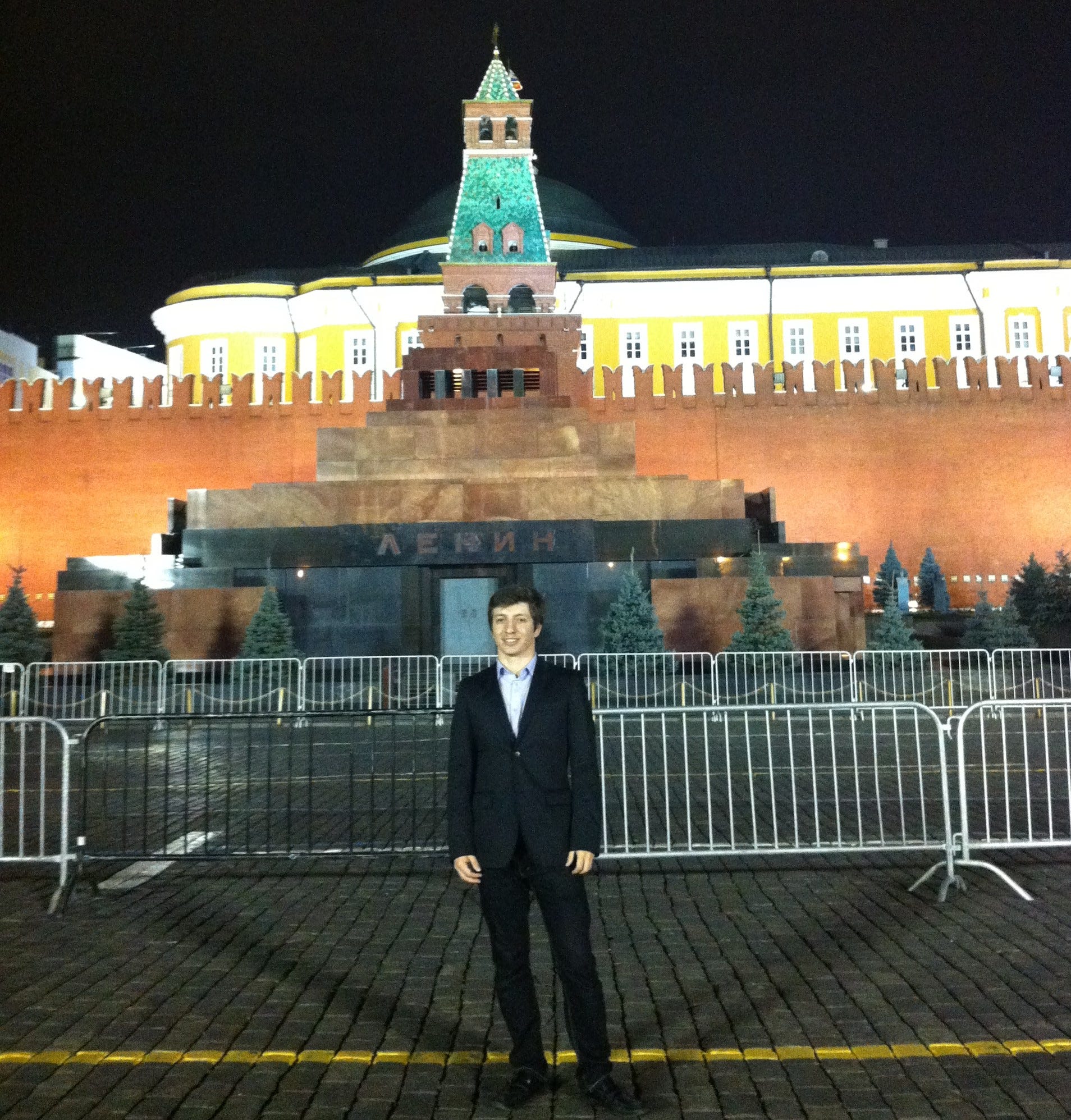
In Part 3A of my autobiography, I recounted my experiences of moving to Moscow in 1997 when I was just 9 years old. My family had left Armenia in search of better economic prospects and ended up in Russia after a short unsuccessful stint in Ukraine first. Russia in 1997, led by Boris Yeltsin, was one year removed from the end of the First Chechen War which caused a significant influx of immigrants to Moscow. While these immigrants could have been seen as a positive addition to the labor force, filling low-paying and physically demanding jobs in sectors with labor shortages, they were instead viewed as a security threat and blamed for various societal problems, such as economic instability, political unrest, and corruption. As a result, my family and I faced discrimination and prejudice for not being ethnically Russian, even though our skin color was not all that different from the locals.
Less than a year after we moved to Moscow, a financial crisis was brewing. I vividly recall the sudden shift in the exchange rate between the Russian ruble and US dollar. Initially, one could exchange six rubles for a single dollar, but within a short period, the rate shot up to nearly thirty rubles to a dollar. This would become known as the "Ruble Crisis'' of 1998. Although I was only 10 years old, even I could reason that those who had saved money in rubles suddenly found that their savings were worth much less than before.
To make matters worse, there were a series of terrorist attacks in Moscow and other cities in 1998 and 1999, including bombings in a subway station, a shopping center, and an apartment building, all labelled as being perpetrated by Chechen separatists. The Russian government responded with a crackdown on all immigrants of non-Russian ethnic descent, leading to increased military operations and a visible military presence in the city. I saw military officers with assault rifles regularly patrolling the Moscow subway stations at this time.
The terrorist attacks also led to the start of the Second Chechen War in the summer of 1999, as Russian forces launched a major military campaign in the Chechnya region. A month after the start of the war, there was yet another bloody apartment bombing in Moscow, killing hundreds, which escalated the conflict and led to increased support for the war among the Russian population. There was no transparency in the bombing investigation however, leading many people to question the validity of the claim that it was done by Chechen separatists. As a kid who had never lived in anything other than apartment buildings, I remember specifically thinking about the chances of my building being bombed next rather than wondering who really did it.
As already mentioned, Boris Yeltsin was the President of Russia through most of the 90s but on New Years Eve of 1999 he unexpectedly resigned from power citing health issues, marking the end of an era in Russian politics and paving the way for the rise of Vladimir Putin. If anyone is old enough to remember Boris Yeltsin, you probably remember him for his public displays of drunkenness. Check out the link to this nearly 4 minute compilation of Boris Yeltsin caught on camera acting really drunk during official presidential proceedings to familiarize yourself with the man. Even I, as a young boy, saw some of these clips on TV and knew this about him. So it’s not difficult to imagine that he truly was unhealthy and could not continue to act as President. On the other hand, Russia was facing high inflation, unemployment, and a sharp decline in living standards because of the Ruble Crisis in addition to a new kinetic military campaign in Chechnya, so it’s also plausible that he did not wish to face these challenges while managing conflicts with the parliament, the military, and other powerful groups in Russian society. Regardless, after nearly a decade in power he stepped down and let Prime Minister Vladimir Putin take over as acting President. Three months later in March of 2000, Putin was elected President with a majority vote. Thankfully, my family would emigrate away from Russia 7 months later in October while the country would remain at war with Chechnya under the direction of Putin till 2009, nearly a decade later. Putin himself remains in power to this day, significantly outlasting his predecessor Yeltsin by more than a decade. And of course I don’t have to remind anybody that he has also started a new military campaign in Ukraine.
So how did my family manage to escape to Canada? With the economic and geopolitical struggles of Russia in addition to the ethnic discrimination we would continue to face, my parents decided that we had to keep moving somewhere else. Fortunately Canada's immigration policy in the late 1990s was focused on attracting skilled individuals with a "Skilled Worker Points System." Applicants were assessed based on education, language skills, work experience, age, arranged employment and adaptability. Points were awarded for each of these selection factors, with a minimum score required to be eligible for immigration to Canada. Both my parents had university degrees, and they could meet the minimum number of points required for immigration if they scored high in language skills. So they went to work and started learning English like their lives depended on it. This brings me back to the end of Part 3A where I revealed that my family came across a “free” English lessons ad offered by American Mormon missionaries on their mission in Moscow, Russia.
Looking back now, it's clear to me that what we thought were "free" English lessons were actually a clever way for the missionaries to introduce us to their faith. But at that time, my parents were desperate to learn English as we were saving up money to move to Canada. So, the price of "free" was perfect for us. The lessons turned out to be good and ultimately helped my parents improve their language skills, which was crucial for them to qualify for immigration to Canada based on the points system. As a young child, I was fortunate to be exempt from language testing, but I still went to the lessons with my parents.
After the first English lesson, the missionaries extended an invitation to anyone interested in learning more about their faith. Intrigued, my parents and I stayed behind to speak more with these young Americans who were friendly, outgoing, and had a distinctive appearance. They wore dark pants with a white shirt and tie and black plastic name tags identified them as representatives of The Church of Jesus Christ of Latter-day Saints. They gave us a free copy of the Book of Mormon and invited us to come back for another English lesson followed by a discussion of a passage from the book. I don’t remember any other details from that first meeting but I think as a family we got the general sense that these were dedicated and hardworking young people who were committed to sharing their faith and serving others.
We continued attending the English lessons and soon enough, the missionaries were invited to visit us at our apartment. They were eager to build relationships, share information about their faith, and engage in open and respectful conversations about Christ, the Bible and the Book of Mormon. We learned that the missionaries considered the Book of Mormon to be a sacred scripture alongside the Bible, containing religious teachings, history, and prophecies of ancient inhabitants of the Americas. According to Mormon belief, the Book of Mormon was translated by Joseph Smith, the founding prophet of the church, in the early 19th century. He claimed to have been visited by God and called to translate an ancient record written on gold plates, which he translated into English by the gift and power of God.
The Mormon beliefs were presented to us in a slow and careful manner over a period of months with weekly visits from the missionaries. The slow pace of delivery of their core beliefs dampened the impact of the ext…