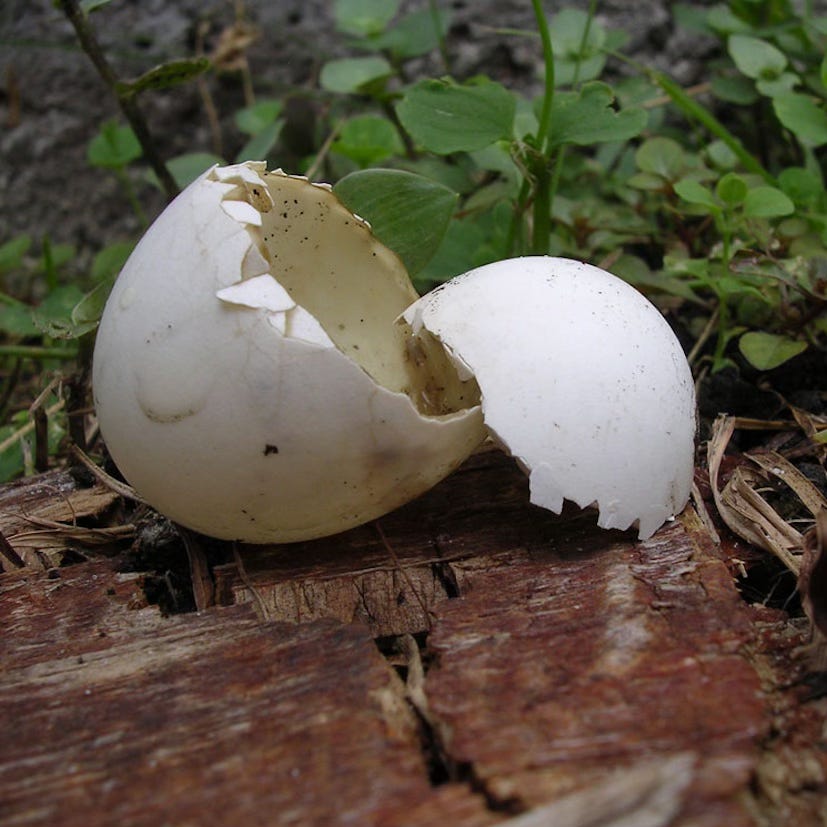
I had painted myself into a corner the day he arrived. Returned to the farm after a year away I no longer knew where I fitted into this thing we’d started, a commune in Surrey, everyone else getting on with it but I was lost. I’d set about my bedroom floor with white gloss, a fresh start, and forgotten to leave a way out. Barefoot, dripping paintbrush, my back against the wall, he appeared in the doorway and introduced himself. He didn’t say, I am the egg man, but we came to know him as that. Many years ago when he was just a boy from Kent, he’d had a dream about a place in Mexico. Like it happens in the story books he’d taken a flight, walked into a cafe and a grizzled man had glanced from under a wide-brimmed hat and said, I’ve been waiting for you. He’d gone with this man, a shaman, into the jungle and emerged twelve years later a shaman also, whereupon he’d left his teacher and set up shop in India where a friend of mine met him and brought him back to the farm where he met me, dripping brush in hand, back against the wall, painted into a corner. His teacher had taught him the ways of divination by eggs; a process of wafting and breathing and cracking into water, the white tendrils and yolk a replication of your innards, not just your guts but your soul and heart and innermost feelings too. He didn’t do that to me yet. He didn’t need to. I skipped over white gloss leaving toe prints and smudges and made tea for him. We sat together before the huge open fire in the sitting room where he told me my home was not my own. I remember he used the word doormat. He said, These people walk all over you. These people who I lived with, who had set up home and had children and built a life. Who had taken care of the farm while I went off to be smashed by a cult masquerading as a drama school. Who were happy. He said I’d lost control. This sense of invasion was hardly breaking news but the power of that moment was in its voicing, your home is not your own. I’d grown up in a house like that, a place overrun with guests my mother used to make up for the guilt of being rich. The commune was a beautiful attempt at another way of life and a replica of this stab at feeling better about wealth. And in naming it, he provided an answer; hey presto, it was him. He would sort it out, he would save me, all I had to do was close the commune and tell all the people to get out.
The Literary Obsessive is free to read, while the archive is paywalled. To access the full breadth & depth of my work, please become a paying subscriber.