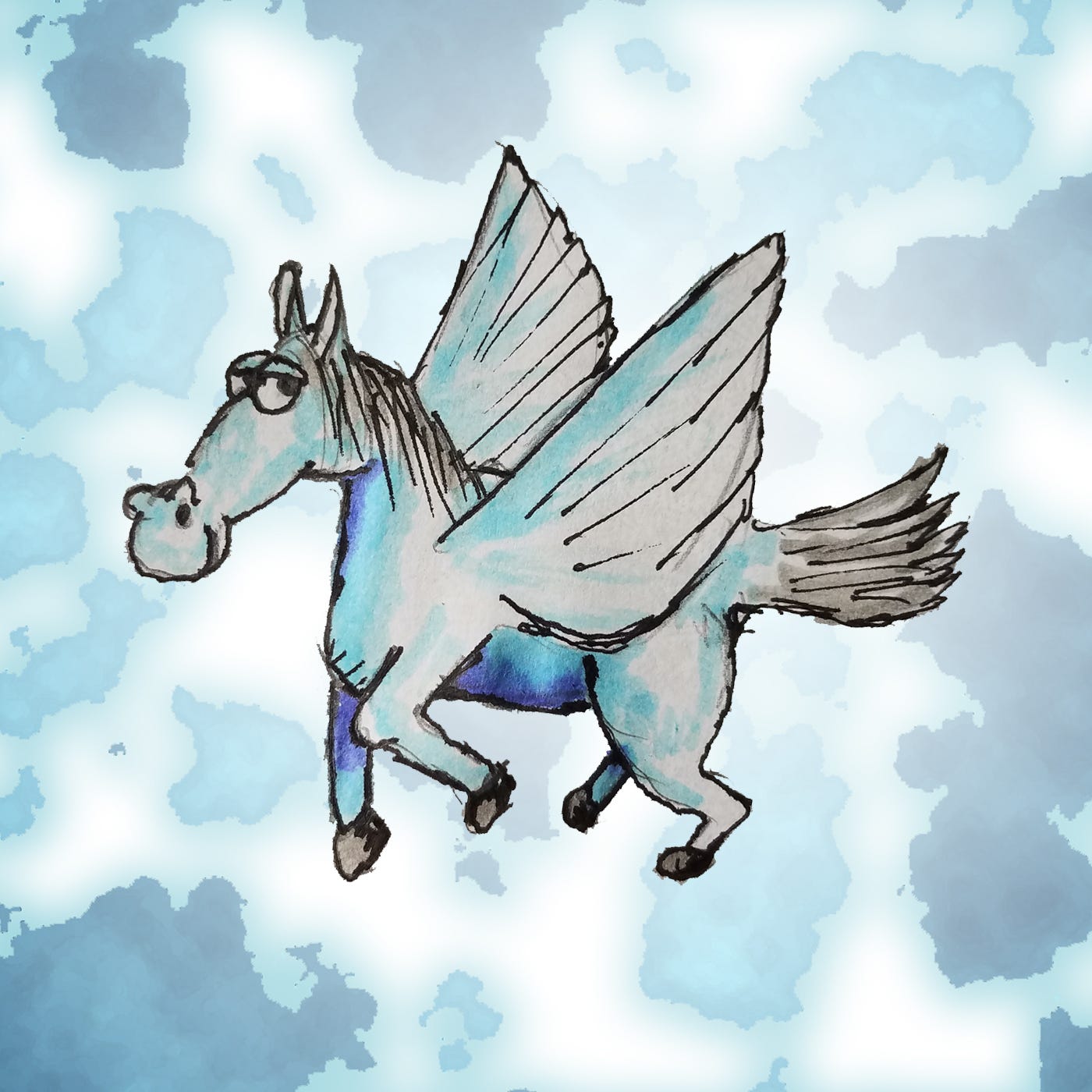
My approval has never been something my children have been forced to covet. I’ve always given it to them freely and without condition. It fills me with delight whenever they sit down to draw or play a game or do anything artistic. I bubble with encouragement and praise.
Growing up, things weren’t the same for me. This morning I found myself thinking about my father’s family and how they only knew how to communicate through criticism.
My dad had three brothers and two sisters. He was either the second or third youngest and I know he was tormented by his siblings.
He grew up in another era. They lived in a cramped farm house. Their mother, my grandmother, thought reading Little House on the Prairie was a good time.
I read the whole series to my children a few years ago. We live not so far from Pepin, Wisconsin which is where the first book was set. My daughter and I even took a trip to the town. We ate at a restaurant that served me raw chicken.
Little House on the Prairie has value as a work of literature if you read it as a historical document. However, if you read it as some sort of idyllic model to which all families should aspire, then you’ve got problems.
We have the opportunity to live much better lives than the Ingalls family. Turning away from all our technological advancements in order to find “purity in a connection with the land” is the type of insanity that can only breed resentment.
Unchecked resentment is what leads to brothers and sisters tormenting each other. I think that’s the crucible in which my father was formed.
My own experience overlaps theirs. My grandfather died when I was very young. I think a picture exists of him holding me, but other than that he’s nothing but a ghost. He haunted every gathering. I wonder how many of the snarky comments my dad and his brothers made would have been permitted if the old patriarch had still been around.
Did they love him, or were they openly defying him? The conservative mindset is filled with such contradictions.
This family of rugged farmers never offered compliments. They sneered at you. Nothing you did was ever good enough.
I knew it frustrated my mom. She mainly tried to keep out of their line of sight. But I was still finding my way in the world, so I took the heat.
It’s a heartbreaking thing to watch young people attempt to earn the approval of false authority figures who are never going to offer a kind word. Even now, I look around at a society where wave upon wave of childhood innocence comes crashing down upon the unwavering rocks.
All you have to do is say, “Good job! Well done! I’m proud of you!”
But the false authoritarians refuse to say those words.
Why? Why are they so reluctant to simply pay attention to what their innocent, loving children need and then provide it? Why don’t they care?
The funny part about all this is that my father, aunts and uncles are all verifiably a bunch of dweebs. They’re all socially awkward. There is nothing particularly special or remarkable about them. The scary part is that it took me years of distance and separation to perceive this truth.
But childhood is an era of magic and vulnerability. Children are subjected to powers beyond their control. In those days, my father, aunts and uncles rose up like invincible titans from the depths of a raging sea. If only they could have seen themselves the way I saw them. Perhaps they could have become giants in reality as much as in their cruel, personal delusions.
There’s nothing more pitiful than an adult who has been so corrupted by insecurity that they respond with mockery to the adulation of a child.
“You must be really stupid to think I’m something special.”
This is the assumption that drives them, though that’s not something they recognize. People who have had an inferiority complex fused with their fundamental identity reflexively resent anyone who sees good in them.
Even children.
Their response is confusing and contradictory. They demand the praise and adulation of their children, even as the sound of kind words fills them with resentment.
It’s all a bunch of water crashing on the rocks. I observed this for years.
At first, I tried my best to be worthy of their praise. But no matter what I did, I was always met with ridicule. This is no different than when upperclassmen decide to beat up on the Freshmen.
Some of those Freshmen remember and get their payback the following year. Others break the cycle.
I came to perceive the pattern. It’s something that rears its head in many ways within our society. Years ago, I remember sitting in a bar with a friend of mine. He was trying to get the attention of a pretty girl. I took one look at her and realized he was never going to succeed. Something in her expression reminded me of a personality type of which I’ve had far too much experience.
“She’s not going to care about you unless you ignore her.”
“Yeah, right, what makes you think that?”
“Because I know that type. Something about the way she is sitting there reminds me of people I’ve known.”
He bet me that he could get her interest before I could. Then he went into a clownlike routine, bought her drinks, and did everything else he could think of.
Meanwhile, I deliberately turned away every time she looked at me. After about an hour, I felt somebody sit on the stool beside me. Then she grabbed my arm. I turned to look at her. “Hey,” she said.
That’s when I realized I wasn’t in trouble because I sincerely wasn’t interested in her. To a person like that, disinterest becomes a compulsion. She’d surrendered a certain power to me. She needed my approval and I could keep her attention by refusing to offer any praise.
So I got rid of her by offering a compliment.
Abuse allows insecure people to create bubbles of compulsion. I came from a family of six adults who had such a high level of inferiority that they became trapped in the net of a trauma bond.
Praise is a beautiful thing, and cruel people learn how to distract observers from their fundamental ugliness.
“See this pretty bauble I can give you? Look at how it catches the light. Never mind my twisted claws and horrible demeanor. It’s the praise you want isn’t it? Focus only on the praise! Now you must endure me and all that’s awful in order to ever have a chance at this glorious prize.”
It’s all a lie. Perhaps a parent withholding love is the most terrible lie. It leaves children wondering if the love their abusive parent never gave might have been the most beautiful love of all.
Here’s the secret: it’s not.
This is a form of manipulation that leaves us rejecting the advances of truly kind people in favor of the illusion of a reward that will never come.
We build up an illusion about the approval of reprehensible people. The truth is their praise means nothing. The fundamental deceit is that they make us focus on them instead of ourselves. I’ve followed that path long enough to know that it leaves you feeling perpetually incomplete. You’re bound to awful men and women because they’ve conditioned you to believe a part of you is missing.
It’s not.
The only approval you need to seek is your own.
Don’t withhold your kind words. Think of them as wards that will fend off the forces of evil that will try and come to corrupt your children. When compliments drive people away, it’s a sign that they are in a tremendous amount of pain.
It can be difficult to learn how to speak truth to power, but it’s easier when you remember that the alternative is to live a lie. Praise your children, and in doing so teach them that external praise isn’t an end unto itself. The purpose of this life is to take comfort in our good works whether they are recognized or not.
You all make this newsletter happen! Thanks for your sponsorship! I have payment tiers starting at as little as twenty dollars a year.
I’m so happy you’re here, and I’m looking forward to sharing more thoughts with you tomorrow.
My CoSchedule referral link
Here’s my referral link to my preferred headline analyzer tool. If you sign up through this, it’s another way to support this newsletter (thank you).
I'd Rather Be Writing is a reader-supported publication. To receive new posts and support my work, consider becoming a free or paid subscriber.