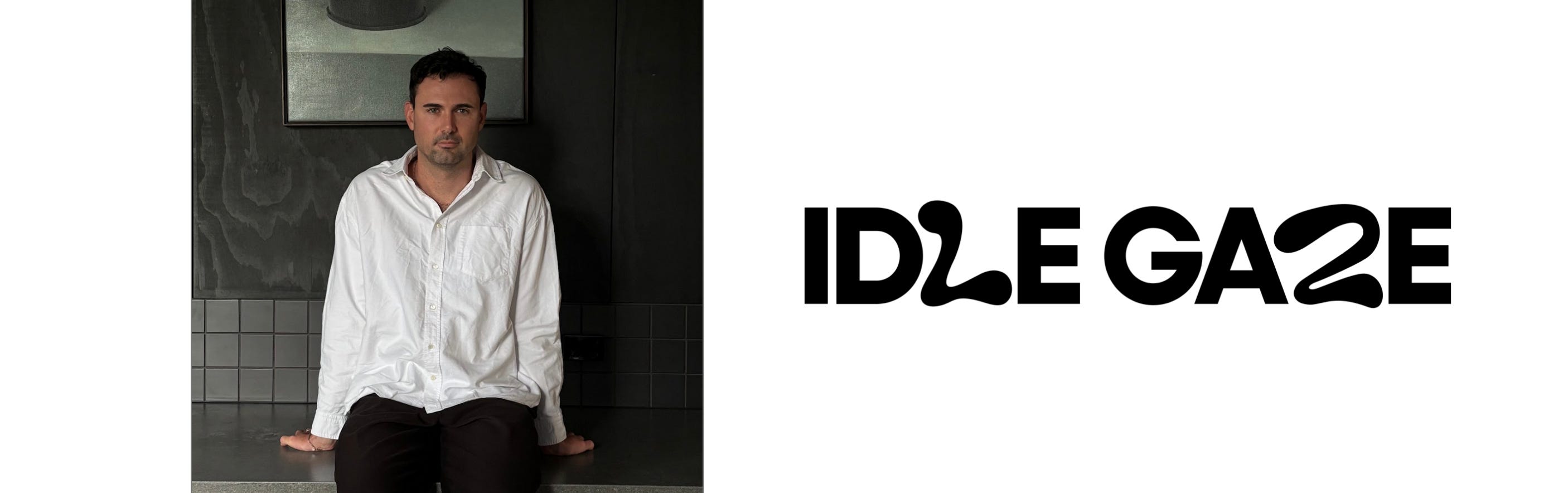
Alexi Gunner is an independent cultural researcher and strategist based in Melbourne. He is the founder of idle gaze, a consulting practice and newsletter exploring the hidden undercurrents of culture. He previously held strategy roles at We Are Social, AKQA, and Zalando, and served as cultural futurist and Berlin chapter lead for RADAR.
In our conversation, we talked about his recent essay, “Research as a form of pattern disruption.”
Later, in a discussion of analog v digital planning, we discussed Yancey Strickler's “The Dark Forest Theory of the Internet” (2019), which frames the retreat from public online spaces not as apathy but as survival — people going quiet because the predators came out.
So you may know this, you may not know this, but I start all these conversations with the same question, which is, I borrowed it from a friend of mine. She helps people tell their story. She’s an oral historian.
And when I heard it, I was really struck by how beautiful the question was, but it’s pretty big. So I over-explain it the way that I’m doing right now. So before I ask it, I want you to know that you’re in total control.
You can answer or not answer any way that you want to. And the question is, where do you come from?
So I think I was born in Sweden. My mother is originally Finnish, but she grew up in Sweden. My father is British.
And from quite an early age, we were moving around a lot. So before my teenage years, we’d lived in Brazil, in the US, in the UK. So constantly moving around.
And I think because of that, I don’t feel particularly Swedish. I also don’t feel particularly British. And so I think from a geographical or a national identity point of view, I think it’s always quite hard for me to answer that question.
I think for me, because I was moving around so much as a child, it programmed me to continue moving around constantly. So now even in my adult life, I’m not often rooted in one place. So after high school, I went to the UK.
I was in London for six, seven years. And I moved to Berlin, where I was seven years. I’m now living in Melbourne.
And so I think that every time I move, every place I think shapes me in a different way. So I think rather than feeling like I come from one specific place or one specific identity, I think all these different places I’ve lived in have had an influence on me. So it’s almost like this bricolage of different influences.
So I think that’s how I like to see myself respond to that question.
And what was it like growing up moving around? What was it like as a kid moving around that much?
I mean, I think in some ways, it was quite challenging. Because every few years, it would be this process of unrooting the family and then going to a new place and starting in a new school. And I think it’s challenging because I think you start to build this identity as being a little bit of an outsider.
You’re constantly having to adapt to a new place, a new situation, a new social circle. So often I always say that I envy a lot of my friends who’ve been based in the same place their whole lives. They’re still really close friends and they’ve spent time with their childhood friends, people they know from primary school, they’re still friends with now as adults.
But I think in a lot of ways, I think it builds a lot of useful tools. I think being this outsider that has that ability to adapt to new situations, I think does help a lot in life. I also think it helps a lot, I think, when you are a researcher and a strategist as well.
I think something I’ve been reflecting on recently is being always in this mode of being ready to adapt to a new situation, moving to a new place, and then trying to fit into the new culture or a new social circle or a new context. I think what happens is we start to become very observant around a lot of the nuances and the rules and all this seemingly invisible layer of things that happen in a culture and in the rituals of communities. And I think that’s how you learn to fit in to new contexts and situations.
But I also think it helps in being a strategist in terms like you are always trying to learn about a new type of consumer or target audience or a new subculture. And you start to notice these nuances and these almost like these invisible unwritten rules and rituals that I think a lot of people might miss. So I think moving around, it’s been challenging, but it has, I think, been useful in a lot of ways as well.
Do you have a recollection of what young Alexi wanted to be when he grew up?
So I had a phase where I really wanted to be a war reporter. I think I always felt like it seemed very exciting, looking at the news and seeing these reporters on the front lines. And I think gradually that shifted to wanting to become a culture journalist.
So it was always like, oh, I want to work in media. As a young child, that was this dream of becoming a traditional journalist. And I think for a long time, I got really into this idea of wanting to be some culture journalist, analyzing things that are happening in culture and society, doing the long form scoops and features in newspapers.
So I think that was the thing I wanted to be when I grew up.
And was there, who was the role model? Was there something, was there a model out there that was like, oh, that’s what I want to be?
No, I think growing up. So one thing I always remember is that my parents used to subscribe to a lot of print publications, print newspapers. And I think that had a really big impact on me.
It’s like every morning before I went to school, I would go through the, read the morning papers. They had a subscription to, I remember, for example, being really influential when I was in my teens. I thought the doing that deeper digging, the really reflective long form pieces.
I remember thinking like, that’s super cool. Like, how do I get into that?
So catch us up. You mentioned you’re living in Sydney, is that right?
And so I’m currently based in Melbourne.
Melbourne. I don’t know why I did that. All right. So catch us up. Tell us where you are and what you’re working on. What do you do for work?
Yeah. So at the moment I recently relocated here, but I’m still spending a lot of time in Europe. I moved here from Berlin and I’m continuing what I did in Berlin.
So at some point I went from being a full-time strategist to breaking free and starting as a freelancer. It started through my Substack newsletter. So that’s something I started when I was a full-timer.
But I eventually started to get client interest in the things that I was writing about. And that’s when I had the epiphany that, okay, this is interesting. I could maybe start a little bit more of a consultancy and a little bit more of a business model around the things that I research, that I document and I write about in the newsletter.
So that was the major driver that made me want to start working independently. So yeah, at the moment, what I call myself is a cultural strategist.
I work both a lot on the research side of things, but also on the creative strategy side of things. And I still continue with the Substack. I think whether it’s writing for the Substack or doing the client work, I think the approach to research and the principles I think are similar, where it’s really about trying to dig a little bit deeper into all these trends that we’re seeing, trying to understand what are these deeper undercurrents that are shaping these things we’re seeing that are happening?
Trying to connect dots between lots of different domains to try to build up a more nuanced bigger picture of what’s happening in culture, what’s happening in society, trying to break free from I think some of the common narratives and assumptions that we have around where culture is heading. And trying to maybe provide a little bit of a reframe for people of maybe this is an angle that you haven’t thought about. Here are some of the more interesting nuances and tensions that are behind all this stuff that is happening.
And writing about that in the Substack, but also then clients helping them to navigate that and to help shape their role in the world and how they want to position themselves in this perspective of what’s happening in culture.
Yeah. I’m curious about this. That’s how I encountered you in that, it’s impossible to ever discover the moment of interaction, but your newsletter came into my world and I love it.
I've always appreciated it, so I'm curious about the origin story. Where did the inspiration come from? Why do it at all? And how has it evolved over time?
So I think I started the Substack during COVID at some point, everyone had their pivot project, right? So that was mine. That’s where it started.
And it started off, I didn’t have a specific model or something specific that I was trying to do. It was basically trying to have an outlet for things that I was researching and things that I was trying to make sense of. There wasn’t a bigger plan, but I’ve always enjoyed writing.
And I think taking the research and patching into something, engaging something for people to read, I think I immediately felt like it was something that I enjoyed. And yeah, the more I did it, the more I felt like even though I was writing about stuff that I was personally interested in, I wasn’t doing it for trying to write about things that I thought an audience would be interested in. So it’s really nice to then see subscribers come in and also have this joint interest in the things that I was writing about.
And I think that’s what motivated me to continue with the newsletter. I think one thing that was always a big part of what I wanted to do with the newsletter was trying to, I think, connect dots in more interesting ways. And yeah, trying to challenge these generic ideas about where a culture is heading.
I think that’s where the name comes from as well. So Idle Gaze, it’s this idea that if you focus your gaze too much on one specific domain or one specific area of culture, you start to build a bit of tunnel vision. If you can have a little bit of an unfocused view, you can start to see the bigger picture a little bit, and you might be able to connect dots between seemingly unrelated things.
So that’s really what I was trying to do was tickle my brain and tickle other people’s brain of, oh, well, you see this thing happening over here and you see this thing happening here. They are connected in some way. There are these deep undercurrents happening in culture that are connecting all these different emerging behaviors, emerging signals that we’re seeing.
It’s also someone, a friend once told me when she was talking to me, she said that I had an idle gaze. I think I was daydreaming and losing focus on the conversation. But that phrase stuck with me.
And I thought that was a good name for the substack. And it’s also the name of the consultancy. So yeah, it’s stuck.
Yeah, it’s really great. I love hearing that story. I’m curious, how would you describe, because a couple of times you’ve pointed at the fact that there’s a common narrative or there’s a tunnel vision in the way that we or the way that culture maybe is talked about.
Can you talk more about how you see culture or do you consider yourself to be in the space of trends? I don’t think that’s a word I see you use, but where do you see yourself operating and how do you think, what’s your, how would you describe the state of it today and how you’re, twice you were, listen, there’s this common, there’s a big conversation going on about how the direction we’re going. And I don’t think that that’s the right conversation.
I think we need to look at things differently. Can you say more about that? Yeah.
So I think in terms of the client work that I do, I call myself a cultural strategist, which I think is one of these interesting terms where I feel more and more people, it’s become the buzzword, I think, among strategists to call oneself a cultural strategist. The way I see it is that I have my foot in two different domains. On one side, there’s the research and trying to do a little bit of the deeper digging and really trying to understand whether it’s emerging trends across certain consumer groups, but also trying to understand subcultures, different movements, doing that proper research work, but then also having a foot in the creative strategy.
So I think for me, it’s working at an intersection of proper cultural research, but then also creative strategy. How can you apply those insights to a creative opportunity, a business problem? So I think for me, calling myself a cultural strategist is trying to convey that it’s the intersection of these two things, the research and the strategic application of that research.
In terms of the research, so I recently published, for the first time on my Substack, I was trying to tangibly define my approach to research, which I’d never really done before, but it’s something that I inherently had in my mind, I couldn’t really describe it, but I had an attempt of trying to set out some tangible principles of the way that I approach research, because yeah, I do see myself as a little bit of a trend forecaster, a cultural researcher, but I think there are unique or specific principles that I follow in terms of our research. So one of the things that I always think about is looking for weird signals.
So when you talk traditionally about trend forecasting or research, right, you typically talk about, you’re looking for weak signals, right? A weak signal can be any signal happening today, any anything interesting or behaviour, an emerging trend that provides evidence of a future shift in culture or society, right? I think the danger often that a lot of research and a lot of strategists, I think a trap that they fall into is falling into a lot of the commonly accepted narratives about where culture is heading.
So there’s a danger of confirmation bias. So if you think, this is what’s happening in culture, you’re only going to start spotting the signals that corroborate, that support that worldview that you have. So for example, if you are bullish on AI, you think it’s going to transform all these industries, you’re only going to find evidence that that’s the case, and you’re going to dismiss and miss, totally miss, be blind to things that might challenge that view of maybe what the future looks like.
So what I think about is weird signals instead. So a weird signal is anything that you come across that might make you feel uncomfortable, or might feel strange, because there’s a little bit of cognitive dissonance, right? Because you see that and it might challenge a commonly held assumption that you have about a certain thing that’s happening.
And the interesting thing about spotting these weird signals is that it’s a glitch in the matrix, right? Where you get this weird feeling, oh, it shouldn’t be that. That’s strange.
But I think the interesting thing about weird signals is that it helps to show you it’s a portal to a vastly different future. It’s a future that’s vastly different to our current reality. And I think that’s one way of trying to challenge this, the commonly held assumptions about where certain trends are heading in culture.
So that is something I think that is a key cornerstone of the way that I approach research. Secondly, it’s around trying to find non-obvious connections. So a little bit what I was mentioning earlier is often when you see trend reports, or documents that are prepared for clients, it’s often the way the trends are framed is you’ll have evidence, signals that are very closely connected, that are from the same domain.
So if you see three startups with the same business proposition, that are getting funding, you’re, okay, cool, here’s an emerging industry, or you might see something that’s happening in hospitality, and then you see something that’s happening, oh, here’s a new trending alcohol product, and here’s a new food trend. These are very interconnected industries, right? And so, not that these trends are wrong, but I think what I’m always trying to do is trying to spot these more, these less obvious connections of, okay, let’s try to look at lots of different domains.
Look at both highbrow culture, lowbrow culture, if you can start to connect the dots between these things, that’s when you start to, I think, unlock more interesting perspectives around what’s happening in culture, but not limited to one specific domain. I think that’s a useful tool to starting to, yeah, I think, build a more nuanced and a more, yeah, I think, more unexpected, more imaginative view of what’s happening in culture. I think a third key thing for me, which is, I think, quite challenging, is this idea of trying to resist immediacy.
I think when people often think about trend forecasters and cultural researchers, there’s this idea that you’re always on the lookout for these trends that are emerging, but we live in a time where there’s this rapid hype cycle of these trends that blow up overnight, but they’re not really trends. They’re more fads, right? Things, you see something that’s happening on TikTok, it’s huge, viral for one day, and then it disappears.
But there’s always this pressure, I think, as a researcher, as a trend forecaster to jump on that, try to define it, give it a catchy title, and then write a subset about it the next day. Or when you’re working with clients, there is this pressure of you need to be on top of what’s happening in culture. But I think often when you are too, when you try to define something too quickly, I think you miss out on the bigger picture.
Because you’re looking at this one isolated thing, it only tells I think part of the picture, if you can observe these things that are happening, and you can sit back, give it a few weeks, give it a few months, there’s some stuff that I’ve been tracking that I haven’t written or tried to define in years, but I’m still keeping a close eye on it. That’s when you start to then figure out what is the bigger picture here, all these things are connected, they might not all be happening at the same time, but it starts to tell the story about a broader macro theme. So yeah, I think having this process in place where I’m tracking all these different trends, I don’t talk about them, I don’t publish about them, but I’m always collecting signals about them.
And the more I collect signals that either support this trend, or maybe challenge them, the more nuanced and more rich the analysis of a trend becomes. So yeah, so I have these principles on the research side of things that, I mean, certainly not something I’ve invented, but I think it’s helps me to, yeah, I think disrupt a little bit and make the research and the analysis, yeah, a little bit more interesting, a little bit more nuanced.
Yeah. And that’s certainly what attracted me to Idle Gaze and keeps me returning. And I’m now looking, I’ll share a link to this post that you were talking about research as a form of pattern disruption.
And in the beginning, you said this year alone, 135 or more trend reports were published by tech companies, agencies and consultants. So I appreciate everything you share in there. And I’m wondering, to what degree can you, how, what’s your process for collecting signals and how do you organize that stuff?
What’s that? Is there a way of talking about the messy process of collecting them and accumulating them and waiting for them to become something or not?
Yeah, I think I see myself as a little bit of a tool junkie. I’m always trying to find the perfect, particularly with the internet research. And the reality is that a lot of the research that I do is predominantly online research.
For me, also doing the IRL, talking to real people, going out in the real world is super important. I have my own processes for that. But trying to manage the sheer volume and speed of things that are happening online, I think is a big challenge.
So I’m always carefully trying to tweak and try to find the right tools and the right processes. So for me at the moment, it’s a combination. It’s this messy stack of different tools that I use.
So something that I mentioned in the research as a form of pattern disruption essay is because I try to give a little bit of tangible examples what this looks like in terms of the research process. So I mentioned that I use this app called Sublime, which for me is a really great tool for collecting and making sense of signals, different ideas that I come across online. The easiest way to describe Sublime is that it’s like a Pinterest for researchers.
So essentially, you’re saving and you’re capturing things that you come across online and you put it into different collections. And you set up a process of intentionally going through those collections, you treat them a little bit like digital gardens, where you’re slowly nurturing them, you go through them and you start to figure out how these different things related. What an app like Sublime does as well is that it helps to unearth other ideas that other people have saved on the platform that are connected to your ideas.
So back to the way that I do research of trying to connect the dots between all these different things. I think it’s a really useful tool. And for me, being able to spatially map those different ideas is super important as well.
So predominantly, I use Miro for that. So I think going from having all this noise and trying to do the clustering, the analysis, connecting the dots, I think for me, being able to lay it out spatially and use a mind mapping tool like Miro is super useful. I do that when I prepare my essays for Substack, but also in terms of doing the client, the commercial client work as well.
But I also have a huge database on Notion, where I just collect and tag things as well. And my desktop is just full of screenshots. And that’s not a very useful, it’s not a useful system.
But that’s where a lot of things live as well. So it’s a little bit of different, lots of different ways. I’m still trying to figure out the perfect or the ultimate process of that.
But that’s a long term challenge.
When did you first discover that you could make a living doing this?
So I think just to maybe rewind in terms of my career trajectory. So when I went to uni, I even wanted to be a journalist, I didn’t study journalism, I ended up studying language and communication. It was just broader, this broader course, there were some journalism modules to it as well.
And it was quite a theoretical course, but I got, I really enjoyed, I think some of the more academic theoretical stuff that I was learning at uni, just all the fundamentals, Stuart Hall, encoding, decoding, Roland Barthes, mythologies, semiotics, Marshall McLuhan. I thought all this stuff was super interesting. Although when I was a uni, I never thought that I would actually apply any of this to my real work.
I just thought, people don’t, this is just something people use in academia. And I started off my career. So at some point, I realized that being a strategist was a thing, which was totally random.
I had a brief stint working in public relations when I graduated. And it was just by chance that we were sharing office with a creative agency. And I just remember, I remember instantly gravitating towards this group of people in the office, bare corner of the office, there was always post-its up on the walls, and a whiteboard where they were drawing these frameworks.
And I was, I just remember trying to figure out what they were doing, because there was just something about them. I was, that seems really interesting. And that’s when I started to inquire a little bit more.
And that’s when I realized there was this thing called being a strategist at a creative agency. And I mean, I encounter a lot of strategists who they just, there’s not a lot of, maybe it’s better nowadays, but I think 10 years ago, there just wasn’t a lot of education of when you work at an ad agency or creative agency, it’s not just about being a creative or an accounts person, there is this planning function as well. So I just found that randomly.
And I realized, okay, that’s what I want to do. So I eventually found myself on a graduate scheme at an agency in London, called We Are Social. And it was a really good training ground for being a strategist there.
And I had a great boss that Harvey Cosell, who he came from a very old school planning background. He’d worked at these old school London agencies that had defined planning, JWT, and so forth. And so there was this immense respect for planning fundamentals.
But at the same time, We Are Social was one of these first agencies back in the day to really invest a lot in cultural research. So they had a proper research team. And it was quite novel at the time of they were selling in cultural research and insights as a function to clients when a lot of agencies weren’t really doing that as part of a creative agency context.
And I think being able to combine these things of learning proper planning strategy, how to work really closely and collaboratively with creatives, transforming insights into really tight, clear creative briefs, but also really trying to create culturally resonant work through doing that proper research. That’s where I already started, I think, to figure out as a strategist, this is what I really want to do is have a foot in the research, but also having a foot in the creative strategy. And I worked at a few different agencies, I moved to Berlin, I worked in house a little bit as well as a strategist.
And, but it wasn’t until I started my newsletter, but I realised, okay, it’s this funny thing where when I started writing about things, I thought I was just interested in this. And it was really interesting to see that people client side were coming to me being, okay, this is a topic that we are really interested in, we’re trying to figure out internally, do you want to do a research sprint for us? Do you want to come in and explore this topic further within the context of these projects that we’re working on.
And that’s where I realised, okay, not only am I interested in this stuff, but there is a business case for it as well. And so that’s where I realised, okay, because I always really enjoyed working as a strategist in creative agencies. But I think what I this, I’m quite passionate about working at this intersection of being a very enthusiastic researcher that really understands trends and not just researching consumer groups, but really doing for example, the forecasting, the foresight, not just understanding where things are now, but where is culture emerging in the next few years?
Doing this proper research work, but also finding a way to translate it into creative work into creative opportunities. I felt like it’s, there’s not a lot of agencies that do this particularly well at the moment. So I think that was another driver of okay, as a consultancy, these are the kind of projects that I want to get.
I look at, I think there are smaller agencies out there that are really great at the trend forecasting. And the proper research, I follow agencies, nonfiction and places like that. But then I think for me, what’s really interesting is you have these smaller agencies and these consultancies that are proper trend forecasters do the trend work, but also creating really interesting creative work out of that.
So I think for me, places like there’s an agency in London called Morning, also Sibling Studio, DigiFairy. These small indie agencies are emerging that are working in this intersection. And this is where I’m trying to place myself as well in terms of my consultancy.
I have some really great creative directors that I work with that I pull in for particular projects. But I think it’s been a slow realization that this is something that there is a demand for with client work. It can live beyond just a substack, because it’s quite hard to make a living off substack.
It’s a passion project, first and foremost, but it’s also opened doors to getting commercial work as well. So I think it’s just been a bit of a trial and error and testing and building confidence that this is something that I can do independently.
You mentioned you had a mentor at the agency, and you talked about traditional planning and maybe it’s analog planning versus digital planning, and maybe that’s a little brutish and reductive. But I’m curious, what’s the role of qualitative in your work? What’s the role of what have you kept from traditional planning and how have you evolved it into the practice that you have now? Or does it have a role?
I feel like these things get pitted against each other, but I’m curious, what’s the balance between analog research and planning and digital and social research and planning?
So, even though I say I’m a cultural strategist, a big part of that is being a researcher. I don’t have any particular formal education or formal training in a proper research environment doing really structured qualitative or quantitative research. But I think working at agencies that, starting off at agencies, even though the agency that I mentioned before where I started off at We Are Social, it’s a digital agency.
But I mentioned, I think the planning team had this respect for this more analog type of planning and research. And so, I think that’s something that has really stuck with me. So, even though today, I, a big part of what I do is online research.
And like you said, I think I’m more of a digital approach to research and strategy. I think for me, the analog stuff is still super important. I think I’ve never been a huge fan of really structured focus groups, for example, and traditional surveys.
I think it does have a place. I think when it comes to trying to understand the more IRL approach to research, I think what’s always been more useful for me is, I don’t know if you can call it a more gonzo type of research of, instead of inviting, if you’re trying to understand, let’s say, teenagers in London. When I started off in London, I was working on Nike and Adidas, these sports accounts where a big focus was trying to understand youth culture in the UK.
I think what I was taught and what I also realized is that instead of bringing all these teenagers into a corporate office and organizing a focus group, where at the end of the day, it’s just going to be a performance, they’re not going to feel at home themselves. You’re not going to get a lot of super rich insights in my point of view from that. Instead, get closer to their lives.
I remember working on Nike projects where we would just go hang out at the inner city football pitches and just observe everything that’s happening around them playing football. Or even just, okay, let’s just organize a WhatsApp group with some people who are part of the target we’re trying to understand. Ask them to just journal or capture, a digital journal, just capture these everyday mundane moments of their lives.
Go to study their bedrooms, go in and see what they put up on their walls, the things that they put on their bedside tables. I think stuff like that, I think, unlocks far more interest. For me, it’s a way to unlock really interesting and interesting nuance understanding of a certain target audience or a certain subculture or community.
So I think in terms of the analog research, I think that’s something that has played a really critical role. But I think not having that really formal background research, I think, and working often in a creative environment where it’s not so much about provide creating a very detailed research report, but it’s, okay, what are the key interesting tensions inside so we can bring into the creative work? I think that has been, that more Gonzo type of research has been, I think, really useful.
And that’s something that, I learned during, for example, my We Are Social days. So I think that’s how I try to combine, more analog research with the online research as well.
What do you feel like the Gonzo approach does for you that the digital doesn’t? When you feel like you need Gonzo?
I think doing online research is, in some ways getting more and more difficult. I think even if you look five, 10 years ago, people were posting so much on social media, for example, social listening was a really key element of how you would do online research. I think the digital landscape is changing in such fundamental ways at the moment.
So people are posting far less on public channels. There’s this move, people talk about the move to a more dark forest ecosystem, where a lot of conversations are happening in DMs, in private WhatsApp groups away from the public eye of public feeds and social networks. So there’s less signals, there’s less data input, let’s say, in that respect.
You have to find these and get access to these, I think, these private conversations, private communities to understand how people are talking when it comes to digital. And there are, of course, I think, interesting places to look for. If you want to get that authentic view into what people are really thinking, there are places still online.
I think it’s more about, I think Reddit, I still really depend on Reddit. I think Reddit is super interesting for a lot of research because people are very authentic on Reddit versus, let’s say, Instagram or Twitter. It feels much more intimate.
I think people trust those spaces a lot more. So I think that is a really key place for me. But also just going on Discord, people are talking more on these private communities and servers on Discord.
So I’m spending a lot more time on trying to find those spaces. But I think this is why I think there is more, it’s more and more important to balance online research with offline research as well. Because you can do, it’s more difficult to find those conversations, those insights online.
So I think it’s always going to be super important of just getting escaping your desk and exploring, exploring your city, exploring the real world, trying to find what are these, what are the, particularly as a trend, working in the trend space, it’s trying to figure out what are these spaces and places and communities that are sort of there’s a gravitational pull, there’s always these places that culture sort of radiates from, the early adopters, the innovators. You just have to figure out where they are. And often they are offline as well.
It could be a gig venue, if you’re trying to understand certain music subcultures. If you’re, I work at quite a few fashion clients, there are certain schools where the students, they are the ones that are experimenting the most, where that’s where you can get a little bit of a hint of certain fashion trends that are emerging. So yeah, I think the analog research I think, is in the next few years, I think it’s become more and more important because you can’t rely on online research in the same way that you could 10 years ago.
Yeah. You mentioned the dark forest. That’s a, is that the, I’m vaguely remembering the essay or something. Can you talk a little bit more about what that was? Or that theory?
Yeah. So the dark forest theory, I can’t remember who exactly, who originally defined it. I think the person who made it more legible and more widespread was Venkatesh Rao.
He’s an online researcher and writer. There’s this collective, it’s called the Dark Forest Collective. They’ve published a few books as well, but the dark forest theory is this, I think it’s a term that originated in sci-fi, where there was a story of these aliens that came to earth and they came to earth and they realised there were no humans left, but the humans were just, they were hiding in the forest.
And this is a theory, you can go into a forest and it might seem quiet, but it’s filled with animals, but they are hiding underground. And it’s this idea that same thing is happening online right now, where because of all these different factors, hostility, cancel culture, breakdown of nuanced conversation, people are much more afraid to post things in public feeds. So gone are the days of having a public Instagram channel and posting your most private intimate moments on there.
You’re voicing your opinions on Twitter. Instead, all this is moving underground. So, whether it’s WhatsApp groups, DMs on Instagram, forums.
Yeah. So it’s this idea of all these conversations and all this, let’s say, cultural production is still happening, but it’s not happening in the public eye anymore.
It’s amazing. I should have known this before I went in. It was Yancey Strickler.
Yancey Strickler, that’s right. Metalabel.
I just found it was 2019 he wrote this piece. I didn’t know until you told the story that it had its origin in a sci-fi novel.
And he was borrowing that metaphor to describe the shift in the, I guess, in the availability of public data, because people were, we really came out of a very extroverted social age. I always feel, I always would always, excuse me for a little rant as an old man trained and qualitative and face-to-face stuff. It always struck me as Orwellian that the corporate world chose to describe social listening.
It was the first time a corporation ever said that it was listening to anybody. And I was well, it’s not listening. It’s reading.
You’re reading public posts. It’s not, you’re not listening to another human being when you’re doing social listening. You’re reading public data, but it’s that being a little resentful.
And I think you’re absolutely right. I think there’s always, there’s always been limitations to social listening because you’re not truly listening. Even when people were posting publicly, social media has always been an external performance for people.
It’s very rare that people are very honest on social media. I think that’s what’s interesting with seeing people talk in more private confines. I think that’s more listening, but I think again, it’s never a conversation, right?
You’re just observing what’s happening. And I think that’s, you’re always going to get richer insights from having proper conversations with people through gaining their trust and digging a little bit deeper.
Yeah. How do we think about, I mean, I didn’t, how do we, Derek Thompson, he’s a popular culture author. I don’t know if he’s in the States and in the Atlantic.
And I remember he had a quote, because we’ve learned so much, this Facebook era, I feel we’re in a little bit of a hangover with the consequences of this ability to broadcast our thoughts and feelings all the time. And we’re always doing it in isolation. We’re alone with our device, not engaging with another person.
So I guess my question is, he says, he’s I don’t think, I think there was one quote, he’s I don’t think we, as a species, we were really meant to be broadcasting this, because we have, we’re so disinhibited, we say things that we would never say if we were in the presence of other people. So I guess my question is just a follow-up really, is how do you think about digital research now, and then how does AI and all that, this feels a conspiracy theorist question, change how we think about what’s going on out there and how people are communicating or expressing themselves online?
Yeah, so I think one thing with the AI is, people talk about it’s a dead internet theory as well, but any form of social research is invalid now because, 80-90% of conversations that are happening online is AI bots. Yeah, I don’t know, it’s a theory, but I think it’s becoming more and more true. Even Instagram, his name escapes me, the head of Instagram, but he came out with a statement recently that, in a prediction from Instagram themselves, that in the coming years there’s going to be a high percentage of content created by AI and by humans, and creators and influencers should prepare for this.
They see it as an opportunity, but I think the second that Instagram users or social media users feel there’s more AI content than human content, there’s going to be a desire to move to a platform where there is some sort of proof, because it’s harder to distinguish gen-AI content and human content. There’s going to be a desire for a platform where there is some ability to prove that a piece of content is coming from a human. So anyways, yeah, I think on the AI thing, I think that’s going to be a big shift in the next few years.
I think to your point around when humans aren’t designed to be constantly broadcasting, most people have quite a dystopian, quite a negative view of where culture, in terms of how cultural production is heading. There’s lots of arguments to say that innovation, invention is at an all-time low in terms of cultural production, whether it’s film, whether it’s music, whether it’s art. But I think that a lot of that lack of invention and creativity and imagination comes from the fact that we right now live in a time where there’s a pressure to always be broadcasting, always be creating, and getting, showing it to the world to get engagement.
And I think that there is still a lot of creativity in the world, but it’s that it’s not being broadcast publicly as widely as it has before. So I think if we’re moving into this era where there’s more a culture of working on things in private, where you can follow your own creativity without feeling pressure to shape things to fit what’s going to work well in the algorithm, I think there might be, there’s probably going to be a renaissance, I think, in interesting ideas where we are creating stuff not for immediate broadcast, but for our own pleasure and for our, based on our own interests and tastes. And yeah, I think that’s going to be a positive thing for culture in general.
We have just a few minutes left, and I thought I would just open it up. And what are you thinking about now? Is there an idea that you’re fixated or excited about or observing out there that you would to talk about?
Yeah, I think I posted last week. So one thing that I’ve been thinking about a lot, which I think is a little bit connected to some of the things we’ve spoken about now previously, I had this piece called Archive Futurism, which I think is based on quite an interesting shift, I think, that’s happening in culture at the moment. So the idea of Archive Futurism stems from this observation that I’ve had recently, that when you look at some of the most forward-thinking and inventive brands, but also creatives at the moment, there’s this newfound enthusiasm with retrospection.
And when I talk about retrospection, I’m not necessarily talking about this old recycled nostalgia that we’ve been seeing in culture, but it’s about having a genuine appreciation and respect for the cultural canon. It’s something that I’ve noticed a lot in fashion. So some of the examples that I talk about, one of my favourite fashion brands at the moment is, or one of my designers is Grace Wales Bonner.
She runs her own namesake label, Wales Bonner, but she’s also the creative director of Hermes menswear. She talks about, she specifically talks about archival research being a fundamental cornerstone of her creative process, where she is really deeply and diligently researching history, whether it’s Afro-Caribbean diasporas in the UK, or Renaissance painting in the Netherlands, and finding ways to recontextualise this in her work. And I think this not just repeating the past, but really understanding the classics and all this interesting stuff that has happened in the past, whether it’s archives or old masterpieces, not just replicating or repeating it, but finding ways to recontextualise or to challenge this stuff, I think is something that’s happening across lots of different domains and cultures. So another example that I talk about is Charlie XCX, who, I mean, arguably is one of these artists that, on a mainstream scale, is pushing the pop culture zeitgeist forward. What’s really interesting is that, at the moment, she’s putting a lot of time and effort into showing the world that she has this immense respect for the cultural canon.
So she recently went on this YouTube series called the Criterion Closet Picks, which is, you invite these famous people to go through the archive of the Criterion films, and they pick out their favourite classics. And she’s talking about being a Cronenberg stan, and she’s talking about all these indie film auteurs from the 60s and the 70s. And it’s an interesting shift for me, because for the past decade, there’s almost been this rejection of the past.
There’s been this idea, and this is something that, I’m not sure, I don’t know if you’ve read W. David Mark’s recent book, Blank Space. He argues that we are in this creative rut at the moment, because people have started to reject the cultural canon, where this idea that you should embrace tradition has been tied to more conservative values.
And he argues, and it’s something that I think is happening at the moment, is that in order to push culture forward, to be more inventive, to be more innovative, we once again have to really study the cultural canon, what has come before, so that we can find ways to get inspiration from this. And it helps inform creativity in far richer ways than if we start with a blank slate, because we’re always going to be recycling the same references, leaning into the same recycled mood boards. So this idea that the most forward-thinking creatives are looking into the past to come up with more interesting forward-thinking creativity, I think is an interesting shift at the moment that I’ve recently been writing about.
Yeah, it’s beautiful. I’m glad you brought that up. Beautiful. Alexi, we’ve run out of time. I want to thank you so much for accepting my invitation and for Idle Gaze, which is a great newsletter. I recommend people subscribe, and I’ll share links to the pieces that we talked about. But thank you so much.
Fantastic. Thank you so much.