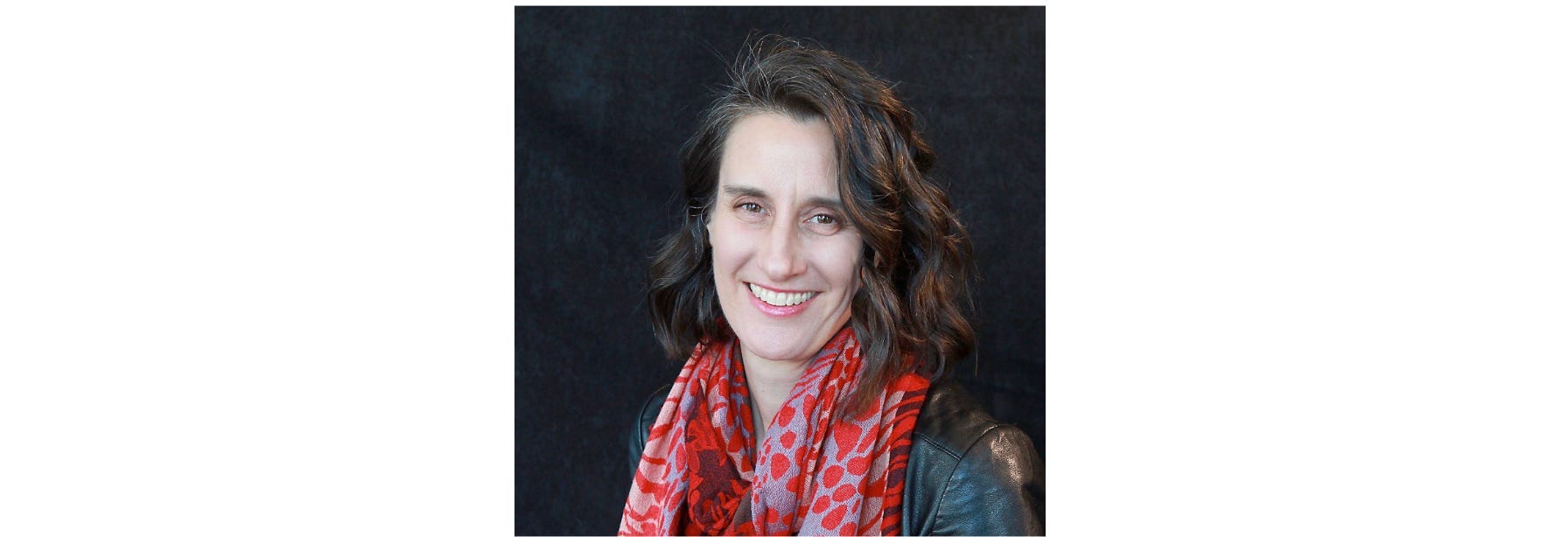
Reverend Barbara Ann Michaels is a New York-based interfaith minister and performance artist known as the "Jester of the Peace." She combines humor, art, and spirituality in her work as a wedding officiant and event creator. She founded the Humor Arts Museum and House of Holy Humor, using interactive performance to promote wellness and social connection.
Barbara, thank you so much for accepting my invitation. It is a pleasure, an honor, and a joy. I start all my conversations with the same question. I borrow it from a friend of mine who lives here in Hudson. She helps people tell their story. I borrow it because it's a big, beautiful question. I over-explain it because it's big. Before I ask it, I want you to know that you're in absolute control. You can answer or not answer in any way that you want. It's impossible to make a mistake. The question is, where do you come from?
That is a beautiful question. It has mystical applications, artistic applications, geographical applications, mystery of life applications. It's very interesting that you asked me that today because the other day, my cousin who lives in Portland, Oregon - and I live in New York City - and we hadn't connected in a couple of years. She messaged me in the middle of the night, asking me about our family heritage.
Half my family is from Italy from a bunch of generations ago. She was asking me about our family heritage, saying to me that I had been the keeper of the flame. First of all, I was honored to find out that I was keeper of the flame. Then we ended up having a two-hour conversation in the middle of the night, up until about two in the morning, about our family - why people do what they do and where we come from.
Is it even possible to know where we come from? There's only documentation for a couple of generations back from one side of that Italian family and not the other. One of the things I've been thinking about recently is feeling, as an American person with European heritage, that I was dropped from the sky onto New Jersey where I grew up, without a long connection to those many generations of European people.
On one side, the Italians; on the other side, the Eastern Europeans. After my grandmother passed away at age 99 and a half, I took the time to go to the one place on earth where I actually know that some family of mine comes from, which is Montesarchio, Italy. It's a hill town of 13,000 people or so in the Benevento region. I went there, and it was the first time that I could imagine relatives of mine walking in a place where I was walking. It was very profound to feel a sense of physical history, because the United States is such a new country, comparatively. It wasn't a feeling that I was used to.
I also have had the experience of not feeling fully at home anywhere ever. I do have nomadic tendencies. This conversation with her was very beautiful to me because we were exploring what our family heritage is and can we get Italian citizenship? What would it be like to be Italian-descended people going to live in Italy after a few generations didn't do that? That is only one part of where do I come from.
What did it feel like, that moment when you were walking where you could imagine them walking?
Although the other night - it was my birthday - I was in Newark, New Jersey, where some of these Italian people came from Italy. I know that my grandparents partly got their start as a couple there. I was imagining, "What was it like? Did they look at this square? Did they see that church? What was still here when they were here? Am I walking on a spot that they would have walked?"
Not having that feeling be familiar because I've been super nomadic and lived all over the US for all of my adult life - this is what I did. I don't speak Italian because I come from the generations where it was "don't speak the language of the old country, we're just going to forget that language and be American now." There's definitely a loss there.
When I was in college, I took an Italian class and I wrote my grandmother a letter in Italian, and she was so happy. Then I wrote her another letter in Italian and it was beyond what she remembered. She said, "Don't write me any more letters in Italian." I thought that was pretty funny.
Going back to Montesarchio, Italy, which is what you actually asked me about - I translated using Google Translate this message that said: "Hi, I'm in your town. I know for sure that I'm related to some people in your town. These are the names of my relatives who lived here 150 years ago. If you can help me find my family, that's great. Thank you so much. I'm so happy to be in your town."
I would show people this message on my phone in Italian. They would start talking to me in Italian and they would pick up their phone and say "Del Giaco" and "Del Sesto," which are my family names. They were trying to find my family thanks to Google Translate. Nobody found my family, but I know that somebody there is related to me because it just has to be that way.
What made that important to do?
She had passed away and I had never been there. I actually had never been to Italy. It was the first time I went to Italy. I went to Venice Biennale and had this extraordinary experience in Venice of feeling like I was in a place where life moved at the speed of people, not technology. First of all, I go to Venice and the whole experience of being a human being gets dialed back to pre-technology because you can only get around by boat or feet. There's no cars, not a bicycle, not even a roller skate - at least not that I could find.
I watched people in cafes talking to each other and not being on their phones because life was moving at the speed of people. Then I went even further back in history going to Montesarchio, Italy, in this little hill town. I didn't know that on one side of the hill, there's a very smooth road to get to the top of the hill where the little castle is that my great grandfather had some kind of connection to.
On the front of the hill, there's all these windy little paths and old stone houses. I walked all the way up through all the little twisty turnies, only to find out that there was a clear road on the other side. One of the funny things when I got to the hill is there was a sign - and for many years, I've been saying to whoever I happened to be in love with at the time, "This is a kissing spot. We should kiss on the kissing spot," just as a fun game over many years.
I got to the top of the hill in Montesarchio, Italy, and lo and behold, guess what there was? There was a sign, and it says in Italian, "kissing spot." I felt like, are you serious? I've been carrying around the kissing spot on the top of the hill in Montesarchio, Italy, with me everywhere I go into all the loves that I've had. And I was representing my family's historical kissing spot. It was totally delightful.
Did you have an idea growing up of what you wanted to be when you grew up?
Yes and no, because my mother took me to a program called Creative Theater Unlimited at McCarter Theater in Princeton. The program would tell us a story - it was a theater program for young people. They would tell us a story and then they would take out all of the details, take out the character names, take out all the lines, take out all the specifics and just leave us with the plot points. Then we would retell the story with our own characters, our own lines, our own details.
I thought that was quite brilliant because it teaches you how to have a story structure, but it also teaches you to improvise. I realized decades later that everything I do artistically is an improvisation on the structure, which probably came from that experience that then stayed with me for many years.
All of the artwork that I create has very simple structures that are audience participatory, like the Love Letter Lounge Post Office, where people come and write love letters to clear their heart or cheer their heart. "I Vote for You" - the voting booth that I was…