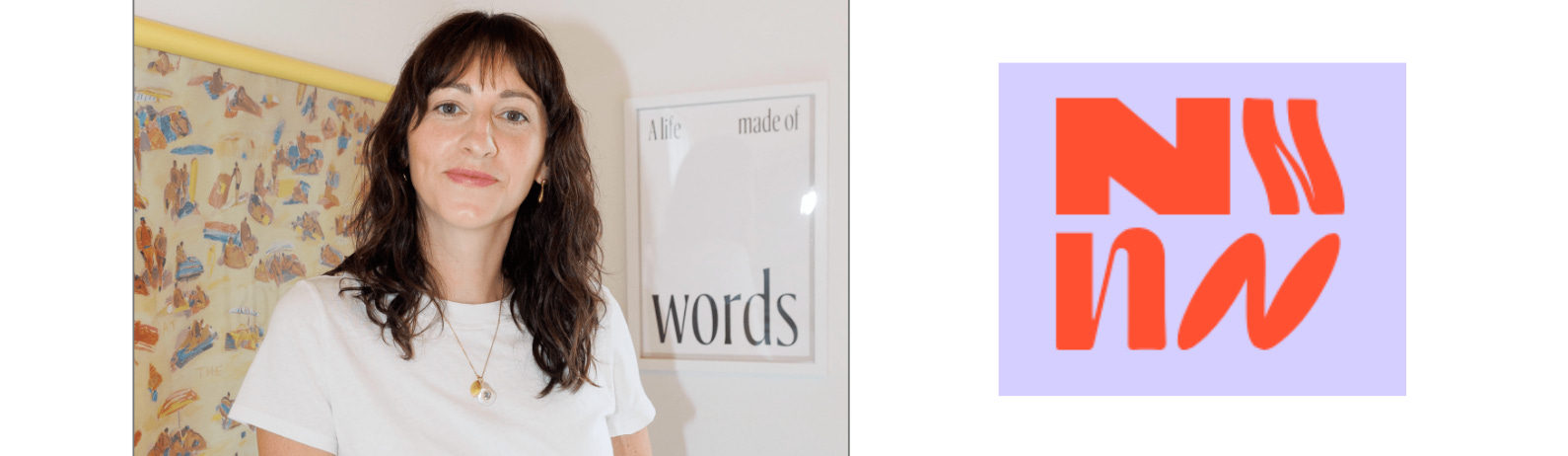
Carissa Justice is a copywriter, creative director in Atlanta. She is the founder of Nimble Creative, a brand studio focused on voice, naming, and storytelling. Her clients have included Google, Strava, Figma, and ThirdLove. She previously served as Verbal Lead at CharacterSF. In 2023 she founded The Subtext, an online publication and community dedicated to elevating the craft of brand language.
So I start all these conversations with the same question. You may or may not know this, but it’s a question I borrowed from a friend of mine who helps people tell their story. And it’s a big, beautiful question, which is why I ask it, but because it’s big and beautiful, I kind of over-explain it like I am doing right now.
And so before I ask it, I really want you to know that you’re in total control and you can answer or not answer any way that you want to. And the question is, where do you come from?
All right, I think I can start off with the more literal interpretation of that, which is born in Vermont, raised in Massachusetts, have lived all over South Carolina, Atlanta, California for 11 years, and then back to the South. But I think maybe the more emotional response or that might tell you a little bit more is I’m the youngest of three raised by divorced parents.
My dad was like a conservative, Republican pharmaceutical salesman, and my mom’s like a super hippie, liberal animal lover, social worker. So I feel like I got raised by two different worlds, both people that I love dearly.
And I think when I think about that question, it’s fun to think back on it, because I think when I grew up being the youngest, I had a brilliant older sister who was so smart, and then I had a really athletic older brother. So I feel like they had their things and I never really had my thing.
So I did a lot of things and tried to blend in and be the peacemaker and be the kind of easy, and I don’t want to say easy kid, but always was like, I don’t know what I’m doing. I don’t know what I’m good at. So I’ll have fun along the way.
And I think that that’s been a bit of a backdrop of my whole life. It’s doing different things and seeing what sticks and seeing what I like about it and not ever really knowing where I’m going, but trying to enjoy the ride as I go.
Yeah, so much I want to ask about, I guess the first is really Vermont. What does it mean to you to be from Vermont? And are there moments when you feel particularly like a Vermonter?
Yes, I feel like I love being a Vermonter. I only lived there until I was about five, but then my mom moved back up when I went to college. And so that’s always been like home base now for many, many years.
It’s the most beautiful state. It’s so peaceful. I feel like there’s, you could zip me down the middle and half of me belongs like off-grid in the country riding horses and wandering in tall grass.
And the other half belongs deep in a city in the grit and the grime with that rougher kind of hustle edge. And I feel like both feel right at the same time.
Yeah. Yeah, where in Vermont were you when you were there?
I was born in Brattleboro, but my mom has a farm up in Northeast Kingdom outside St. Johnsbury. That’s a beautiful place. She’s a 72 years old and still a competitive horseback rider.
She has horses and cows and chickens and sheep and whole menagerie.
Yeah. What did young Carissa want to be when she grew up?
I wanted to be an in living color fly girl for a little bit. I wanted to be on SNL. I wanted to be, I don’t know.
I think I was very influenced by whatever I was watching on TV. I think the only thing I knew in school that I was decent at was writing. So I think I always followed that because I was so, so tragically bad at math.
Dumb, dumb at math. And science was really hard. So I was like, I guess it’s English for this girl all the way. But I don’t think I knew what I wanted at all.
Can you tell a story about that? About, I guess the way writing showed up early for you?
Yeah. Well, I think my mom was doing, went back to school when I was young. And got her master’s in social work.
And so I feel like she was always writing papers and clacking away at the computer. So I think I saw her, she was very, I think she was quite the writer. Even, I think she really enjoyed that part of her studies.
And so I think that infiltrated me a little bit. And then I was not the best test taker. I was really bad at memorization.
And so I would revel at a paper project because I’d be able to do it in my own time. And so I think that was my only source of feeling like I was okay at school. So I think that, I remember writing papers and being like, oh, okay, I’ll at least get a B because I know I can nail this.
And then if I mess everything else up, that’ll be my saving grace. So I think I found comfort in being pretty good with words.
Yeah. I really identify with that, how painful, impossible math and science, they didn’t seem to enter my consciousness in any meaningful way at all. But words were very easy.
Yeah. And I think, I didn’t know it at the time, but my grandfather was a copywriter and I didn’t even for a good part of his career. And my grandmother was like an editor and also a writer.
And I think, I didn’t know, when you’re a kid, you don’t really dig into your lineage as much. But as I got older, I was like, oh, that’s so interesting. Because I always thought they were artists.
My whole mom’s side, they’re so creative, so artistic, and there’s art everywhere. And it’s all done by people in the family. And so I always like, oh, they were artists, but they were actually writers. And they also happened to be really good at art.
Wow.
And so I think I’m probably lucky for what I was maybe given a bit naturally on that front.
How did you come to discover that they were copywriters? Given what you’re doing now, that’s pretty beautiful.
I think when I was in college, I was trying to figure out my major. I think my mom, I went to see my grandmother and cause I did all my internships in New York and I went and visited her. She lived outside of Westport, Connecticut.
So I would take the train out to go see her and my mom met up with us and then I got to, they just started talking to me a lot more about her life. And I remember just being like, oh, wow. That’s so cool.
But yeah, even in college though, I don’t think I knew, I didn’t know that copywriting was a thing.
So- What were they doing? What kind of copywriting were they doing?
So my grandfather did, he was the copywriter to the art director in advertising. So we worked for a local advertising firm and just pitched ideas to local companies.
It’s funny, I just completely randomly ended up watching just because of the queue happened that way, watching the premiere of Mad Men. And so that whatever you’re bringing into this conversation, you just got all this imagery from that show.
Have you watched it, the whole thing yet?
Yeah, I watched it when it was- Yeah. So I hadn’t revisited it in a while and it was amazed at how good it felt to watch. I was a long time ago.
I don’t even know when that premiered, but it’s beautiful. That first episode is amazing. They’re all so young, of course, but it’s amazing.
It’s amazing show. I’ve watched it twice and the second time was even better because I think you have such a, I don’t know, you’re not waiting to see what happens, but you just get to see how good they play it out and the different storylines and the references. I don’t know.
It’s such a genius show and Jon Hamm is my forever number one.
Yeah. Yeah, he’s something else. Yeah, and it’s funny, even in that first episode, not to get to derail a little bit, but they have a researcher, it’d be selfishly, there’s a researcher that comes in and they’re trying to pitch the tobacco client and they have this woman with a German accent come and represent Freudian insights into the behavior.
And Don Draper is like, “What the f**k?” They’re all like, “What are you talking about? That’s insane.” They ridicule her for bringing this psychological insight into the conversation. That’s pretty funny.
That is funny. Did you feel a little bit hurt in that moment?
No, I think I’ve been around long enough to know that everything’s true all at once. You know what I mean? We all hold different things with a different level of need or attachment, I think. And so, he’s as right as she is in a way. And the solution he comes up with, toasted. You know what I mean? It’s the Lucky Strike thing where he sort of, he avoids, the creative solution is avoiding the psychological conversation entirely and coming up with something brilliant. Yeah. It’s cool.
It’s really cool.
Anyway, so now, where are you now? Catch us up. Where do you live? What are you doing? What are you up to?
I live in Atlanta, Georgia. I moved here in 2021 and it’s wonderful. I run my own branding studio and I’ve had it for about nine years.
I have a business partner who’s wonderful and a small team and we do strategic branding. So, the crux of the type of work we do is around articulation. And so, clients come to us when the biggest need is articulating value or particular technology or challenge.
So, while we do full-scale branding design strategy and even executions around websites or packaging or whatever, I think what our sweet spot is is around finding the right words, finding the right language to articulate something that’s tough to explain. So, because of that, we work with a lot of emerging tech or work with bigger companies navigating, whether it’s a pivot or a change in their business or an expanded set of customers, it’s like, okay, how do we get from here to there and make it make sense and understandable to people? So, that work is very custom fit for the things I like to do and the challenges I like.
And then on the other side, I started a publication called The Subtext, which is about elevating the craft of writing and strategy within the branding and marketing world. And that was started selfishly because I was sort of feeling down and disillusioned about the state of the industry and how many awards and publications were talking about logos and design and advertising and no one was showcasing and talking about the other brilliant people that are in the work. And so, our community is mostly made up of strategists, namers, writers, researchers, but also designers and marketers and business folks that believe in the power of language and its role.
So, those are sort of my two avenues. And then personally, I have two boys, 10 and six, and that’s also a big part of my life.
I wanna talk about, well, two things, the word, articulate. You seem like the right person to ask about that word. You’ve used it a bunch of times. And I remember when I was coming up, my mentor, our project objective was always to explore, understand and articulate the thing. And it was always very clear what that was. But the way you were using it made me curious about what that means to you. What does it mean to articulate something?
So, to me, it means, I think you can’t articulate something until you understand it. And so, I think a big part of the work that we do is trying to get our arms wrapped around our clients’ challenge. And that’s through a lot of conversation, research, diving deep into their world.
And then, I always think it’s like untying a tangled up knot of, because there’s so many things you can say, but articulation is about finding the things that hold the most value and understanding. So, to me, I think articulation is a process of crafting, you know?
I love that you were talking about the subtext as coming out of maybe a little bit of frustration with how, and I think this is a fair assessment, how verbal creativity is maybe undervalued as opposed to visual creativity in the world of brand and marketing. Is that a fair description?
Yes, yes.
So, what is the role? How might we properly respect verbal creativity in the role of brand building?
Pay us. No, I’m just kidding. Pay us, hire us.
No, I think it’s not about, to me, it’s about getting a seat at the table with the other disciplines. So, it’s not about one being more important than the other, but I think to talk about a rebrand project, for example, and go into every detail of their identity around motion, logo, typography, color, and to then not discuss all the words and ideas that underpin that brand, it feels like a one-sided conversation that didn’t encompass so much of the work. And so, that’s where my frustration started, which is even as a studio owner, I’d be well, I wanna submit work, but I don’t wanna talk about the logo.
And honestly, the hardest part of what we did was figuring out the positioning of this company. And so, I think there is a challenge that I do understand about elevating the other side of the work, which is strategy is often feeling quite proprietary or secret or something that a lot of companies don’t necessarily want to externally promote or show. But I think when you’re talking about the language that shows up within brands, whether that’s not in ads, but on your website or even internally, the types of the way that you articulate what you do, I think is as important within your brand presence as a logo or a color palette.
So, I think it’s about finding parody and game recognizing game on both sides. And I feel like we started to, I don’t know, I feel like there’s been a bit of a change within the industry where I think people are realizing how important strategy and writing is, especially in the dawn of, or I guess the hyper cycle of AI that we’re in. So many disciplines, a lot of things that people have been precious about are sort of changing a bit.
And I think what comes out of it is what is the idea? What is the real story that we wanna tell? And then how do we do that in the best possible way?
I think has started to rise to the top, at least in my mind. I don’t think that the subtext is responsible for that, but I think that it’s a good way for us to ride.
Yeah. Yeah, well, how has that changed the role of, or the need for more verbal clarity? I mean, I guess you’re taught there’s two things too.
There’s this idea that strategy is words, right? It’s being very clear and disciplined about the language you use and positioning. It’s all pretty much a linguistic exercise.
Totally.
And then there’s also, then there’s the verbal, there’s the creative side of the language on the creative side. How has the role of that changed? And I’m totally naive on this, in the different media environments we’re in, is it more important to have a clear verbal identity and how do you help clients understand what it can do for them?
I think what’s changed is that there was such a focus for so long on, I think what happened was brand became obvious, the way that your company looks can impact the success of it, right? The Nike, the Airbnbs, the big businesses that showed that high design, high craft, high intention can move the market in your favor. But then I think what happened was, everyone went through a design exercise and a brand exercise, and then it wasn’t there wasn’t all these brands that hadn’t been touched or they looked outdated.
It was sort of everybody got to a similar aesthetic level, even in B2B now. I mean, the rules are so different. So I think when you think about branding, it’s not it needs to look cool or it’s an aesthetic exercise, but it’s the market is so noisy.
There’s so much competition. AI makes it so much easier to start companies, to compete quicker, that understand, crafting a clear and compelling story that people wanna choose you over somebody else. I think is the thing that’s changed.
That I think the value of that, I think has gone up.
Yeah. What do you love about the work? Where’s the joy in it for you?
I think it starts with people. I love working with clients and I love working with my team and collaborators. I think the start of a project, it has so much energy.
I love that feeling of being terrified, being oh God, what did I say I would do? I don’t know if I could do it. Yeah, this is the high of winning a project and then the low of being okay, now I gotta do all this stuff that I said I would do.
But I think the working with people is always my favorite part. And then I think that over the years it’s changed. I used to love writing, I would love a manifesto or I’d love to give people goosebumps in a meeting or try to crack the perfect sort of line that would rally everybody and get them excited.
And now I feel like my joy comes from the wayfinding through it. I think the positioning part is, it used to make me too nervous to enjoy it. And now I think I’ve done it.
I’ve gotten my reps in enough to where I think the strategy is more fun because it is, it feels like the most rewarding once you get to the other side.
Yeah. How do you think or talk about, was sort of kept, caught by what you just described, the wayfinding until you get to the right place. How do you think or talk about what a good brand needs to be or a good positioning needs to be?
I think it’s different depending on industries, but I think in my view, I think we are moving away. I don’t think it’s about finding white space or finding what somebody else isn’t doing. I think it’s about looking deeply at what you’re doing and what you have and what makes it special and trying to pull that out in the most compelling way.
Because you can find white space or do all this research and say, this is what customers want. But if that’s not the business you have, that’s not that helpful. Because I don’t, there’s definitely been times where we, our strategy influences business significantly, but there’s only so much businesses can do, right?
They have to build off their strengths. So I think that to me is the wayfinding is where are the strengths and how can we make sure that those are amplified and the business can then prop those up. And then how can we build the story around that, that makes it feel like the most desirable thing that people want.
What’s the role, if any, that sort of qualitative plays or research plays? Let’s say research plays and then if it plays a role qualitative within it.
I think it, ideally I wish it played a role always. I think the hard part about research is that it takes time and money and increasingly clients don’t wanna wait. I feel like branding is one of those things where after they’ve exhausted every other business conversation or sales solution or whatever, they’re finally okay, I guess we do need to think about this from a brand lens.
And then they’re at that point behind the eight ball it often feels like. And they’re we needed this yesterday. And it frustrates me to no end because I think, well, you’ve already waited this long, you’ve already waited too long and now you wanna rush through it.
But I think with that aside, I think research can do a lot. I think if you have an active customer base, if you have more of a mature product, I think research comes in from figuring out how people are using something or engaging with something, or what are they loving or what are their hate about it or why they didn’t want it to change. So I think research can be helpful on that end.
And then on a newer business, I think research is important on the cultural side of things. What is this business, what gap is this business gonna fill or what need are we trying to serve or what moment are we building on in culture or in the country or the economy? How can we do our work in terms of research and sort of figuring out the context of the business?
But it depends on whether it’s new or mature, I guess.
Yeah, and how would you describe the way that you learn culturally or you’ve got a project or a client, you have a, maybe you don’t have a way, but I’m curious, how do you feel like you learn?
That’s a great question. I don’t know if I’ve thought about this that much. I’m very your classic ADD brain where I have a million tabs open.
Usually when I start a project, I read as much as I can haphazardly. I don’t stick to, I don’t have a well-oiled machine brain where it’s I do this and then I do this and then I do this. But I think I try to get, I try to read what I can about the business from what they’re saying.
And we often get a lot of documents and then I try to zoom out and be okay, what is everybody else saying about this? And does it feel incongruent with what they’re saying? So I think so much of my days is reading and wandering around the internet for information.
Now I do a good amount of research and wayfinding with certain AI tools like Notebook LLM or Clod, but I can only get you so far. Cause I don’t, I can’t, a synthesis is helpful, but you have to get it in your brain first. So it makes the tidy recaps easier, but I still need to look at all this stuff.
Can we say more about that. You drew a distinction between getting a synthesis from Clod or Notebook LLM, I guess, versus getting it in your brain is what you said. What are you pointing at?
Well, I think that there’s a misconception that if you can do research through AI and it just accelerates the process, I think it accelerates the synthesis of it in some ways, because you can do, I need to still read the things. I can’t just get a recap of all the things. Because then I, especially as somebody who’s taking more of maybe a heightened approach to language, I need to see what they’re saying in their docs.
I can’t get a recap of it. I need to see the language they’re using.
Why?
So I, because that’s often a big part of our mandate is to be intentional with the language and see what’s working and what’s not and how we would shift it. So if I get a truncated output from an AI, I won’t actually, that’s not actually that helpful to me. Again, I think when I synthesize my findings, if I agree with what some of the things that I’m using, then I’m great.
Yeah, I agree with that. But other things I feel like I have to work through on my own.
Yeah. I mean, I didn’t, I was very curious about that. I mean, because I feel like this line between what we ask or allow AI to do for us and what we do for ourselves is, we’ve been thrown in this very weird situation where we can allow it to do quite a bit and it will do whatever we ask it to do very easily. So it’s not gonna defend those boundaries.
So I’m gonna have to defend the boundaries between what I do. Have you found that to be the case or what broadly, how do you feel about, or I guess what’s your experience been incorporating these AI tools into your process?
I think it’s been a mixed bag. I think from a research standpoint, I find it incredibly helpful because I don’t find that I have the most organized brain when it comes to, I feel like I’m often overwhelmed by the amount of documentation that we’re given. So because I can house it in something like a notebook LLM, which is essentially like a closed portal, you can add certain things to a project and then it only, you can query it.
And it only takes from the documents within this portal, which is nice. Because then it’s not like it’s taking from all of the internet and you’re what, where did you get that? And I like to be able to search within the information I’ve been given for answers, especially when I want to find something specific or get a specific quote.
In some ways, I think it’s definitely made parts of the process more efficient and gives you easier ways of accessing the material. In other ways, I feel like I really like it when you get more to the execution standpoint, you always have to feed it your idea. I think if you want it to give you an idea, I don’t think it’s good.
I’m thinking more about ChatGPT or even Claude. It’s I feel like I have to have a point of view. And then once I have it, I think it’s helpful.
Sometimes it’s helpful in the sense where I’ll be give it a rough draft and then it gives me something back and I have even deeper conviction over it not being right. And then I’m okay, why? Now I know what more of, I feel more convicted now that I see somebody else try to play this out.
And then other times I’m sweet. I like some of that. I can build off that. And I don’t feel like it’s ever a linear thing. It either fight with it or it feels like it’s giving the work a boost.
I dug around a little bit in stuff you’ve written before. And I wanted to maybe shift. Oh, I guess I’m curious about, before I get into that, when did you first discover that you could make a living doing this? Do you have a recollection of really encountering this as a jobby job?
A jobby job. Yeah. I mean, I had a very circuitous path.
I was an assistant sports editor, my college paper. So I made a little bit of money doing that. I only knew journalism was a thing.
I didn’t really know you could be a copywriter. I knew you could do advertising, but I didn’t know there was another side of being a copywriter, which is more like a brand writer. So when I got out of college, I did wanted to be a sports writer.
And then that was weird. And then I wanted to be a music writer. Anyways, I wrote about a lot of different things that I was interested in, made a little bit of money, but not much.
I was actually convinced for a while that I wouldn’t make money at it. So I became a massage therapist. So I had a different, a day job.
So I could take on all these really poorly paid writing jobs. And that’s how I got my first job. That’s how I ended up moving to San Francisco.
I made money, more money doing that for a few years and took on really crappy writing jobs, but they got me a foot in the door. And eventually I got my first big gig at Shutterfly as a full-time in-house copywriter. And I made so much money at the time.
I mean, it wasn’t so much money, but to me it was so much money. And that was my big aha moment that it was oh, this is made for me.
Nice. And you talk about voice and some of your, how do you talk to clients about voice and what makes a good voice, what it means?
I think my opinion has changed over the years on voice. I definitely think voice is important. I think it, but I think what it used to be was having it feel unique and ownable and consistent so that people could understand, see something and know it was you because you had created this vibe and a way of articulating what you do that felt recognizable.
To me, that’s what voice used to be and still is in a large part. But I think to me, voice comes all back to strategy. And to me, I think more about what is your point of view?
What do you believe that others don’t? And what is your unique take on your industry or the value you deliver? I think once you have that, which is to me the harder nut to crack, how you then express it should feel a little bit more obvious.
And I used to really beat the drum of consistency around voice, but I think it’s such a different world. Brands have to constantly be evolving and moving. So I focus a little bit less on consistency as opposed to trying to really focus on what you do best and what your point of view is and making sure that’s coming through as opposed to cleverness or pithiness.
Yeah. What are the examples of brands that have done this really, really well? And I’m thinking for whatever reason, maybe when we were talking about the visual branding versus verbal branding of the great blandification of visual identities.
And maybe you were talking about a little bit of the consistency that there’s been a homogenization on some level of brand identity. I think we’ve come out of that quite strongly, but what examples are there of brands using voice really powerfully and strategically?
Well, there’s so many. I think, I mean, I think people love to talk about the big ones because they were what started, I think, the drive towards having a really ownable voice. People still imitate Apple all the time for good reason.
They really birth the crisp and clever headline. They use punctuation with such impact that I think that still reverberates today. And then you have the really chest beating, feel it in your heart, Nike anthematic kind of voice that can flex in so many different ways for all their different product lines, but you still feel it’s Nike.
And then you have Volkswagen just always has this pulls at your heartstrings, reminds you why safety matters. It’s this really engaging, but emotional storytelling that I think has really been consistent and really well done over the years. So this is the big ones that come to mind, but then there’s really cool, even brands like Twitch, right?
They speak in the language of gaming, right? And they get their user. And so they’re not polished lines or it doesn’t feel as much like marketing as it feels more like something you would read within a Discord channel or something.
So I think, and WhatsApp does a pretty good job of that too, speaking within the vernacular of their product and within their customer base. Or there’s really beautiful, Alison, who’s in exposure therapy to this beautiful brand with her studio, Forner, where she works. It was called Uma and it was mushrooms or something, but it was so drippy and sexy and every sentence just felt seductive and you wanted to try it.
And it just, I don’t know, there was something so beautiful about it. I always think when I see stuff, my first litmus test is if I feel a pang of jealousy that I didn’t write it. So stuff like that, I just think there’s so many, there’s so many great voices.
And then people love Duolingo because mostly because their social voice, which is actually quite different than what you see in their product, which is quite functional actually. But they have this sort of caricature and this mascot that has permission to do things their own way. And I think it just adds a bit of a fun foil to that brand that builds on the storytelling and the voice in cool ways.
Anyways, I could probably go way too long. I could do a whole hour on just talking about examples, but there’s so many. And I think it shows that I think people understand it.
And it’s, I just talked to a writer named Nick Parker for the subtext, who’s a sage when it comes to voice. And we were both agreeing that it used to be that we’d have to try to convince clients that voice mattered. And we’re post that.
I think clients get it because you see it out in the world. If you don’t have something, if you’re not saying something in an interesting way and you’re not getting attention, it’s such a waste of money. And it’s such a waste of money and airspace to be boring or bland.
So it’s sort of, the problem isn’t trying to sell it now. It’s more, oh, there’s a lot of good stuff out there.
So yeah. Well, that’s great. I was gonna ask that question about how, I guess selling it into clients. What do you think explains or how do you, yeah, how do you explain that shift? Is it just hyper-competition? Is it a very banal explanation like that? Or what changed?
I think it’s, now it’s, I think it’s about reminding clients, you have to explain what you do. So you might as well do it well, right? You might as well have, really understand what you do.
And it’s amazing how many projects I get where they really don’t know how to talk about what they do. And they’re not even really sure what’s most important. They have a list of features.
They have a list of things that their service or product does, but they don’t actually know why or what it’s helping. And so I think to me, it’s really about reminding clients and doing a bit of that therapy around, nobody needs this feature. What do they need?
What, why, or why would they need that feature? Or what does that help them do? And I think what you get is a lot of what you see today, which is to give you more time back in your day so you can get back to doing what you love.
So you can, AI powered blank, so you can do more of this other thing. And it’s such a bizarre argument or more seamless, blah, blah, blah. And it’s really, it’s a lot of words to say nothing.
And so getting clients to cut that s**t and be, we have a few words here. Can we say something that actually gets us somewhere without saying nothing? And I think it’s really around the inability to commit.
They don’t wanna commit. They wanna be, they don’t wanna pick a lane cause they’re all in one. They do everything.
Oh yes, yes.
That’s the biggest issue.
I have two quotes that I always, I’ve probably bored you with before and I’m sure you have counted them just that you’ve brought up that make me think of. One is that the biggest problem with communication is the illusion that it has occurred. Have you ever heard that?
Yeah, I love that. That’s so great.
That one and then what you’re talking about too is this woman, Fiona McNae, who ran, I think it was called Space Doctors, a semiotics outfit in the UK. And she has a TED Talk. And the title is taking responsibility for being understood.
And I quote that line all the time because we never, we so rarely do it. Do you know what I mean? We so rarely actually do take responsibility for making sure that things that we say are actually understood by whoever’s on the other side of it.
A hundred percent. I mean, I haven’t heard either of those and they’re amazing. I should pocket them and use them myself because I think it does, it’s shocking how little is communicated in all of these communications.
It’s more about obfuscation and not taking responsibility or not promising too much, but also promising way too much. The willingness to promise that you’re bettering the world, but not promise that you’re gonna do something X times faster or it’s pretty interesting to see. And I think that that’s part of the legal landscape that we find ourselves in.
It’s part of the marketing landscape we find ourselves in. I think also the hardest part is what gets somebody’s attention is often not what helps people understand something. And so I think we often have to think about those in different ways.
So an advertising moment deserves a bit of a different brief, right? As it should, which is, there’s so much coming at people. What’s gonna make somebody be, what?
What’s that? And then click on it. But then the responsibility really does need to be there around, this is what we do.
And this is what you’re buying. That I feel is the part that, yeah, that I think it’s nuanced. And I think a lot of people wanna simplify it because they are just, no, just, this is what we say.
And that’s what we do. But it needs to be a lot more layered than that.
This last question, cause we’ve sort of coming into the end of time. And it reminds me of a conversation I had here with Grant McCracken, who’s a cultural anthropologist guy. And he makes this really, I mean, all of his arguments are very compelling but enthusiastic.
But this idea that brands, he talks about multiplicity. That we came up, I came up in a time when brand was consistency was the thing, and it was a pattern and just all this stuff. And we’re just in a totally different landscape now.
And brands can be a whole host of different things in different contexts. And there’s so much freedom in terms of how brands can show up in the world. And you talked about social voice versus product voice.
And I’m just wondering, how do you think about the idea of multiplicity as it relates to brand and brand voice?
Yeah, I mean, I think I agree with him in the sense that, yeah, I don’t think it’s about consistency. I don’t think it’s about following your brand guidelines. I don’t think it’s about saying the same thing over and over again until the market understands it.
I think it’s about multiple things. So it’s what is true? What is unique to you?
What is your very specific point of view? And then what’s contextual, right? So what is happening that you can speak to?
And I think that’s the part that deserves that sort of ongoing negotiation around language. There are things that shouldn’t change a lot around that, what we do and why we do it and what we believe, they can be deepened over time, they can be expanded over time, but there should be some sort of core thing to hold on to, but everything else needs to be very much willing to react and excite in new ways. And I think it just depends on what you need it to be.
Do you need it to be something that somebody can’t live without or do you need it to be something that somebody desires? Depending on the industry, those two things are different. And so they require different ways of showing up.
And then I think if you’re not responding to the world and what’s happening and whether that’s in your market or within your industry or within culture, you’re just missing such an important layer of communications. Multiplicity. Layered, nuanced.
More words.
Any other buzzwords we can get in? Synthesis.
Teresa, thank you so much. This has been a lot of fun. I really appreciate it.
Yeah, thank you for having me.