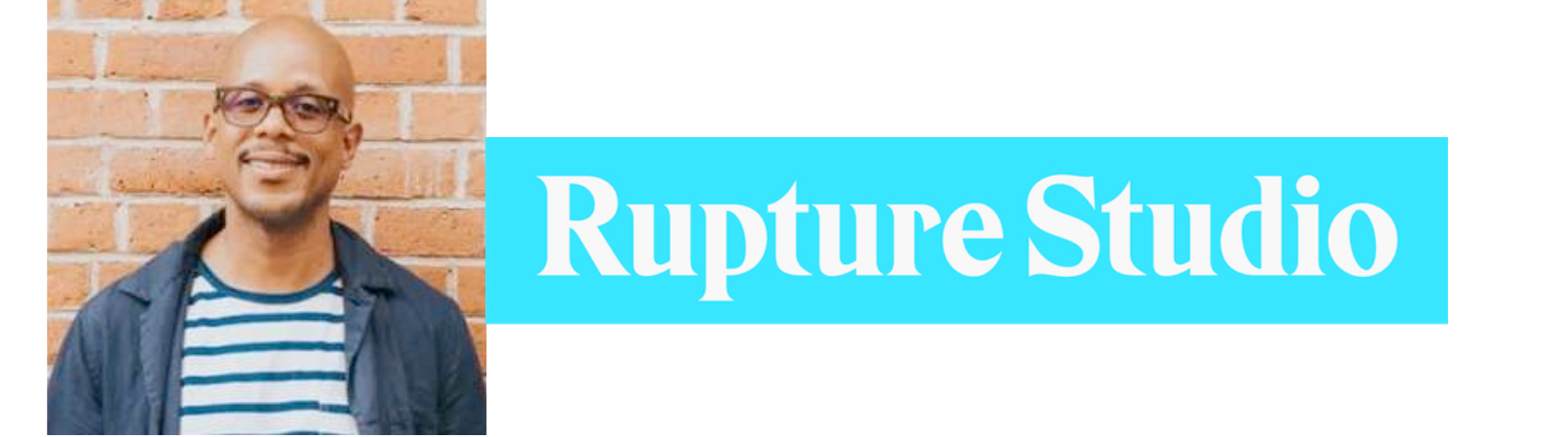
Chuck Welch is the founder and chief strategy officer of Rupture Studio, a culture-led brand consultancy. He brings deep cultural insight, strategic imagination, and brand experience with Nike, PepsiCo, Dove, LVMH and others to help organizations connect authentically with fast-moving audiences.
I start all these conversations with the same question, which is a question that I borrowed from a friend of mine. She’s an oral historian. She helps people tell their story. And so I learned this question from her, and I use it in my own work, too, to start conversations because I haven’t really found a way of getting into a conversation that’s more honest in a way. And so I use the question, but I caveat it extremely. I over-explain it the way that I’m doing now because it’s a strong question. So before I ask it, you can answer or not answer any way that you want. And the question is, where do you come from? And again, it’s impossible to make a mistake. You can answer or not answer any way that you want.
Where do I come from? That’s a good question. I guess Mama Africa, right? Like all the rest of us come from. And if you want to connect it back to Mama Africa, you connect it to the drum. When you connect it to the drum, you connect it to hip hop. So I guess that’s my grounding identity, so to speak, that kind of filtered and still filters my world to some extent. It’s beyond just kind of the four elements. I guess you think about a worldview, right? Especially when you connect it back to advertising, which is the field I guess you would say I’m in—people like me aren’t necessarily represented usually. And just like hip hop, we were underrepresented and still are. We came from the outside and kind of had to create our own way and culture. And if you want to parallel it to brand communications, advertising, whatever you want to call it, in the business now—that filter has shaped my understanding of art, of business, of aesthetics, of connection and collaboration, of seeing the way I see. I think it’s shaped through that lens.
And I think the parallel thing is that hip hop remains potent. Even though I may not listen to it as much as I do, the aesthetics of it and the spirit of it still moves me. And I guess you could say the parallel is that it’s always evolved just like this business and just like my mindset and the way I show up in the world and the way I serve my clients. So the kind of parallels, right? You got a base of a culture. You got a base of knowledge. And it’s like, I compare it to almost like a house. Foundation doesn’t change. Hey, but we’re going to swap out a room here. We’re going to decorate differently. We’re going to do an add-on. We’re going to add a deck on the back. I’m a suburban guy now. So I give you this parallel. I’m going to add a deck on the back. We’re going to change the paint colors. We’re going to invite some people in sometime. You’ve got a full house, sometime you by yourself along with your own thoughts.
So the way I think about hip hop is kind of constant change, constant change, but there’s a core there, right? It’s kind of the thing I tell my clients: the difference between timeless and timely. So there’s timeless things that matter in the culture that I come from, but then there are things that are always of the day and the things that are pointing to the future.
So, to the long-winded answer, that’s kind of where I come from through that worldview. And I’m not just talking about the art of hip hop or listening to the music. It’s like the outsider spirit, entrepreneurial spirit. It’s the make-something-out-of-nothing spirit. That’s endemic to the culture that I come from. And that’s not just hip hop. That’s Black folks. You know what I mean? And they’re not one and the same, but there’s an overlap there.
Yeah. Can you tell me a little bit more about—we’ll talk about work and brand and advertising and all that stuff—but can you tell me a story about that outsider spirit or Mama Africa or the drums or hip hop, like before you discovered this world and got into Jobby Job land? What was it about for you?
I don’t know. It was about kind of making yourself, right? That culture allows you to create yourself, just like the best cultures do. Like you can have a palette of ingredients, whether you’re a writer or break dancer. We all tried to break dance at one point or write graffiti. I never wrote graffiti, but we all try to break dance or rap or DJ or whatever the thing is, but like you see the connections everywhere in your life, how you dress, you’re putting things together.
Hip hop is a bricolage, right? So you’re taking bits and pieces of the past to create a future. That’s what hip hop is based on. We take what we have, whether it’s a beat box or a light pole that we plug into or a piece of linoleum that you spin on and we create structure, we create emotion, we create form.
I mean, so it’s like—I’ve always seen it as, especially when I look back now with the advantage of hindsight, having practiced the craft of brand communications for over a quarter century—a lot of what we do is based, very similar creative process. The advertising process, the strategy process is very similar to hip hop, right? We’re in the age of bricolage, in the age of taking pieces and creating a whole from pieces that naturally on their face wouldn’t fit together. And that’s the way I see strategy in the notion of creative problem solving. It’s very similar.
I would say I’m like a deep—especially in a research project—I always think of myself as almost like a DJ looking for samples or looking for records. And then the strategy is you put it all together, right? You take all the things that you’ve gone out there and hunted for. Sometimes you’re hunting inside yourself. Sometimes you’re hunting inside your client organization, inside of your clients. Sometimes it’s a research respondent. Sometimes it’s just observing, sitting on a train and looking at people walking down the street and observing bits of conversation, pieces of information. And you’re putting all these puzzle pieces together, these samples, these sounds to get to a whole.
Especially oftentimes, the way we work is we come in and embed in a client team, but it’s rare we get a solid brief from a client. We usually start with, “Hey, we’re trying to do X,” or “We don’t know what the problem is. We’re trying to energize our brand. We’re trying to reach a new audience. We’re trying to drive a certain metric, but we don’t know 100% sure.” Like out of ten projects, we may get one solid brief. So a lot of it is kind of conversational. We’re wading through the dark. It’s very ambiguous when we come in.
For those who aren’t aware of your work, introduce your work. Where are you now? What do you do?
We have a strategy consultancy going on 11 years with my wife, who is the brains and beauty of the operation, Nandi Welch, and myself. It’s called Rupture Studio. Our job is to be a bridge between the street and the suite and connect brands to culture.
A lot of that is educational, it’s strategic, it’s advisory, it’s creative problem solving, it’s storytelling, it’s agitation, it’s provocation, it’s therapy. It is creating environments where people can let down their guard and be vulnerable and be honest. It’s very collaborative. It’s very energizing for clients and hopefully for the end recipient on the other end of what we create together with the client—to connect to an audience and hopefully give them something of value. So we can inspire them and deliver value to them and capture value from them and grow our client’s business ultimately. That’s what it’s about.
But the process that I talked about and the kind of ethos of hip-hop is very similar to that process. If you make a record, it’s similar to that process. I haven’t worked in the music business. It’s like you go in and you have to come up with an idea, a theme, almost like a thesis. A record is like a thesis, starting a record. That’s how we start our process with the thesis of what we think the problem or opportunity is. Then we either prove that out or we don’t and course correct and collectively create a way forward.
You were talking a little bit about the projects that come to you. What’s that first conversation like that you have with a client? Let’s say it’s a new client that’s heard about the good work that you do. They know that you’re the studio for them. What’s the first conversation you have with a client? How do you start a conversation?
It’s really not about us, to be honest with you. It’s about our client and either the pain or the promise that they have that they haven’t either resolved or achieved. “Here’s an opportunity that we want to go get that we don’t know how to get there,” or “Here’s pain that we’re dealing with. It’s giving us anxiety and it’s impinging our relationship with the audience or it’s crimping the business at hand.” Our job is to, as quickly as we can, get to the ambition.
We introduce ourselves but we try to spend more time asking the client than beating our own horn or tooting our own horn. Our job is to get a sense of what the challenge at hand is, the task at hand. It’s very conversational, it’s very honest.
I was in agencies—oftentimes there’s these formal pitch processes and clients got their client suit on and their client mask on, the agency has their b**********g face on and you’re all doing the dance. We don’t do the dance. We just have conversations like this. They’re very normal. We talk to clients like they’re normal people, which they are—they’re just normal people with a lot on their shoulders and a lot of power. We just have normal conversations and we try to get in their shoes. My wife, Nandi, was a client. She sat in their seat; I never sat in their seat. We try to understand what they’re dealing with. Not just the ambition, but what they’re dealing with.
What’s going on in the organization? As much as you can—everything’s not going to be revealed at first conversation—but what’s the challenge at hand? What’s getting in the way? Then the normal things: What’s the environment? Who are their partners that they’re currently working with? Do they need us to just do inside strategy work or is it, “Hey, do you want us to pull it all the way through into post writing the brief? Do you need us to run the creative process? Do you need to run a pitch?” What’s the thing? What are all the elements? What’s the timing? I probably won’t get the budget the first time, but get a sense of the landscape and then the opportunity for us coming out of that.
There’s probably a couple more conversations. Maybe, “Hey, we meet somebody’s boss or somebody’s team.” It just depends. Every conversation is different. We tend to work with very large organizations. Sometimes they bring somebody who’s adjacent to the client. Say somebody in insights or innovation. Maybe there’s a senior leader you talk to. It just depends.
What do you love about the work? Where’s the joy in it for you?
I mean, the joy is solving problems, man. Because you use the full expanse of your knowledge and your ability to persuade, collaborate, inspire, challenge—all the things you learn in life, not just in business. The expanse of your skill set to help a client solve a problem and ultimately to help somebody on the other end who you’re trying to reach out in the world solve a problem. That’s what we try to do. Sometimes you succeed, sometimes you don’t. How do you position a brand to solve a problem? Because then you’re coming from a place of value, not just extraction.
Can you say more about that?
That’s how we look at it. We don’t look at people as consumers. Even how we start our process is not through the lens of consumption. Because when you look at people through the lens of consumption, you’re cutting down their humanity, one, and you’re cutting down the surface area that you have to connect with people.
If I just look at you through your pocketbook, I don’t understand your heart, I don’t understand your head, I don’t understand how you stand and walk through the world and or your community—not just kind of this marketing word “community,” meaning like how do you show up in your environment? How do you move through it? What are the forces that shape you as you move through it? What are the myths? What are the signs? What are the symbols? What are the stories that go through life? The things that are spoken and unspoken. We start there.
What are the socioeconomic realities that impact your life? What’s your family? What’s your ethnic or racial or religious or educational—what are all the things that shape you? Then once we understand that, what’s the role of this brand then to alleviate the pain point you may have or tension you may have or inspiration you may need? What’s the thing we’re delivering on beyond what we sell?
People talk about “lifestyle brands,” whatever the hell that means, but you don’t have meaning—or you don’t have as much meaning as you could—if you just focus on the transaction. It’s always the counterintuitive thing, right? “Hey, we want to drive transaction, but we just focus on the transaction.” You become a commodity.
It’s like I kind of give this analogy. A lot of brands—hey, you throw a dinner party, they show up late, they want to eat early, they don’t bring nothing, they don’t wipe their feet at the door, don’t take the shoes off, they don’t bring dessert, don’t bring a bottle of wine, they don’t offer—they eat and they run. Come into your house, they eat and run. As much as they can, as fast as they can, they’re off to the next house. Who is this? Who are we describing? That’s how brands think about people and culture, right? “Hey, I want to come in, I want to eat as much as I can eat, as fast as I can eat, so I gorge myself and then I’m off to the next house.”
As Aim said, how are you a good houseguest? How are you a good host? You want to invite people into your house, you want to come in their house, what do you bring to the party? Literally, what do you bring to the party? That’s valuable to people. Don’t bring us your f*****g potato salad with a couple of raisins on it—bring us some good mac and cheese, man. I do, I do. Have some sustenance, don’t bring us that b******t, bring us something good to eat.
So it’s like, I think brands always talk about driving loyalty. So how do you reverse that? How are you loyal to your audience? How do you show up for them and deliver for them? How do you just not abandon them and go chase greener pastures? How do you continue to deliver value? And that bar for what is valuable is always rising. And that’s a lot of why clients bring us in, because they may be stuck in yesterday’s value frame, not today’s or tomorrow’s. And our job is to help them up front understand what is meaningful, valuable to a certain public, and then how do you deliver something that’s unique and distinct to these people?
When did you discover that you could make a living doing this? When did it click for you that, oh, this is a job, this is what I do, I can make a living?
Oh, man. Good question. I got my start out of school—I was working almost like a hybrid in the music business. I was working for a hip-hop mogul named Russell Simmons, but he had a small marketing group inside of Def Jam. So I was kind of touching everything, and he had a gazillion businesses: comedy, internet stuff, and Def Jam, the music side. And we were working with Coca-Cola and HBO on the marketing side—marketing artists, doing grassroots marketing and street team marketing and lifestyle marketing and all this stuff.
And that’s when I kind of understood like, yo—I didn’t know what the hell I was doing, to be honest with you. I was just literally doing it on instinct. But kind of seeing that I was a guy who could connect the dots between these disparate things and between people who sat in corporate seats from the brand side and the agencies and entertainment offerings or music department. I could see the connections, and I could forge the connections at a time when those things lived in very different worlds. Like music people lived in the music world, advertising people and brand people lived in their world, sports lived in its world, fashion lived in its world. Yeah, it was a little bit of crossover, but not a whole lot.
There were different mores for doing business, there were different incentives, there were different worldviews in each of these spaces, and my job early in my career was to create connection between these things.
So, very early—before people were talking about culture—we were in culture. I was in culture.
What do you mean when you say culture? That’s such a word that we don’t often talk about. I indulge myself often in those definition questions.
Right now, it’s been beat up so much, and everybody’s kind of a cultural expert, you know what I mean? I mean, there’s different levels of it, right? There’s things people share, right? If you want to say in its broadest sense, culture is the things groups of people share. Spoken and unspoken, right? There’s always these invisible things that we don’t even think about, they’re just muscle memory, they’re second nature.
Why do we stand for the Pledge of Allegiance? That’s culture. Why do we shake with our right hand? That’s culture. Why do we put a wedding ring on our left thing? Some cultures, it’s on the right, but in America here, it’s on the left, right?
So, to me, culture is a variety of things, right? So, it’s the things we share: attitudes, values, behaviors, spoken and unspoken. The unspoken things—some are based on race and ethnicity, some are based on nationality, some are based on passion points. If I’m a fashion person, the things that bind me with other fashion people. Or if I’m an athlete, there’s ways of being that connect me with other athletes, right? An athlete knows another athlete, and what the worldview is of the athlete, right?
So, there’s culture on the macro sense, there’s culture on the passion point sense, but then there’s your internal compass. What are the things that are inside of me, inside my head? What’s my identity? How do I see myself in relationship to the world if I’m an 18-year-old Black kid from South Side Chicago, right? How does my lived experience connect me with other people who live like I do, not just in the States, but around the world, right? So, culture can be macro, can be micro, can be subcultural, it could be seen, it could be unseen, right?
And the way the business usually works, historically, is that we focus on the same things, right? The surface, the cultural skin, so to speak—the aesthetics, the fashion, the music, the trend, the language. But our job is to get to the unseen, and to the unheard, and to the emergent, right? What are those metaphors? What are those myths? What are those belief systems that shape people, right? And how do we connect legitimately to those things?
So, when you say “play in culture,” that can mean a variety of different things, and that word is becoming more amorphous by the day. So, when we take on an assignment, based on what the state of ambition is, we define what that should be for a brand, whatever specific brand we happen to be working with, right? So, it’s not this generic thing that’s just a catch-all; it becomes very specific, right? What is the belief system? What is the identity of the people that we want to reach? What are the passion points, right? What are the unseen things? What are the expressions of those things?
If you want to take it back to hip-hop, you say, “Hey, this culture is created out of a lack.” From a lack that created a world, right? Lack of resources, lack of money, lack of school funding for music programs, right? Bombed out, impoverished, bankrupt cities, towns—the Bronx was burnt to a crisp, right? So, out of that: “Hey, we take what we have to create something new.” We take pieces to create a new whole, and that is parallel to the Black existence in this country, right? It’s invention. It’s invention out of necessity, and that invention continually churns out the pop culture that shapes the American identity around the world, right? It’s through that invention.
So, that’s kind of the worldview I’ve come through—is like, how do you become an event? What’s the new thing that brings value? That’s our job. It’s to help clients. It ain’t strategy. It’s not storytelling. My job is to create something that creates value for our client by creating value for enough people that they want to support what you put out in the world. And we call it whatever we want to call it. Everybody’s got their own jargon, but our job is to create new value in the world for our clients. If we do that, we’ve done our job.
How would you say it’s different now than it was? I mean, we all get old, right? And we experience the passage of time. You were talking about starting at Def Jam. How is it different now than it was then in any kind of way in terms of how culture works?
It’s radically different, man. But there’s things that stand the test of time. Like I said, it’s timeless and timely. I don’t get caught up in all the snake oil salesmen and saleswomen, right? I’m an old guy, so I’ve seen all the waves, man, and people pushing that, “Oh, you’re going to be extinct in two weeks if you don’t do this.” It’s b******t, man. Scare tactic.
Yes. I love how you talked about the myth and the meaning. Everything you just shared about culture, we share really. I mean, I just love how clearly you are articulating the meaning, right? And so I wonder—how do you end the idea that the things that matter persist? You know what I mean? Some things are constant, and this shared culture, that meaning is vital. How do you help—I’m leading towards a question about research and about understanding and about bridging. How do you bridge the client and the customer, the suite and the street? Do you have a method or approach or principles about how to do that and make that bridge happen?
It’s shared understanding. Shared understanding is the thing that bridges everybody, right? But it’s not omnipresent or there, right, all the time.
No, you got to forge it.
Because the needs of a Fortune 100 CMO are very different than the needs of a 24-year-old Latino in East LA that you’re trying to reach. They’re not the same. You know what I mean? On their face, they’re not the same.
Yeah. So what do you do to bridge that gap? How do you do it?
How do I do it? I try to understand—or we, because we work collectively—we try to understand as much as we can about the needs, right? It all comes down to needs. What are the needs of an organization? What are the needs of a business? What are the needs of a brand? What are the needs of people? And what is connected between those two things? Our job is to go deeper than the surface.
That’s why we embed ourselves in organizations or in agencies. I was on the back end of a brief, and I was running like the Dickens to get creative team coming back with the solution, and you give me the gladiator thumbs up or thumbs down with your client. We don’t work like that.
We work in the bowels of an organization directly with teams. We’re in the meetings understanding the promise and the pain, the opportunities, the politics, all the things that either help you win internally or get in the way. A lot of what we see is that organizations often get in their own way. A lot of what we do is helping to get people to come into the process so they help shape it, connect across silos so they’re in communication, try to create a shared framework for success where people understand what the win is collectively and help our clients own their strategy inside and then find, either with their partner, current partners or new partners, ways to express that point of view out in the world to drive competitive advantage.
What would you say is challenging clients the most today? What do you find is the biggest challenge or confusion? Is it a new challenge? Is it the same old challenge?
There’s often challenges in very large multinational matrix organizations. There’s challenges of incentives. I’m a senior leader. My day-to-day and my purview and my ambitions and goals are different than if I’m in a business driving the day-to-day of a brand.
Our goals are to, first of all, understand what people’s perspectives and remits and areas of expertise are and then understand what are the things getting in the way of communication, of clarity, of simplicity as much as you can—and these massive, confusing balls of yarn that are the modern organization. Then how do we show up? What’s our distinction? What’s our competitive advantage? What’s the thing that makes us different and unique to drive a point of view to somebody on the other end? Hopefully, they find that meaningful.
Everybody says they have a process and we have a process, but it’s messy, man. Anybody who tells you it’s not—it’s, “Oh, we got this four-step.” Yeah, everybody’s got a f*****g process, man, but it’s messy. It’s messy. It’s messy.
There’s always impromptu meetings. There are changes in direction. There are new priorities. There are new people coming in and out of process. “Hey, there’s a new exec that just got hired last week. He or she needs to be onboarded.” Broaden the process. You hold space for the circularity because it’s not just linear. We try to make it—it’s no linear process, man. We try to make it, but it’s messy because ultimately, our job is to be almost like detectives inside of organizations to understand what the clues are to solve the case.
You’re always trying to uncover as much information as you can because sometimes they give you a stack or a file of past campaigns, but that’s just the marketing work. I’m not saying it’s easy. It’s not easy, but we can do that. The hard stuff is the soft stuff. The hard stuff is the soft stuff. It always is in organizations. Organizations understand hard. They understand process, technology, and scale, and systems, and distribution. The soft stuff is always the hard part: the politics, the conversation, the point of view, all these things, the expression. That’s why they hire people like us to help them. The tangibles, the tangibles they got in space, the data, everything that you can measure.
A lot of our job is like, what does meaning mean? How do you figure out how to mold and shape meaning? That’s the process for that. Ultimately, that’s our job—to use meaning as a material. We don’t create anything. We’re not creatives. We don’t develop pretty pictures, and video, and all that stuff. Our job is to help people make decisions. That’s it.
What’s the role of research in your work, specifically qualitative or just generally?
Research is everything, man. I guess you would say the research process as it used to be—go back to your question about what’s changed. That’s been a huge change in the business since I was a youngin because people don’t do near as much research, like formal studies. We used to do months long.
Do you feel it?
I feel like I had the same experience too. There was a ton of research. I guess it’s just shifted or something.
Did it go away or did it shift?
A lot of it is that we’re missing it. A lot of it is that way. People are moving faster now. They got to create more stuff. AI probably is going to accelerate that. People are moving—I don’t know why or how. Why are they moving so fast? I don’t know. What’s the rush?
Research is not done as much, like formal research. To answer my own question, I feel like to some degree a lot of it was probably redundant and unnecessary and could be done without. Some of it was probably methodologically questionable. Research is just like anything else. You got good practitioners and you got people who aren’t good. It’s just like you got good campaigns, you got good brands, and you got s**t brands.
It depends on the funding, the support of the organization, how serious they’re going to take it, how much time they’re going to give it to gestate and do what it needs to do. I see that’s just not happening near as much anymore.
We often do down and dirty, impromptu research. That could be anything from immersions where we’re taking our clients out into the marketplace, into the world of audience and bringing the audience inside. It could be having conversations with academics to give us a different contextual look into the problem or the space we’re trying to understand. It could be talking to entrepreneurs or politicians or reporters or whoever—just people from outside the business who give you a different frame, either to give us context at the beginning of a research or quick down and dirty research process or post strategy to kind of bomb-test a point of view off of.
I miss that. I think it’s having a material impact, I think, on clients’ businesses because what I see is oftentimes they don’t know their audience. This has been happening for years, for years. They know a data-driven facsimile. It’s like you understand the skeleton, but not the meat and bones and lived experience of people.
Oftentimes now we’re kind of cobbling together different approaches to at least bolster a client understanding or understanding comes from a client’s media agency or internal insights or what have you.
Why is it important that we have this stuff and what’s at stake that we’re kind of running without it? Do you know what I mean? It’s like if I did a project with a museum, wouldn’t I want to learn a little bit about art and why people go see art?
Yeah.
How could I assume if I have a director of a museum that I know what their supporters or their patrons want? I didn’t talk to them. I was just supposed to know. I was just supposed to look at a spreadsheet and say, “Hey, five out of ten people like Basquiat and eight out of nine people like Lorna Simpson.” It’s ridiculous.
To your point, it’s like—how can you be valuable and meaningful if you don’t know what people want? I’m not saying people should dictate communication. They should be brand-led but informed by understanding of the populace that you want to reach. At the very least, their lived experience. A lot of that lived experience does not show up in data. That’s the stuff that falls through the cracks.
Can you say more about when you say lived experience, what are you talking about? What kinds of conversations do you have with clients about research? Is it something that gets talked about or is it—things are moving—
I’m not going to tell you who the client was, but we had a big insurance client come to Atlanta a couple of years ago. We were working with an agency. We had a big insurance client come to Atlanta. They wanted to reach first-time homebuyers, Black and brown first-time homebuyers. We said, “Hey, let’s get a group of first-time Black and brown homebuyers in a room and we’re going to just have a day of conversation so they can understand these people.”
It wasn’t a focus group. It was just getting in a room and having a conversation. You had a largely white executive team come to Atlanta, a very Black city, and get in a room and spend time with people they probably would never ever spend time with.
Those conversations are super enlightening because they understood how these people have to move through the world. These were doctors and lawyers and marketing professionals. They were talking about the good, bad, and ugly of their existence and how that shapes their homebuying process. How that shapes their life, first of all, and then how that shapes their homebuying process. They’re able to see in a different way than if they just got a spreadsheet, if they were behind a focus group screen, if they got a data dump. Because they felt the emotion in the room.
We broke down the conversation. They had questions so they can understand the nuance of what was being said, not just the words. They left that room inspired and with their heads spinning, but in a good way. Because it challenged a lot of their assumptions on who these folks were and how they have to communicate to them to drive a message home in a way that’s impactful.
So that’s just an example of, “Hey, we don’t have a lot of time. We’re not going to spend a ton of money doing research. But hey, in lieu of that, we’re going to put you in a room where we’re just going to have conversations—and honest conversations two ways. They’re going to ask you questions. You’re going to ask them questions. And we create an environment that’s safe where nobody’s going to feel judged if they ask something that’s insensitive or so-called whatever around race and ethnicity and all that stuff. We’re going to create a space where we can just be honest and open and be vulnerable.” And that’s what we did, right?
So from there, then the agency is armed with more understanding and the client has more context. So when the agency makes a decision, they understand from where it came from.
I mean, that’s just beautiful. I mean, it’s the most—I really feel like that what you’ve described is like the atomic unit of all the things that I find interesting and exciting about just being in this work, that there’s this possibility of encounters like that, where you change the way people think, and you just sort of, the world just gets bigger and more interesting when assumptions get overturned. You know what I mean?
There’s always this kind of thing, but it doesn’t come easy. Do you know what I mean? We keep looking for this, we keep producing these efficiencies that make it easy for us, that pretend to deliver, but it’s just—we’re so far away.
I mean, I love how you described about—we’re sort of operating on the—I heard you describing personas, you know what I mean? We’re operating on this sort of the skeleton of an idea of a person, as opposed to an actual human being person with a lived experience and how rich even—sorry, I’m rambling a bunch here, because we’re talking about research, but what you’re describing really is an experience of bridging. It’s probably doesn’t qualify as research in an academic or professional sense, you know what I mean? And all that other stuff, but it’s a moment where people are together and they’re experiencing each other for who they are as people and they’re from different worlds and they’ve been brought together and that produces—I mean, that’s like everything.
Yeah, I mean, you can kind of get to, like I said, what’s shared? What’s the shared thing? And then if I’m a client, then I hear, s**t, I may not understand everything about the lived experience, but I can see their humanity or I can empathize with them in a different way. I can see myself in some—I can see the universal things that connect both of us outside of whatever race or ethnicity or what—I can see the human thing that connects us, right?
That’s what this thing is about because, our clients, their heads are down. As they should be, because they got pressure coming right down on their head from senior leadership and their job is to deliver a portion of the thing that drives the Wall Street number. So we understand that. Our job is to bring peripheral vision to our clients, 360 vision. They can see sideways. They can see history looking back. They can see left. They can see right. They can see the future. Our job is to bring bigger vision and we create collective vision with them because their heads are down.
Our job is to get them heads up, pull down the mask, be human, right? And once you can be human, then you can be open, right? And once you’re open, all these kind of mores start falling to the side. “Hey, these are the ways we do things. This is the way the organization does things. This is the way I know I can sell an idea into this organization because we always do X, Y, Z.” Yeah, and a lot of that is great because it speeds efficiency. Sometimes it gets in the way of effectiveness and our job is to come in and sometimes poke on the places and spaces that no longer serve a client.
So we can connect it back to the example of having those people in the room. Then we can say, “Hey, remember when they said X, Y, Z? And you guys do this, but we need to change it to Y because of those reasons.” Right? So it’s like you’re on them. They’re on the journey. We’re on this kind of collective process together.
That’s why we embed ourselves. We don’t do the agency thing where we run away and we come back with a solution. This is a collective process and we’re on it together, right? And everything’s connected. It’s like a layer cake. You’re just building, building on top, building on top, top, top until you got a whole. We had our conversations entirely up front. We understand the org. We’re going out and doing our research—competitive, audience, cultural, talking to academics. We’re getting all the information we can. Come up with strategy. We may go back and get more feedback on it. We’re writing a brief so we all got clarity on what the task at hand is. We’re working with creative partners to express that. We’re staying on to make sure that that expression is connected to the value creation that we want to drive with these people.
It’s like we’re maniacs to figure out what’s valuable because if we don’t figure out what’s valuable, we’re wasting everybody’s money and time. So we don’t want to add to the cultural pollution out in the world. There’s already too much of that.
Oh my God.
Hopefully we—we get it. We’re ultimately selling soda, toothpaste, or fashion, or beauty, or spirits, or whatever the thing is, but just because you’re selling that doesn’t mean you can’t put some beauty into the world or idea into a campaign that may inspire a young kid like me who saw old Sprite work.
Oh, wow. Is that right?
Who helped me get in the business.
Can you tell me that story about the Sprite?
I mean, yeah. Sprite will bathe you first. That was one of the first campaigns that spoke to young hip hop kids like me. It was a guy named Daryl Cobbin, who I can proudly say is a buddy of mine now. He was at Coca-Cola, an old client, and him and a guy named Reginald Jolly—they inspired our generation because they were putting hip hop images, and personalities, and ideas into campaigns in a way that had never been done before. I was like, damn, that s**t resonates with me. It didn’t feel like advertising. It felt like the world I was a part of. And it felt very respectful. It felt like, “Hey, you’re respecting my time, representing the imagery that resonates and that inspires me.” And not just me—a whole generation of people. That work helped inspire me to get in this business.
So like, the power of advertising is—as we know, I think people say, “Oh, it’s just advertising.” But then they say, “Oh, advertising changes the world. Oh, it’s just advertising.” Right? You hear people actually speak with a forked tongue when they want to say advertising has no impact. When they say, “Oh, advertising does X, Y, Z.” So, like, we know advertising shapes how people see themselves. How they think about—our job is to put signs and symbols into the world and to create meaning. It has tremendous power. And we understand that responsibility. We don’t always get it right, but we look through those eyes to have integrity and try to put something in the world that has meaning, that doesn’t just serve a capitalist agenda.
So, we got a couple minutes left. I want to ask a question, give you an opportunity. Often I ask, are there any mentors or touchstones, people that really shaped you or ideas that you return to a bunch? And you talked to—you just mentioned the Sprite story. So, yeah—what mentors or touchstones have played a big part in your career or ideas that you return to?
I don’t know if I’ve had formal mentors too much, but like you have people come into your life. A woman named Anne Simmons, who was one of the most intelligent, smartest women that I’ve worked—fiercest woman that I’ve worked with. She hired me, working for Russell. She was running Russell’s marketing group. Brilliant woman. She kicked my ass, man. But she got me ready for what we do now.
When I went into advertising, it’s like, yo, whatever, these people are nothing. I went through Anne Simmons in the Def Jam boot camp, man. So it was like, for real, I was forged by fire.
People like that, Def Jam folks who taught me. What else? Jesus, there’s so many, man. Friends of mine now—Keith Cartwright, Dan Cherry, Stan—like all my buddies, a lot of them came through Wieden & Kennedy. A lot of my buddies in this business came through Wieden & Kennedy. A lot of my buddies either came through Wieden & Kennedy or Naked on the agency side.
What lessons did you bring from Def Jam, that period? What did you learn? What were the things, the principles or the ideas that you really kind of got?
I mean, Def Jam was a lifestyle company, man. And they—the decisions that they made—they tried to, in their best, like, I don’t know about it’s perfect, but they tried to make decisions that bolstered the brand of Def Jam, not just selling albums. They sold the album because they bolstered the brand of Def Jam. They attracted great artists because they bolstered the brand of Def Jam. Now people just sell music. That’s a different era.
But Naked, right? Naked—my background is a kind of synthesis of Def Jam and Naked. Naked taught me strategy game. It taught me about communication, taught me how to do work in global markets, because we were doing work in Asia and Latin America and Europe. They taught me that everything communicates, which is very—Def Jam never articulated that way, but they had the same ethos, right? So those ethoses were shared. Like the companies were very, very similar. They were pirates. Us against the world. Take no prisoners. That was the Naked thing. That was the Def Jam thing. Very similar companies, very similar DNA.
What does that mean to be a pirate?
I think a pirate is somebody who sees new opportunities outside of the traditional system and creates their rules on how to do it, right? And has a voice. Pirate’s not trying to scare you. Pirate’s trying to express their voice because they know there’s value in their voice, right?
Like Naked had a voice. They say, “Hey, the business is doing this. We’re going to do that.” Def Jam says, “Hey, back then, the business is doing—why? The business thinks they’re a record label. We’re a lifestyle company, right? Yeah, we sell records, but we do comedy. We make movies. We create stars out of our artists.” Like, it’s a different way of looking at something. It’s looking at an industry through an expansive mindset, not a commoditized one. Which gives you license then to challenge the mores as they are and to do it differently.
Beautiful. Well, listen, this is a good place. This is the end. I appreciate you so much for just accepting my invitation. Thank you very much.
Thank you, Peter. Always good to catch up, my man. Enjoy Hudson.