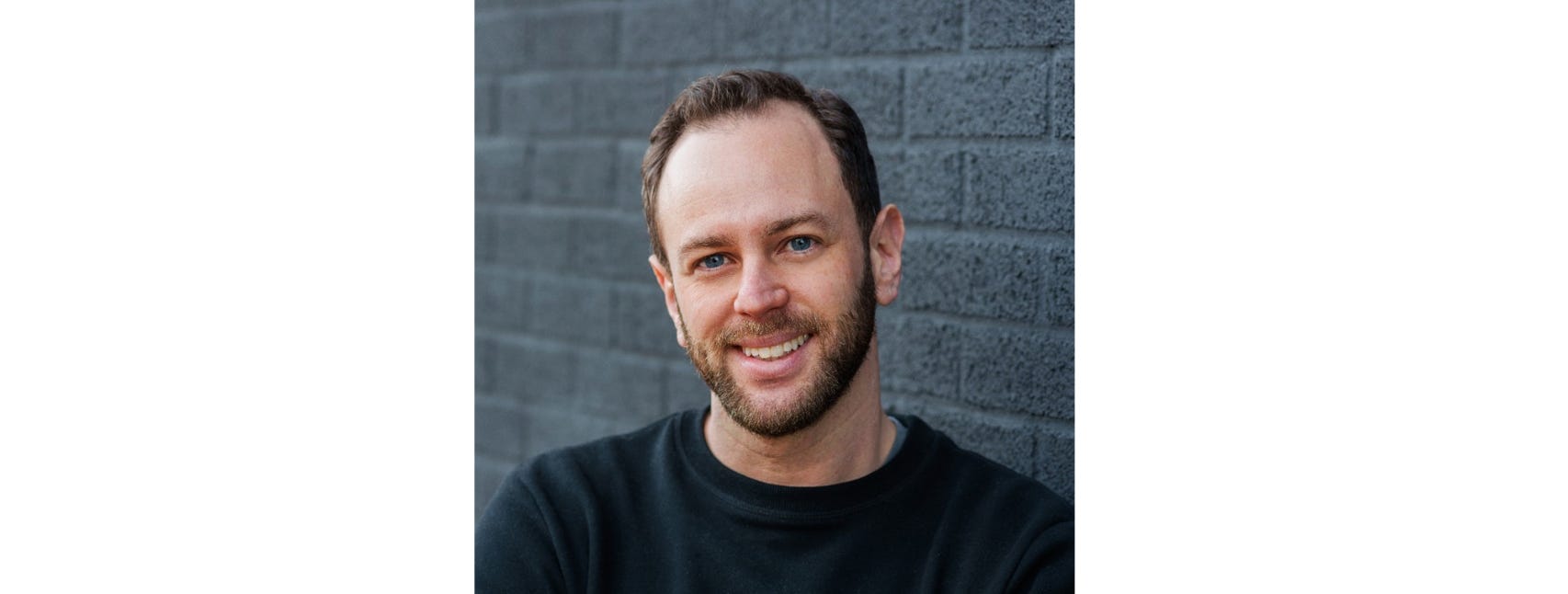
Freddie Pikovsky is the founder of Last Human, a placemaking and creative studio built around making places, brands, and experiences that preserve human connection. Its flagship project is Barnfox, the work and retreat club in the Cannonball Factory in Hudson, New York he co-founded in 2017. He has spent his career building spaces and media for people who want to work and live differently: he opened DUMBO Startup Lab, one of Brooklyn’s first coworking spaces, in 2011, and founded Off Track Planet, the travel brand behind Off Track Planet’s Travel Guide for the Young, Sexy, and Broke. He is the co-author with Nicole Caldwell of FARM + LAND’S Back to the Land: A Guide to Modern Outdoor Life (Chronicle Books), a collection of stories about slow living, sustainability, and doing things with your own two hands.
So I do this all the time, of course, in every conversation, I start with the same question, which I borrowed from a neighbor of ours, Suzanne Snyder, who runs the Oral History Summer School in Hudson. She has this amazing question, which I stole from her because it’s big and beautiful and great, but because it’s big and beautiful and great, I kind of overexplain it the way that I’m doing right now.
So before I ask it, I want you to know that you are in absolute control and you can answer or not answer any way that you want to. And the question is, where do you come from? And again, you’re in absolute control.
I’m originally from Brooklyn, New York. I grew up in Bensonhurst, Brooklyn in the 80s, which was a huge concentration of mobsters in that time in Bensonhurst, Brooklyn. And the reason I think that’s important to say is we grew up in a neighborhood that was very family and community oriented.
If you ask my mom, she was like, we liked having the mafia in the neighborhood because they protected us. If you ever had a problem, you can go to somebody and they’ll help take care of it for you. So I grew up in the type of neighborhood that it was almost like straight out of a Scorsese movie where kids on the block would play all night.
Parents knew each other and everybody felt really safe and protected. And there were a bunch of characters. And we all made up fun stories about that guy who sat on the porch smoking cigars all day and how he probably killed a few people and has a few bones in his closet and things like that.
But I grew up in this very tight knit community. I think it made a big impact on me as a person for the rest of my life. And my grandmother and our other family members lived in Los Angeles. And I remember leaving Brooklyn when I was about seven years old, which is why you don’t hear the Bensonhurst Brooklyn accent, although it tends to come out of me when I get passionate about it or I get tipsy.
Sorry, this is a really long answer to the question. But we moved to Los Angeles when I was about seven years old and we moved to the San Fernando Valley, which is not the cool part of L.A. It’s very, very spread out, very suburbia. And it was the complete opposite of what I experienced up until that point in my life, which was, people were very disconnected, no sense of community, very spread out. You didn’t really know who your neighbors were. And it lacked a whole lot of character as far as I was concerned.
So I longed for Brooklyn ever since I arrived as a seven year old in Los Angeles and eventually moved back to Brooklyn as soon as I had the means to in my 20s. So I think the reason I answer that question in that way is because I think those first few years of my life were really shaped by this unique time and place. And that’s been my perspective on the world is living in this very tight knit community where everybody knows each other and looks out for each other.
And that’s been a big impact and shaped my view of the world since I was little.
Yeah, it’s amazing. Do you have a way of thinking about what does it mean to be from Brooklyn? When you say that, what does that feel like?
I feel like it’s always been a cool thing to say. I’m very proud of it. And even my wife will tease me.
She’s like, yeah, you grew up in L.A. Like, don’t lie. And I’m like, I try to downplay the fact that I actually did kind of spend most of my life going to school in Los Angeles because I as a person identify as a Brooklynite, even though I spent a lot of my formidable years in Los Angeles. And I have great friends that I obviously grew up with and went to school with in Los Angeles and still stay in touch and visit all the time.
But I never felt that it was my identity. I never identified with the culture of Los Angeles. I always thought they were a bit soft and lacked — not everybody. But there was a lack of character unless you were trying to be a movie star or something like that. I never. Yeah, I was just not my vibe.
Yeah. Well, my daughter’s nine. And so seven years is a lifetime. Do you know what I mean? So those early years are really powerful. So I appreciate hearing that. I believe you when you say you’re from Brooklyn.
Yeah, when I get passionate about something, though, the Brooklyn really starts to come out and start waving everywhere. I should also mention, we’re Ukrainian Jewish immigrants. So I was the first in my family born in the US period. I have many cousins now younger than me, but I was kind of the first one here.
So we were Ukrainians. We were adjacent from Brighton Beach, which is known as Little Odessa, with families from Odessa in the Ukraine. And so it was a melting pot of Ukrainian Jews, Italians, Greeks. So that vibe has always been a big impact on me. Yeah.
So you’re in L.A. What did young Fred want to be? What did you want to be when you grew up? You have a recollection of.
I still find myself asking that question. What am I going to do? Who am I going to be when I grow up?
Yeah, I would say my path is zigged and zagged a whole lot. Again, I grew up with parents who grew up in the Soviet Union and like typical immigrant parents who come to the U.S., they expect you to choose a path, doctor, lawyer, accountant. Those are basically your options.
And I was not a good student. I definitely leaned more in the direction of being creative and entrepreneurial. I always kind of liked coming up with my own little projects and things.
And so when I graduated, I will barely graduate high school. It was time to go into college. I try to do all the things that you’re told to do and go to college and pick a career and things like that.
So I try to do all those things. I went to community college out of high school, but my interests kept kind of taking me in other directions. And I tried a lot of different things. I’ve done everything from working in the music industry in L.A. for a period of time. I was actually even a Hollywood extra for some period of time. It was a gig job, but dabbled in a little bit of that and started businesses when I was very young, without having absolute clues as to what I was doing.
But essentially, I didn’t have the type of guidance from my parents that benefited a personality like me. And then also, I think growing up in the U.S. and my parents were not familiar with that sort of entrepreneurial culture here. I mean, I don’t think entrepreneur — the word didn’t really even exist in their lexicon.
So it was a lot of figuring things out for myself, basically. Yeah.
Yeah. I feel like that’s how I met you. And this is the next question I always ask is sort of catch us up. Where are you now and what are you doing? And I got to know you here in Hudson and in Bard Fox and as a real entrepreneur. And so tell us, where are you and what are you working on now?
So in my journey, I’ve had a number of entrepreneurial projects, some successful, some not. And eventually, I, like many folks, when I came back to Brooklyn in my 20s, I worked on a bunch of different projects and ended up in a similar place as many folks in the city where I eventually got burned out on hustle, hustle, hustle and started to feel inspired by going upstate and made fr…