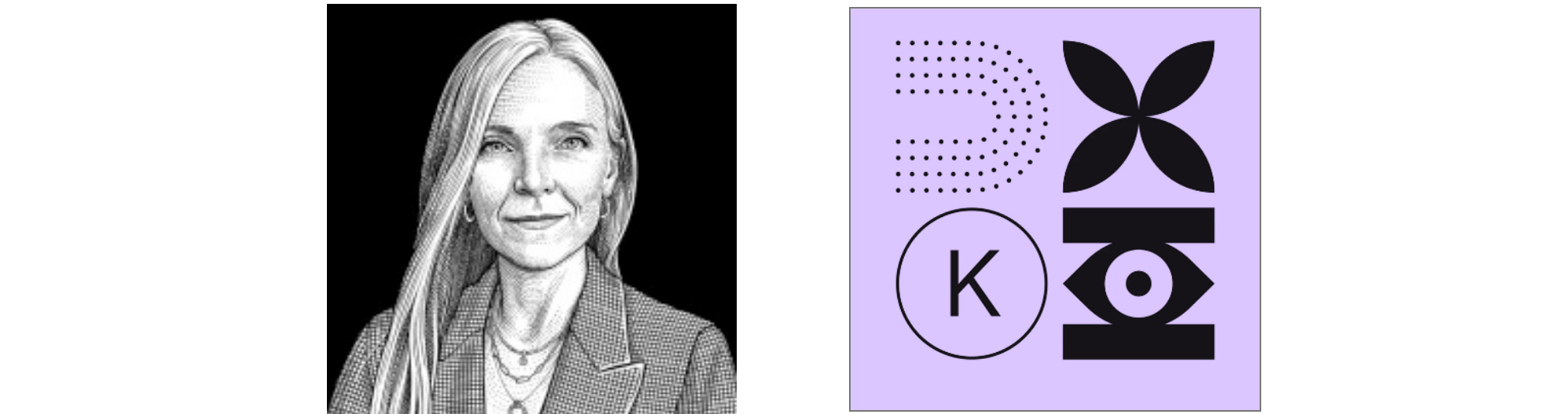
Katie Dreke is founder of DRKE, a Portland-based strategy consultancy. At Nike (2014-2021), she relocated to Tokyo to launch the company's first membership program outside North America, led concept development for Nike Women including the maternity collection launch, and designed global media strategy for the 2016 Rio Olympics. Previously, she led strategy at Wieden+Kennedy Amsterdam, Droga5 Sydney, and 180 Amsterdam, with clients including Honda, Adidas, Coca-Cola, and the United Nations across four continents.
I start all these conversations, you may or may not know this, but the same question which I borrow from a friend of mine, she helps, she’s an oral historian, she helps people tell their story. And she has this big, beautiful question, which I stole from her, because it’s so big and beautiful.
But it’s so big and beautiful, I kind of over explain it, I’m doing now. So before I ask it, I want you to know that you’re in total control, and you can answer or not answer any way that you want to. And yes, this is probably the biggest lead up to a question ever.
But the question is, where do you come from? And again, you’re in total control of and can answer or not answer any way that you want to.
That’s a great question. I think I’ll answer it in a couple different ways, more like a conceptual way. And then like a literal way.
I would say I’ll start with the literal, I’m from the Pacific Northwest. And I think that really means something. It means something to me anyway.
It’s upper left, it’s West Coast, best coast, as I like to think of it. It’s Cascadia, which is kind of a collection of ideas that sit near and on the west side of the Cascadian, Cascade Mountains. But I think just culturally, I’m really proud of where I’m from.
I feel like having studied people in the United States, and then comparatively across other different regions of the world. The things that I like about where I’m from, the United States was obviously inhabited by plenty of incredible people before the West arrived, before Europeans arrived. But that movement, at any rate, started on the east and moved out west.
And so the people who took those big gambles early on, Oregon Trail, etc., pioneers, people who enjoyed that idea of going into the unknown, I feel like their DNA stock is still alive and well out here on the West Coast, which I think lends to a certain affection and affinity to nature, to a certain sort of casualness. We don’t have time for the frivolities and the frailties and the gilded nature of things that come from Europe or from the East Coast and silver spoonage, family lineages and VIP back rooms with cigars. Not to say those things don’t exist today on the West Coast, but they’re just not part of our origin story.
It’s a lot less about who you are and what your family name is, but what can you do? Can you fish? Can you trap?
Can you build something with your hands? What do you do when things break? Can you fix them?
And there’s a little bit of a collaboration that is involved in that, because no one exists on an island when you’re up against the realities of nature and an environment that didn’t have infrastructure. So you needed to know what the guy and gal next door knew how to do, and you needed to care about each other. So there’s, I think, some nice things, and I could be completely authoring a worldview that is self-serving right here, but I feel like in the people that I’ve met, even some of the brands that spring out of the ground from this side of the nation, I feel a lot of pleasure and pride.
So I come from this, and I acknowledge that, and I feel like I bring it with me when I go other places. But the conceptual response to that question is that I’m from the future, meaning my brain spends an inordinate amount of time in the future. Sometimes for work, it’s like what’s happening next quarter, next year, or where do we think this trend is going to play out in the next decade?
But again, selfishly, when I get free time, I throw my brain into the deep future. I’m reading a story right now that takes place 300 years in the future. I read an inordinate amount of science fiction, largely because it is a thought experiment that is just so enjoyable, and given the type of authors that I like, I really go deep on authors that are spending a s**t ton of time on the world-building aspect.
All the details, the nuances, the future mundane, as Julian Bleeker would put it, the wallpaper, those things that really give you that lived-in sense of this is a very viable and authentic sort of space to occupy. The characters are very well built, and I feel like it’s not that dissimilar to being a strategist. A science fiction author really tries to understand the human nature of the people that they are trying to inhabit, and then they extrapolate.
The most respectful ways that that’s been done, Ursula K. Le Guin here, her portrait on my wall, she’s one of my mother muses. Kim Stanley, Neil Stevenson, these guys, they really, all of them, N.K. Jemisin, Octavia Butler, they create these very tactile, very tangible, viable thought experiments. So that’s where I’m from. I’m from the Pacific Northwest, but I’m also from the future.
Yeah, so I’m gonna ask a follow-up for each of those. The Pacific Northwest, do you have a recollection of what you wanted to be as a girl? What did you want to be when you grew up?
I wanted to be Indiana Jones when I was little. I think in a way that’s kind of stayed with me. I wanted to study the artifacts and the record.
I even named part of my company about the deep record. My company is DRKE, which is my last name minus one vowel. It’s an exercise in editing, which I think strategy is an exercise in good editing.
But if I take each of those letters and turn it into an acronym, which I have, it’s a deep record knowledge exchange. So I am really fixated on what came before and left a mark on the record. If you do your little CSI experiment, what lasts?
Which then when you look forward, what can we create that lasts? What will be in the deep record of the future? And of course the knowledge exchange bit is like, it’s going to take a village to really understand all these things and put them into action.
So it’s about radical generosity and no gatekeeping and mixing it up with a lot of disciplines. So who did I want to be when I was little? I saw Indiana Jones and was like, I want to go into the unknown.
I want to be in those hard to reach places. I want to understand the artifacts of peoples that have come before, covet them, teach people about them. And also be cavalier and cool.
I thought that was really awesome. For a while, I thought I wanted to be an anthropologist. When I was in university for a while, I took courses around etymology and language.
I ended up getting a degree in speech communications, which was the study of how you create written form speech writing. Also incorporated a lot of, it was, I remember taking this incredible course about cultured communication, but not culture like national culture, but like Vietnam veterans, deadheads, sorority girls, subcultures, and studying their styles of communication, verbal, nonverbal, semiotics, and so on. I was drawn to it because it was drawn to it like a moth to a flame.
I had no idea that there was a world within a creative industry where these things could be put into practice for business. I had no understanding of this. My dad was like, what are you going to do with this?
What’s going to be your job? And I’m like, I don’t know. I’m just going to follow what I like and see where it takes me.
It wasn’t until I graduated from college and was in an interview and they said, what did you study? What classes did you like? That I suddenly was like, ding, ding, ding.
The thing that I was drawn to is really useful to me in the creative world. Advertising, I was a quote unquote planner at the time, connections planning was a big thing at the time, which was all about that. So life makes sense in the rear view mirror, not often through the windscreen in front of you.
But yeah, that’s what I wanted to be. I wanted to be Indiana Jones.
And catch us up, where are you now and what’s the work that you’re doing now?
Yeah, well, it’s not quite Indiana Jones, but I like to play Indiana Jones on television. I run my own consultancy, like I mentioned, I started in the end of 2020, early 2021. So it’s been about five years.
I’m a strategist. I learned early on that I’m the person who likes to try to understand the landscape and the lay of the land, trying to figure out the connectivity that either exists or could exist there, that creates either sometimes a practical efficiency or a cleaner line through to the consumer, or not even the consumer, it could be any sort of invested party on the outside of the organization. And then also a lot about, again, going back to that sort of projection mapping that science fiction trains me to do all the time.
It’s like, what else could it be? Where else could it go? Why is it not there already?
What’s holding us back? Is it us? Is it something else in the industry or in the culture?
And why not us? Could it be us that takes this to a new place? Creates the next white space.
When did you, I’m curious about the moth, when did the moth meet the flame? What’s the, when was the first moment you really realized that you can make a living doing this kind of thing?
Let’s see. I think like a lot of young people, and I want to make an assumption, but I feel like I’ve heard this from other younger people. I didn’t realize that the things that I love to do, I couldn’t do for a job.
I guess you hear people say, find what you love and never work a day in your life. And it’s so cliche and transparent. It’s like nobody does, people who say that already have a bajillion dollars, that’s not real.
A lot of people have to make compromises. And so I assumed I was going to need to make compromises. I also learned that from my parents.
They told me about the compromises they had to make about life, lives, and you’ve got to deal with it. So I love, like I said, being Indiana Jones about culture and people and digging and questioning and thinking about where it could go. If you give it 50 years, if you give it 500 years, I love that stuff.
I never thought that I could actually apply that to anything practical where I get paid until I found the creative space, which is where storytelling comes in. And you really need to understand who are people, why are people? The why is really important.
And then where do we think that’s going? And all of those things that I really like to do naturally for funsies on the weekend or when I’m on holiday, I suddenly was like, I could get paid. This is great.
And so it took a while to find my way there. I had a couple kickstarter jobs. I was a receptionist.
I worked in HR and ran a college recruiting program for a software company, which gave me a great 101 course on how to talk about technology to people who don’t speak technology. I was like a translator, which was also a fun aspect of pretending to be Indiana Jones is you are having to translate one sort of world and language into people who don’t travel in that world and speak that language. Technology is a great example of a world where we all have a lot more ability to speak that today.
But back in the early 90s, when I was working in an enterprise software company and you had to hire college recruiters and, or sorry, college students, and I was the recruiting person getting out there, you have to learn to speak the language real quick. Otherwise they won’t want to talk to you. You can’t hire them if they don’t think you understand what they’re doing.
And so I think it was kind of, it wasn’t until the creative part snapped into play. I started working at an agency that had all tech clients. This was in the early 90s before the tech bubble burst.
And it was in Seattle. So yeah, it was very active. I went to the University of Washington. I graduated, worked first at a software company with that recruiting job, and then got hired at a creative agency downtown Pioneer Square.
And all of our clients were tech companies. A lot of them were startups. And we had a full suite of services, everything from naming that brand, marking that brand with like a logo and like a visual identity.
But then also there was a PR arm that would help them with talking points and get them out on their press tour. We had a digital studio where we’d create their first website and get them ahead of that game. And then there was an advertising arm that would start to help them get sorted about where they should show up and what they should say.
So it was a really cool 360 integrated approach to tech. And it was a very rapid on ramp into how do you creatively connect these dots? And it was there when it started to kind of, okay, wait a minute, I need to get closer and closer to this work.
And for a hot minute, I thought maybe I was going to be a creative, but I took some courses and realized, no, no, no, no, I don’t want to be that close to the work. I don’t. And particularly around, I thought maybe I wanted to be a graphic designer.
And I don’t have the patience. I don’t really have the focus to move the pixels around and look at the kerning. Like that just, it’s a bridge too far for me.
And I had to know, I had to take a class and know that in my bones to know for sure, because I was attracted to the beauty of it and the aesthetic of it. And I could felt like I had the ability to know when it was working or when it wasn’t working, but I don’t know how to make it work. And that is somebody else’s wheelhouse, not mine.
And so I like, okay, I need to zoom out a little bit. And strategy ended up being the right zoom out layer where it’s like, I know how to direct and I know how to maybe nudge, but I’m going to leave it to the pros to really bring me the solutions that they understand far better than I do.
So I feel like I was coming up, I was in San Francisco around that time. And sometimes I always, sometimes I say that when I started, it felt like brand was the new technology, at least that was sort of my experience. Was that your experience that brand was sort of a new idea or what was, what was, when did you encounter brand as a thing?
Yeah. I mean, brands like Big B brand. The first time I encountered that was when I worked for a really small, very VIP, pristine, precious boutique graphic design firm.
Yeah. And there, it was about going into the legend and the lore of this organization and the origin story. And what was the first speech that this person gave at the first all hands and what are the artifacts we can dredge up that are still true today.
And we can reanimate them and we can reanimate them in the packaging and we can reanimate it in the store design and we can reanimate it in the investor speech that’s being given next quarter. And so it wasn’t about the photo shoot. It was really looking at all of the other elements, the whole music, et cetera, et cetera.
That was the first time that brand as a non-visual design system concept was introduced to me. And it was really beautiful to be introduced to that idea in a very analog way with a graphic designer who was using very little technical tools and we created physical artifacts of what we were doing. I think, yeah, that’s the first time.
What was that sign?
What kind of happened after that is I started working in digital agencies because that’s what was on fire at the moment. And it was, I was in the midst of the maelstrom of making sense of this new tool in the toolkit. And I’m in reflection now, I’m seeing how that’s how a lot of the analog got stripped out of the world of brand.
Not everybody has stripped it out completely, but I think some of it, some of that texture never came back in once everybody finally eventually had a web address for their company. But that steamroller, that tsunami of activity, I joke, but I think I was invited to talk to a class, a university class recently. And they were asking me about the big differences between when I started and now.
And I was like, guys, this is going to sound really ridiculous. But I was working at a design agency that was digital. We had server farms in the basement.
I was making, I was having conversations with companies who were getting their very first website. I felt a little bit like a car salesman. I’m like, what’s it going to take to get you into a website today?
But they had no concept of like, I’m in the yellow pages, I’m listed in the Better Business Bureau. I’m, people, I do advertising and there’s a phone number on the bottom. They hadn’t conceived of the idea.
Nobody had. It was a completely new idea that there’s a worldwide web that people will very soon do all of their first queries on. So we were building like Starbucks first website.
We were building an intranet for Starbucks. We were building Flash websites, one-offs for Nintendo for every game that they were releasing. We’d get the game six months in advance.
We’d play it. Then we’d figure out the narrative. We’d create a Flash website that would give you a simulation of that experience on a marketing site, get you excited about Legends of Zelda 47, and then you’d go buy it for Christmas.
But we would build those websites and then we would host those websites. And then we had quote unquote webmasters who would do quarterly updates. And so we’d be talking to the marketing and the comms people who would send over, oh, one of our CEO people left.
We need you to make an immediate update to the website. Oh, well, there’s going to be a rush fee on that. And we’re going to do that.
It was a really weird time, but in the rush to making everything readable on the web, I think sometimes we forgot the tactile for a hot minute. Although I do feel like it is starting to come back. I think we’ve officially as a mass consumer of the world in digital formats, I think we’re starting to get, okay, enough of this, enough of the saccharine and the sugar.
I am overstimulated. I don’t, I need a nap. I need things to show up in the real world when I’m ready for them. I need some of these things to be calm. And it’s nice to see the appetite shifting. Probably not fast enough for my liking, but still it’s shifting. It’s certainly out there.
How do you think about where we are right now? When clients come to me, how do you start a conversation with somebody, with a client? What are they asking you?And how do you frame the conversation for today?
Given the cattywampus tumultuous nature of everything, everything, everywhere, all at once right now, a lot of the briefs that come to me or phone calls that I have with people do tend to be pretty closer in than I think is probably prudent, or even just that personally, I’m always pushing my clients to think longer out. And sometimes I realize, okay, I’ve hit a ceiling here. I just can’t push them any further.
We need to play in closer to the vest. But things tend to be really myopic at the moment. The future is unpredictable, extra unpredictable.
We can’t really use the past as a measuring device the way we used to. Even last quarter, last year, or even looking at the last five years is becoming less and less dependable as a measuring stick.
So that’s become true, really true. There’s some piece of this, it feels like this is a cliche we always talk about, but it also feels like it’s more than ever before.
Well, I’m biased, I guess, probably based on my particular demographic. I’m 52 now. I remember in 2014, I started at Nike, and I was brought in on a strategy assignment.
It was probably one of the most juiciest and enjoyable pieces of work I ever got a chance to do. It was for every year at Nike at that time, I think it’s shifted since. They had a strategic cycle that started with something called SPKO, which was the strategic priorities kickoff.
And at the time, Mark Parker was the CEO, so he would take his leadership team off site every year at this time. They’d actually go up in the Rwandan country, they go to this place called the Allison Inn, and they’d spend a week together. In preparation for that week, each of those leaders would reach down into their orgs and say, I need some of the biggest thinking on certain topics.
There was always a theme going into that. This particular theme of this year, because it was 2014, they were looking ahead to 2020, which was only six years. But still, it was good that they were looking ahead six years.
Oftentimes, it was closer in than that. And so this was actually a bit of attention and an opportunity for this. I was in brand at the time, and we were coordinating between brand, product, and the GMs of the different verticals.
And we were given the task of trying to imagine what consumer engagement would look like in six years. And ironically, it’s the year 2020. We didn’t know yet that Tokyo, or maybe we did know already that Tokyo was going to be the Olympics.
I’m not sure if that was announced yet. We certainly didn’t know COVID was coming. So we were doing this big projection into the future.
Part of that argument, or not argument, but kind of teeing up that headspace for that room, which was the C-suite of Nike was to say, you are asking us to look forward six years. Well, let’s start by looking back six. Or even better, let’s look back 12.
And what do we see? And when you do that, the acceleration that we were experiencing was incredibly obvious. And this was that moment of, quote, unquote, disruption across everything.
There was Uber disrupting the taxi industry. Airbnb was disrupting what it means to be a hotelier or to have lodging. We started looking that Google was experimenting in automotive and cars and self-driving.
Everyone has so much more power. These tech companies have so much power over data. Do we understand our own consumers well enough?
Are we going to be disintermediated or intermediated? So these really strong, divisive ideas landed in that room pretty strongly. And I’m so proud of the team that I was working with on this, because actually we contacted Bruce Sterling, who is a science fiction author.
And he notoriously gives the closing keynote, or it’s an unofficial closing keynote at the end of every South by Southwest. And we said to him, we want to create a film, something that kind of visualizes where this whole thing is going. And so he and I went back and forth over email, putting a script together that turned into about an eight-minute edit.
And I was told as a new person at Nike, you can’t show people something that’s eight minutes. Nobody has the attention span to consume something eight minutes. You got to make it maximum a minute, a minute and a half.
And I was like, we can’t do that. We can’t get it there. I think I got it down from 11 to eight, and that was the best possible.
So we had it in our back pocket. We weren’t even sure if the executives that we were writing the presentation for would have an appetite for it. But it happened that the CMO wasn’t available to actually be there on the presentation day.
So it was going to be the CFO and the GM who needed to give this presentation about the future of consumer engagement, and this is not their wheelhouse. And so they had a little anxiety about it. So we created this deck.
We were going through the deck at 11:30 the night before. And we said, hey, we got to show you one more thing that we created for this. We think it’s going to, you’ll play it after slide three, and then it will open the floodgates for the rest of the presentation.
And we pressed play on the film, and they were high-fiving. I’m so comfortable now. This really, okay, I can do my part now that Bruce Sterling has done his part, and he’s kind of articulated the worldview.
So I don’t know if I’ve answered your question. I kind of ranted there for a minute.
No, it wasn’t a rant. Well, you were doing something with your hands about to describe what Bruce Sterling had done for everybody, and ultimately what you had done for the team. What did you feel like you had done for them?
I think what we enabled them to do is quickly, and without a lot of labor, see the opportunity to be a part of the future that was already well on its way, and to not sit it out. The data points that we put in there were unassailable. They were large.
We talked about how tech companies are akin to the railroads of the previous era. This is like massive amounts of infrastructure is what is being developed by Google, by Amazon. This is like the power company, the railroad industry.
If you think about what was developed in that era, this is what’s being developed for this era, and this is what it means for everyone. This is why it’s changing the floor under our feet, and if you’re choosing to not participate and ignore that, you’re going to be superseded by it. So, we need to thread the needle here.
We need, as an athletic brand, what do we do? How much do we owe it to our consumers and constituents, people who are the passion point of sport, to be masters of our realm? Which means we need to get savvier about data and understand our own technology.
And then, where do we also need to keep people in their bodies? When we’re moving into a deeper digital relationship with the world, you can’t go for a run in your mind. I suppose you can, but you’re not going to get the physical benefits.
You do need to put on the shoes and go. So, we got to keep people in the real world.
Part of that story, I think, was triggered by, you had made the observation, you can’t really, the past isn’t a good predictor of the future anymore, and I pushed back on that. So, you told that story of 2014 of having had the benefit of going back six years and 12 years to deliver all that, but what’s the current, how do you operate now? How would you do, how do you deliver that same kind of insight or about the opportunity to a team now, if we’re operating in a different, in a more volatile culture?
Yeah. My first thing that I always do is understand the center and the history of the brand that I’m working on. They may or may not be a brand that I have my own experience with.
They may or may not be a brand that’s even existed very long in the world. And so, sometimes you’re dealing with a shallow ocean of how deep can we go on what this brand has established already in the world? But regardless of how deep the ocean goes on that brand, the sky’s the limit in terms of where they would like to take themselves next.
And so, a little bit is what’s the ambition? How reasonable is that ambition? And most importantly to me is who are our true believers?
Who are the consumers that we need to serve? And serve by knowing them better than anybody else knows them. And serve by anticipating their needs, but also understanding their needs better than anybody else.
And so, whether that is a financial product, or whether that is a physical product that you put on your body, or even a medical product that medicines or supplements that you put in your body. Things that you do to create the sanctity of the home. Things that you do to stay in contact with family and maintain connections, or to raise children, mobility.
There’s so many different angles where it’s what are you trying to do for people? I feel like it’s not enough to be another thing in this world where we are overrun by consumerism, and we are overrun by options. It’s ridiculous going in a grocery store these days.
It’s not the cereal aisle anymore. Go into the beer aisle, go into the beverage aisle. Everything is proliferating to an extent that it is comical. Well, it would be comical if it wasn’t a catastrophe. Many, if not most of these things shouldn’t exist. There isn’t a need.
Yes. I also feel there’s something really unbelievably, what am I trying to say? The comical and the catastrophic are right next to each other all the time. And this seems to be a particularly contemporary phenomenon.
Yes. They’re holding hands and skipping down the road. Yes.
A hundred percent.
Yeah. And it’s a little weird. And in some ways without the comedy, the catastrophe would just send everybody over the edge.
So maybe that’s a coping mechanism. But I also saw an incredible talk a few weeks ago in San Francisco at the Long Now Foundation. I’m not sure if you’ve heard of them, but they’re an organization that thinks about time in an incredibly deep way, founded by Stuart Brand and Brian Eno.
Actually, Kevin Kelly was there at the event. So I had a moment of swooning and geeking out. I just really adore the way he thinks.
I read a lot of his writing. And the speaker was Indy Johar, which I’m not sure if you’ve heard of him, but if not, look him up. He also runs Dark Matter Labs.
He’s involved in a ton of different areas. But after that, I went to a dinner the night before, before the talk, and we talked about if capitalism could just do a proper job of accounting, we would weed out most of the players that are in the game. Because if you look at the accounting for capitalism, where they are taking either from nature or from society in ways that are not reckoned with and captured as value on the books, those companies would be hardcore in the red.
They are not a good investment. They wouldn’t be in the stock market. They’d be underwater.
They’d be out. So one of his, I mean, a-ha points for me that was really heartening, because you’re thinking, how do you fight against capitalism? I was thinking, well, you make capitalism do its job better.
You don’t try to kill it. You don’t try to drown it. You actually challenge it to do its job properly.
Your accounting is not working. There are businesses and business that shouldn’t be in business. And that’s why we’ve got all this crap in the landfill.
So can we knock the losers out of the game, please, and get them out? Because there’s so much waste in this system that it is actually causing more harm than we can even reckon with.
And I feel that reminds me of, is it Natural Capitalism? This is the argument that Paul Hawken made all the way back in the 90s, that we were treating the environment and natural resources as just free. But are you also saying that this, and I feel there’s a, that on some level, there’s a, so natural capitalism takes and creates the natural resources as an asset that needs to be accounted for. But we also have this social capitalism too, where the cost that we’re experiencing at the social realm is devastating. We have no way of talking about what has been lost.
Totally. Yeah. You think about, I mean, just take a measure of everybody’s general nervous system right now, who’s working nine to five, and then they bring that home and it gets spread around the family.
And we get this one precious life to live. And we call it priceless. We say that it’s precious, but then we abuse the hell out of it.
And it’s pretty rough. It’s pretty rough when you realize people can’t pay their healthcare bill, their bills, that we’ve allowed that the haves and have-nots to be such a split, that groceries have become a conversation in the last Olympics or election. It is, these are strange days.
Yeah. And I simultaneously feel tension and anxiety everyone does. But I also am one of those people that gets excited when things start to break a little bit, because I do feel a break, breakdown is an opportunity.
There’s beauty in the breakdown. There’s also editing in the breakdown. And Lord knows we could do with a little bit of editing right now.
And I know it won’t be clean and easy. And I know that not everyone will escape unscathed, but it’s time for a bit of a revolution. Hopefully not the kind that we take up arms for, but where, what is leadership actually?
Whether you’re talking about political or whether you’re talking about brand or business or even the civic. And why have we allowed that bar to get so low?
The bar for leadership. Do we really feel we’re being led to anywhere good right now? I would hasten a bet. The answer is no.
I think people have forgotten how much power they have. And once reminded, there will be a different story on the other side. And I’ve been really thinking a lot about, well, what would be on the other side?
What does that work look like? How do we imagine it for business, for civics, for social, society, for politics? All on a planet whose weather is getting demonstrably worse.
Where do you see the kinds of practices that we need to develop happening? I mean, I guess on some level it’s a, we need new storytelling practices. I feel we’ve demonstrated that we’re not very good at telling the kinds of stories we need to do the kinds of things that we need.
And some of this feels it’s because we’re not very good at imagining the future. And maybe this is why you think about the future. And maybe I don’t know the question I’m asking, but I’m wondering where are the, where are the, maybe before the call, we talked about bonfire?
Where’s the, where are the funds that we want people to come together? How does that, because I feel like, and I’m going to rant a little bit too, where I feel like there was a shift where everybody was a strategist. And then all of a sudden now everybody’s talking about the future and everybody’s talking about the imagination.
And my first boss was a guru. And he would say that we consume the thing that we’re afraid we’re losing. I hear so many people advocating for the imagination and we’re trying to talk about the future, but we just can’t do it in some way. We just find it so hard to come together and do it. So Katie, what do we do?
Well, this is where I’m hopeful that those of us who have spent so much of our lives involved in storytelling of various formats and forms can really offer something because here’s some of the rubs I feel. What is happening? Let’s use the planet, for example, what’s happening in climate shift and change and transformation.
It’s hard to get your brain around. The numbers are really big. Geological time is hard to grok with our tiny little brains that are thinking about what’s for dinner tonight.
So there is some hack. And I think it’s a storytelling hack that needs to help people understand where we sit in the story of this planet and of the universe, dare I say, and that this is a moment for our, really for our species and the others that live on this planet with us. There’s as well, but the planet doesn’t need us.
The planet’s going to be fine. The planet’s been here before. There’s been proliferations and shrinking of speciation on the planet for billions of years.
So we don’t have to worry about saving her. She’s fine. We have to worry about saving ourselves and hopefully a planet that’s worth inhabiting, meaning that it’s got beautiful diversity of flora and fauna and air and water that’s enough and clean for us to thrive on.
Otherwise the kind of environment that we can imagine in the future is really not worth inheriting. So I don’t know. That’s one of the things is just the time thing is hard for people to understand.
The scale is hard for people to understand. I’ve also been a little bummed out to see other parties really killing it in the semiotics and symbolism. I would say the extreme, I mean, I grew up in a conservative family.
My parents were Republicans. I grew out West in a rural place. My cousin had a wedding at the gun range.
I understand conservative people. The red is not bad, but I do think their leadership is suspect right now and has taken them to an extreme place. Not all of them, but a large party voted for something that is extreme and they have done an incredible job of creating symbolism, semiotics, language, story, belief, underpinning and undergirding that makes it easy for people to quickly, without having to sweat at all, grasp and fall behind and then retell and retell and retell.
And on the other side, the more liberal version, not the extreme liberal version, but just hopefully more of more, is there a normal, normal, is there a mainstream? I don’t know, but someone more towards the center on the bluish side, we’ve just been fumbling around. So I think story is, and the creation of story.
Someone joked the other day, we need to create a new religion. I don’t think we need a new religion. I’d prefer not to have a religion per se, but you start to hear about, we certainly don’t need another Messiah or anything like that.
But if you look at the concept of solar punk, for example, which is a playoff of steam pump, it creates a world building for the future in which it is green energy. It is energy that’s not stealing from nature and trashing nature. It could be solar, it could be wind, it could be any other methods, even nuclear exists in the solar punk future.
It’s about a healthy relationship with the planet and agriculture. It’s about a lot of diverse voices, older voices, female voices, colored voices, disabled voices, all participating in equal measure. It’s really more about a shared mindset as opposed to, well, you’re this type of person, so you do this type of thing.
It’s everybody, we need everybody’s skin in the game. And it’s also thinking about the future with a much more indigenous lens of we are responsible for it. We need to be good ancestors.
We need to be thinking about multiple generations to the best of our ability, which goes back to that hard thing about the brain not being naturally good at that and that storytelling helping. The indigenous cultures have tons of legends and lore and verbal histories, oral histories that teach those folks at a very nuclear level to understand their relationship to the earth and their responsibility for it deep into the future. And we’ve just failed in our modern expression of ourselves as humans to keep that practice alive in a meaningful way.
So the solar punk world, if you haven’t touched on it at all, if you haven’t heard of it, go Google it. There’s a lot of fun AI imagery, people trying to imagine on a macro mass level. Chibani did a great ad a number of years ago called Dear Alice.
It was an animated ad done in a style similar to Ghibli films. It’s the best example of a mainstream brand that I’ve bumped up against recently who embraced that vision of we don’t just make yogurt here. We have a vision for the future and it looks like this.
It was beautiful. And I often use that as an example with clients when I try to say to them, you think you only just make pencils or you just sell whatever, dishware, whatever, tires. But look what this yogurt company, they have a bigger vision.
You too can have a bigger vision. It doesn’t mean you have to bring it all to life tomorrow, but it’s your North Star and it’s your story that you’re telling together with your consumer that makes them feel like they’re seen and that you’re on their side. And then sometimes you can even give them the ability to have their own skin in the game.
What excites you about that work, about the possibility of brands reaching?
I do have reservations about that too, let’s be clear. I have read some science fiction books, most notably Margaret Stewart and Oryx and Crake. She has a trilogy, the Mad Adam trilogy, in which corporations take over.
And then there’s these enclaves where you have a job somewhere and you only live in that controlled environment. And it’s like these corporates are almost more like nations. And so she took just that concept to an extreme.
And you could see that when it’s pushed to extremes, it’s also not healthy. So you don’t want to get anywhere near that. As a mind experiment, you see where things can go wrong.
But I do feel that if you’re going to go ahead and employ a whole bunch of people who are citizens of a place and put them to work doing something for other people, you have some responsibility to incorporate the needs of the workers and also the customers into the work that you’re doing. And I guess there’s some good examples of that. Ben & Jerry’s isn’t always a nice one.
There’s other brands that have accentuated their sense of place. I don’t know. I’m not sure if I’m answering your question very well.
I don’t know. I don’t know. It’s impossible to make a mistake. I guess on some level, a vague question about the role of brand today?
Maybe it’s more just designing a brand in the past was more about locking it in. Designing a logo, making sure it’s used universally in the same way everywhere. Digital arised and everything was suddenly dynamic. And so then you needed to be a little more nimble.
You needed to be a little more elastic. Now with AI, quote unquote, vibe coding, all that stuff, we’re getting into this place where it’s like your brand has never landed. It’s alive.
It’s messy. It’s organic. You got people that work there. People are messy. You’re working in a world that is in hyperflux. And you’re trying to communicate and connect with people who are under duress and trying to also navigate this wild world.
So create an emotional linkage that means something that matters. It’s true. There’s a I don’t want to say purpose because purpose has gotten a bad rap lately, but maybe mission.
There’s a reason to why we exist. I often say with my clients, what’s the dent you’re making in the universe? How will we know that you’ve even been here?
If we shut you down tomorrow, would anybody notice? If you’re just making stuff, that’s just not good enough. It’s just not. And I think as frankly, as a consumer myself, I’m not going to buy something that’s not good enough. I need to know what you’re about. I need to believe in you. And the product, frankly, just needs to have been intentional.
Even if it’s five bucks, I still want to know that you have some sweat equity in this thing and that you believe in it.
So last question, I would love to. I’m a qualitative researcher and ethnographer. I’m always probably selfishly looking for arguments for face to face, good old fashioned face to face qualitative research.
What’s your position on qualitative? How do you have a way of how do you talk about the role of qualitative in work? And what’s the value that it brings?
Yeah, well, even just to reiterate, people are messy. So they do whatever they do. But it’s almost impossible to understand it unless you get in their face about it and get in their shoes and in their face like a confrontation.
But like you get eyeball to eyeball, person to person. I have utilized tools to make virtual ethnography possible when it wouldn’t otherwise be possible. COVID obviously meant that you couldn’t get on a plane and you couldn’t get focus groups together.
And so I think some new tricks of the trade were introduced during that time. I’ve kept a couple of them going. When a client doesn’t have the budget or the patience to do proper in-person dives, I’ll do asynchronous interviews.
I found a really fun platform where I load it with questions. And then the person on the other end, if I were to send it to you, you could press a button and you hear me say, oh, hey, thanks for participating. This is what we’re talking about today.
And then one by one, you could see me, you could see my face, hear the expressiveness in my voice, watch my hands move around as I’m explaining to you the question I want you to think about. And then you get a minute to sit there and think about it. And then you press a button and you record your response back to me.
And so if you stitch it together, it can look like an in-person interview or it can be presented to a client as like a full conversation. But it’s an asynchronous device, which has given me a lot of great talking heads and good quotes. And because people, as you know, respond differently when they’re on, off the cuff, as opposed to in written form.
I worry about AI.
Oh, say again. What do you feel like you’re after in those exercises? What are you after?
It’s the invisible stuff. I can observe everyone being anxious to answer that question or everyone searched for the right word. They didn’t have it off the tip of their tongue.
They didn’t want to answer that question. That’s interesting. What’s that about?
And then also if you get a nice swath, did men or women answer it differently? Did people of different ages answer it differently? Did people of different economic positions answer it differently?
Like the classic what do we see? What do we think we’re witnessing here? And then part of it is witness, bearing witness.
Oh, wow.
I did a series of these interviews right after COVID. So this was the tool needed for the job for a rock climbing company. And they were trying, they were witnessing what was happening with yoga and then what happened with running.
And they weren’t seeing it happening in climbing. And they weren’t even sure if they wanted it to happen in climbing, because climbing is a little bit, if you know, you know, it’s a special culture. But as a business, they wanted to know more about like, are we missing a beat here?
Should we be trying to participate? Or even creating a culture around rock climbing? Particularly bottom of mountain rock climbing, bouldering, and also gym climbing.
That could be compelling. And so I spoke to a lot of young people because they wanted to know what are the young kids think, as most brands are thinking. But I also sprinkled in some of the OGs because they are noticing change.
And they needed to be witnessed, they needed to have somebody listen to them talk about how their favorite thing got from then to now. And also they were very valuable in terms of what needs, what must be protected? What must be remained true?
The kids don’t know that they have a sense, kids, excuse me, the younger people, they have an older sibling who did it, they thought it was cool, they picked it up. They can start to softly articulate what they think they love about it. But the OGs know what it is.
They know it, they can talk about it, they can demonstrate it, they can tell you how it’s flexed and flexed over time, they can tell you when they almost lost it. So I think bearing witness, again, to time, as you can see, time is one of my friends when I do a lot of my work, I use time a lot, but as a device, but that’s always interesting.
Yeah. Can you say more about that? Because you mentioned a few times, I know The Long Now, and you talked about pushing clients to think more long term, what’s the role of time?
Time, it’s so funny, because I think we suck as humans, as feeling time pass, we use clocks because we can’t sense it very well. So I need, what time is it again? Are we, like that thing?
Am I going to be late? I don’t know. Time is an emotional thing for us too.
Time flies when you’re having fun, all that stuff, or the way different people of different age groups sense time. When you get over 80, time feels different than if you’re a kid, you’re in a rush to get places, when you’re older, you’re, hey, hey, let’s take it easy. This is, let’s savor this.
So there’s, you put that into business context, and you’re like, if we had all the time in the world, what would we want to solve for people? These are great workshop questions. Oh, well, in that case, all the time, I would want to, then ambition comes out, desire, and also what they feel they have a sense of responsibility for, or a passion around.
If we had no time, if we only had one product that we could, that we had to release, but before the end of this year, where would we focus? Reduce, take time away, crunch it. I took the Chicago Bulls through a world building exercise, or sorry, a cathedral building exercise, which is just saying cathedrals take a long time to build, and often the architects of those cathedrals don’t live long enough to walk in them.
I remember the first time I learned that, when I was a teenager, we went to London, and I went into the cathedral, and they’re like, this guy designed it, and then he died, and then another guy finished it, and I was like, what? You didn’t get to see the end of his project? And of course, the Sagrada Familia in Barcelona, it’s still not done.
It’s like hundreds of years old, and they’re still working on it. So to say to the Chicago Bulls, you guys are the executive team right now. This is an icon.
You’ve had great names, Pippen and Jordan, but we are who we are right now. What does this mean? So what does the Chicago Bulls mean to the game of basketball, to the city of Chicago, to every player or coach or fan that walks into this cathedral, the stadium here?
What does it mean? But we need to think about what we’re passing on, not to next season, but to the person who has your job after you, and then to the person who is a kid who will become a father and pass it down to his son here in the city of Chicago. And so we took them out of the game that was going to be in the stadium that night, and they were checking their phones on every break to see if they had sold out, and if the strike that the concession stand employees, that it had resolved, if it had stayed resolved, they had real near-term things going on.
But we talked a lot about all the things that we could do in the business and in the city, and also with the NBA, to make sure that the game, that the city, and that the team were better than they’d ever been, and it was something like an heirloom object that could be passed into the future. So part of that was getting them to see time differently, examples of different projects in both the art world and in the science world. I think, innately, people enjoy being taken out of the day-to-day.
They just don’t get a chance to do it very often, and that was the way I teed it up with that room too. I was like, I’m taking all your phones away because you may not realize it until about 30 minutes from now, but this is actually a rare thing that you get to do today, and hopefully you feel that way at the end of the day too. But you get to do the thing you want to do right now on your phone all day, every day.
Let’s put that aside and do something you don’t get to do every day, because it will change the way that you look at your work, and it will change the way that you look at the other people that you see in the stadium who come in to spend time with you and your property and your team that you’ve put together. It’s just funny, the gifts that time can give you if you just distort it.
When I think about The Long Now, I met with the new director. I’ve been helping them out with a couple things recently, and we had a meeting a couple days ago. She’s like, why do you like The Long Now so much? What drew you to us?
I was like, honestly, when I think about long time, really, really big, big time, I’m not afraid. All the fear and anxiety that I feel about more near and present dangers, it goes away, because I’m so small. I’m just minutiae. I’m just a little gnat in the history of the universe. I can just look at it for what it is. It’s comforting.
I also think it’s really important that people take comfort from the fact that we have our finite moment. At the heart of it, that’s our humanity, our one little precious snowflake life. Time helps us realize that.
One last question, which I didn’t ask earlier, which is what do you love about the work? Where’s the joy in it for you?
I think some of it is about finding the humanity in there. Some of it is about anything and everything can be interesting if you’re interested. I sometimes see clients come to me and be like, oh, maybe this isn’t the most interesting thing. I was like, tell me about it. I like proving them wrong. We can get interested about that. That can be super interesting.
I like finding the cracks. I think sometimes the cracks are often wallpapered over and people don’t even realize it’s happened, or the cracks are seen as a flaw. When you look at it more closely, it can become your strong attribute.
One of my clients is a ski resort. They are one of three ski only ski resorts in North America. They were really shy about it. We don’t want to be seen as exclusive. We just really love skiing. We don’t want the snowboarders mad at us and all this stuff. We just don’t know how to talk about it. I was like, that’s how their current campaign came to be.
It’s called Dear Skiers. Your whole resort is a love letter to skiing and ski culture. You see skiers inside of everyone, inside of the people who haven’t yet skied, inside of the people who are snowboarding today. You’re like, hey, that’s cool that you’re snowboarding. If you want to ski, come over here. By the way, we love it more than anybody else. We’ve designed this whole place for the ski experience. It’s tip top, man. Don’t be shy.
I think that’s fun when the light bulb comes on. The thing that they were really worried about as being like an Achilles heel or a problem or a weakness is their differentiator that they can come out swinging with and be really proud of. That’s fun.
Then, of course, I just really love when I get a sparring partner at a client who is really willing to play with time with me and to really think big about it. We’ll always have to play the short game, but when I can get someone to play short game and long game with me, then we’re cooking. Then we’re cooking with gas.
I think we come up with some really compelling artifacts for senior leaders, too, that let them know that when you do both at the same time, your strategies are tighter because not only are they relevant for the contextual moment, but they’re taking you someplace new and distinctive. They have a vision.
Awesome. Thank you so much. I really appreciate you accepting my invitation.
Thank you so much. It’s been great. This was super fun.