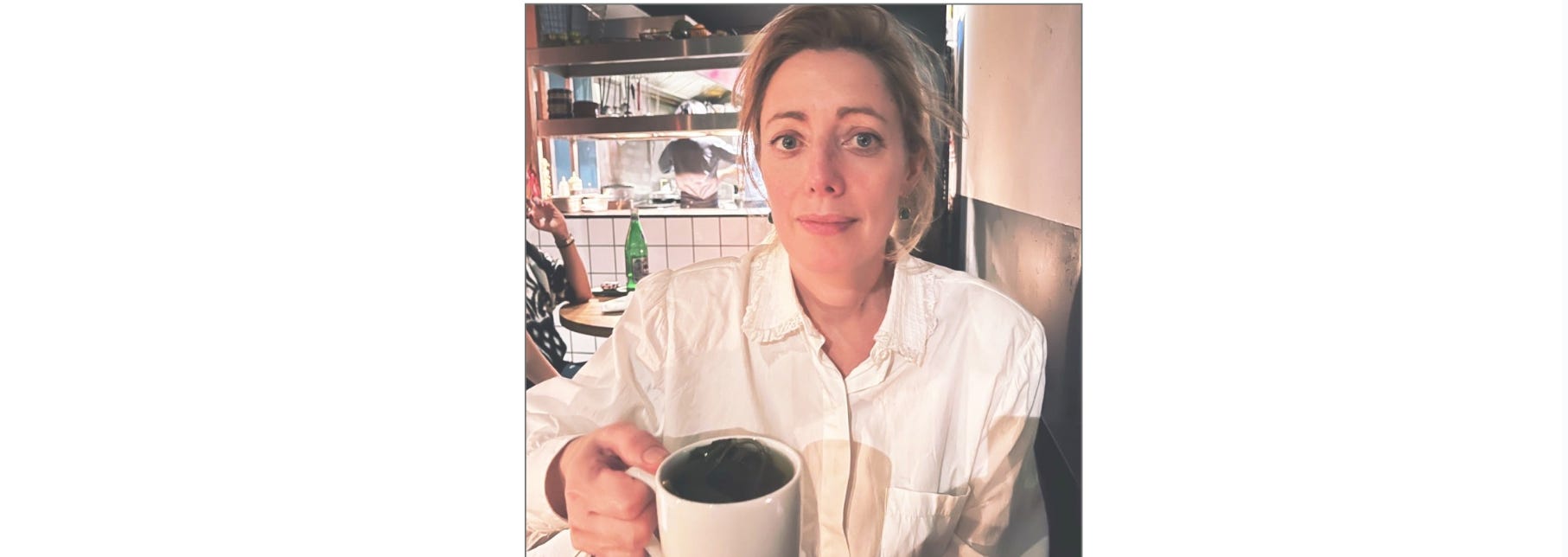
Lucy Neiland is a Business Anthropologist at Ipsos UK and a founding member of the Ipsos Ethnography Centre of Excellence. She previously led ethnographic research at Serco ExperienceLab and worked at Ethnographic Research, Inc. in Kansas City. She holds an MA in Visual Anthropology from the University of Manchester. Her published work includes "Hysterical Health: Unpicking the cultural belief's that shape women's healthcare" and "From Purity to Power: The wellness cultural operating system."
And I think you know this, but I start all these conversations with the same question, which I borrowed from a friend of mine, who’s also a neighbor, who helps people tell their story. And it’s such a beautiful question, I borrow it, but it’s so big, I over explain it the way that I’m doing right now. So before I ask it, I want you to know that you’re in total control, and you can answer or not answer really any way that you want to. And the question is, where do you come from?
It’s a really nice question, it is, and I’m not sure I the being in total control. I’ll give it a go. Because I am used to asking the questions and not answering them.
So bear with me. So I feel the question is two parts. For me, really, there’s people and there’s place.
And I think, in terms of people, I’m from, I don’t know, I’ve always felt my family were a little bit crazy. So there’s, my mum is, she’s Polish Jewish heritage. So second generation, I think her family, through, they flew in contraband during the Second World War.
And we’re sort of East End Jewish gangsters, as far as I can tell. And then on the other side, my dad is Irish Catholic. And they weren’t parented well.
My mum, I think she was, she had to leave home and live with her relatives, because she was too much, her mum said. And then my dad, he was put into a home and then taken out again. And as a long roundabout way of saying, my parents are really nice.
They’re both still alive, I’m lucky. But they are, they never knew how to parent. And so I always felt a bit feral.
And a bit, yeah, I think, and also on top of that, they’re both artists. So they take up a lot of space with their worldviews and their noise. And, and it’s made me quite an observer of people, I think, watching their, their craziness.
Yeah. And where were you? Where was this all?
So I grew up in South London, in Clapham. So 70s and 80s is really multicultural, nice, lots of nice things about it.
But when I was there, at that time, there was no national curriculum at school. And it adds to my sense, I had really feral childhood, but, maybe in my mind, but sometimes my boss says, I’m not trying hard enough with spreadsheets or numbers. And I don’t think he understands that I probably did maths, for half an hour, once every two weeks, there wasn’t, it’s not, it’s no joke.
But it was also there was a lot of good things about it. But it was also a really violent place back then. And it felt very polarised in that sense.
And I was mugged and attacked a few times, as was my dad and my sister. And it just felt, it felt a bit of a, I don’t know, a rough era in London. And I’m now I’m in Tooting, which I really, but I’m hoping we don’t slide back into 80s London, but I don’t think we will.
And do you have a recollection of what you wanted to be when you grew up?
I don’t know, not really. I do. I do remember saying to my mum, I’ve got to work outside, I can’t sit still.
I can’t, I need to be moving around. I might have to make my desk into a standing desk in a minute, because I will need to stand up. I’m not very good at staying still for a long period of time.
But yeah, I remember my, my mum, we had a school play at primary school, and it was the Pied Piper of Hamelin. Do you know that one? And I had to be a rat.
And I had these brown itchy tights. And my parents were watching. And they were saying to each other, who is that kid on stage that just can’t sit still, jumping around?
Really glad it’s not our kid. That’s really embarrassing. And then realised it was me.
And I feel that’s been the story of my life a bit. But I feel, it’s, I really have always been a people watcher, and really fascinated by rules and rule breaking and notions of authority and, and people who are so certain about things trying to unpick why? How can people be so sure of things?
But yeah, no, not, not really. I applied to art college, and I got a place in a really good London art school. But then I thought, oh, that’s my parents career.
So I shouldn’t, I shouldn’t do that. I should try something new, they’ll interfere too much. So I mixed art with anthropology and did a master’s degree in visual anthropology.
Yeah. I love, I mean, I was just about to ask about, you had talked about how growing up in the house, you grew up and turned you into an observer of people. And then you use that phrase people watcher. And I feel I say often that I’m a people, people watching, it’s my favorite pastime. Can you say more about people being a people watcher? Is that if I’m just even the phrase itself? Do you have a record where that comes from?
It’s so nice, isn’t it? It’s, it is such a nice thing to do, even a bus stop, or I think it was Mike Agar, the anthropologist said, you can do, ethnography, a bus stop with one person. And I think that’s really true.
You don’t need to be anywhere exotic, or it doesn’t have to be too complex, you can find patterns and norms and change and just by, your local superstore or wherever, it’s, I can’t help it. I’m a real watcher, starer. And I’ve also always felt I’ve been, I’m invisible.
So I took a, I took this cup of tea to an exercise class the other day. And I had a china cup. And I drank it. And I was just standing there with my cup. And everyone was, why have you got a cup? And I just, I thought no one would be able to see me, it wouldn’t have made any difference.
But yeah, just from a young age, I remember when, when my parents, when we all live together, there would always be people over and they’d always be, drinking and gambling. And they’d be, smoke in the living room. Everyone was smoky in that era.
And I just love to watch them all argue and try and work out what the hell was going on with them all. Yeah, I feel that continued into my life today. Definitely.
It’s my favorite part of my job.
Yeah. And so catch us up. Tell us where are you now? And what’s the work that you do?
So now I work at Ipsos. And I work in business anthropology or ethnography and run all sorts of projects on everything on, what’s it being a patient with a certain illness or, looking at financial services and interactions with products or what’s missing in people’s lives. So a bit of everything.
I think some of my favorite projects have been around things like weight stigma and obesity and masculinity and things that you really feel like social silences or stigma or that aren’t well explored or maybe society isn’t thinking about in a complex way.
What have you been working on? What’s the most recent social silence that you’ve been really fixated on or spending time thinking about?
I think wellness is one I’m really interested in the kind of rise of wellness culture and how it’s become a kind of total operating system almost in how it shapes how people think and eat and what they buy. And I guess that’s tied in with misinformation is one strand of it. But also this idea I’m really interested across all the projects I see in that your health is your responsibility as an individual and that you need to take control of it.
And it’s almost like this gentle gaslighting of people to that they’ve caused weight gain. They’ve caused themselves to be sick. Therefore, they need to fix it.
And I feel like these are the narratives that we’re hearing in health in finances, when you think about things like pensions, you didn’t save enough, you made some bad decisions, and not taking into account where you’re born, what you’re born with your family circumstances, life choices, pressures, this idea that we’re these autonomous individuals who should be able to navigate things almost like a rich white man. And that you’re ultimately accountable, or you’re responsible for your outcomes. But I guess more interestingly, that the society isn’t what you’re saying.
Yeah, that society isn’t. And that, I’m seeing more chatter. I mean, I don’t on in the social media I’m looking at in terms of the growth of community, community support.
I’m working with a great group of people on this idea for community pension. So just things like that are really giving me hope for the future that people want to be together and draw from each other.
When did you first discover that you could make a living doing this kind of thing?
So during my master’s, I remember I was working with this company called Ethnographic Research Incorporated. I think they were the first company to do business anthropology. They were based in Kansas City and run by Melinda Ray Holloway, really great ethnographer and Ken Erickson.
And they, so I was freelancing for them, whilst I was doing my master’s degree. And I remember going back to my colleagues on my master’s who were saying, how can you, how can you work for these car companies or these, what are you doing? It should be for social good.
Why are you doing business anthropology? And really getting it in the neck. Because I felt like it was interesting because they, a lot of the course were, it was this idea that you should be looking for something exotic or, to put it bluntly, study people that are poorer than you, go to communities where you can, I think, could be more extractive. And I was always interested in power, where power is or those dynamics.
But yeah, that was in my 20s. I started doing this type of work and I didn’t know it would be more of my career. So I started out doing this part time, but also trying to make documentary films or making documentary films and doing those two things at the same time.
And what kind of film, what were the films you were making?
They were weirdly a lot about the American military. I’m not really sure what was going on. So one of the films we made was about this motel where Timothy McVeigh stayed before he carried out the Oklahoma bombing. It was in the middle of America, right there. If you put a pin in America, it was there. And I wanted to make a film about middle America.
It was at the time of the Iraq war and what was going on. It was right by a military base with soldiers shipping out to Iraq. And I guess it was how middle America was feeling at the time about domestic terrorism and foreign terrorism and how they were conceptualizing these things differently or the same or othering people or yeah.
Yeah. And other films I’ve followed a military family from Oklahoma over to the UK to understand life, an American life in the UK on an American Air Force base.
So in Britain, we still have American Air Force bases, which I find so bizarre. And they are like small American towns in the UK with American dollars, food, culture, high school. And it was meant to be a film about the culture of the UK and US, but they didn’t leave the base.
The American fact, they were very scared of the UK. So it became much more about that, about fear and containment.
Yeah. That’s amazing. How would you how do you describe the way that you work? I mean, everybody develops their own maybe method or approach or way of doing ethnography. How do you think about what you do? And how do you how would you describe the way that you learn?
I feel like I really love working in a team. And I really thrive from trying to work out what we’re seeing as a team. So coming up with, we’ll go and do our research.
And it might be on things like health influences in different countries, what, what I like your dog, what what informs people’s health decisions in say, a global study on who influences health, and we’ll go to these countries. And we’ll talk to people spend time with people. But for me, the really exciting part is working out what we’re seeing, and often arguing about it.
I love that. And it was like, spending a couple of days really analyzing and unpicking and working out a story and a narrative that makes sense. And I feel like if you’re not arguing or coming at it with a different view, and then working out together, then what that that gray area is, then I don’t know, that’s the bit that gets me out of bed is that bit? I really love that.
Yeah. And what makes it so important, like the case, I was in these conversations, I always feel like I want to get to some foundational thing of what is the value of this kind of ethnographic work? And we can always talk about AI and all that stuff. But what do you think makes this stuff so important? What’s the value that it brings and the role, the proper role it should play in the way organizations go about doing their business?
It really, it really helps understand what’s happening in the world. I know that’s just really cheesy. But I remember making channel four in the UK years ago said, Can you make a film about a future predictor?
I think her name was faith popcorn. I can’t remember.
I have a funny Faith Popcorn story.
And I said, No, I can’t. But I could make a film about how anthropology or sociology or understanding cultural patterns can help you prepare for what’s coming. If you work with people’s social and cultural norms, you can, you have to work with people for things like, during COVID, you’ve got to work with these norms, you can’t dictate from above, and make people comply, you need to understand people’s beliefs and everyday lives and care networks and ecosystems to work with those.
And that’s really important for brands and for medical professionals and institutions to do is to get behind the counter with these with people and work with them rather than impose from above, I think. I really want to hear your faith popcorn story.
It was not directly with her, but I interviewed at the it was Faith Popcorns Brain Reserve, I think was the name of her company. Yeah, and I got into the second interview, I think it was the same interview, but they brought me into some room that was like a war room for we’re doing something for, I think this woman came in and she asked me this is where this is about the future of carbonation. And so she was she asked me point blank, what do you think is the future of bubbles? And I think, sincerely, one of my proudest moments, without meeting a missing a beat, I said, no bubbles.
I love it. Very good.
Yeah, my entire higher education prepared me for that.
That’s really good. No bubbles.
I did not hear back.
No. I wonder what someone else said, who got that job?
Yeah. How do you what is the answer?
What’s the answer? Yeah, the bubbles have still stayed the same as far as I can see.
I think there’s been experiment with smaller bubbles. I think there’s probably there is light and low carbonation. I feel like we’ve Oh, yeah.
I haven’t thought deeply about bubbles, clearly.
And I didn’t intend for us to get overwhelmed. I overflow with my fave popcorn story. I do.
I bubble over. That’s right. Well, very well done.
So the visual anthropology bit and the business anthropology bit. I’m just curious what how has the practice changed over your career to I feel like, I’m sorry, I’m bumbling questions on top of each other. I love that description you described of being challenged by the anthropologists around you for applying this into the corporate world. And I’ve often been the brand guy with not for profit people. And that that boundary is very well protected on one side. You know what I mean?
Where people really feel you can’t go over there and do that thing. I’m just wondering, what’s what was your experience? If you could say more about that experience. I would love to hear it. About the experience that Yeah, I guess that anthropology is not something that should be participating in corporate culture or commercial culture. Maybe I’m projecting.
No, I feel it’s an interesting one, isn’t it? Because we all need products and services that work and that are good and that talk to us. So.
So to understand people is key to getting these things. And I don’t think it’s as simple as good guys and bad guys, you know, so you might do work in public affairs or for government. But if you don’t particularly the government or, you know, you know, then you benefit structure.
Why? Why? In a way, that’s not any better or any worse than working for, you know, a particular corporation.
Obviously, there’s not nice corporations out there to obviously lots of them. But but I think it’s it’s not as black and white as public sector, good private sector, evil. I think it’s it’s more complicated, isn’t it?
And I feel especially for things health systems, or I don’t know, things financial institutions, I do a lot of financial services, a lot of healthcare ethnography. And I feel those are really important because your health finances need, you know, you need those things to be to be working for you to, you know, get into order age in good Nick. I don’t think I answered your question at all. Sorry.
No. You did. I think it says the follow up was really was how has the role of anthropology changed over your career? I feel it was maybe fringe in the beginning. Do you feel it’s changed in terms of?
Yeah, definitely. It’s definitely changed. One of the things I was gonna say, yeah, I went for this job ages ago, it was I really did want it was working for a mental health team in London Hospital.
And it was basically because there was a lot of, I think it was a lot more black men being sectioned than anyone else in in this area of London and probably elsewhere. But it was focusing on this area. And the job was to really understand the cultural beliefs of the, you know, clinical team and the police and to work in that community and understand why the rates of sectioning were higher and, you know, and how to reduce them.
And I’ve sat on this table with other anthropologists there. And we had a group discussion. And it was it was really great.
And somebody who had a PhD got the job, they wanted someone with a PhD, I didn’t have one and don’t have one. And, but I remember talking about, you know, even doing ethnography for the military, you know, not that I’ve ever done that, or, but, you know, you can be an anthropology, anthropologist for the police, or for, you know, these health services to really help liaise with the community. And I remember somebody in on that table saying, you know, anthropologists can’t work with the military, that’s really awful, you know, how could you do that?
And it’s sort of, to me, that blew my mind, because these places and institutions are the ones that often need those cultural bridges to communities, I think.
Yeah, yeah, yeah, more, more than ever, actually, more, not more than ever, but they need that intelligence and understanding more than other institutions, it would seem.
Yeah. And as long as you’re doing it in the right way, I did apply for a job with secret services in the UK to be an anthropologist, and it was looking into the rise of terrorism. And I didn’t get a second interview.
And I was quite pleased about that, because I, I wondered if that would be going undercover. And, you know, and I wouldn’t, I’m not, I wouldn’t want to do anything, you know, that, unethical.
What is it that anthropologist does that other people don’t do? It seems it’s a sort of a weird, it’s, you know, for some people, it’s very strange. You know, you say, people watching what God’s name, does that have to do with the how the world works?
Or how adding that, I mean, maybe I’m being being provocative, of course, but what is it that anthropology does that others don’t do?
I think it’s really trying to understand others, the set of rules and identities and behaviours that other people have that make sense of things. So how other people and groups and subgroups are making sense of things. And I think that’s maybe the difference is really, yeah, trying and no, it’s so boring to say, but walking in other people’s shoes, I can’t believe I said that, but really trying to understand these and not dismiss different views.
So I’m really, I’ve got on when I did this work on masculinity, a couple of years ago, I started a social media account, as a young man, and I wanted to see, I don’t post anything, I just receive, I just have an algorithm now that feeds me stuff. And some of it is, it’s just really blows my mind, it’s stuff that I would not be following, but I want to understand different movements. And, you know, and some of them are quite far right, quite extreme.
And I think, but I want to understand the mindset of people rather than dismiss, and not lean into the end of history and liberalism, but to really walk in the shoes of views that I might not necessarily agree with to, to try and, yeah, work out what’s going on and how gaps can be bridged. And I think I was feeling quite despondent recently thinking about how it feels like an era where I think we used to say as anthropologists, at least on our team, it was about empathy creation for different groups. So for your consumer, for your patient, really empathizing with them as a brand or as an institution to work with them.
And I feel like that’s not enough anymore, just empathizing. And I’ve been really thinking about what’s going on, and why isn’t that enough? And I was reading about empathy.
And I was wondering if it’s about people are now almost over empathizing with a with their own in group. And it’s, I was reading about that analogy of, you’re almost shining a spotlight on your in group. And so everybody else outside that group is in the dark, rather than drawing back and having sunlight on everybody. It’s like, wow, do you know what I mean?
Yeah. That’s beautiful. Where did that analogy come from? Is that your own analogy?
I can’t remember. I was reading this. A guy who’s who’s written about it. I just can’t remember his name.
This observation started with the work around masculinity and you exposing yourself to the social media feed of a young man, presumably. What’s that? What can you say more about what that experience has been has been like?
Yeah, it’s been really weird. So it started with my daughter during COVID times. And when everybody went back to school in the UK, she became a bit of a school refuser.
She didn’t want to go back. And she did go back. But, you know, it was much lower attendance.
And I talked to her and her sister, who are younger teenagers at the time, and they just were reporting just the rise of misogyny in the classroom. And, and I think the schools really didn’t know what to do at that time. You know, they had templates for not necessarily the best ones, but for racism or for, you know, other issues, but this was something that they hadn’t that they hadn’t seen before.
And so I interviewed lots of teachers, other students, and, you know, my kids, other people’s kids and started a whole project with my colleague Diana on looking into what was going on and did a lot of expert interviews to build up a picture of, of what was going on, because it really blew my mind. And so, yeah, I put together a documentary, combining different voices. So, you know, young men, young women, experts, teachers.
Yeah, and it was a really interesting process. And a part of that was creating this social media algorithm to see what these young men were exposed to and, and, and was what was coming at them hard and fast, just from searching things like gym or football or vitamins, you know, how, how extreme things would go, you know, straight on to choking or, you know, Andrew Tate back then, or, you know, how to get your girl to do what you want her to do, and just so much worse.
It’s obviously so much worse out there. But I think what blew my mind about this project, and is still blowing my mind is the fact that we’re spending so much time looking at young men and boys, and we are still only unpicking what’s going on with the, you know, with Epstein. And, and you think about these older musicians and politicians and the social silence around almost, around what’s happened with these older men, you know, that have set a template, sure, without social media.
But this culture has been well established. It’s not new news. It’s just now we have little reels explaining it. So we shouldn’t be pointing at the young boys, you know, to be accountable here, I feel.
Yeah, that seems to be, I mean, that, of course, is the Epstein files, the promise of the Epstein file, what makes them so powerful, right? Yeah, what they seem to promise about, about what we’re going to learn. I mean, we just, there’s a college nearby, the president of the local college was, you know, just revealed to have been in 2500 emails or something like that.
That’s amazing. So don’t you think, don’t you think with the, what is a silence here that is interesting is how we other the men involved. And slowly, we can’t do that anymore, because it’s so many.
And so it’s surely then it’s a cultural norm that we need to talk about rather than say, look how unusual it is, the French case. I can’t remember her name, but that really brave lady who turned up to court and said she wouldn’t be ashamed. But it’s like, you know, there was a whole narrative about how unusual these things are.
And actually, they’re not, are they? But they’re so well covered up.
Yeah. Yeah. Well, it’s just so, it’s all part of some, some just general way of being, you know what I mean? You say, the power is all, there’s somehow acceptable aspects of what one does if one is in pursuit of power. The president said, I was looking, you know, I’m looking for money for the college. That’s it?
That’s it. Yeah. Okay, then.
Strange, very strange. I want to return to you that you’re, that I have so much identification with the, your insight into the idea that, that is true, that we used to be advocates for empathy and empathy was this thing, but we’ve entered into an era where empathy doesn’t even feel like it’s, it doesn’t, it’s just not up to purpose, I guess is the way I came along with the cliche I’m looking for is, but so what do you do now? Is there a way that you’re rethinking approach or rethinking practice to, in an acknowledgement of this? I love that we’re all, there’s, I’m going to add a little detail here.
There’s a guy, I live in a very small town. I’ve thought a lot about community engagement and how divided we are and what social media did to all that. And there’s a guy from University of Berkeley, California, Berkeley, John A. Powell, who wrote a book called Belonging Without Othering. And it’s this framework about bonding and bridging and breaking. It’s all this whole way of talking about how communities can come together to repair injustices of the past, but not do it.
Often we do it, we end up just what is, what’s the line, you know, meet the new boss, same as the old boss. We just switch power positions and just perform the same injustice in a different direction. And it just pushes the resentment down the road.
And so anyway, he has this way of talking about bridging behaviors, which is, we don’t have them anymore, really. We’ve forgotten here in the States. But that bonding is, you’re talking about we’re so, maybe social media has got us, we’re bonding all the time.
We’re celebrating the in-group all the time. That flashlight image you gave was really so powerful. So enough of my rambling. What are the implications for how you work, if that’s the case?
So one project I’ve really enjoyed working on is one about kidney disease recently. And it’s been really moving. And we’ve spent time with patients, people, you know, going through kidney disease and treatment for it.
And how we’ve brought this to our clients is we’ve done our ethnography. So we’ve gone out, we spent time with them, we’ve understood their lives and the patterns, the influences, the journey. And what we then did is we brought them into a co-creation session with the client and the client, you know, comprised of designers, product designers, scientists, doctors, and some of them hadn’t met patients before.
Some of them work, you know, are patient facing, but they hadn’t spent time with patients as an equal. Do you know what I mean? You’re always, as a doctor, you have a role to do.
And it’s a different hierarchy, you know, even if you’re a great doctor, you’ve still got a role. So here we had, I think it was a two hour workshop, where we didn’t call patients patients, they were people, they were guests. And then our clients, we mix people up.
And we designed a workshop where it was really about co-creating together, everybody was equal, everybody learned from each other’s experience. And we just got such great feedback that that was a really moving session. And for us, we just finished a project to on elitism.
And for that project, we really would like to get our clients in the room with some of our participants as well. And also in that project, we’ve got participants with very different political views. And I don’t know, I don’t think co-creation is always the way or necessarily always the answer.
But it’s quite nice to see where people do converge. And what are those things where people have the same worries and fears and interests and where they can come together, rather than trying to get somebody to empathize with his whole other person, maybe it’s just with some aspects that they can relate to. So maybe it’s more dissected, I’m still thinking on it.
Do you have an answer?
I don’t have an answer. Lots of other things come back to me. Actually, I was just remembering, I guess I’m a bit of an Anglophile.
But do you know, Roy Langmaid? Does that name ring a bell? So he’s a, there’s a couple, I think, threads in my own career, I think he was the, they call him a father of qualitative research in the UK, Roy Langmaid. And what was her name? Wendy Gordon? Does that name ring a bell?
No, we’re gonna have to look them up.
But they’re in the conventional qualitative space. And I think there’s a way that qualitative and ethnography are two totally different cultures, even though they’re addressing the same problem, of course. And of course, that makes sense.
But he would do these breakthrough sessions, the same thing, this idea of co-creation. So yeah, I think stuff like that, that there’s a need. And I remember, yeah, just getting people in the same room.
I feel echoing what you said before, that somehow the answer to what’s the role of qualitative, you said, you said these, you said these things that felt you were apologizing for how simple they were. But this idea that just getting people in the same room and treating each other as human beings, and just having some interaction about the facts of the matter or the experience of the matter is a lot, it seems.
It’s a lot, isn’t it? And trying to remove power dynamics when you do that, I think is really important, isn’t it? So working hard to, we did think long and hard about what to call patients, how to introduce them, and that thing to really try and empower people to bring their whole self, if they can.
Yeah.
It’s interesting. Yeah, to create the appropriate conditions for people to actually meet each other.
Yeah, yeah. And I feel like for the most part, people want to, don’t they? It’s, it’s all the other things that I think I’ve got a very positive view about humans in general.
But people want to do good and have agency. And I don’t believe in the concept of laziness, people.
Wait, wait, wait, what do you mean? Who’s, who are the advocates for laziness that we’re, we’re up against?
Don’t you in the tabloids, lazy benefit, whatever, or just people should eat less and move more or, and I, I just don’t believe anybody is lazy. There’s a reason people don’t do things. Not that people should be eating less or moving more.
It’s not what I’m saying, but there’s a people, there’s a reason why there’s always a reason nobody is, everybody wants to be appreciated. Everyone’s agency, everybody wants to find fulfillment. But stuff gets in the way and circumstances out of your control.
Is it, yeah, I don’t know.
I remember having a very strong reaction when somebody would ask for creative respondents, we need creative respondents. And I’d just be like, it just pissed the hell, it just pissed me off because I felt like it just diminished the idea that, I feel like in a way, we’re all creative and imaginative all the time. The whole project of trying to get through a day is this imaginative act.
Right.
And, and we’re now we’re going to have to find somebody who’s what, there’s some people that aren’t creative. I just think it’s not the job.
Yeah.
I think that’s really, really annoying. I would hate that because we’re, might have a project going ahead that is looking at how men engage in the arts and not the arts as in opera, painting or whatever, but to look at some of the barriers that men might have in, it’s for this company that does these festivals for women and how women come to, and they understand well how women come together, and appreciate different things, but they, they want to understand the barriers for men engaging in these things. And what I really like about this brief, it’s not a creativity as in high culture or, it’s actually, maybe how someone relates to music or a podcast or, dancing on their own or, being a creative builder or, or, dressing up as a knight or, or whatever you might do. So yeah, people are creative in, in every way, aren’t they?
Right. Right. Yeah.
Yeah. You begin by not pretending what it means to be creative.
And also to be part of creative industries, I think is if you look at the history of art and music, most of these people are probably really rich, aren’t they? Because they’re the people that could afford to, be part of it. So you’re already excluding so many creative people.
Yes. Which leads to another rant I have about the use of the word of taste, but I want to, I want to, well, it’s not so much of a rant as I feel like it’s just used as shorthand for this, for this thing. Let’s, let’s just treat this as a, something that we can’t really explain, but that explains my superiority is the, the application of it.
As opposed to maybe just doing the research and being rigorous about it, but I’m, I’m being a bit of a prick, but I want, I’m curious, what’s the, when people call you guys, what are the, what kinds of problems do they come to you with? Like, what’s the, yeah, what do you, what do people come to you for? And what do you say?
Oh, don’t ask me that one, but what do they come for? What they come for all different issues, really so we’re a team of, 15, I think. And we all have different skill sets.
So, I do a lot of healthcare and financial services, ethnography, but also other types, but different team members specialize in different things. And that’s why it’s so nice. Different people bring a different expertise together.
So one of our colleagues, Gigi really focuses on beauty care, and it’s so interesting listening to her talk because that’s not, my area. So it could be anything, about new trends in, in drinks or, just anything and everything, but really with an eye on, on the future, the rise of, low alcohol, you’ve got a whole lot of companies worried there, haven’t you about, what, what’s going to be happening in the future if, if you’re, somebody making beer or, or, yeah, I said, I do a lot of the looking at, patients, healthcare companies with new medications or thinking about how better to communicate to patients, the, how to get patients engaged with, with their products.
I’m just trying to think of what I’ve been working on recently, just, just everything.
We’re running near the end of time. And I’m curious about, I have the question that usually comes early. It’s where the joy is in it for you. And in particular, I’m wondering about the actual ethnography itself, the time you spend with people, what’s that experience like for you and how do you feel, I think we’re, it’s a strange bunch that spends this much time people watching and, and how do you feel it’s changed you? What do you, what do you appreciate about all the time you’ve been able to spend with people trying to understand them?
I feel like I’m not, I, I, still feel like I can just stare and watch and no one will ever see me. And I feel you just feel really lucky. Don’t you doing this type of work that you’ve been up and down the country and to different countries, not that I travel that much with kids, but, but, in, in the UK, just all the different households you’ve been in and the people that have given you their time and what you’ve learned from them and, maybe what they’ve learned from you.
I remember with my colleague, Hela, we went to a participant’s household a few years ago. And at first they were, it was her, she had COPD and her son and her son had quite severe epilepsy and she was the carer of him. And they were, their lives were really tricky and they were quite suspicious of us at first.
And we sat there and we weren’t getting anywhere. And then I just start to talk about my, my daughter had epilepsy. She’s grown out of it, but it was a childhood form of epilepsy.
And as soon as I shared something of myself and my lovely colleague share something of herself, our participants shared their whole lives with us. And that was just so nice, making sure that you, you give something, you, you’re not just taking, and I feel like our best ethnographers do that. You’re not, you’re not just a sponge, you’re there in a relationship and you, you have to give.
And I think that stays there, doesn’t it? You, you’ve, you impact people’s lives. I remember doing field work in, when I graduated, I worked with an anthropologist, in, I went to make a film about his field work in India and, in South India and him and his wife.
So we dressed in local clothes and, and him and his wife were quite strict about, not answering questions when people asked you questions. And I remember really arguing with them about this. So they were white.
I think he was from Belgium. She was from England and we were in a community in Tamil Nadu in South India. And some of the people there had hadn’t left that village.
And, and I didn’t like the idea of not, they’d ask, so would you wear these clothes at home? What was it like, are you married, like really sharing a world outside, this is the time, people didn’t have the internet then at home. Well, I certainly didn’t, and so you, you have to really share your life, don’t you too. And it’s not all about you, not everything about you, but something.
Yeah. That’s beautiful. I mean, so much of it. Yeah. That’s beautiful. I feel like, I don’t think I have anything to add. I was going to say, I feel like as a young man, I always say that I was feel really grateful that I was put in across the table from, from somebody and told to try to understand them. And you know what I mean?
I don’t know that I would have gone out of my way to learn that if it hadn’t ended up my job. Certainly that way of being in the conversation is, I think something I learned just as getting older to your point. And I think it’s made me better, but it’s changed everything.
Yeah. And I think there’s a, maybe, I dunno, maybe as well, there’s a way to challenge views sometimes that you learn, don’t you too, to, especially when you’re with more powerful people to sort of throw the tiny bombs in, in slightly in the nicest way. So whilst you’re listening and giving, but you’re sort of also just sometimes staring slightly, probably not meant to say that, but I do like that.
There’s drama in there. You’re not just, it’s not this there’s drama in there. There’s conflict in there.
And to your point about what, what do you like about it? What gets you up in the morning? I think it’s, it’s those things, isn’t it? It’s like the tension and the conflict and picking this puzzle of like human weirdness and try to find out what those patterns and stories are. Cause they’re really complicated, aren’t they?
Oh my gosh. Yes. Awesome. Lucy, thank you so much. This has been such a pleasure. I really appreciate you accepting the invitation and sharing your time. Thank you.
Oh. Thank you for talking. It’s been really nice. I hope it’s made some sense. Thank you.