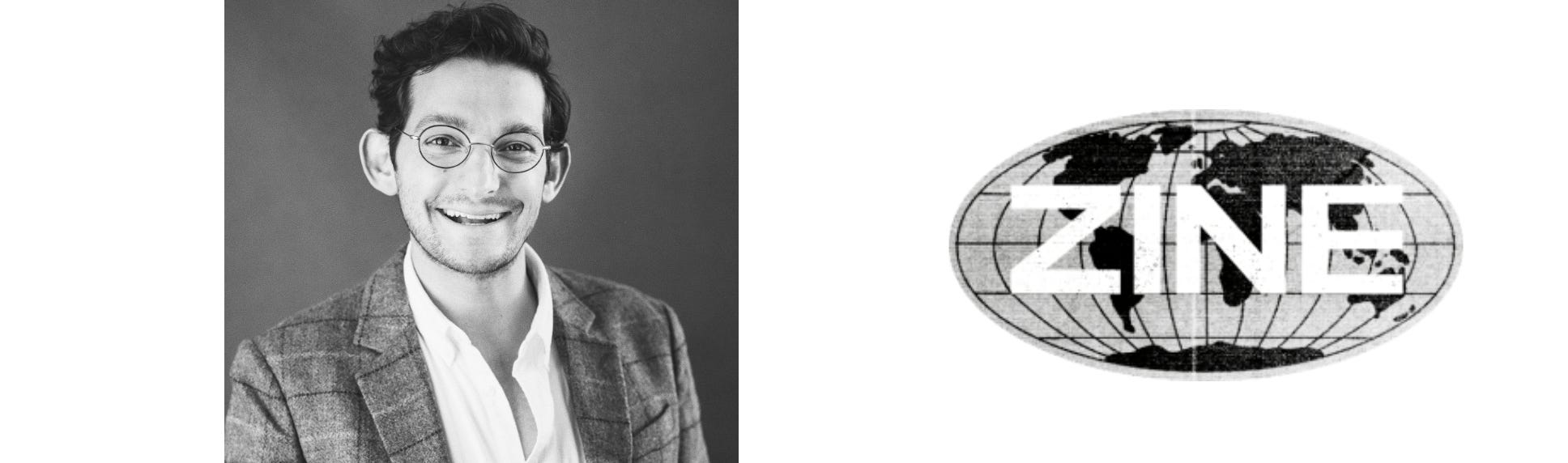
Matt Klein is Head of Global Foresight & Research Methods at Reddit and the creator of ZINE, a Webby Award-winning cultural intelligence newsletter with 26K+ subscribers across 150+ countries. He calls himself a “digital anthropologist, cultural theorist, strategist, and writer.” Douglas Rushkoff called him “a brilliant cultural analyst.” Someone else called him “the closest thing to Gen Z’s Marshall McLuhan.”
So I start all these conversations with the same question, which I borrowed from a friend of mine, who’s also a neighbor, which is significant, and she helps people tell their stories. And I haven’t really found a better question to start a conversation, but it’s a big question, so I over-explain it the way that I’m doing right now. So before I ask it, I want you to know that you are in absolute control and you can answer or not answer any way that you want to. And the question is, where do you come from?
I knew this one was coming. Still don’t have an answer.
Where do I come from? I come from two loving parents in New Jersey. I grew up in the quintessential suburbs and went to high school in the very stereotypical movie high school with Friday Night Light football games and people shoving people into lockers type of deal. And didn’t love that experience. I was not shoved into any locker, for the record. But I did find a lot of relief. We had a mass media department. We had a full-on film set, TV studio in our high school. And I found a lot of both relief and just a respite catharsis in that space.
And it was also quite convenient to edit movies there rather than sit at the lunchroom table or alone. And very quickly I learned this is it. This is what I love doing.
I ended up going to a very small liberal arts school, Franklin and Marshall, where I did a double major in psychology and film and media studies. And I was either going to be a film director or a child therapist. It was a coin flip, one or the other.
But it wasn’t until I was taking these courses in strategic communications and the theory of technology that I realized that there was this overlap here, which was the psychology of media or the ways in which new technologies are changing the ways in which we communicate, express, create senses of self. I’m like, oh, that’s it. This idea that we can study media and culture and people through our devices or through media. And that’s what I was so interested in with film as well.
And that landed me in Adland. I had my first gig at RGA. It was perfect timing because all these brands were trying to figure out, what do we do with this thing called social media? How do we behave? What do we say? What is the purpose of these tools? And here I was explaining all of these platforms and the psychology of it and what that meant for culture and purchase decisions and creation of identity. And to be paid to do that was profound. That was wild.
And jumped from shop to shop, to market research, to creative, cutting my teeth on any and everything. And here we are. The passion is still the same, which is trying to make sense of culture. And what does our technology say about us and what do we say about our technology?
Yeah, that’s really wonderful. I’m so excited for this conversation. I wanna go back to the beginning. I was really struck by the suburban upbringing and your discovery of that studio. How did that begin? What’s the origin story of you finding that space to play in and explore?
I had already loved backyard movies. I was using our old massive camcorder. I don’t think it was even DV tapes. I think it was VHS tapes. We were recording on just nonsense in the backyard. And then for a birthday one year, I got a handheld. Lego also had their own movie studio product line. So I was loving that.
How did I discover it? I don’t even remember. It’s not like I chose the high school, but there was these intro to mass media courses where they taught you, here’s how to shoot. This is a pan. This is a zoom. And we were just editing. And the next year you take a course on deeper into editing styles or narrative fiction. And I mean, it was quite advanced for a high school and absolutely loved it. Was absolutely hooked because it was just filling an existing interest in the first place. And our school took it very, very seriously.
We had a full blown film festival at the end of the year where all the students submitted their films. There were screenings where students and teachers and parents came to watch them all in award ceremony. And I think it was so rare to have that experience where at a very early age in high school, you are given the opportunity to find something or for something to find you that stimulated you. And you can find something that was challenging. I mean, that wasn’t happening in US history for me. So to have all of those options of electives, essentially what they were, to find that in film was quite special.
Yeah. And do you have a recollection and maybe the answers in everything you’ve already said as a young, as a boy, what did you wanna be when you grew up?
What did I wanna be? I don’t know what the title was, but I knew that it was something creative in nature. I mean, I was always doodling. I was making those backyard movies. It was something creative in nature. And I mean, I went into college thinking maybe this is a film thing, but it was deeper than just the art itself. There was something beneath it. And I think I found that in, here we are, business. I’m not as much interested in the business part as much as everything else. Business is just the vehicle to explore that. I still don’t know. I still don’t know.
Yeah. And so catch us up. Where are you now? And what do you spend your time doing?
Doing a lot. I am currently at Reddit. That’s my nine to five on the Research and Insights team. The last four and a half, five years has been focused on helping brands understand what’s happening in culture through our data so they could show up in a more strategic way.
In a more strategic, creative, resonant manner. Last year or so, I’ve shifted a bit to focusing on applying those insights to Reddit itself and thinking about consumer growth, both in the US and internationally as well. That’s the nine to five.
And then outside of that is a lot of writing. I’ve been writing for quite some time, trying to make sense of the messiness of our current moment. I was writing for two people on the internet and was quite fine with that.
I was doing that on Medium and then Forbes and then a little thing called Substack came along before Substack was even Substack. And I thought, well, this is great. If two people subscribe, then at least I’m not fighting for attention.
Those are two people who are raising their hand to say, oh, I’ll read that. And that allowed me to focus more so on what I wanted to explore and think about rather than chase a view or cut through on attention. And that has grown into Zine.
And that has then brought in other speaking opportunities and advising opportunities. And that’s how I’m filling my time currently.
And when would you say you first discovered you could make a living doing this?
It’s an interesting question because we can interpret living in a few ways. There’s the financial aspect of it. And there’s the, oh, wow, I could fulfill myself and find that meaning in that.
That was very quickly. That was very, very, very quickly. Still today, I don’t view writing as something for other people.
I don’t say that selfishly. There’s of course value and people wanna pledge and fantastic, I’m so about that. But when I say it’s really for myself, it’s I have something that I’m trying to wrestle with.
I can’t make any sense of it. I’m trying to find my words to explain this to myself. The page is the canvas to do that. It’s really for me. Truly, it is for me. And sure, if less people read it, would I feel differently? Yeah, probably.
That said, anything that I’m writing is truly for myself. Truly, first and foremost, I’m trying to make sense of this thi…