In my town of Hudson, I have been advocating for new forms of civic engagement for a while. It’s a long story, but the short version is this : our small city struggles to do what it needs to do, and the spaces we have for having conversations about what to do next weren’t built for the social media age.
It was clear to me, early, that we would need new spaces custom built and strong enough to hold the conversations we need to have. This led me to the concept of a citizens assembly - and to the world of civic engagement. A few interviews follow this thread of civic design and engagement and offer a diversion from the world of ethnography, brand marketing and cultural strategy.
This conversation is one of those, with leaders in this space, working to innovate democratic participation at one of our nation’s oldest organizations.
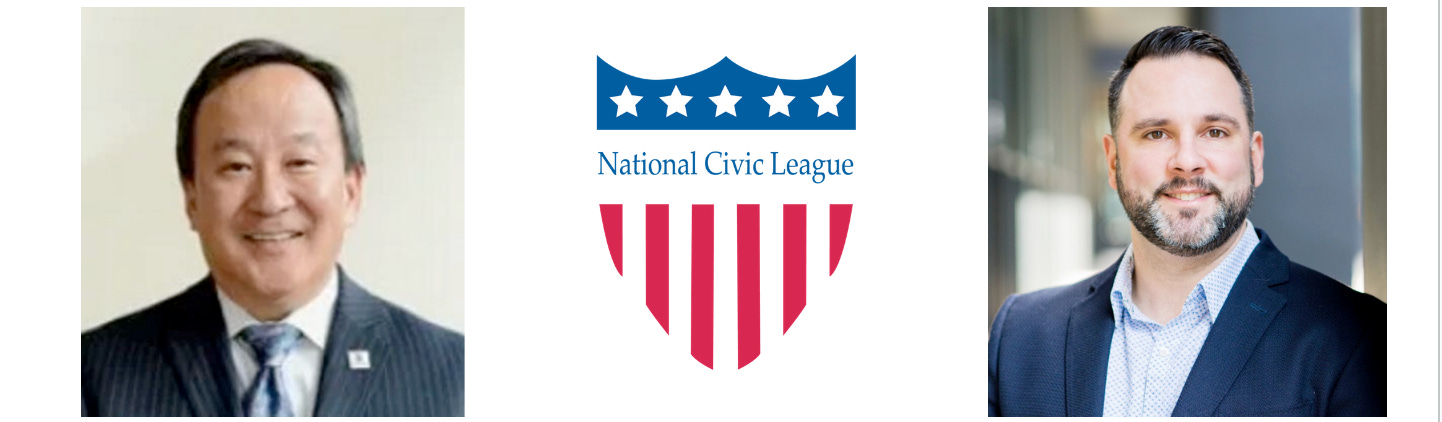
Nick Vlahos is Deputy Director at National Civic League's Center for Democracy Innovation. He holds a PhD in political science, authored a book on British devolution, and previously worked on civic engagement initiatives in Canada and Australia.
Derek Okubo, is Director of Civic Assistance at National Civic League, and led Denver's Human Rights agency from 2011-2023. Previously, he worked for Big Brothers, Governor Romer's office, and the National Civic League, where he facilitated nationwide planning efforts. He serves on several Japanese-American organization boards.
The TIME magazine article, “What Jimmy Carter Taught us About Civic Populism”
So, Nick and Derek, thank you both for accepting my invitation. I start these conversations with a question borrowed from a friend who helps people tell their stories. It's a big question, and you're in complete control of how you answer it. The question is: Where do you come from? Either of you can go first.
Nick Vlahos : I guess the first thing that I would say is, where I come from is a small ish prairie town in the center of Canada, Winnipeg Manitoba. And, you know, I currently live in Toronto for the past 15 years. So, I'm Canadian by birth, I work for the National Civic League, I worked for the Center for Delivered Democracy and Global Innovation in, in, in Canberra Australia so I'm just really, you know, I'm globally focused on my, you know, you know, thinking about democracy innovation in a variety of different contexts. And so you know my background really is really interested in participatory deliberative democracy, community development, and any form of public decision making that can really elevate people's quality of lives to better forms of decision making processes. Beautiful.
Derek Okubo: I’m glad you took it first. I come from a Japanese American family. I’m a fourth generation in this country of my family. I come from a history of where my family experienced. Very unconstitutional acts in this country where they were imprisoned during World War Two lost everything from their business to their businesses to their house to their feeling of security, and then restarted all over again after the released from the camps, and, and which probably played a big role, as far as that history in my own work that I've done in community as far as civil rights, as far as advocating for the underrepresented in this country in our communities. I worked with the National Civic League for 20 years, and then received an appointment from one of my former staff members who was elected mayor of the city and county of Denver, and he appointed me to be his executive director of the Agency for Human Rights and Community Partnerships. So I did that for 12 years.
And then we turned out in July of 2023. I started my own little gig and have been working since I came back to the National Civic League halftime to help with specific projects around the country, again. But yeah, for 20 years with the Civic League, I did a lot of work around the country in communities, whether it was strategic planning or dealing with specific issues.
Yeah, I'm so honored to be speaking with both of you. I really do appreciate you being here with me. And before we get into sort of the nuts and bolts of the National Civic League and charter reform and all that. I was curious, what do you love about the work? Like, where's the joy in this for each of you?
Nick Vlahos: Yeah, I mean, the real joy for me is working with people. I mean, I started I cut my teeth in community development and social housing communities working with underrepresented groups, specifically on community economic development and different forms of participatory decision making related to how to, you know, how to establish, you know, positions and roles and jobs for for the youth in specific communities.
And so it really is on the ground, speaking to people and seeing the fruits of, you know, the good processes that bring people to have conversations together. And I think part of that is also, you know, learning over the years and being present over the years in some spaces where or public for where there really isn't civil discourse or dialogue or structured conversation and things like that. And so the real joy for me is seeing collaborative efforts come to fruition and people problem solve because I think naturally we are problem solvers and we give people a task to solve a problem collectively, then they come together with a shared vision for that.
Derek Okubo: Just to kick back off of what Nick said, I learned very early that this work awakens a belief in the people. And just like what Nick said, I mean, I'm in the work I've done around the country and in my own communities. When people come together with a wide ranging perspective and they come in, we share the good information, we develop the vision. And I mean, I've seen where people have thought things were impossible to accomplish where they actually did across a wide range of perspectives. And so it really has just left me with a belief in people.
Beautiful. So I wanted to start maybe just could you tell, I mean, so I only encountered National Civic League, I think within the past few years in my own efforts, you know, I live in a small town and there's conversation about charter reform and I bump into the National Civic League, but I don't know that I had really been aware before. So what do people need to know about the National Civic League, its history and what it's doing?
Nick Vlahos Let you take that one, Derek.
Derek Okubo: Well, yeah, I'll just start with the nation's oldest good government organization founded in 1894 by a bunch of young civic rebel rousers of that time period. I mean, we're talking about a young Theodore Roosevelt, young Louis Brandeis, a young Marshall Fields, just that came together that we're really concerned about how local government was working at the time. It was very dysfunctional, highly corrupt, and they came together to address that issue. And about six years later, came up with the first model city charter to address how local government can be run more effectively.
And as you know, a lot of those folks became the reformers of this country. And so since that time, they've kind of laid the groundwork, developed the DNA of our organization as far as participatory local government, collaborative decision making, working together across perspectives across all sectors to address local issues. And that's something that we do on a daily basis. Nick, do you have something to add?
Nick Vlahos: Yeah, I just think that it's interesting. I mean, I've been with the organization for two years now, you know, our in-house National Civic Review is over 100 years old. We've been celebrating communities through their local civic action and innovation for 75 years through the All American City Awards.
We've been advocating for, you know, structural forms of city government, which have ranged and have different over time. Initially, you know, I think that city manager form of government is one in our model city charter, but also electoral reform. And so thinking about this in terms of, yo…