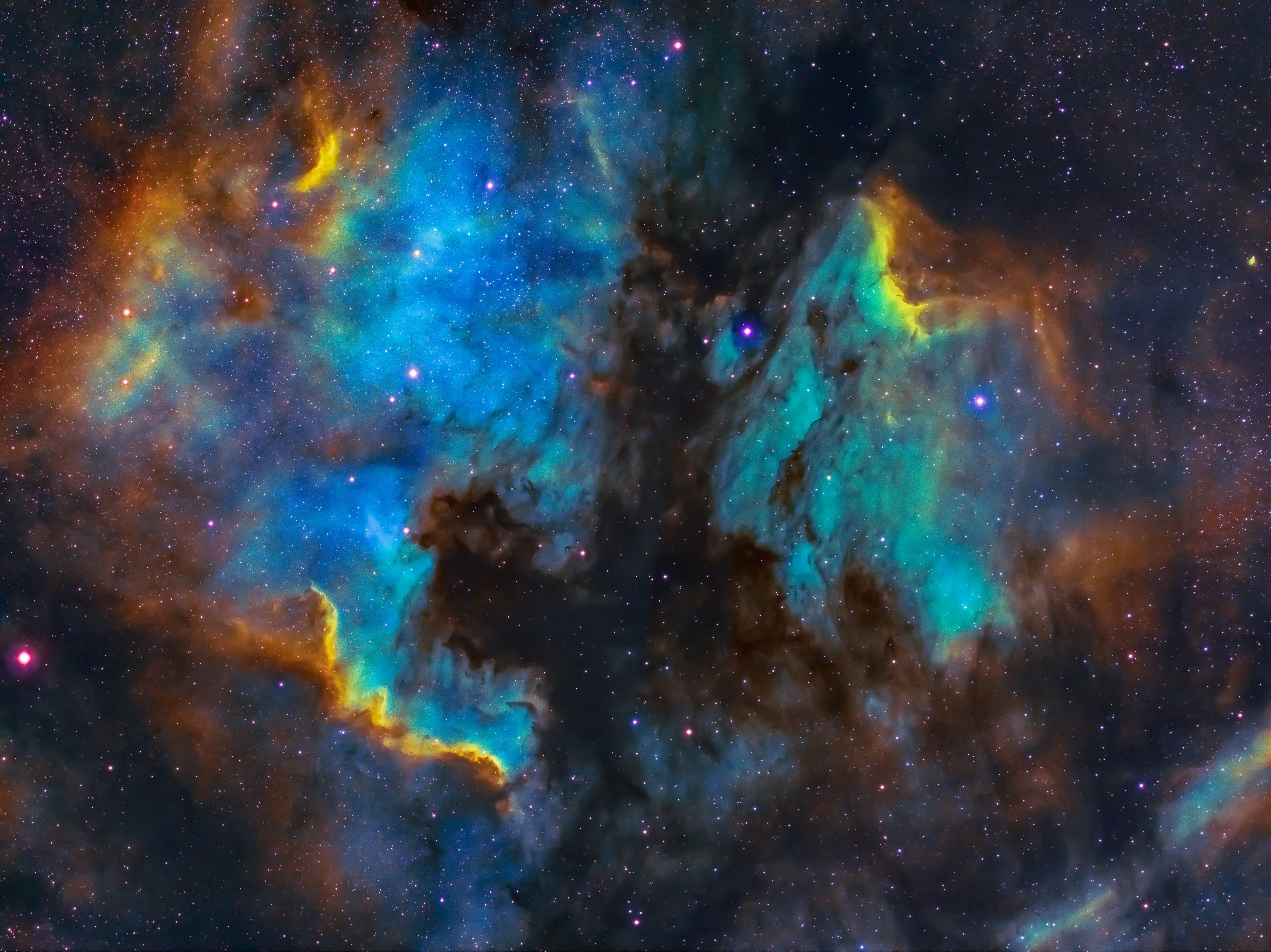
What if Earth is the only place in the entire cosmos where life exists?
For decades, scientists have scanned the stars, listening for distant signals, searching for signs of intelligent civilizations. Telescopes have peered into the vast unknown, mapping a vast number of galaxies, each filled with countless stars and planets. And yet, so far, we have found nothing—not a whisper of life, not a flicker of consciousness beyond our own.
And so we must ask:
What if Earth is not just another planet, but the rarest phenomenon in the universe?
A Living Miracle in a Vast, Silent Universe
In the grand cosmic scale, we are a tiny blue speck orbiting a rather ordinary star. And yet, within this speck, the impossible has happened: life emerged. Not just microbes clinging to survival, but forests that breathe, rivers that sing, creatures that dance, and humans who dream, love, and create.
If life were common—if the universe teemed with civilizations—perhaps our carelessness could be excused. But so far, it seems we are alone. That makes this world not just special, but sacred.
Gaia: More Than Just a Rock in Space
Some might say Earth is just a rock, no different from the lifeless planets that orbit distant stars. But they fail to see the intelligence woven into nature, the wisdom of ecosystems, the way this planet has nurtured and sustained life for over four billion years.
The Gaia Hypothesis, first proposed by scientist James Lovelock, suggests that Earth itself is a self-regulating, living system. The atmosphere, the oceans, the forests—everything interacts in a delicate balance to sustain life. It is as if Gaia herself breathes, adjusting, evolving, and ensuring that life continues.
If we accept this, then we are not separate from nature—we are part of it. We are not mere visitors to Earth; we are Earth, conscious of itself.
The Fermi Paradox: Do Civilizations Destroy Themselves?
If the universe is so vast, then where is everyone?
This is the question at the heart of the Fermi Paradox—if intelligent life is common, why haven’t we found any evidence of it? Some scientists propose a chilling answer: perhaps civilizations do arise—but they don’t last.
Maybe they reach a certain point—a technological tipping point—and self-destruct. Maybe they consume their planet’s resources too quickly, or their greed and divisions lead to collapse.
Maybe they, too, failed to recognize that their world was sacred.
What If Earth Is Our Final Warning?
If no one else has survived long enough to make contact, perhaps this is our moment of reckoning.
We are at the crossroads—one path leads to destruction, the other to regeneration.
Will we follow the civilizations that burned too brightly and faded too soon?Or will we be the first species to wake up in time—to see our planet not as a resource to be exploited, but as a living miracle to be protected?
If there is a Cosmic Intelligence, a God, a great unfolding mystery, what does it mean that this planet—out of trillions—is the only one bursting with life?
What if Earth was uniquely designed—whether by divine hands or cosmic chance—to be the cradle of life?
What if we, humans, were meant to be not conquerors of nature, but its stewards?
What if our greatest purpose isn’t to escape to Mars, but to learn how to live in harmony with the paradise we’ve already been given?
A Walk in the Future That Honors This Truth
Imagine a world that has embraced this sacred responsibility.
* Cities breathe with green spaces, their rooftops alive with plants, their streets shaded by trees.
* Oceans thrive, no longer choked with plastic, but teeming with whales, dolphins, and coral reefs that glow with vibrant color.
* Schools teach reverence for life, not just facts and figures. Children grow up knowing that every breath they take is a gift from the trees, that their well-being is tied to the well-being of all life.
* The economy shifts from endless consumption to regeneration—every product designed to nourish the Earth instead of depleting it.
In this world, we don’t just survive—we flourish.
All of this begins with a shift in consciousness.
The Eco-Guardian Team Reflects
As the Eco-Guardian Team gazes up at the stars, Zak asks, “Do you think there’s anyone else out there?”
Tess tilts her head. “If there is, they’re being awfully quiet.”
Iya, tracing the constellations with her finger, says, “Maybe we were given something rare—something other civilizations didn’t understand in time.”
Ra-Kit stretches, her tail flicking thoughtfully. “Or maybe… we’re the ones meant to be the first. The ones who get it right.”
The fire crackles as they fall into silence, each feeling the weight of that possibility.
What if the greatest adventure of all isn’t waiting beyond the stars… but right here, in our hands?
Instead of seeing ourselves as masters of Earth, what if we saw ourselves as its devoted caretakers?
What if every tree, every river, every creature was seen not as a resource, but as a fellow traveler in this grand cosmic mystery?
What if we understood that protecting Earth is not just an environmental duty—it is a sacred, cosmic responsibility?
This is not just about sustaining human civilization—it is about safeguarding the rarest, most miraculous phenomenon in the known universe: life itself.
And that, dear reader, is a story worth rewriting.
Call to Action
Take a moment to step outside tonight. Look up at the stars. Feel the ground beneath your feet.
What shifts in you when you imagine that Earth might be the only home for life?
What actions will you take to honor the extraordinary gift of this world?
Let’s not be another lost civilization.Let’s be the first to get it right.
Brad(Eco-Author, Grand-Dude, and Co-Creator of One Cause)
We’re creating a collaborative community of Eco-Guardians-in-training. Won’t you join us by subscribing as either a free or paid member?