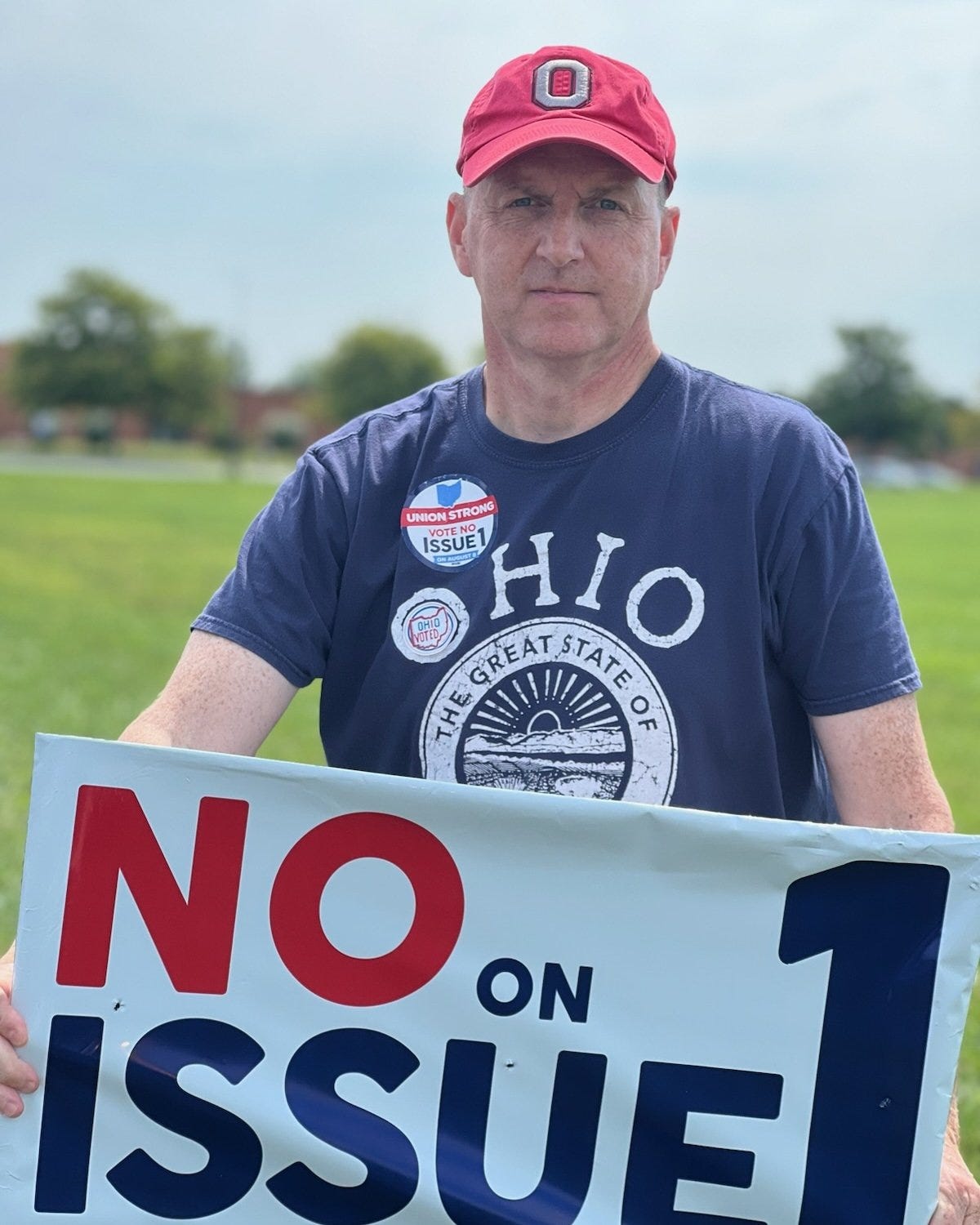
Last Week, The Audio Companion sat down with our second congressional interview of the cycle as we spoke to former state representative Adam Miller on his way to the May 5th primary against Don Leonard.
https://www.adammillerforamerica.com
Still no interest from the Republican side of the conversation as sitting Rep Mike Carey awaits his own primary challenge from the unconventional conservative Samuel Ronan.
In the opening minutes of our interview candidate Miller discussed his own career path encompassing public education, the law, and lengthy military service. As a result of that career Miller emphasized he had seen some of the more notable events in our country at national scale and personally played a major role in trying to define and create accountability within those challenging environments.
He further took time to call out the shortcomings of the Democratic Party over recent cycles in engagement and issue sets that didn’t speak clearly to local voters or emphasize strongly enough the party’s ongoing commitment to working people post-election.
Bright Lines
Whether it was service in Afghanistan, the aftermath of the January 6th riots or defining in clear terms the uses of military personnel in the domestic context (disaster response and at the request of civilian authority only) Miller described himself as unafraid to embrace the bright lines of the Constitution when institutional authority and leadership would have preferred “strategic ambiguity.”
Miller carried this critique and structure throughout our interview. The former state representative argued that congressional oversight has eroded and been usurped with power increasingly concentrated in the executive branch and insufficiently challenged by lawmakers. Taking a moment for his potential general election opponent he directly highlighted current officeholder Mike Carey’s tendency of avoiding unscripted public interaction and cast even basic accessibility itself as a core campaign issue. More broadly, Miller framed his candidacy as an effort to restore federal leadership balance, calling for renewed hearings, stronger institutional checks, and more direct engagement between elected officials and constituents.
Direct Pressure
Throughout the conversation, Miller returned to this idea: institutions only function when individuals inside them are willing to enforce their limits. Whether in a school district, a legal case, or a combat zone, he argued that the rule of law depends less on prefered rhetoric than on the willingness to stand for it under direct pressure. For voters in the OH-15 primary, the question he posed was straightforward. Not just who aligns on policy, but who has demonstrated the capacity to hold the line when it matters.
The Hilliard Beacon is a reader-supported publication. To receive new posts and support my work, consider becoming a free or paid subscriber.