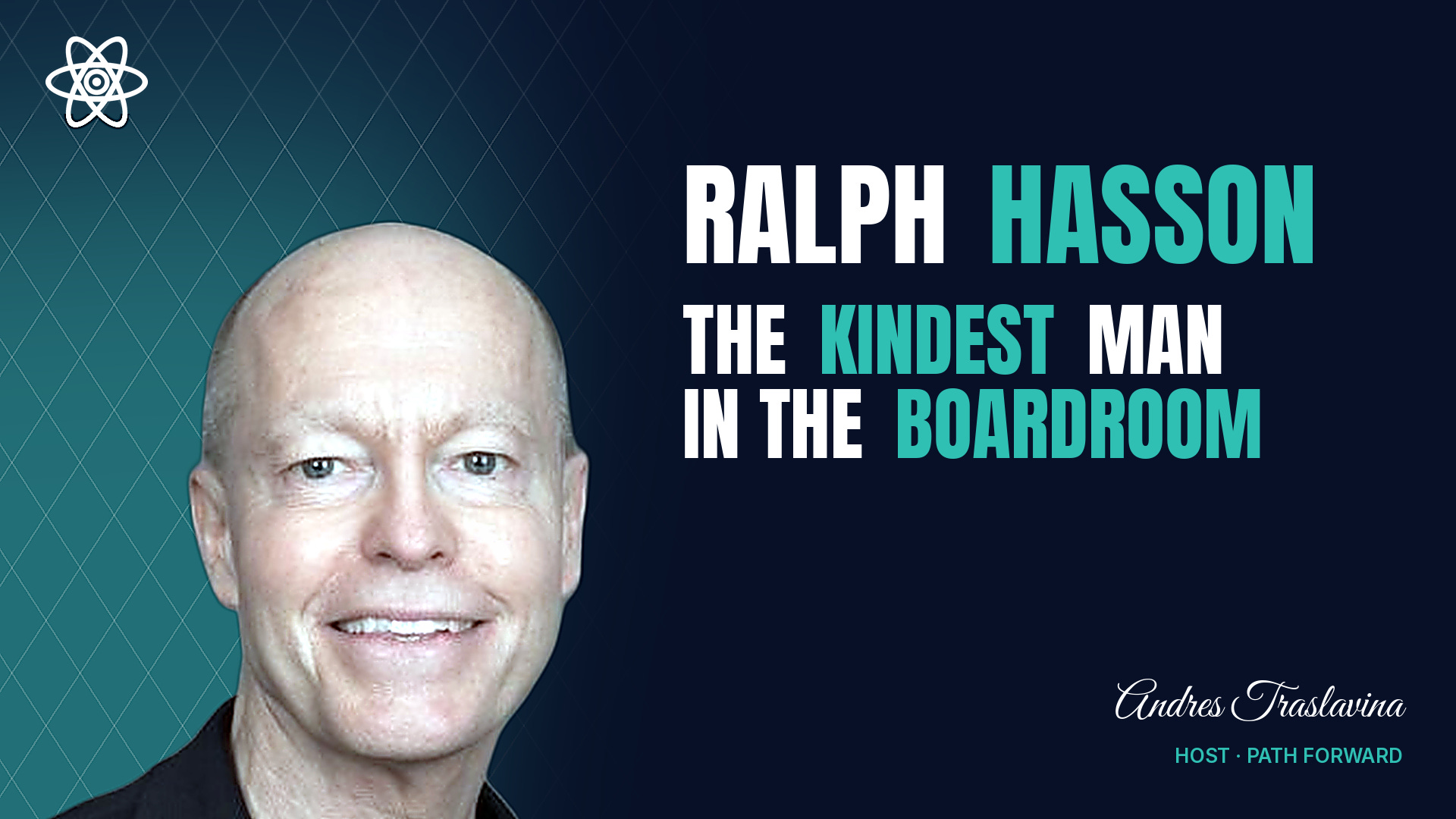
Ralph Hasson said one thing on the podcast that I made him repeat. Networking and building relationships are not the same. Networking is you walking into a room with your hand out. Building relationships is you walking in curious about the other person, trying to help them first, before you ever ask for anything back. One of those makes people feel used. The other one is why, years later, they still pick up your call.
I have known Ralph a while. We share an orthopedic surgeon, we cross paths at Whole Foods on Saturdays, and I still learn something every time we talk. Lawyer, mediator, sits on real boards, spent years at the National Association of Corporate Directors. But the reason I wanted him on the show is that he does the relationship thing better than almost anyone I know, and he does it without performing it.
Then we got into boardrooms, and this is the part I want you to slow down and read twice. If you are an executive thinking about board service, Ralph handed me a whole playbook in about ten minutes. Here is what he said.
How boards actually pick people now
* The old way was celebrities and stars. Big names in the industry. Ralph says well run boards do not do that anymore.
* They build a matrix. They look at the company’s strategy first, then ask what skills and experience already sit on the board, and what is missing.
* Then they recruit to fill the gap. So if you want a seat, stop trying to be impressive and figure out exactly which gap you fill.
How you earn your way in
* Name the sectors where you genuinely add value. Get specific. Have a few sample companies in mind.
* Go build relationships in those sectors. Not networking. Relationships. Two way street.
* Get in front of the right boards with a value proposition that is strong, because the room is crowded and competitive.
What the job actually costs
* Usually four board meetings a year, sometimes more.
* Committee work between the meetings, and real homework. A lot to read, a lot to absorb.
* On a good board, you are doing site visits and meeting the people who work there, not just the management team.
* His line: this is not something you show up for four times a year.
The part nobody tells you
* The fiduciary duties are serious. If the board does not do its job, you can be personally liable.
* So Ralph’s advice is blunt. Do not join a board unless you know it is right for you.
* Nonprofit boards are unpaid, and you are expected to give or get. Paid boards vary a lot by size and whether the company is public or private. Most people are not getting rich doing this.
How to run a board meeting worth attending
* Spend less time looking back at last quarter and more time looking forward.
* Cut the historical reporting. Maximize the actual conversation between board and management about where the company is going.
* Strategy belongs on every agenda. Every single one.
* Someone has to keep time and move the room along, usually the lead independent director, and Ralph does it gently. How are we doing on the agenda.
How you know if you are any good at it
This was my favorite part. Well run boards assess themselves. The full board, each committee, and then peer reviews of individual directors, usually a third of the board each year so everyone gets looked at over three years. What are they looking for in you.
* Are you prepared. Did you do the reading.
* Do you show up on time. He knows it sounds basic. It is not.
* Do you engage constructively. You have to be willing to challenge what you hear, but you do it in a way that moves the room forward, not one that blows it up.
* Are you collegial, even when you disagree on a decision.
* Do you do your committee work between meetings, where a lot of the real work happens.
* Do you bring new ideas to the table.
Read that list again and you will notice something. None of it is about being the smartest person in the room. It is about showing up, doing the work, and treating people right. Which brings the whole thing back to where Ralph started.
Networking gets you in the door. Relationships are what keep you in the room.