As we close this monumental year, I’ve felt the weight of movement. Friends changed jobs. Neighbors packed up. People I admire moved on. Some left quietly. Some left a hole.
It’s a strange kind of sadness — not dramatic, but deep. It reminds me of a thought I’ve carried for years: imagine your own funeral. After an hour, people leave. Someone else takes your job. Your house sells. Life goes on.
That idea used to scare me. It made me wonder: Does anything really last?
This year, that thought came back — but not as fear. As clarity.
I’ve found myself reflecting on mentors, friends, colleagues, and even people I wasn’t particularly close to. People who, through a shared season or circumstance, made a quiet but lasting mark. Some moved on because of new opportunities. Some because of distance. Others simply drifted. But I still carry them.
When I left Colombia at 15, connection became my anchor. It’s been the constant ever since — sometimes in coworkers, sometimes in strangers through a book, a podcast, a chance encounter. If the connection is genuine, it lifts me. That part hasn’t changed.
What has changed is how I understand connection now.
For a long time, I assumed closeness required proximity. That being connected meant being in touch. But it doesn’t. You don’t need daily contact to stay close. What matters is that you once shared something real. You saw each other — fully, honestly. That kind of truth doesn’t dissolve with time.
I’ve seen it in my own life. You can pick up the phone after five years of silence and the voice on the other end feels like yesterday. Research backs this up: dormant ties — old colleagues, classmates, even brief but meaningful encounters — can be just as powerful, if not more so, than our current circles when reactivated. Because the foundation was real.
In Japan, there’s a word for this kind of commitment: moai. These are lifelong groups, chosen early, that walk with you through life’s ups and downs. In Okinawa — one of the world’s longest-living communities — people belong to moais for decades. Some for nearly a century. They celebrate births, endure grief, share food, and show up — year after year.
Dan Buettner’s research on Blue Zones — the world’s healthiest, longest-living populations — found this kind of deep, reliable connection matters more than exercise, even more than diet. These aren’t transactional relationships. These are emotional safety nets. You fall, they catch you. You disappear, they look for you.
When I worked in consulting, we often asked executives, Who do you admire? And I always found myself answering with people I knew. My mom. My dad. Leaders I worked beside. Not the ones on magazine covers. The ones who showed up fully. Who led with presence, not perfection.
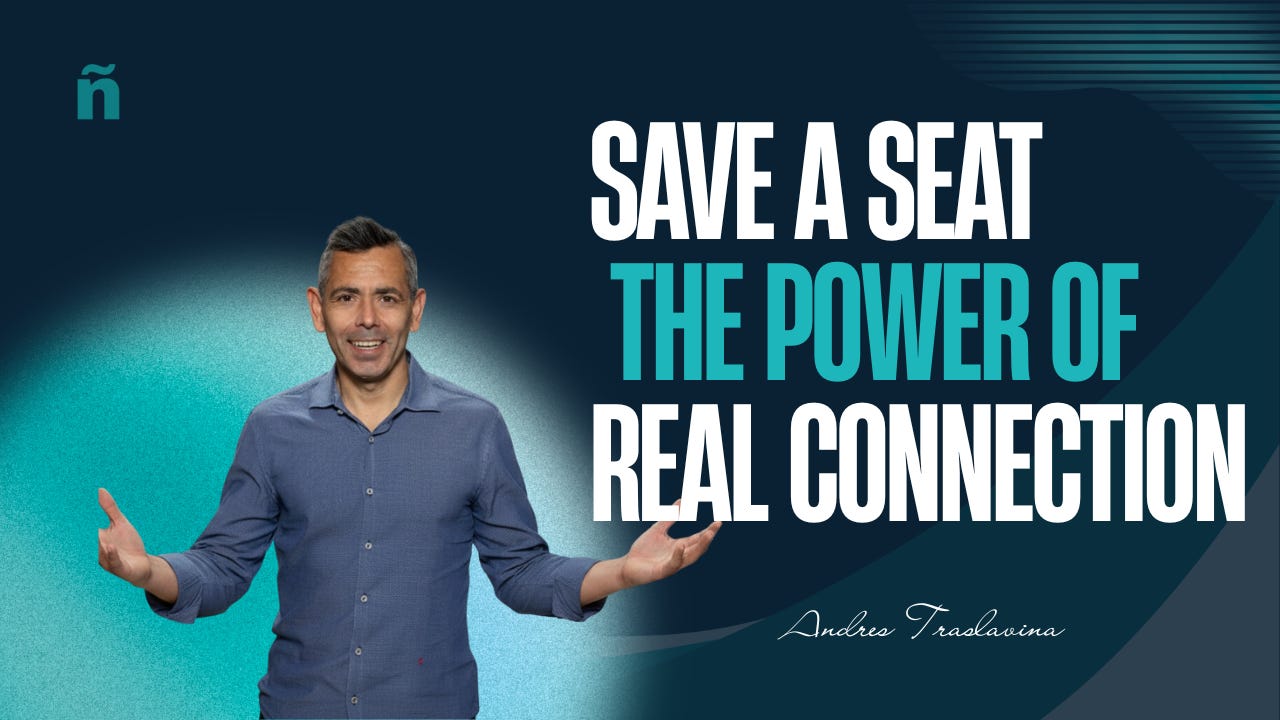
Some of them are no longer in my life. But they’re still with me. I’ve saved them a seat. Not out of nostalgia — out of gratitude.
Because here’s the thing I’ve realized: Real connection doesn’t end. It just changes form.
And in some seasons, it returns when you need it most.
This is not just about personal relationships either. It shows up in leadership. In culture. In hiring. It’s the difference between retaining people who stay for a paycheck and people who stay because they feel seen. The future of work isn’t only about skills. It’s about trust. Belonging. Knowing someone has your back — even if they’re no longer in the next room.
This year, I felt that shift. People left — but they also stayed with me. Not physically, but emotionally. Mentally. Spiritually. I’ve found myself quietly whispering thank you to those who walked beside me, even briefly. A few were mentors. A few were strangers. Some were just people who showed up once — but fully.
We live in a time of hyperconnection, but loneliness still runs high. That’s because scrolling doesn’t equal bonding. LinkedIn messages won’t replace shared presence. Not really.
So I’ve stopped chasing more contacts. I’m choosing depth over reach. I’m learning to name the people who shaped me. To say: You moved me. You mattered. I’m glad you were on my train.
Because life is a train — constantly in motion. People get on. Some stay for a few stops. Some for many. Some leave when you least expect it. And that hurts. But what stays isn’t the seat they left behind.
What stays is the part of you they helped build.
And that... doesn’t get sold. That doesn’t move out. That doesn’t end.
So as we enter 2026, I’m not chasing more contacts. I’m going deeper. I’m not afraid to say: I admire you. You moved me. I’m glad you were on my train.
Companies come and go. Seasons shift. But real connections stay.