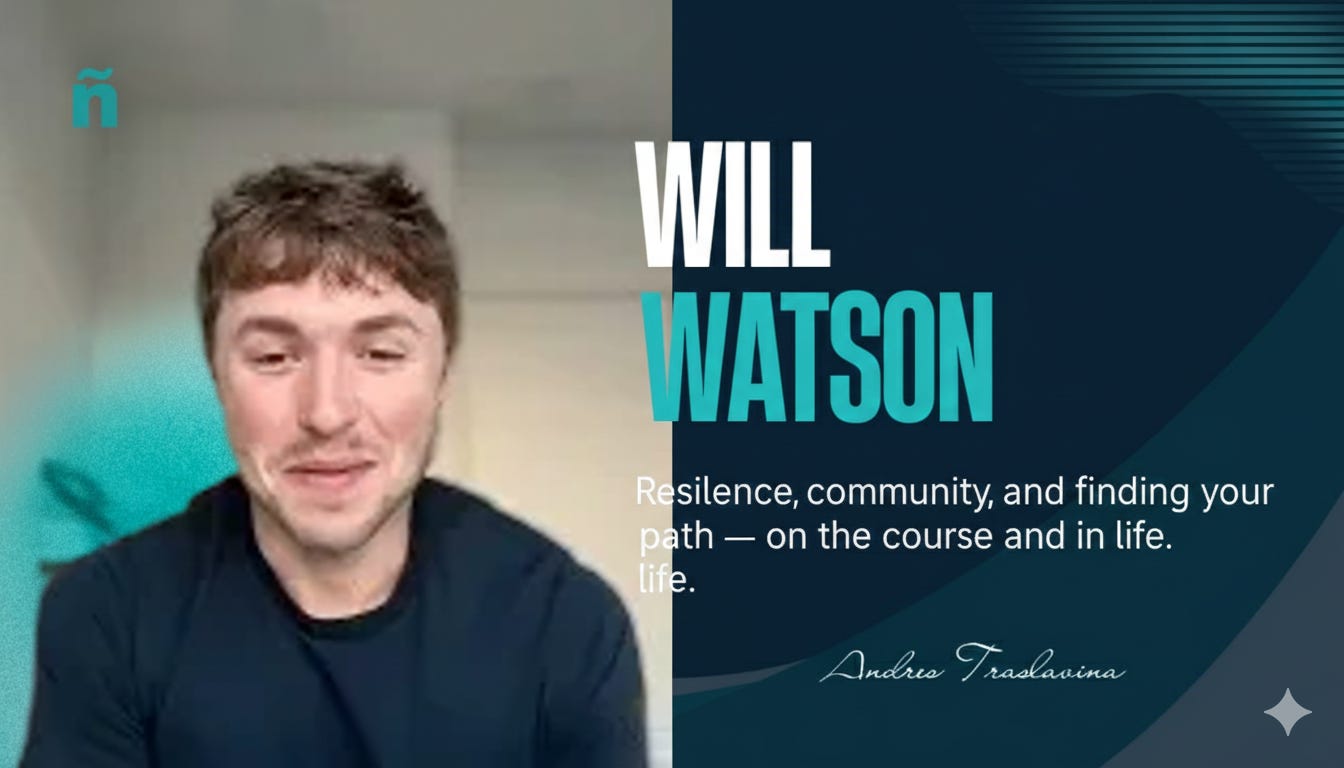
Some conversations stay with you because they reveal simple truths about work, life, and who we’re trying to become. My conversation with Will Watson — a young triathlete, coach, and someone still shaping his early chapters — was exactly that.
Will is 22. But the way he talks about discipline, fear, community, identity, and purpose has the weight of someone who has already lived a few lifetimes.
Here’s what surfaced — and what’s worth carrying forward.
1. The discipline to show up, even when everything in you says don’t.
Triathlon is a long game. You don’t win on race day — you win at 5 a.m. on the days when you’d rather stay in bed. Will admitted motivation is inconsistent. Injuries wear you down. Cold mornings test you. Lows come without warning.
But he also learned something simple:
The lows are temporary. Showing up isn’t.
That’s no different from work. The wins stack over time, not in one burst.
2. Perceived effort beats analytics — in sport and at work.
Will loves data. Heart rate. Power. Fuel. But he realized something: the deeper skill is knowing yourself. Knowing when you’re holding back, when you’re pushing too hard, when fear is making decisions for you.
We chase dashboards at work — KPIs, OKRs, performance cycles, AI tools — but what actually moves the needle?
Awareness, intuition, and the courage to risk blowing up on the run to see what you’re capable of.
That’s how people grow. That’s how teams grow.
3. Community is the multiplier.
When Will moved to Austin, he discovered something surprising. He wasn’t “behind” in his training — he was just training alone. The moment he found community, everything leveled up. Accountability changed. Energy changed. His belief in his own potential changed.
The same thing happens in companies. High-performing teams aren’t built on job descriptions — they’re built on proximity, shared standards, and the feeling that someone is running beside you.
Community is the cheat code for growth.
4. Hard seasons change your life — but they don’t define you.
Will got sick, ended up in the ER with a massive bill, then two weeks later got hit by a car. He thought his season — and maybe his career — was over.
He laughed telling the story, not because it was funny, but because it reminded him of something essential:
Life hits in clusters. Your job is to keep going anyway.
In work and in life, it’s not if you hit a low — it’s when. Resilience isn’t heroic. It’s quiet. It’s the decision to keep pedaling even when fear is louder than momentum.
5. Education is not the map — it’s one of the tools in your bag.
Will wrestled with college:• Good grades in some areas• Not great in others• Unsure of direction• Feeling like school wasn’t “lighting him up”
We talked about something that took me decades to learn:
The workplace doesn’t reward straight A’s. It rewards people who know what makes them come alive and who build the self-discipline to pursue it.
Will has that. Many people twice his age are still searching for it.
6. Identity is flexible — especially in your 20s.
Will started his life as a soccer kid. Then he became a triathlete. Now he’s exploring a professional career in a company he believes in.
Identity shifts are not failures — they are chapters.
What matters is exactly what he’s doing:• Listening to his gut• Asking thoughtful people for advice• Placing himself in the right rooms• Taking intentional risks while the stakes are still low
If more young professionals operated like that, career transitions would feel less overwhelming.
7. AI is a tool — not a replacement for critical thinking.
Will uses AI in coaching: adjusting workloads, tailoring recovery, planning how athletes return from injury. He uses it the right way — he interprets it, questions it, adds judgment, translates it for real humans.
In a world terrified AI will replace us, his approach is refreshing:
AI can’t replace someone who knows their craft. It amplifies people who think clearly.
That’s the future of work.
8. Joy comes from lighting other people up.
Will defined happiness in a way that many executives struggle to articulate:
Happiness is helping people find their spark.Joy is watching people do things they didn’t think they could do.Fulfillment is waking up early for someone else’s growth.
That’s not the answer of a 22-year-old. That’s the answer of someone who understands leadership at its core.
9. Purpose is simple: be a light in the pond you’re in.
He doesn’t care about titles, status, or prestige. He said something that stayed with me:
“I think I’m here to be a light. If I can help one person show up, try something new, or find some purpose, that’s enough.”
That’s it.Not everyone needs to change the world.But everyone can change the room they’re in.
10. The triathlon–work analogy is real.
A race is life compressed into hours:• You start behind sometimes.• You catch up by leaning into your strengths.• You collaborate without drafting — like teams do when they’re aligned.• You suffer in silence and then in community.• And you cross the line knowing the real victory happened long before the finish.
The workplace is the same.
People think careers are built on milestones — promotions, titles, LinkedIn updates. But they’re really built on the invisible moments of discipline, community, resilience, and purpose.
This is the heart of Path Forward.
Will doesn’t have all the answers — none of us do. But he understands the fundamentals:
Show up.Trust your gut.Invest in people.Take risks when you’re young.Ride out the lows.Be a light.
If more people lived like that, workplaces would change. Teams would change. Lives would change.