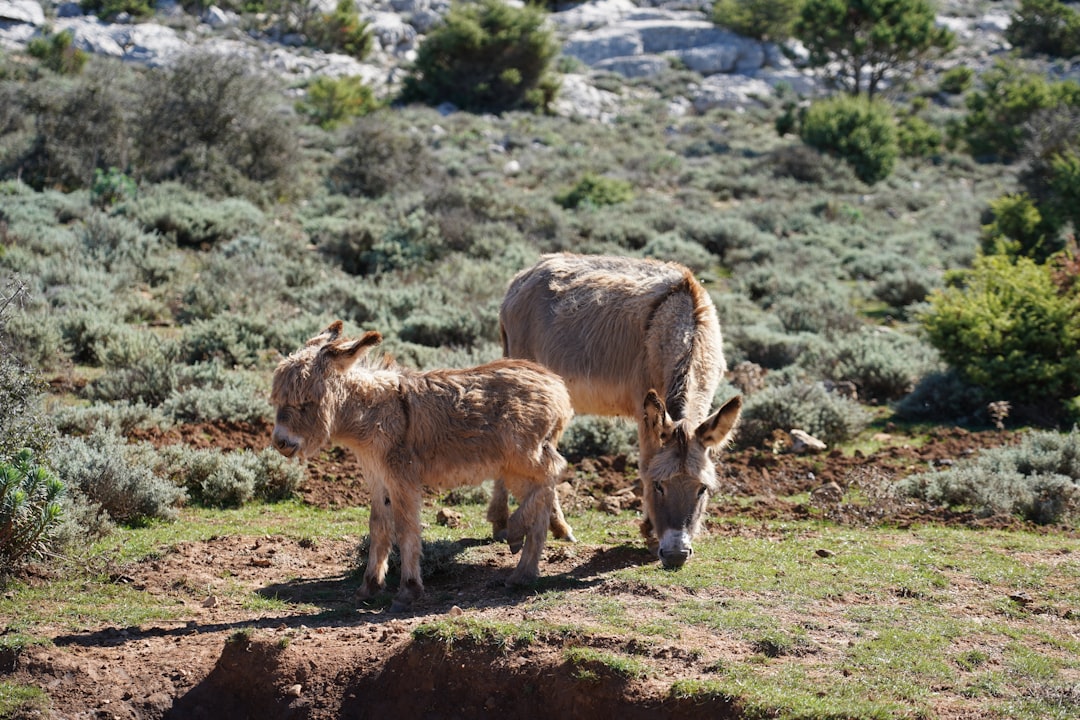
Purpose Driven Donkeys
1 Samuel 9:1-10:16, Remsen Bible Fellowship, 11/08/2020
Introduction:
Is God at work in every circumstance? That is a question to which we all need an answer. If God is asking me to trust him with my eternity, to place my faith in what he says in his word and what he’s done through his Son, don’t I need to know I can trust him in every circumstance? Some picture God as managing the flow of history in a broad sense, not really in control of the details, but making sure the general flow of things continues to head in the direction that he wants, and somehow he’ll pull it all together in the end.
But is that how history works? Growing up I heard the story of Henry Shoemaker, a man living in Indiana in the first half of the 19th century. In 1842, Mr Shoemaker was at work in a farmer’s field when he realized that he had promised to cast his ballot for Madison Marsh, who was running for state representative. He saddled his horse and hightailed it for the nearest polling place-12 miles away. When the ballots were counted, Mr Marsh was elected-by one vote. Henry Shoemaker’s one vote mattered. Now, if we believe that God is in control of “big things” like setting up and tearing down rulers, it seems obvious that he is also Providentially guiding even the “small things”-like one more ballot in favor of Madison Marsh.
We need to know that God is in control of every little detail, and in the text this morning, we find God working details together as he answers the request of Israel, and provides them with a king.
Read the Text
That is a long text, but I think having all of that context will help us understand what is going on, as we drill down to see the main point: God is at work here. As we examine this passage I want to organize our thoughts under three headings: Provision, Providence, and Peculiarity.
Provision
Remember that in chapter 8 the people had demanded a king. At the end of the chapter, we read Samuel telling the people, Go every man to his city (v22). Chapter 9 opens, then, in what seems to western eyes an unusual way. We get six generations of genealogy of this man of wealth or significance, Kish the Benjaminite. The presence of this genealogy is significant, however, because it marks a new phase in the book. Remember that chapter 1 opens with the genealogy of Elkanah as a way of introducing us to Samuel. In chapter 16 we will spend most of a chapter, not in genealogy, but in meeting the family of David. And here in chapter 9 we are introduced to the lineage of Kish as a way to bring attention to Saul. The author wants us to see that Saul will become the center of the story for the next several chapters, and he does so by situating him within a particular family context.
As for Saul, we read that he is a handsome young man. There was not a man among the people of Israel more handsome than he. From his shoulders upward he was taller than any of the people. So the first we know of Saul is that he has an influential dad, and he looks the part of a king. But this may be our first indication that he might not be the best kingly material. As humans, we certainly want rulers who look the part. But is an impressive appearance what God looks for in a king? 1 Samuel 16:7, man looks on the outward appearance, but the LORD looks on the heart. We are being introduced to the man God will establish as Israel’s first king. But it seems that from the beginning the author is dropping hints that this might not be the sort of man who will be a man after God’s own heart.
Saul is an unlikely figure. We see this in his own reaction, in 9:20b-21. Samuel says, And for whom is all that is desirable in Israel? This could be understood as saying that everything good in this land will come to you, as ruler over the nation. This would make a lot of sense given Samuel’s warning to the people in chapter 8, that the king will be taking all the best of your land and property. Another way that could be translated would be to say that all the desires of Israel are for you-that you are the sort of king they want. Either way this strikes Saul as very strange. So he protests, Am I not a Benjaminite, from the least of the tribes of Israel? If you remember back in Judges, the people of Benjamin were nearly wiped out following the horrifying incident with the Levite and his concubine. So Benjamin has been reduced down to almost nothing. They also occupy a tiny territory, and it seems that Saul’s family is the smallest in number of the clans, which I think is how we should understand, is not my clan the humblest in all the clans of Benjamin? Why then have you spoken thus to me?
Kingship doesn’t seem to be on Saul’s list of career goals or aspirations. But while this is not part of his plan, it is God’s plan. Even Saul’s name fits these circumstances. I was helped by R.F. Youngblood’s commentary a lot this week, and he comments, ‘The Hebrew root for the name “Saul,” which means “Asked (of God),” occurs in 8:10, where the people were “asking” for a king’ So the people ask for a king, and God says, I have just the guy in mind. Even his name means asked of God.
Another thing I want to draw your attention to under this heading of God’s provision is the idea of anointing. The Hebrew verb mashach here means simply to smear or poil oil onto someone’s head. Here it is used as a setting apart for the kingship, and Samuel makes clear that this is not him setting Saul apart, but rather the Lord himself is doing so. Anointing also carries with it the idea of God’s blessing for the service that one is set apart to, and this is what we see in 10:1. Then Samuel took the flask of oil and poured it on his head and kissed him and said, “Has not the LORD anointed you to be prince over his people Israel? And you shall reign over the people of the LORD and you will save them from the hands of their surrounding enemies. And this shall be a sign to you that the LORD has anointed you to be prince over his heritage.
That Saul is the anointed one, YHWH’s mashiach, becomes important in this book. Not only in the verses that follow, as God essentially seals this to be true by causing the Holy Spirit to rush upon Saul, but even after Saul has abandoned the Lord, David will continue to honor the action of God in this moment by refusing to lift his hand against the Lord’s anointed one, his messiah with a lowercase m. God has given Saul to the people. He alone has the right and ability to set up and tear down rulers.
So the people have asked for a king, and God has anointed one. But didn’t he pick a weird way to do it?
Providence
I titled this sermon for the donkeys, not because they are actually main players, but I really liked the play on words. And their presence does frame this narrative for us. After the introduction in 9:1-2, we are thrust into a narrative where the donkeys of Kish are lost. And this sets the son of Kish, Saul, on a journey to find them. He takes one of the servant men with him, and they go looking, for three days 9:20 tells us.
And they wander all over the place. Mainly heading north, up into the fertile hill country of Ephriam, then circling back south into the land of their tribe, Benjamin. This story is remarkable for how unremarkable it is. Donkeys get out, the farm boy and his servant go looking to find them. Super mundane, right?
But during this fruitless search for the donkeys, Saul and his servant “just happen”to come past a city where a man of God (v6) is staying. How handy. Saul is tired after three days of searching, though, and it seems is a little more interested in getting back home than searching out someone to help with the donkey search. What can we bring to the man? he asks in v7. What he seems to be implying is that we don’t have any gift (which seems to imply that part of how prophets made their living was by people paying for their services), let’s just get back home. But again, we have another “just happen”-ing...the servant…