Transcript and summary generated by AI. Please comment if you notice any errors.
Sermon Summary
"How Will You Respond to Jesus?"
🔶 SERMON OUTLINE
I. Introduction: The Range of Human Responses
* Commentary on reactions to the announcement of a new Pope.
* People’s emotions vary: excitement, skepticism, indifference.
* Transition to Jesus: how people also respond to him in varied ways.
* Key Question: Is it okay to have neutral feelings about Jesus?
II. The Olivet Discourse and the Two Final Categories (Matthew)
* Jesus declares that at the end of time, there will be only two types of people:
* Those who embraced him (the sheep, right hand)
* Those who rejected him (the goats, left hand)
* Superficial acknowledgment of Jesus (“Lord, Lord”) is not sufficient.
* Jesus demands full submission and trust as Savior and Lord.
III. Overview of the Gospel of Mark
* Mark introduces Jesus as the Son of God and King of the Kingdom.
* The first half (chapters 1–8): Jesus establishes his identity through miracles:
* Authority over demons (e.g., Legion)
* Authority over sickness (healing diseases)
* Authority over sins (forgiving the paralytic)
* Authority over nature (feeding crowds, walking on water)
* Pivot in Mark 8: Peter confesses Jesus is the Christ.
* From that point on, Jesus reveals his plan for redemption: his death and resurrection (repeated in chapters 8–10).
IV. Jesus’ Final Week (Mark 11–14)
* Chapter 11: Triumphal entry and cursing the fig tree (symbol of Israel's spiritual barrenness).
* Chapter 12: Warnings against the scribes.
* Chapter 13: Prediction of temple destruction and Jesus’ second coming.
* Chapter 14 opens with the plot to kill Jesus by religious leaders.
V. Two Responses to Jesus (Mark 14:1–9)
A. Rejection (vv. 1–2)
* Chief priests and scribes seek to kill Jesus.
* Even though modern hearers aren’t physically crucifying Jesus, choosing sin is still a rejection of him.
* Every sin aligns us with the forces that put Jesus on the cross.
B. Worship (vv. 3–9)
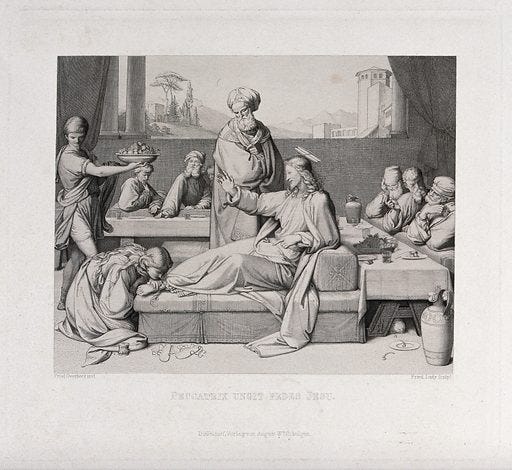
* Mary’s act of worship: breaks alabaster jar of expensive perfume and anoints Jesus.
* This sets up four characteristics of true worship:
🔸 Four Characteristics of True Worship
1. Worship Is Rich (Costly & Lavish)
* Mary gives her most valuable possession (worth ~1 year’s wages).
* True worship values Jesus above all material goods.
* This worship is rich not just materially, but in affection and devotion.
2. Worship Is Reasonable
* The disciples (especially Judas) criticize Mary for wastefulness.
* Jesus defends her: it was a beautiful thing.
* Worship that gives Jesus everything isn’t extravagant—it’s entirely fitting.
* Romans 12:1–2 – giving ourselves to God is our reasonable service.
3. Worship Is Rewarded
* Jesus promises Mary’s act will be remembered wherever the gospel is preached.
* God sees and rewards every act of sacrificial love.
* Encouragement especially to those who serve behind the scenes (e.g., mothers, caregivers).
4. Worship Is Responsive
* Mary’s act wasn’t to earn favor; it was in response to Jesus’ love and sacrifice.
* She is preparing his body for burial—Jesus ties her act to his coming death.
* True worship flows from understanding God’s grace, not trying to earn it.
🔶 Conclusion: Side with Mary
* Don’t align with the self-righteous or indifferent religious elite.
* Pour out your life at Jesus’ feet—he is worthy.
* This is another instance of Mary choosing the “better part” (Luke 10).
* Final prayer: for God to make us like Mary.
SERMON SUMMARY
This sermon presents a challenge to the listener: How will you respond to Jesus? Through a mix of biblical exposition, narrative overview, and practical application, the preacher presents two stark options: to reject or to worship Christ.
Using Mark 14:1–9 as the focal text, the sermon contrasts the murderous intentions of the religious leaders with the extravagant, sincere devotion of Mary of Bethany. Her act of anointing Jesus with a year’s worth of perfume is held up as a model for Christian worship.
The preacher offers four key traits of real worship—it must be rich, reasonable, rewarded, and responsive. Worship is not about checking boxes but about responding to the immeasurable worth of Jesus and the salvation he has already given.
Sermon Transcript
How will you respond to Jesus?
There was a little discussion this morning about Pope stuff. Obviously, the Catholic Church named a new Pope here a couple days ago. And it's interesting having conversations with Catholic friends and customers at the coffee shop—just the different reactions to the Pope.
There are people who are just excited to the point of tears, like they're really emotionally invested. And there are people who are skeptically excited, like, yeah, we'll see how he does. I talked to a friend of mine, and he said, “I just don't know, Will. I really don't trust Americans.” So he's really skeptical of the idea that there's an American pope.
The way we react to people in general can be all over the map, right? Maybe you feel really strongly, passionately positive towards someone, or really strongly negative towards someone—or you're somewhere in between. And with normal human beings, we can have those kinds of all-over-the-map reactions.
But is that the case with Jesus? A lot of people would say, yeah, I don't have strong feelings about Jesus. It seems like he was probably a good guy. Or, I don't have strong feelings about Jesus. I don't really feel the need to follow him. I don't see the need for a savior. But whatever, if you want to, that's fine.
But what Jesus tells us in the Olivet Discourse in the Gospel of Matthew is that at the end of time, there's only going to be two categories of people. There are those who embraced him as all that he is—Savior, Lord, God—and they are the sheep who will go to his right hand. And then there are those who do not embrace him in that way, which includes many people who are going to say, “Lord, Lord, didn’t we do all kinds of good things for you?” But they didn’t actually submit to him as their Lord, and they are among the goats who will go to the left-hand side.
That's important for us as a church. We've just gone through about two months of walking through the seven words that Jesus says from the cross and considering his life as it came to an end—an earthly end—where he paid for our sins. And we discussed all that that implied about our sinful state and about the sufficiency of his sacrifice and his sovereignty and all of that.
As we jump back into the Gospel of Mark, we're going to again be confronted with this choice, this decision. There are two ways to respond to Jesus. You can reject him, or you can worship him.
We should reorient ourselves to the Gospel of Mark just a little bit because it's been since August that we were here. The Gospel of Mark introduces itself, chapter 1, verse 1, as the Gospel of Jesus Christ, the Son of God. And Mark tells you at the very beginning of his Gospel who he is introducing you to. This is the Son of God who has come to earth.
And in verse 15 of chapter 1, Jesus tells us that the gospel that he comes to bring, the good news that he comes to bring, is the good news of the kingdom. In his coming to earth, Jesus is the king of the universe, the king of God's kingdom, and he has come near. That's the good news that he is preaching.
The first half of Mark's gospel is devoted to Jesus establishing his identity. And so we see that in the authority that he exercises over demons. Chapter 1, verse 34 tells us he's casting out all sorts of demons. It says that right after he has cast out a demon from a man in the synagogue that Sabbath day.
Chapter 5 has the story of Jesus encountering a man when he comes to the region of the Decapolis. He comes to that region and a man meets him from the tombs. This man has—they've tried to chain him up—he's been ripping free of the chains. And Jesus says, “What's your name?” and he says—the demons from wi…