Remsen Bible Fellowship; 10/01/2023
Introduction
Why do you exist? Let me clarify that question slightly: I’m not asking “how did a particular human with your genetic makeup come to exist”; rather, what I’m getting at is: why do you exist at all? Why do I exist? Why is there such a thing as existence?
This is one of the most important questions which a human being can ponder - and we’re the only earthly creatures who are pondering it. So we had best get the answer correct. Getting the answer to this question nailed down will help us as we start to ponder what we might think of as more “relevant” or “modern” questions: the nature of human personhood and sexuality, humanity’s role in relationship to the creation, does work matter, why does the world seem to be coming apart at the seams - all of these questions are downstream from this fundamental question of existence.
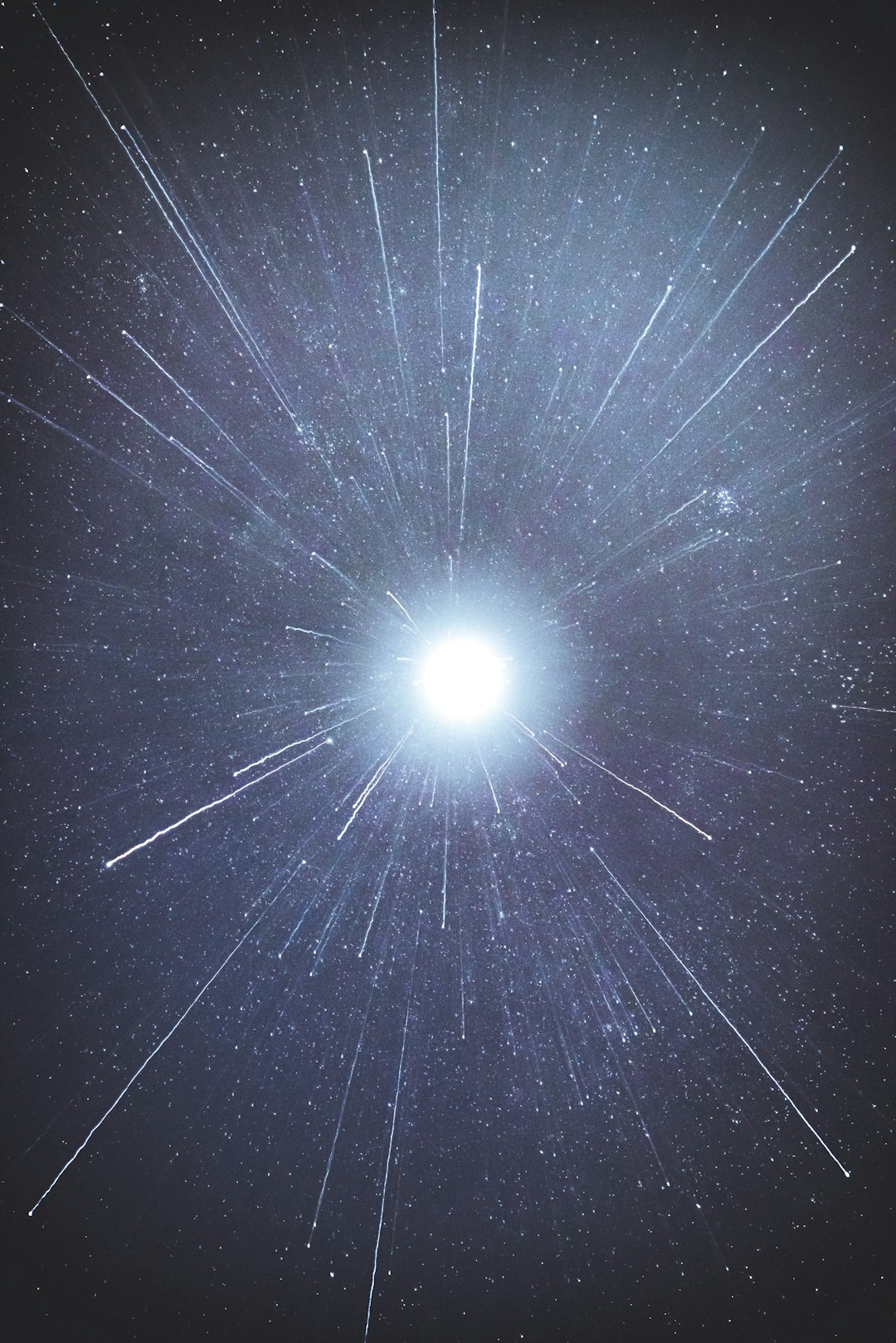
The world has no coherent answer for the question. We can see that existence is. It is an observable reality, regardless of what some philosophers will postulate. You are here, I am here, this pulpit is here, and so are those chairs. You came here in a car, you drove on a road, you’re inhaling air with just the right mixture of nitrogen, oxygen, and other gasses to keep you going. But where did it all come from? The American Museum of Natural History gives us the best answer modern science has to offer: “The Big Bang was the moment 13.8 billion years ago when the universe began as a tiny, dense, fireball that exploded. Most astronomers use the Big Bang theory to explain how the universe began. But what caused this explosion in the first place is still a mystery.” In other words, a tiny ball of hydrogen (we don’t know where it came from) exploded (we don’t know why) 13.8 billion years ago. How do we know that? Well, that’s essentially the result of giant guesswork: take the rate of known universe expansion as measurable by current telescope technology, and run that rate backwards to zero, and this is what you get. So, even the number which is postulated as absolutely “true” is itself a guess.
One way around this problem is to say there was no beginning, that everything which exists has always existed. The matter present has always been here, it just shifts shapes. But that problem runs into another issue: “Newton's First Law of Motion states that a body at rest will remain at rest unless an outside force acts on it...” Well, the postulation of evolution requires constant change. But if everything has always existed, and there is no force outside the universe to act upon it, how - why?! - is the universe in a constant state of change?
The secular, godless answer to the problem of existence is to say “let’s just not speculate.” Because they have no answer. But the Bible does. This morning we’ll look at the opening two verses of the Bible, which lay an irreplaceable framework for all sixty-six books which follow.
Text
In the beginning, God created the heavens and the earth. 2 The earth was without form and void, and darkness was over the face of the deep. And the Spirit of God was hovering over the face of the waters. (Genesis 1:1-2)
I should pause here and address a hot topic inside of Christian circles: is this passage (and the chapter to follow) to be read as literally true? Or is it more poetic and song-like?
Here is how I take this passage: at face value. I think that makes the most sense of the text: it certainly is poetic and highly structured. But that should communicate to us the great intentionality with which God acted, and cause us to stand in awe. Not question if it’s true.
I want to point out that many believers over the years have taken a view that says Genesis chapter 1 is not literal, or that it is somehow limited in its geographical reference. I don’t in any way question their integrity, and for me this is not a litmus test for if someone takes the Bible seriously. Nonetheless, I don’t think that viewpoint, be it progressive or old-earth creationism, or some form of theistic evolution, can hold up to the light of Scripture.
These are all things we’ll touch on at length later in the series, but briefly: Moses, the writer, clearly appears to be presenting his case as history. The Hebrew word yom, though it can refer to an age, when modified numerically (first day, second day, etc), always means a 24-hour day. Paul, in Romans 5 & 8, ties all death in the world (including animal) to the fall of Adam and Eve in Genesis 3. God’s logic in the Sabbath command of Exodus 20 assumes a literal seventh-day Sabbath. These reasons and others lead me to the Biblical conclusion that what we have in Genesis chapter one is the record of what God did over the course of six days, almost certainly less than 10,000 years ago.
The only time large numbers of Christians have brought this into question is with the advent of modern science a couple of hundred years ago, and especially after the publication of Darwin’s Origin of Species in 1859. Doesn’t modern science make it impossible to believe the creation account of God making each creature distinct in the relatively recent past? If you haven’t read at all on this subject, but this idea bothers you, I’d encourage you to pick up the book Darwin Devolves by Michael Behe, a biochemist who teaches in Pennsylvania. He’s not a young-earth creationist by any means, but he’s an honest scientist whose work over the past several decades has shown that Darwinian evolution on the scale necessary to explain life apart from God is absolutely impossible. If we’re willing to “follow the science.”
I’m very thankful for modern science. The world we live in due to the scientific revolution is pretty amazing. But scientists have the science hammer in their hand, and mistakenly think that everything is a nail. What you need to remember is that simply because science does some things really well doesn’t mean it can do everything really well - like explain the origin or age of the earth. Don’t be bullied by talk about what “science says” when science can’t tell you about the past. The scientific method is all about making controlled observations of the present. It is useful for understanding the past insofar as our current observations are correct and past conditions were the same. But past conditions likely were radically different, especially pre-flood. When it comes to understanding origins, I’m going to bank on the eternal God revealing himself clearly in his word, over and above a collection of fallible human beings doing guesswork which excludes the most necessary of assumptions: the existence of God himself. That’s a recipe for getting things wrong.
So, that is a very brief treatment of that subject, but let me summarize this way: I take the Genesis account literally. We do need to pay attention to the literary structure and poetic elements as well, but these things compliment, rather than contradict, the historical aspect. Which brings us back to the text.
In the Beginning
In the beginning. God, in his word, clears up the first of our issues - is the universe eternal or is it created, does it have a start point? It had a beginning. In the beginning, God created. But that half of a sentence contains multitudes. Because embedded within that statement is this assumption: there is something - or rather, someone - which is eternal. And that eternal being is the Triune God, who reveals himself in Scripture.
This biblical introduction is the source of one of our most important beliefs about God: namely, his independence. This has been called by theologians the aseity of God, meaning that God is from himself. He has no needs. Eternally existent in three persons, there is no lack in God. Sometimes Christians have spoken of God’s work in creation as if he were lonely, or needed a friend, or was attempting to fill some other lack in himself. Genesis 1:1 makes clear that such a needy God does not exist.
Tied to this is another important doctrine: the eternity of God. He has no creator, no author. He eternally has been, and thus he stands outside of all those things which constrain us: time, space, and matter. God is. His being is absolute in a way that is not analogous to anything in creation.
Part of the appeal of the secular worldview which says that this universe is all there is or all we can know is this: if matter is all there is, and humans have clearly made it to the top, then functionally speaking, humanity is god. That makes you a god, and it makes me a god. But the witness of Scripture is that there is an eternal God of all things, who stands outside of creation and rules over that creation. Which means, as we’ll see in the weeks to come, we have Someone we must answer to.
In the beginning, God. God is. He, unlike everything else in existence, is uncreated. He alone is eternal. But he is not all that exists. Because in the beginning, God created.
God Created the Heavens and the Earth
Back to verse one: “In the beginning, God created.” And what did he create? “The heavens and the earth.” What does that mean? Well, the word “heavens”, in the Old Testament, often refers simply to what we would call the sky. But there are also places that speak of the heavens - and the highest heaven (1 Kings 8:27). Heaven, as in, the physical place where God makes his presence totally manifest, where the sons of God (angels) present themselves before him (Job 1:6), where he is enthroned above the cherubim (Isaiah 37:16), where we depart to if we die in Christ (Philippians 1:23) - this is described as a heaven beyond the heavens. And it would seem to be included here, in the phrase “heavens”, because the sky and the air as we know them are actually created by God on the second day in verse 6, where God creates an expanse between the waters above and the waters beneath and called that expanse “heaven” or “sky”.
So it seems what we find in verse verse one is essentially a summary statement of all that follows. God created everything that exists - inside of the known universe and beyond it - and it all is within the scope of his control. He is the only one with true generative power, the ability to call forth existence from non-existence, life where life had not before been. He created ex nihilo, out of nothing, everything which exists.
As we will look at more closely next week, he did this simply by the power of his word:
Psalm 33:6-9, By the word of the LORD the heavens were made,
and by the breath of his mouth all their host.
7 He gathers the waters of the sea as a heap;
he puts the deeps in storehouses.
8 Let all the earth fear the LORD;
let all the inhabitants of the world stand in awe of him!
9 For he spoke, and it came to be;
he commanded, and it stood firm.
Formless Void
But what was the earth like when he formed it? Verse two tells us that the earth “was without form and void.” This is, first of all, a contrast. As James Jordan writes in his book, Creation in Six Days,
“The earth was made good, of course, but not yet developed. It lacked structure, was empty, and was dark. Nothing like this is said of heaven. Indeed, it is clear from the rest of the Bible that heaven was made structured, full, and bright from the beginning. The angelic host does not multiply, and so new angels do not appear in the process of time. Humanity was created as a race that matures into a host, while the angels were created as a host from the beginning.”
This is really important for understanding the rest of the Bible. Jordan continues by saying, “The earth matures in a way that heaven does not. Heaven is thus a model or paradigm for the earth. The earth is to grow more and more heaven-like.”
We see this in many places, such as when Moses is given a vision of things above in order to know the plans for the tabernacle beneath. The tabernacle, the temple, these are patterned off of heavenly patterns.
So, heaven is not said to be formless and void, and though it is hidden behind a barrier we cannot see from earth, nonetheless from the rest of Scripture we can assume that when it was created in verse one that the Lord made it fully formed, lit, and populated with the angelic host.
But the earth is different. Verse two introduces us to a world very unlike the earth we know today. Two problems are introduced: shapelessness and emptiness. This initial world was a mass of water, no air, and no dry earth. For the ancient mind this would have been the very picture of chaos and terror. The sea was a place of danger, and here the initial world is presented as a giant sea. But worse still, it is a giant sea in the dark.
It’s at this point that many readers start to accuse the biblical text of simply repeating the pagan assumptions of the surrounding cultures with this creation “myth.” But a key difference is that the pagan gods did not create a world initially formless and void, they simply appear within such a world and bring form to it. Yahweh, on the other hand, created the world. And then he brings form and shape to it.
Most commentators see these two problems, formless and void, as a paradigm for understanding the rest of the creation week. In days one through three, God brings form to the earth. The creation of light in day one brings the establishment of day/night as a pattern. The creation of the expanse or the firmament in day two creates, really, the world as we know it by separating waters below and waters above, creating the space which we call air. And then on day three, God brought forth from the seas the dry land, separating the waters into bodies. He then filled the land with trees, plants, shrubs - all the plant life necessary for creatures to survive.
In the following three days, four through six, those three forms are filled. The light and dark are filled with markers on day four - sun, moon, and stars. Day five is the day in which God fills the skies and the seas with birds and sea creatures. And finally on day six, God creates the land creatures, and forms man to rule it all.
This sort of intentionality, this beautiful forming and filling, is what we ought to expect, when we read the end of verse two.
Darkness and Spirit
“And the Spirit of God was hovering over the face of the waters.” I’ll be honest with you, I should have spent more time with that phrase this week. There is a richness here that I’m relatively certain I haven’t grasped. But let’s talk about it for a moment.
We just looked at how the shaping and filling of the earth would unfold over the first six days. But when we think about how the universe now works, through orderly processes, with stars like the sun holding planets like the earth in place as we make orbit after yearly orbit, we might wonder, how did it not all fly apart prior to that being set in place?
Hebrews 1:3 says that Christ “upholds the universe by the word of his power.” Colossians 1:17 says that “In him all things hold together.” Here again we are at a place where science is able now to tell us what is going on - with orbits and rotational axis, and a whole bunch of other stuff that is over my head - but that something is happening is not the same as why it is happening. And it’s happening because Christ, the Word of the Father, upholds the universe by his Spirit. It was no different in the very beginning, though what we now see as immediate causes - stars, planets, gravitational pulls, etc - were not yet in place, the fundamental reality of God’s active work in upholding creation was the same.
The Spirit brooded over the face of the waters. Similar language is used in the song of Moses to refer to how God cared for his people. Deuteronomy 32:11-12,
“Like an eagle that stirs up its nest, that flutters [or broods, or hovers] over its young, spreading out its wings, catching them, bearing them on its pinions, the Lord alone guided him, no foreign God was with him.”
We see in that text the intimate care of God for his people Israel, and that same language is used in Genesis 1:2 for the way the Spirit brooded over, cherished, and cared for the earth. As the days unfold, God spoke and created by his word, and the Spirit executed that which was spoken. He upholds and sustains not only God’s people, but God’s world. This was true, even when darkness was over the face of the deep.
Conclusion
And as we conclude this introduction to Genesis, I want to meditate on that truth just a little more. The same Holy Spirit who was brooding over the dark, formless, void of a world is now still at work in the world today. Some places, some people, seem like they contain a deep dark formless void, spiritually speaking. There is opposition to the gospel, difficulty engaging on a spiritual level.
In 2 Corinthians 4, the apostle Paul is speaking about the fact that all unbelievers have had their hearts darkened and blinded to the light by Satan. He doesn’t want them to see the light. But the gospel of Jesus Christ can conquer that chaotic darkness:
‘5 For what we proclaim is not ourselves, but Jesus Christ as Lord, with ourselves as your servants for Jesus’ sake. 6 For God, who said, “Let light shine out of darkness,” has shone in our hearts to give the light of the knowledge of the glory of God in the face of Jesus Christ.’
Friends, the only reason we can have hope and life is the belief that the Jesus who died on the cross for our sins, who rose again victorious from the dead, is not only loving enough to die for us, but is powerful enough to call forth our dead hearts from their spiritual graves. And here’s the good news: he is.
The God who created and fashioned the world, the God to whom we are all accountable because of our rebellion and sin, is the same God who sent his son into the world to accomplish our redemption. And he now sends forth his, giving life to dead hearts, opening eyes to the glory of Jesus. The God who made the world is the same God who loves the world.