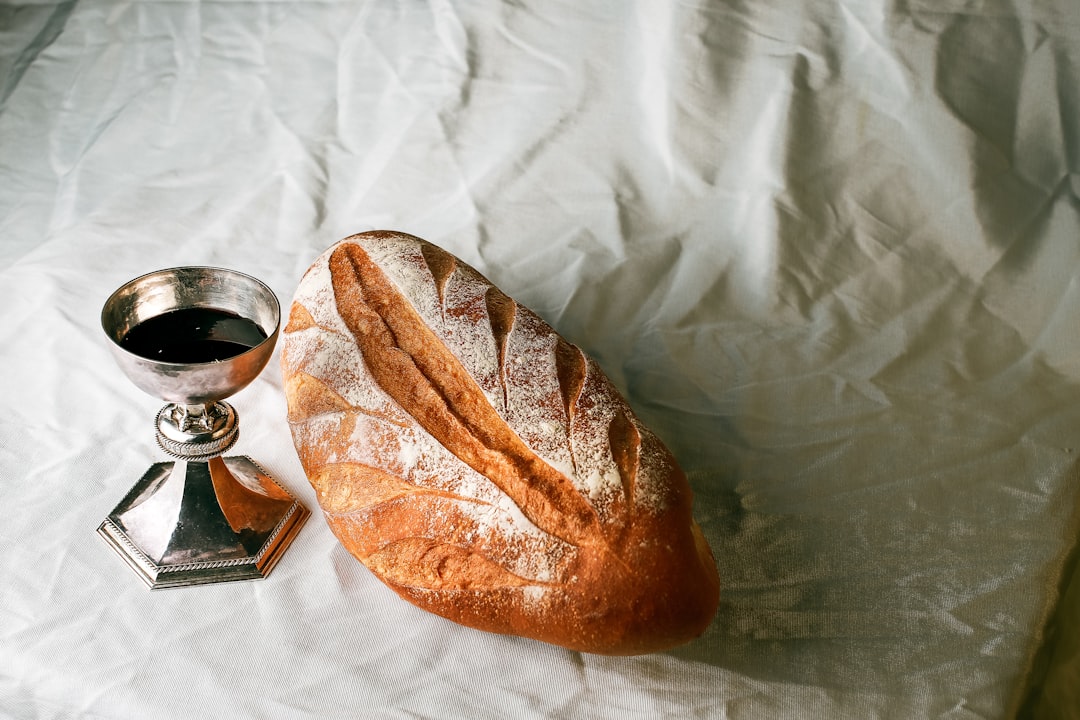
The Lord’s Supper
Mark 14:22-25, Remsen Bible Fellowship, 05/25/2025
Introduction
Tomorrow is Memorial Day. Why do Americans celebrate memorial day? Beginning in 1868, Americans began to set aside a day to remember the sacrifices of those who had died in the Civil War. This expanded throughout the course of the late 19th and into the 20th centuries, and the last Monday of May was officially set aside by the federal government to celebrate Memorial Day beginning in 1971. Of course, it is also now generally seen as a time when we can remember all of those we have loved and lost, while maintaining that particular emphasis on those who served our country through military service. As an aside, I’d encourage you, if you are able, to attend one of the memorial day programs in the area. There’s one here in town at the Cemetery, at 10am, and one over in Oyens at 11am later. The one here in town, if the weather is bad, will be just down the street at the City gym. There’s a service at the cemetery in Marcus at 9:30am. Oyens does a very nice job, if you don’t have a particular attachment to one of the communities. It’s important to remember. To remember those who went before. To remember sacrifice.
The Jewish people also have a Memorial day. The feast of Unleavened Bread, highlighted by the Passover meal, was described by God in this way: “This day shall be for you a memorial day, and you shall keep it as a feast to the LORD” (Exodus 12:14).
What were the people of Israel supposed to remember on that day? They were to remember the salvation worked by God as he brought them out of Egypt. We discussed this some last week, but to refresh your memory on the Exodus story: After 400 years of sojourning in the land of Egypt, God determined to save his people from their Egyptian oppressors. For this purpose he had raised up Moses, to deliver the people from the hand of Pharaoh. Over and over, the Lord commands Pharoah to “let my people go, that they may worship me”, and Pharoah steadfastly refuses. In chapter eleven, God described for Moses the dreadful devastation which would come when he stretched out his hand over the land—the firstborn males in all of Egypt would die: both animal and human, from the slave girl grinding grain to Pharaoh on the throne. The firstborn would all die.
It is in chapter 12, then, that the Lord gives Moses instructions for this meal—a meal to be eaten in haste, consisting of bitter herbs, unleavened bread (all the leaven was cleared out—the two-fold purpose being the haste with which they would leave, and the symbolism which came to associate leaven with sin), and the passover lamb. This lamb, a spotless male from the flock, was to be killed and then roasted whole. The blood was to be taken, then, and sprinkled on the doorposts and lintel of the house using a hyssop branch, and when the angel of death passed through Egypt, any house that was covered by the blood would be passed over.
When the angel of death visited that night, Exodus 12:30 tells us, “Pharaoh rose up in the night, he and all his servants and all the Egyptians. And there was a great cry in Egypt, for there was not a house where someone was not dead.” The Lord had visited judgement on the enemies of his people, but Israel had been kept safe. Verses 31-32 continue, ‘Then he summoned Moses and Aaron by night and said, “Up, go out from among my people, both you and the people of Israel; and go, serve the LORD, as you have said. Take your flocks and your herds, as you have said, and be gone, and bless me also!”’
Of course, the story doesn’t end there—in chapter 14 we read that Pharaoh, though he had that lucid moment after the death of his son, hardened again against the Lord and his people. He rides with his fastest chariots out into the desert to overtake them, and has them pressed against the Red Sea. But the Lord protects his people from behind with a pillar of cloud—and then he splits the sea. The people of Israel walked through on dry land, but when Pharaoh and his army attempted to pursue, the walls of water collapsed, and they were hurled into the depths. In Exodus 15:1 Moses led the people in song—“I will sing unto the Lord, for he has triumphed gloriously; the horse and rider he has thrown into the sea.”
All of this the people remembered on their memorial day, the day of Passover. It was a day of remembering God’s judgement of sin and his deliverance of his people.
And so in Mark chapter 14, in verses 22-25, we read of Jesus eating together with his disciples on their Memorial Day, but then he does something interesting, something unexpected, with this particular meal. He shifts the focus off of God’s deliverance in the past, and moves the focus squarely to himself.
Text
Mark 14:22-25, And as they were eating, he took bread, and after blessing it broke it and gave it to them, and said, “Take; this is my body.” And he took a cup, and when he had given thanks he gave it to them, and they all drank of it. And he said to them, “This is my blood of the covenant, which is poured out for many. Truly, I say to you, I will not drink of the fruit of the vine until that day when I drink it new in the kingdom of God.”
Broken Body
As I noted in the introduction, the most distinctive elements of the passover meal were the lamb, whose blood was shed, and the bitter herbs which were eaten with it. Bread was, of course, the most commonplace item available. Though for the week of the feast it was to only be unleavened bread, bread was, nonetheless, very everyday. So I find it striking that Jesus takes this item and picks it up, blesses it, and pronounces to his disciples: “take; this is my body.”
What would they have made of this? Surely, their minds would have been drawn back to the hard words Jesus spoke in John 6:33-35,
“For the bread of God is he who comes down from heaven and gives life to the world.” They said to him, “Sir, give us this bread always.”
Jesus said to them, “I am the bread of life; whoever comes to me shall not hunger, and whoever believes in me shall never thirst.”
Jesus calls himself the bread from heaven—taking the minds of the audience back to the Exodus story, but this time a little further on—to where the people ask for food and God sends manna: bread from heaven. Jesus says to the people, “I am the true manna. I am the bread of real, spiritual, life. You must eat of me.” He continued in John 6 to insist that without eating his flesh you could not have life in you, that it was necessary to feed on him to abide in him, and that if you would eat of him you would have eternal life.
After saying these words, Jesus lost many followers. John 6:66 says, “after this many of his disciples turned back and no longer walked with him.” The twelve, though they didn’t yet grasp his meaning, wouldn’t leave. Jesus asked if they, too, would, but Peter replied, “Lord, to whom shall we go? You have the words of eternal life” (John 6:68). Peter was right. Jesus did have the words of eternal life. But they weren’t always easy to grasp.
And so, while the disciples had heard Jesus speak this way before—that his body was bread to be eaten—to hear it in the context of this meal must still have been jarring. He wanted them to take his body, and eat it.
We should note here the obviously metaphorical nature of this language. Jesus’ body didn’t start to disintegrate or fall apart as they ate the bread. When he said this is my body, he is using language in a way that clearly means “this bread represents my body.” They were symbolically consuming Christ as they ate the bread he passed around the table.
Blood of the Covenant
After they had eaten the bread, Jesus took a cup. Though this wasn’t part of the initial celebration of the Passover meal, and least not as explicitly recorded in Exodus, by the time of Jesus it seems that the meal had become a multiple course affair, part of which was a number of glasses of wine. Several commentators argue, I think rightly, that this cup Jesus took would have been the third cup of wine—the cup of blessing. So he pronounced the blessing over it, and then they all drank of it. So far, so normal for the disciples. They’re still processing his words about the bread being his body: what exactly is he getting at?
Then Jesus drops another bomb: “this is my blood of the covenant, which is poured out for many.” They thought they were drinking wine—he calls it blood. They thought they were drinking it—he says it is poured out. Again, our minds must grasp the metaphorical use of language. There’s no superstitious transubstantiation, nor changing of the bread and wine into flesh and blood. But these tangible physical elements of bread and wine are now meant to point beyond themselves. But to what?
It’s easy for us, as Christians, to jump straight to the cross here. And, of course, that is where our minds do need to end up. But Jesus says that this is his blood of the covenant. What does that mean?
If you remember our discussions of covenant from Genesis you’ll remember that a covenant is a mutually binding agreement. But unlike a modern contract which assumes the equality of the two parties entering into that contract, there was often a power differential in ancient covenants. Thus you would have a Lord who initiated a covenant with his subjects. There were stipulations upon both parties, and the consequences were severe—sealed in blood. Further, there was usually a sign of the covenant which symbolized the covenant arrangement. The classic example of this is Genesis 15 where God enters into a covenant with Abram, putting Abram to sleep and giving him a vision in which the Lord himself passes between the split bodies of the sacrifices. He then, two chapters later, reaffirms the covenant and gives Abram the sign of circumcision—simultaneously changing his name to Abraham. Being in a covenant with God changes Abraham’s very identity.
When Abraham’s descendants were in bondage in Egypt, and then delivered—the Exodus which God, in Genesis 15, had told Abraham would happen; and which Passover was the initiation of—God brought them to Mount Sinai and initiated a national covenant with them. There he gave them the law, the ten commandments and the rest of the Torah. This law was a good law, and Moses tells the people that he is setting before them, in the giving of this law, life itself. To walk in God’s ways is the path of life, obedience to the covenant stipulations brings covenant blessings. But on the flip side, to walk in disobedience was to bring down covenant curses. Disobedience was the path to death.
So the people of Israel always walked in obedience, right? Ha. But God knew that. And the law also had, built into it, the recognition that God’s people would fall short of God’s standard. They would continue to sin. And so a substantial part of the system is what we call the Levitical sacrificial system. Pigeons and doves and bulls and goats and grain and oil—sacrifices of all kinds to thank the Lord, praise the Lord, but most importantly, to come before him for forgiveness and the atonement of sin. Without the shedding of blood there could be no forgiveness.
But such a system, of course, never dealt with the core of the issue. The human heart which wanders far from God was still inclined toward sin, and while God made provision through the law for the blood of bulls and goats to, in a temporary way, cover that sin, their blood could never take the sin away (Hebrews 10:4). God’s people needed a new covenant. And, roughly 700 years after Moses, such a covenant is what the prophet Jeremiah foretold.
Jeremiah 31:31-34, “Behold the days are coming, declares the LORD, when I will make a new covenant with the house of Israel and the house of Judah, not like the covenant that I made with their fathers on the day when I took them by the hand to bring them out of the land of Egypt, my covenant that they broke, though I was their husband, declares the LORD. For this is the covenant that I will make with the house of Israel after those days, declares the LORD: I will put my law within them, and I will write it on their hearts. And I will be their God, and they shall be my people. And no longer shall each one teach his neighbor and each his brother, saying, ‘Know the LORD,’ for they shall all know me, from the least of them to the greatest, declares the LORD. For I will forgive their iniquity, and I will remember their sin no more.”
That new covenant that is written, not on stone tablets, but upon human hearts, is the very covenant Jesus was accomplishing and sealing with his blood as it was poured out on the cross. It’s a covenant that isn’t merely external, but that purchases and accomplishes forgiveness, yes, but also the genuine repentance and transformation of those who are brought in.
But one aspect of the new covenant passage in Jeremiah 31 that might disturb you as you read it is the intended audience—isn’t this just a promise for the houses of Israel and Judah? Well, if we only had Jeremiah’s testimony, we might think so. But a covenant, an everlasting covenant, with David—but which extends its blessings out to the nations—is the subject of Isaiah’s 55th chapter.
Isaiah 55:1-5, “Come, everyone who thirsts, come to the waters; and he who has no money, come, buy and eat! Come, buy wine and milk without money and without price. Why do you spend your money for that which is not bread, and your labor for that which does not satisfy? Listen diligently to me, and eat what is good, and delight yourselves in rich food. Incline your ear, and come to me; hear, that your soul may live; and I will make with you an everlasting covenant, my steadfast, sure love for David. Behold, I made him a witness to the peoples, a leader and commander for the peoples. Behold, you shall call a nation that you did not know, and a nation that did not know you shall run to you, because of the LORD your God, and of the Holy One of Israel, for he has glorified you.”
A nation that did not know the Lord would run to the Greatest Son of David. Friends, the apostle Peter tells us in 1 Peter 2:9 that believers in Jesus Christ are that holy nation, a people for his own possession. And how do we become such a nation? How do we come to be part of the people who receive the good news of the new covenant? We trust in the blood of Jesus which was shed in our place for our sins. We heed the voice of the Lord Jesus, running to him, who, in John 7:37, makes reference to Isaiah 55: “If anyone thirsts, let him come to me and drink.” If we come to him by faith, drinking of the blood he shed in our place, he will pour out into our hearts the Holy Spirit. Jesus says John 7:38, “Whoever believes in me, as the Scripture has said, ‘Out of his heart will flow rivers of living water.’” And John the gospel writer clarifies in the following verse: “Now this he said about the Spirit, whom those who believed in him were to receive.” If you come to Jesus by faith, you become a member of the new covenant. You are counted among the many, for whom Jesus’ blood was spilled.
Signs of Union
The Lord Jesus gave us two signs of the New Covenant. The first, baptism, is an initiatory rite, comparable to how circumcision functioned under the Mosaic code. But the Lord’s table is an ongoing sign. Though it is not made explicit in the text here in Mark, both Luke and 1 Corinthians all give us the impression that this was something the church is to practice with great regularity. No specific frequency is required—but I would never want to take the Lord’s Supper less than our current once a month. And it is, in part, the ordinary elements of bread and wine make a regularity, and “as often-ness” possible. Jesus, our Passover lamb, has already been killed. We don’t need special herbs to season the meal, or to tie our robes tight around our waist, ready to run for the Red Sea. Instead, we are able to sit in the presence of the Lord Jesus and receive these tangible signs and symbols of his body and blood, reminders of the work he did for us on the cross, and the work he continues to do in us as we live as his covenant people here on earth. Though the symbols themselves are physical, the reality that they minister to us is the spiritual gift of Christ, who by his Spirit is present with us.
That current presence by the Spirit is crucial. Jesus told his disciples in verse 25 that he wouldn’t sit down to eat and drink with them again until the kingdom had come—there is some debate over what he means by that, but I think the most straightforward way to understand it is the wedding supper of the Lamb pictured in Revelation 19. One day we will physically be seated at a table with the Lord Jesus at the head, eating the rich food of Isaiah 55 and drinking the best wine, such as he made in John 2. But until then, we regularly gather at the table, feasting by faith, nourished and knit together as we remember—and not only remember, but proclaim—the Lord’s death until he comes.
Communion Meditation: Context and Content
Given the content of the sermon this morning, we’re going to pause our meditations through the Creed, in order to focus more tightly on the Lord’s Supper itself.
I mentioned in the sermon the everydayness of bread and wine: we no longer sacrifice a Passover lamb because Jesus is our Passover lamb who was sacrificed in our place. His blood is sprinkled over the doorposts of the heart of everyone who comes to him by faith. And he gives us ordinary means that we might celebrate and remember his sacrifice with great regularity.
Now this ordinariness should not be transformed into lightness. We need to honor our Covenant Lord in the content of what we use, and the context of where we use it. There is a temptation for modern Christians to be flippant in how they approach the Lord’s Supper. Some take the idea that “wherever two or three are gathered” and reality that Christ fulfilled the Passover feast, and think we can remember this basically however we want. So if I’m camping, maybe graham crackers and hot cocoa can be the Lord’s supper. Or at my home with my friends, maybe we can call pizza and pepsi the Lord’s supper. Let me issue a loving, but stern, warning on this matter: the intended context of the supper is the gathered church. Paul speaks 1 Corinthians 11:17-18 of “when you come together.” Communion is not an individual act between you and God, or even you and some random collection of other Christians, this is an ordinance that he gives to his covenant people, identified and gathered in the church. I don’t think this excludes the ability to take communion to the infirmed, perhaps in a hospital or nursing home. But it does mean that those are exceptional cases, and not to be considered normal.
Likewise, while the context is clearly to be the gathered church, the content or what have traditionally been called the elements are also prescribed by Scripture. First, there is the bread. Now, I do not believe the bread needs to be unleavened; we aren’t celebrating the feast of unleavened bread, we are remembering Jesus’ body. But it needs to be bread. Likewise, we have wine. The wine needs to be real fruit of the grape vine. Not water, not soda, not apple juice, not even that oh so holy substance we call coffee. Fruit of the vine. Historically, this has meant fermented wine. Only in the past 155 years has unfermented wine been used by some Christians—since Thomas Welch applied the process of pasteurization to grape juice and a stable juice became possible. Obviously the practice of our church, and many other churches—especially Methodists and Baptists in the past century and a half—has been to use grape juice. I don’t think there is anything wrong with grape juice, per se, because the Bible doesn’t explicitly say that the wine must be fermented, and the terms Jesus uses are “the cup” and “the fruit of the vine.” Nonetheless, what they used at that first meal was clearly and obviously wine, and that was the universal practice of Christian churches for well over 1800 years, and continues to be the practice of most churches today. And to be quite honest, the more I meditate on this reality, the more convinced I am that the most faithful way to practice the supper is with real, fermented, wine. And so, starting in July—not today, I don’t want to spring this on anybody out of the blue—my plan is to shift from our current practice of using grape juice to what I think is the more Biblical and historic Christian practice: wine.
Now I also want to be sensitive to the fact that some of you may have a problem in your conscience with any consumption of alcohol under any circumstance, or perhaps you are concerned about your child who is a believer taking wine in communion. What I want to do here is two-fold: first, I want to offer an exhortation; second, I want to offer a clarification. First, the exhortation: you may be making the wise choice to abstain from drinking alcohol in principle, to not have it in your house, etc. If this has been a sin struggle in your past or in your family, I am not going to argue with you choosing to abstain. Jesus says to cut off your hand if that would keep you from sin, take drastic measures to avoid temptation, that’s good. I would ask you, however, to pray about whether a sip of wine in the context of the gathered church remembering Christ’s death for our sins—including the sin of abusing alcohol—is that in the same category as buying a case of Busch for the fridge or a bottle of Jack Daniels for the cupboard? Likewise, if you are concerned about your child having a sip of wine in communion, I would ask you to consider the wisdom of generations of Christians who went before who thought that honoring the Lord by remembering him through the supper was more important than whatever our normal house rules would be. Even the government acknowledges this difference in making exceptions to alcohol laws for religious practice.
Second, the clarification: I really do want to honor the consciences of those who disagree in this matter. And so if not taking wine is a matter of conscience for you, I would ask you to do two things:
1), pray about what I just laid out, and
2), come talk to me—not right after church today, I really do want you to pray and read this passage and the 1 Corinthians 11 passage and meditate on what obedience to the Lord looks like—
But if you do that, and still feel you could not in good conscience take wine in communion, again, come talk to me, and we’ll make accommodation for that. Because more important than the question of whether the juice is fermented or not is the question of discerning the presence of Christ’s body at the table: and while his broken physical body is symbolized by the bread, his true spiritual body is present in the gathering of the church. We, together, constitute the body of Christ on earth. And so as we celebrate the supper, let there be no quarreling or dissension between us. Let us be reminded of Christ’s body broken and blood shed in our place, that he might unite us to himself by faith, bringing us into the family of his Father by purchasing our pardon. And remembering also that he, in this process, has made us One, even as He and the Father are One. Let pursue the Unity of the Spirit in the Bond of Peace, and let us proclaim Jesus’ name and and death together, in love, unity, and gratitude.