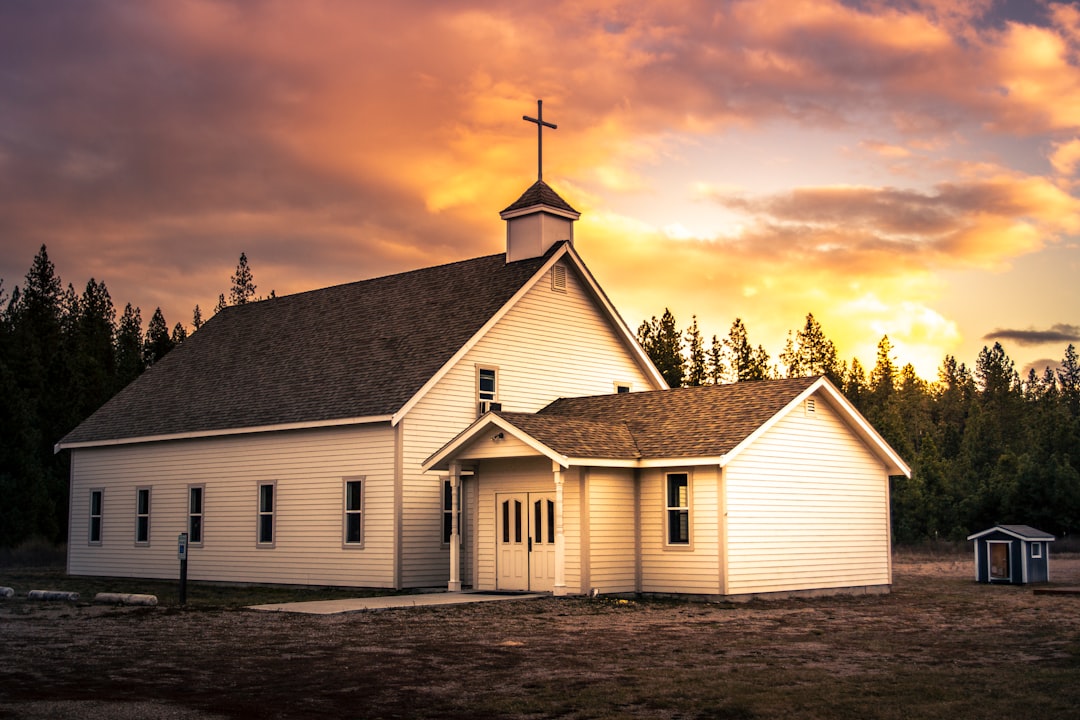
Remsen Bible Fellowship, 06/18/2023
Introduction
Our text for this morning comes from the letter to the Hebrews. This letter, as a whole, has one major theme: Jesus is better. He’s better than angels, he’s better than Moses, he’s better than the priesthood of Aaron, he’s better than the multitude of sacrifices offered in the past. There is nothing that compares with him. There’s no one who can compare with him. Christ Jesus, our Maker, Savior, and Lord, is of surpassing value. By the time you reach Hebrews chapter 10:19-25, this fact has been well established. But before we get to that text, I need to point out the word it begins with in v19: therefore. I know I’ve said this before, and I will say it again: when, in the Bible, you see the word “therefore”, you need to ask: “what’s it there for?” “Therefore” is always pointing backward to a previous point or argument, something which lays the foundation for what the writer is about to say. So before we jump ahead of ourselves, we should gain a basic understanding of the first half of chapter 10.
In verses 1-4, the author explains that the old sacrificial system is a shadow. Though those sacrifices were a good thing (God commanded them!), they couldn’t actually accomplish the purpose of removing sin - and we know that because they were continually offered year after year after year.
For since the law has but a shadow of the good things to come instead of the true form of these realities, it can never, by the same sacrifices that are continually offered every year, make perfect those who draw near. 2 Otherwise, would they not have ceased to be offered, since the worshipers, having once been cleansed, would no longer have any consciousness of sins? 3 But in these sacrifices there is a reminder of sins every year. 4 For it is impossible for the blood of bulls and goats to take away sins.
The writer then goes on to explain that when Jesus came, he came in order to do away with sacrifice. This is because while sacrifice for sin is required, sacrifice itself is not what God desires. What God desires for us is not a continual bloodbath of offerings to pay for our sin, but a changed heart that chooses not to sin. But this is only possible if someone pays for our debt thoroughly and finally and, having forgiven us, gives us a new heart.
5 Consequently, when Christ came into the world, he said,
“Sacrifices and offerings you have not desired,
but a body have you prepared for me;
6 in burnt offerings and sin offerings
you have taken no pleasure.
7 Then I said, ‘Behold, I have come to do your will, O God,
as it is written of me in the scroll of the book.’ ”
8 When he said above, “You have neither desired nor taken pleasure in sacrifices and offerings and burnt offerings and sin offerings” (these are offered according to the law), 9 then he added, “Behold, I have come to do your will.” He does away with the first in order to establish the second. 10 And by that will we have been sanctified through the offering of the body of Jesus Christ once for all.
So, Jesus does the will of the Father by offering up his body once-for-all as the true and final sacrifice for our sin. The one-time payment Jesus made was sufficient for the sin of the whole world. How can we know this? Because when he finished his work here on earth, he sat down.
11 And every priest stands daily at his service, offering repeatedly the same sacrifices, which can never take away sins. 12 But when Christ had offered for all time a single sacrifice for sins, he sat down at the right hand of God, 13 waiting from that time until his enemies should be made a footstool for his feet. 14 For by a single offering he has perfected for all time those who are being sanctified.
Priests in the Old Testament went before the altar day after day after day. Blood was shed year after year after year, in faith that God would accept the insufficient sacrifices of goat and bull blood to cover the sins of his people. And, when offered rightly and from a heart of faith, he did just that. But that blood couldn’t take away sin, and so they were continually needing to come back before the altar. Jesus, on the other hand, offered a single sacrifice for sin. And that sacrifice was so sufficient that he does not stand before the altar, he sits at the right hand of God.
In Christian theology this is called the Session of Christ. He is seated, in the words of the Apostles’ Creed, “at the right hand of God the Father Almighty. From there he shall come to judge the living and the dead.” He sits now at the Father’s right hand, and his work of salvation is accomplished. He will come in the final day to judge. But he already did everything necessary in his earthly life, death, burial, and resurrection, to secure the eternal salvation of all who would trust in him. The perfection of those who draw near (v14) is final; which is to say, there is no more sacrifice to be made. And we can see evidence of this at work in our lives even now if we are believers in Jesus.
15 And the Holy Spirit also bears witness to us; for after saying,
16 “This is the covenant that I will make with them
after those days, declares the Lord:
I will put my laws on their hearts,
and write them on their minds,”
17 then he adds,
“I will remember their sins and their lawless deeds no more.”
18 Where there is forgiveness of these, there is no longer any offering for sin.
If you’ve trusted in Jesus, there is no more sacrifice to make. He doesn’t need to do anything more in order for you to be saved: and neither do you. There is no more offering to be made, because his offering is enough. His sacrifice is enough. Jesus is enough.
And that brings us to the text before us. Remember that the center of our study over these five weeks is the topic of hope. How does the writer speak of hope in v23? He says, “let us hold fast to the confession of our hope.”
In this text, what we confess is the content of our hope. When we speak of confession, our minds often turn to a list of sins that we have committed. That’s not what the writer to the Hebrews means. He is speaking of confession in the positive sense of clearly articulating what we believe (think Heidelburgh confession, Westminster confession, or 1689 Baptist confession). In verses 19-22 we are given two aspects of this confession, two truths which give us a lasting hope. We will then look at two responses that these truths demand from us.
We Confess: We Have Access Through Jesus
19 Therefore, brothers, since we have confidence to enter the holy places by the blood of Jesus, 20 by the new and living way that he opened for us through the curtain, that is, through his flesh, 21 and since we have a great priest over the house of God, 22 let us draw near…
All of what the writer gave us in verses 1-18 was a preface to this great truth: because Jesus’ sacrifice was powerful, authoritative, and sufficient, we now have access to God through him. Not only do we have possible access, but those who trust in Christ have sure access to God the Father.
Look at verse 19. “We have confidence to enter the holy places.” What does he mean by holy places? Remember that the earlier part of the chapter was talking about the OT sacrificial system, so our minds should immediately go to the Holy Place and the Holy of Holies in the tabernacle and then the temple. The Holy Place was a location where only the priests could go, and the Holy of Holies was only entered by the High Priest once a year, after the strictest of cleansing ceremonies, in order to sprinkle blood upon the mercy seat. This was not general access. And even those who had access were to take it with the most grave and serious of attitudes, for legitimate fear that the Holy Presence of the Lord might consume them.
Humanity was created to live in the presence of God, a fact to which Genesis attests. But this side of the Fall, east of Eden, as it were, we can’t be near him without being consumed. If our sins are not dealt with we are right to have a fearful expectation of judgment (Hebrews 10:27).
But if v18 is right, and we have had our sins dealt with by Christ, then the fear should be removed. Fear of the Lord is necessary, it leads us to see our need for repentance and faith. But for those who have thus feared him, we can now approach him with confidence. Do you have this confidence before God?
Today we celebrate Father’s Day. Some of us had bad earthly dads, who were abusive or absent. Others had dads who were trying, but just seemed aloof or distant. Others had dads who welcomed them with open arms. While no earthly father is perfect, the example we see of the heavenly Father is one who welcomes us into his presence. He made us to dwell with him. After we ruined that by our sin, he paid the price of his only eternal Son so that he might have many sons and daughters for all of eternity. Verse 20 says we have access through the curtain of Jesus’ flesh - as Jesus' body was broken on the cross, the barrier between God and man was ripped from top to bottom (see Matthew 27:51). Thus we now not only have access, but he who is the way into the presence of God, Jesus, also sits at the Father’s right hand as a witness to the finality of the sacrifice, he is our high priest before the Father (v21, see also 4:14-16, 7:23-28). Do you know that if you have repented of your sins and trusted Jesus as your Savior, your place before the Father is just as secure as that of Jesus himself?
In his book, Enjoying God, Tim Chester puts it this way: “As long as Jesus has the Father’s approval, we have the Father’s approval.” That truth should give us confidence to come before him. We confess that through Jesus we have access to God the Father. Not the access of a visitor, but the access of a beloved child.
We Confess: Jesus Has Cleansed Us
And this access is granted because by Jesus’ blood we have been cleansed. We saw that in verse 19: “we have access by the blood of Jesus.” Again, note the contrast with the OT, where priests had access on the basis of a substitutionary animal. We have a substitute, but it’s no bull or goat. It’s the Lamb of God himself.
As I noted earlier, the high priest would once a year enter the holy of holies in order to sprinkle blood on the mercy seat in the presence of God. But now we read in verse 22 that “our hearts” are “sprinkled clean from an evil conscience.” Sin has been dealt with by the sprinkling of Jesus’ blood.
That phrase is interesting to me for a couple of reasons. First, we are being sprinkled with blood in order to be clean. Those of you who have done much laundry, especially for little boys, know that blood doesn’t generally make things clean in the sense that we usually think of clean. It does the opposite. It stains. But Jesus’ blood is different. Hear the words of Isaiah 1:18, followed by Revelation 7:13-14.
18 “Come now, let us reason together, says the LORD:
though your sins are like scarlet,
they shall be as white as snow;
though they are red like crimson,
they shall become like wool. (Isaiah 1:18)
13 Then one of the elders addressed me, saying, “Who are these, clothed in white robes, and from where have they come?” 14 I said to him, “Sir, you know.” And he said to me, “These are the ones coming out of the great tribulation. They have washed their robes and made them white in the blood of the Lamb. (Revelation 7:13-14)
Jesus’ blood doesn’t stain us. Our sin stains us. He washes us clean of our filth, our impurity, and our sin. Because of this, we can approach the Father not only with the confidence of verse 19, but with a true and pure confidence. It is not pride to boldly come before God when we come with hearts washed by Jesus. Thus verse 22 commands us to “draw near with a true heart in full assurance of faith.”
Do you have a full assurance of faith? Many Christian traditions teach that you can lose your salvation, but that is contrary to the clear teaching of the New Testament. We should draw near to God with full assurance.
This is not because we have confidence that we are sufficient or worthy. We aren’t. If it were up to us we would lose our salvation and we shouldn't have any confidence. But it’s not up to us. It is Jesus who has cleansed us, Jesus who has brought us into the holy of holies, the presence of the Father. None of it depends on us.
Do you realize that’s the whole point of baptism? Here in verse 22 it speaks of “our bodies washed with pure water.” While baptism doesn’t have any magical or mystic power to remove sin, it symbolizes our burial with Christ into his death and marks as a visible entrance into his people, the church.
This is why we teach that baptism is for believers in Jesus Christ, not babies. A baby is not capable of faith, and thus cannot be united to Jesus by faith. But for those who have believed in Jesus, Jesus commands that you be baptized, visibly professing your connection to his life, death, and resurrection. If you haven’t done this as a believer, come talk to me, and we can go over what that means.
So: we confess that Jesus gives us access to the Father, and that he does this by cleansing us with his blood. That’s what he has done. How do we respond?
We Respond: Keep Holding On
Our first response is to hold fast. “23 Let us hold fast the confession of our hope without wavering, for he who promised is faithful.”
We hang on tight to Jesus. There are so many things in this world that are capable of distracting us from Jesus. The daily needs of our families and work. The media blaring at us through every screen from our TVs to laptops to smartphones. The sin which is still naggingly present in our lives and makes us feel like maybe God doesn’t want us to come before him, like maybe Jesus wouldn’t want us around.
I know very few people listen to AM radio anymore, but I think you’ll still all remember static. You’d struggle to find your station over all kinds of other fuzzy noises or competing stations on the same bandwidth from another area, making it difficult to hear just exactly what is going on 1412 KLEM (or 920 KXLY).
Then you would finally get to the point where you had it tuned just right, everything was coming in clear as day, when you hit a pot-hole. And lost it.
Life is a lot like that. It can seem hard to hear what God is saying, even with the Bible laying open right in front of us. So many other thoughts are crowding in, telling us we need to perform, we have to measure up. We need to be outraged by this, perform excellently at that, and not forget these other things. And somewhere in the static we forget who we are: beloved children of almighty God, with hearts sprinkled clean by his perfect Son. We forget that Jesus is the center of our life, our ballast, our only hope. He gives us strength for today, and bright hope for tomorrow.
If you try to anchor your soul anywhere else, you will be sorely disappointed. Tie your soul to Jesus. Hold fast to him, without wavering. He alone is faithful.
But how do you do that?
We Respond: Keep Meeting Together
The short answer? Tie yourself to the church, Jesus’ body. Verses 24-25 exhort:
And let us consider how to stir up one another to love and good works, 25 not neglecting to meet together, as is the habit of some, but encouraging one another, and all the more as you see the Day drawing near.
Cutting through the static of life, getting the radio dial correctly tuned, is impossible on your own. So many people who end up walking away from the faith follow a progression: encounter a difficulty. Feel too embarrassed to share, or perhaps share and don’t get the response they hoped for. Withdraw from Christian fellowship. Being disconnected from fellowship, they feel distant from God. Feeling that God is distant, they decide that he isn’t real or he doesn’t care. Leave the faith.
How does the writer to the Hebrews tell us to short circuit that pattern? Stay connected! “Let us consider how to stir one another up” - that is, think about how you can encourage another believer in their faith. Who are you encouraging toward Jesus? Who are you encouraging to live more life Jesus? How can you help someone else in their process of growth in the faith? You should have an answer to that question! One of the ways we cut through the static and hear Jesus is by obeying him, and helping others to do the same. Are you willing to be prodded along in your faith by Jesus - and by his people?
One requirement of this kind of “spurring along” in good deeds is that we are actually together. This isn’t something that happens outside the context of real-life relationships. This is why Christian radio and sermons on the internet and church live-streams are not the same thing as real-life church. Though the writer was aware, even in his own time, of some people who made a habit of neglecting Christian fellowship, he says this should not be our habit. Instead, we ought to meet together. The Greek word seems to imply a formal gathering - ie, the Sunday gathering. It also includes more informal times of gathering to pray and read scripture, to share meals, or to just enjoy time together with other Christians. But even those things, as important as the are, are secondary to the gathering together publicly to sit under the word, to sing together in psalms and hymns and spiritual songs, and to lift our hearts together to the Lord in prayer.
We don’t gather as a good work. We gather to worship and hear from the Lord together, and then to spur one another on to live lives outside the gathering that are marked by those good works which bring glory to our Lord.
There is a sense of urgency in this. Notice the end of verse 25: “and all the more as you see the Day drawing near.” There are plenty of believers who get hooked on books about “the end times” and “signs of the times” and wondering “when will he come back?” And there is a lot of money to be made writing those kinds of sensational books. But the clear teaching of the New Testament is that he could come back any time, and that we ought to be ready. But we don’t get ready by reading every news article out of the middle east, or by purchasing vast quantities of food: we get ready by living the sort of lives we’re told to in Scripture. We honor authority, we love our neighbor as ourselves, we work diligently at our jobs and are honest with our money. We give sacrificially to the work of the Lord, and we raise our children in homes where he is worshiped and served. We discipline our children, and tuck them in at night. We take a meal to someone in grief, we write a note to someone in need of encouragement. We gather, week by week, to praise the Lord, to hear his word, and then spend the week trying to put it into practice.
None of those things makes us right with God. But they are the markers of belief we want to see in our lives as those who claim to follow Jesus. But as simple as the Christian life is, easy to understand, it can be hard to do. It can be hard to remember that Jesus paid it all. It can be hard to obey what he commanded. And so we need one another. We need one another to remind us of who Jesus is, and the access to God that we have through him. And we need one another to keep encouraging us to live lives that put him on display. A hopeful life is a Jesus-shaped life; and that life is lived in community with his body, the church.