Introduction
Imagine you’re a Christian in the city of Rome, the year is about 55AD. You’ve heard stories of Jesus, you’ve heard about and believed the message concerning the forgiveness of sins; a forgiveness given freely to all who trust in Jesus as the perfect Son of God who died in the place of sinners, and who rose again triumphant over death. But while this gospel preaching has reached your city, and a church has formed as believers in Jesus come together weekly to worship him and read the Scriptures - what we now call the Old Testament - seeking to understand how it all points to Jesus, there’s one thing you don’t have: an authoritative written record of the gospel story. All you have are verbal stories, no one written story. And if the church is going to live on past the first eyewitnesses, men like Peter (who was one of the leaders in the church at Rome), then this story, this good news, needs to be put down in writing.
Enter Mark. Mark was a close associate of the apostle Peter, and though he was not himself an eyewitness to most of Jesus’ life and ministry, we know that he was very close to several who were. Peter calls him my son in 1 Peter 5:13. In the book of Acts he is called “John Mark”, and we learn from Colossians that he was a cousin of Barnabas. He traveled with the apostle Paul on missionary journeys in the book of Acts. Those initial travels with Paul didn’t end well, but by the end of Paul’s ministry he says that Mark is “very useful to me” (2 Timothy 4:11), so reconciliation must have taken place. In sum, we know Mark was a close associate of the early church leaders, and Peter especially. And he seems to have been entrusted with the task of writing down Peter’s account of the events of Jesus’ earthly life and ministry.
This helps explain some of the stylistic features unique to Mark’s gospel. We know from all of the gospel accounts that Peter is quick to speak and quick to act. There is nothing hesitating in his personality. And that comes through as this gospel account focuses on action. Thow word immediately occurs over 40 times, over 80% of the time you find that word in the New Testament it is in Mark. The details of the stories are extended and more detailed than the other gospels, while at the same time the details of the teaching are fewer, with a focus on simply getting to the point. Peter focuses prominently in many of these stories, but not always in a positive way: his failures, sins, and foolishness are just as evident as his faith. So the story is told from a very Peter point of view. But that view is always aimed somewhere else: it’s the gospel concerning not Peter, but Jesus.
The Beginning
“The beginning of the gospel of Jesus Christ, the Son of God” (1:1).
What should we take from Mark calling this the “beginning” of the gospel? I think the two most likely explanations are that
* He is calling this whole story the beginning of the gospel which his readers have already received. Or,
* This is an introductory phrase for the prefatory part of the book.
Of these options, I think the second is more likely. Verses 1-13 form the opening section, which prepares us for everything else that follows. While the apostle John starts his narrative in the eternal life of God, even before creation, and Matthew and Luke both have birth narratives around Jesus coming into the world, Mark’s picture of Jesus will jump straight into Jesus’ preaching ministry in v14-15. These first thirteen verses which, Lord willing, we’ll look at over the next two weeks, prepare us to hear Jesus’ message of repentance and the coming kingdom.
Beginning with…John?
Why, then, does Mark start with John?
The beginning of the gospel of Jesus Christ, the Son of God.
2 As it is written in Isaiah the prophet,
“Behold, I send my messenger before your face,
who will prepare your way,
3 the voice of one crying in the wilderness:
‘Prepare the way of the Lord,
make his paths straight,’ ”
4 John appeared, baptizing in the wilderness and proclaiming a baptism of repentance for the forgiveness of sins. 5 And all the country of Judea and all Jerusalem were going out to him and were being baptized by him in the river Jordan, confessing their sins. 6 Now John was clothed with camel’s hair and wore a leather belt around his waist and ate locusts and wild honey. 7 And he preached, saying, “After me comes he who is mightier than I, the strap of whose sandals I am not worthy to stoop down and untie. 8 I have baptized you with water, but he will baptize you with the Holy Spirit.”
In introducing us to Jesus, Mark immediately cuts to a quotation from the Old Testament. Mark writes as it is written in Isaiah the prophet. What you might find curious, though, if you’re looking at the Bible in front of you, is that this quote isn’t all from Isaiah. So how can he say that it’s Isaiah? Well, it was a common practice when putting together what we might call a compound quote to cite it as coming from the most prominent of the sources. There was no Chicago Manual of Style for Scripture writers, but there were literary conventions, and the biblical authors generally followed those conventions. So these two verses are actually a combination of Malachi 3:1, Isaiah 40:3, and a flavoring of Exodus 23:20.
Malachi 3:1, “Behold, I send my messenger, and he will prepare the way before me.” This verse sets up the coming of the Lord to his temple, refining the people with fire and scrubbing them clean like a fuller’s soap (3:2-3).
That language in Malachi is borrowed from Exodus 23:20, “Behold, I send an angel [messenger] before you.” There the angel was preparing the way before the Israelites as they headed into the land of Canaan, the land of promise. They were to obey the messenger, and he would prepare the way before them.
Isaiah 40:3, “A voice cries: ‘In the wilderness prepare the way of the LORD; make straight in the desert a highway for our God.’” And here in Isaiah the voice is crying out to prepare the way in the wilderness for God to bring a message of salvation.
Before I explain the main point, I want to encourage you to read your Bible like Mark does. He doesn’t look at all of these Old Testament texts, separated by a thousand years from the time of the Exodus in 1400 BC to the time of Malachi in 400 BC, and think “what interesting verses. Crazy that they're similar.” Instead, he understands that they are part of the one unfolding revelation of God in the Bible, and they find their ultimate meaning in the events surrounding the life and work of Jesus. We need to read our Bibles with the same awareness.
Coming back to the texts at hand: if we put them all together, what we see is that John the Baptist was the one coming before the Messiah in order to prepare his way, the way of salvation. This is a pattern we see all through the Old Testament. Moses came and taught the people and instructed them, and led them out of Egypt - but it was Joshua who led them into the promised land. Before Elisha came and worked judgment in Israel as a prophet with a sword, before he did miracles multiplying food and healing the sick, there was a wilderness prophet named Elijah. Moses and Elijah, like John, were prophets of the wilderness. And Mark wants us to hear the similarities.
Why John first?
This messenger in the wilderness, as spoken by Malachi, was identified later on in the book of Malachi as the prophet Elijah.
Malachi 4:5, “Behold, I will send you Elijah the prophet before the great and awesome day of the Lord comes.”
Mark belabors the similarities. Wilderness is mentioned in the portion of text from Isaiah, but then it is brought in again in v4, as well as being the place Jesus himself is driven in v12-13. The clothing which John wears also is reminiscent of Elijah, “John was clothed with camel’s hair and wore a leather belt around his waist and ate locusts and wild honey” (v6). Compare 2 Kings 1:8, where a messenger describes a man to King Ahab as wearing “a garment of hair, with a belt of leather around his waist,” and the outfit is so distinctive that Ahab immediately replies “It is Elijah the Tishbite.”
In Mark 9, after the experience on the mount of transfiguration, where Peter, James, and John saw Jesus transformed before their eyes and then speaking with Moses and Elijah, they were struggling to understand what it meant. So they asked Jesus why the scribes said that Elijah had to come first. Jesus replied, “Elijah does come first to restore all things…But I tell you Elijah has come, and they did to him whatever they pleased, as it is written of him” (Mark 9:12a, 13). In a parallel account, Matthew tells us that the disciples understood Jesus to be referring to John (Matthew 17:13). They caught the clues. So how was John preparing the way for Jesus?
Repent and be baptized!
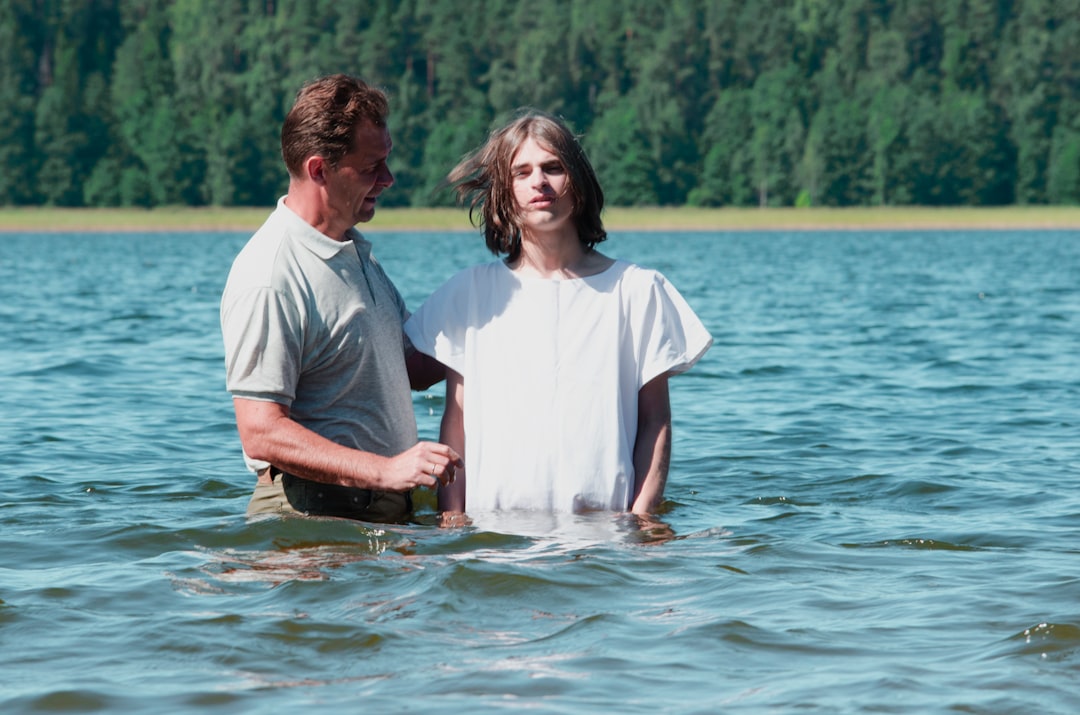
John prepared the way for Jesus by preaching. Proclaiming verse 4 says, and that’s what true preaching is, a declaration of the truth from God. But what was John proclaiming, what message was he preaching? “A baptism of repentance for the forgiveness of sins.” Now we proclaim that the forgiveness of sins comes only through faith in Jesus Christ. Are we out of step with John’s message? I don’t think so. Read the sentence carefully. The baptism is a baptism of repentance. That is to say, it is an external sign of something which existed first within them. John is telling them, repent of your sins! And then show that you mean it, by publicly entering the Jordan river and being submerged by John. Those who repent will be forgiven. Peter, in 1 Peter 3:21, refers to baptism as “an appeal to God for a good conscience.” We appeal to God in baptism, saying “I repent of my former life, and identify with Jesus in his death, burial, and resurrection.” That’s what being submerged in the water and being raised anew means. There isn’t any magic in the ritual itself, but it is a crucial step of faith to publicly identify with Jesus in this way.
Now, John didn’t have all that information himself. But the baptism he was practicing worked along the same lines. He called sinners to repentance, and to be ritually washed of their old self and raised clean as new people, those who were to live my faith in the Messiah to come.
Repentance and faith are two sides of the same coin. We repent of our sins, and we trust God - that is, we have faith - that he will forgive us. And we can see this is precisely the effect that John’s preaching was having on the region, as we read in v5 that all the region of Judea, and all Jerusalem, were coming out to be baptized by him. This is a totalizing statement which doesn’t literally mean every person, but it does mean that John’s ministry wasn’t some tiny thing off in the desert that no one had heard about. It was off in the desert, but everyone had heard about it. You may not have gone down there yourself, but you surely formed an opinion.
You were repenting, and getting baptized, or you were resenting John for implying that you should.
And that resentment was not a small matter. John called for all sinners to repent. It ultimately cost him his life, as we’ll see when we get to chapter 6. The call to repent may seem ho hum to people who’ve grown up in church and heard about sin and repentance, forgiveness and grace. But for the Jews this call to a repentance - especially pictured in baptism - would have been shocking. Baptisms were practiced in that time, but they were primarily for non-Jews who wanted to become proselytes; if they wanted to disavow their Gentile-ness and follow YHWH, part of how they could demonstrate their seriousness would be to go through a ceremonial washing. Here John was saying that even Jews needed to be washed in order to approach God. Being part of the chosen people wasn’t enough. Repentance and washing were necessary. Forgiveness was needed for anyone to be right with God.
And John didn’t just preach about the need for forgiveness. He preached about the One who would bring that forgiveness. The One who would not only baptize with water, but with the Holy Spirit. We’ll spend more time looking at Jesus’ own anointing with the Spirit next week, but John’s message was clear: the Messiah, the coming One who was mightier than John, would be a giver of the Spirit. This is a promise Jesus made a key part of his own teaching, especially in the gospel of John.
Jn 3:3–8. Jesus answered him, “Truly, truly, I say to you, unless one is born again he cannot see the kingdom of God.” 4 Nicodemus said to him, “How can a man be born when he is old? Can he enter a second time into his mother’s womb and be born?” 5 Jesus answered, “Truly, truly, I say to you, unless one is born of water and the Spirit, he cannot enter the kingdom of God. 6 That which is born of the flesh is flesh, and that which is born of the Spirit is spirit. 7 Do not marvel that I said to you, ‘You must be born again.’ 8 The wind blows where it wishes, and you hear its sound, but you do not know where it comes from or where it goes. So it is with everyone who is born of the Spirit.”
Jn 7:37–39. 37 On the last day of the feast, the great day, Jesus stood up and cried out, “If anyone thirsts, let him come to me and drink. 38 Whoever believes in me, as the Scripture has said, ‘Out of his heart will flow rivers of living water.’ ” 39 Now this he said about the Spirit, whom those who believed in him were to receive, for as yet the Spirit had not been given, because Jesus was not yet glorified.
Jn 16:7–8.7 Nevertheless, I tell you the truth: it is to your advantage that I go away, for if I do not go away, the Helper will not come to you. But if I go, I will send him to you. 8 And when he comes, he will convict the world concerning sin and righteousness and judgment.
And this promise came to fruition on the day of Pentecost, when every believer gathered in the upper room received the gift of the Spirit:
Ac 2:1–4. “When the day of Pentecost arrived, they were all together in one place. 2 And suddenly there came from heaven a sound like a mighty rushing wind, and it filled the entire house where they were sitting. 3 And divided tongues as of fire appeared to them and rested on each one of them. 4 And they were all filled with the Holy Spirit and began to speak in other tongues as the Spirit gave them utterance.”
This gospel which Mark is writing is about something new that God was doing in history. In one sense it was something very old. God had first promised a Redeemer, the Seed of the woman who would crush the head of the snake, back in Genesis 3:15. The Bible is one long unfolding story of God bringing that promise to pass in history, through the line of Abraham, the people of Israel, and culminating in the person of Jesus, the Christ, the Son of God.
Mark ties his narrative back into salvation history by telling us that the old patterns of a wilderness prophet followed by a leader who will bring the people into the Promised land are still intact. Mark wants us to know that John was the Elijah-like forerunner who was preparing the way for God’s people to enter into his promised land of rest. But this time it’s not a temporary land of milk and honey, it’s the rest of having all of your sins forgiven. It’s the rest of being right with God.
All four gospel writers feature John the Baptist early in their narratives, and they do this so that we can see that Jesus isn’t dropping out of the sky randomly. The better we as readers understand the OT patterns and expectations, the better we will grasp the gospel as given to us in the NT.
But the connection with the Old Testament and the fulfillment of proper expectations, doesn’t mean Jesus filled all the expectations of the 1st century Jewish people. They had many false expectations. What John was announcing, and what Mark was writing, had deep and old roots. But it also had an aspect of surprise to it. The rest John says is coming is not the rest of having a land freed of Roman occupation. It’s a rest of which comes from being freed from the power of sin. It’s the rest of receiving the Holy Spirit and thus actually having the power to live the obedient life which God requires. The people of Israel tried and failed to follow God and tried and failed to follow God. They needed supernatural help to defeat their worst enemies - not Herod and Caesar, but sin and self.
Conclusion
But this forgiveness of sins and the gift of the Spirit isn’t given to everyone. It is only given to those who repent of their sins and believe in the Greater One who followed after John. And so for each of us today, this is the question: have you repented of your sins and trusted Jesus to forgive you? Have you received the gift of the Spirit, have you been born again? And to press a little further, have you made that public by being baptized? You need to renounce your sin and embrace Jesus - and it needs to be public.