Outline and transcript generated by AI — please comment if you notice any errors.
DETAILED OUTLINE
I. Introduction
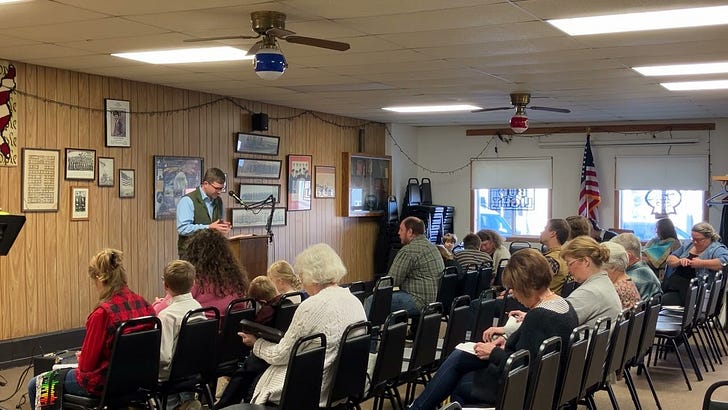
* Speaker: Pastor Will, Remsen Bible Fellowship
* Opening Question: How is God going to fix the world?
* Common human responses: politics, technology (e.g., AI)
* The Bible anticipates this question
II. Genesis Overview: The Problem of Sin and Human Rebellion
A. Creation (Genesis 1–2)
* God creates a good world in six days, rests on the seventh
* Pattern established for human life: work and rest
* Genesis 1:31 – God calls creation “very good”
B. The Fall (Genesis 3)
* Introduction of sin via the serpent
* Eve listens to the serpent; Adam follows her
* Humanity falls into sin; all humanity is affected (cf. Romans)
* Yet, a promise: Proto-Evangelion – Genesis 3:15 (first gospel)
* A descendant of the woman will crush the serpent
C. Spread of Sin and Death
* Genesis 4: Cain murders Abel – conflict of two “seeds”
* Cain’s descendants multiply evil
* Genealogies: “And he died” – recurring result of sin
* Genesis 6: Nephilim and wickedness provoke God’s judgment
D. The Flood and Noah (Genesis 6–9)
* Noah: a righteous man, preserved through the flood
* A new beginning with Noah, but he too fails (drunkenness)
* Ham's sin leads to Canaan’s curse
* Noah dies like the rest—no ultimate solution found
E. The Table of Nations (Genesis 10)
* 70 nations from Noah’s sons – figurative for all nations
F. The Tower of Babel (Genesis 11:1–9)
* People unite to build a city and tower “to the heavens”
* Rebellion: desire to achieve greatness apart from God
* God scatters them by confusing their languages
III. Transition to Hope: The Call of Abram (Genesis 11:27–12:3)
A. The Generations of Terah
* Terah fathers Abram, Nahor, and Haran
* Haran dies; Abram marries Sarai (barren)
* Family leaves Ur but stops in Haran; Terah dies
B. God’s Call to Abram (Genesis 12:1–3)
* Abram is 75; Sarai is 65 and barren
* God calls him to leave his land and follow Him
IV. Sevenfold Promise to Abram
* Land: “To the land I will show you”
* Nation: “I will make of you a great nation”
* Blessing: “I will bless you”
* Great Name: “I will make your name great”
* Purpose: “So that you will be a blessing”
* Protection: “I will bless those who bless you, curse those who curse you”
* Global Impact: “In you all the families of the earth shall be blessed”
* Contrast with Babel:
* Babel: human self-glory
* Abram: God-given greatness and global blessing
V. Abram as the Model of Faith
* Abram obeys without knowing the destination
* God's call requires leaving the known and secure
* Not a map or manual—but a promise
VI. God’s Long-Term Plan Through Abram’s Family
A. Shift in Genesis Structure
* Genesis 1–11: 2,000 years, global scope
* Genesis 12–50: 350 years, focused on one family
* Entire Old Testament traces this line of promise
B. Connection to the New Testament
* Galatians 3:7–9: Those of faith are sons of Abraham
* The gospel was preached to Abraham in the promise
* Salvation has always been by faith, not lineage or law
VII. Conclusion: How God Fixes the World
* Through the promised line: Abram → Jesus
* Through faith in God’s promises
* Through changed lives and transformed communities
* Not self-effort or human glory, but divine grace
VIII. Application
* Believe the promises of God
* Trust Christ, Abram’s greater Son
* Be willing to leave behind comfort and idols
* Follow the call of God to salvation and transformation
IX. Closing Prayer
* Acknowledgement of unworthiness
* Gratitude for God’s generous promises
* Plea for faith like Abram’s
* Hope rooted in Christ’s death and resurrection
SUMMARY
In this sermon, Pastor Will explores the critical question, "How is God going to fix the world?" By tracing the narrative arc of Genesis 1–12, he highlights the unfolding human rebellion, from Eden to Babel, and God’s progressive work of redemption. At the heart of God’s plan is His call and promise to Abram—a barren man with no children—through whom God promises to bring blessing to the whole world.
This promise, rooted in grace and dependent on faith, is the beginning of the redemptive line that leads to Jesus Christ. Pastor Will draws connections between Genesis and Galatians, showing that the New Testament gospel is the fulfillment of God’s ancient promises. Ultimately, God's solution to the world's brokenness is not political, technological, or human achievement, but a promise to bless all nations through faith in Jesus.
Transcript
This morning I want to start with a question: how is God going to fix the world? Have you ever asked yourself that question? Just look at the walk down the street or hear the news or open up your social media app and go, “This is such a mess. What are you going to do?” Just vote for this candidate and everything's gonna be okay. Or adopt this new piece of technology and your life is gonna be so much better. There are many people investing many dollars in the advancement of AI because AI is going to fix everything.
The Bible itself sets us up to ask this question: how is God going to fix the world? The first 11 chapters of Genesis... To kind of recover where we've been in Genesis, the first chapter and a little bit of Genesis chapter 1:1 through chapter 2:3 is a prologue. It's poetic in its structure. It gives us the history of God creating the world in six days and on the seventh day resting. And memorable form with that rhythm of six days and one day of rest that becomes the pattern for how we are to live our lives with six days of work and one day of rest. That's what Exodus tells us. And at the end of chapter one, Genesis 1:31, God looks at everything that he has done and he says, "Behold, it was very good." God makes the world and he makes it very good.
The narrative shifts with the phrase “the generations of.” Adam and Eve are given a commission to rule creation, to have dominion, to cultivate and to keep the garden. But the generations of the heavens and the earth take a cataclysmic turn in chapter 3 verses 1 through 7 when a serpent enters the garden. A serpent comes in and tempts Eve and he says, “Did God really say?” So God has created this very good world, he's put the man and the woman in charge of it, and then a snake comes in and says, “Yeah, but does God really have your best interests in mind? Does God really have your best interests at heart?” And the woman follows the voice of the snake. And then the man standing there follows the voice of his wife. And they enter into sin. And in the rebellion of Adam, the entire human race falls, is what Romans says.
And we see the curse that arises because of the presence of sin in the world. But within that curse, there is hope. Genesis chapter 3, verse 15, we have what people have classically called the Proto-Evangelion, the first gospel, where God promises that the seed of the woman would be in conflict with the seed of the serpent, but the seed of the woman would conquer, though his heel would be bitten by the snake.
There is someone who is coming. But he doesn't come right away. In Genesis chapter 4 we see the first murder take place as there's this conflict between Cain and Abel. Cain, representing the seed of the serpent, rises up and kills his brother Abel who had offered an acceptable sacrifice to God. And things don't get better throughout the rest of that chapter. As the descendants of Cain come, they multiply their evils. They multiply their sins.
The genealogy continues with names and each of them concludes, with the exception of Enoch, who walked with God and was not, because God took him. There's an interesting bright spot in there. But the resounding theme of that chapter is: and he died. He lived out his years and he died. The wages of sin is death.
Wickedness had increased so greatly. In fact, there seems to be some kind of intercourse between angelic beings and human women that are producing this race of giants. And God looks in disgust on the world and decides to wipe them all out. This brings us to the character of Noah. In chapter 6 and verse 9, we're introduced to the generations of Noah. And Noah was a man who is, again, a bright spot on the landscape. God wipes out all of humanity, with the exception of Noah and his family.
When you come to the end of Noah's story, though, we think, oh, okay, we've got a new Adam figure, a new creation with the earth being wiped out by the flood. They're going to come out on this new earth, and Noah is a new Adam, but this new Adam fails. Noah becomes drunk and is lying exposed in his tent. His son, Ham, comes in and shames him, comes out, laughs at him to his brothers, and says, “Hey, look at Dad.” And when Noah awakes and realizes what has happened, he curses Ham's son, Canaan. He places a curse on him, and things just are not looking wonderful for the human race. This man who was righteous and found favor in the eyes of God, even he ends with this shameful story. That's the last we hear of Noah. He died just like everyone before him. Noah died too.
Which brings us to the generations of the sons of Noah in chapter 10. This is what people have traditionally called the Table of Nations. There's these 70 nations listed here who descend from Noah. In the Bible, that number 70 becomes an important figurative number for the nations. The number 70 is used to represent completeness or totality of the peoples.
They begin to multiply and fill the earth. And so maybe they're starting to obey God. But then you get to chapter 11 and realize that the way they started to spread was not because they were obeying God. It was because they were in abject rebellion against him. Chapter 11 verses 1 through 9 give us the story of Babel. The people had gathered together after the flood and said, “Come, let us build ourselves a city and a tower with its top in the heavens.”
They want to build a city and a tower to the heavens. They want to re-achieve heaven without God, without reference to God. They want to just establish a lasting name for themselves. That’s the next thing it says: “Let us make a name for ourselves.” They want to come together and produce something great. That’s a natural human desire, to have greatness. But they want to achieve it for themselves—again, without reference to God.
God had commanded humanity to subdue the earth and fill it with image bearers of God. Adam and Eve had been commanded to multiply, fill the earth, and subdue it. The image of God, the name of God, is to be made great in creation as human beings fill the earth and exercise his dominion over it. But instead, they say, “Let's come together and build something great for us.” So they're in rebellion.
Now, Noah had three sons. We just read the Table of Nations in chapter 10. But then it focuses here on one particular son. And that’s Terah—the line of promise, as we will come to find out.
So let's read our text for this morning. It's a long introduction. I don't normally do introductions that are that long, but we'll just kind of reestablish where we are in Genesis.
Genesis 11, beginning in verse 27, says:
Now these are the generations of Terah. Terah fathered Abram, Nahor, and Haran. And Haran fathered Lot. Haran died in the presence of his father Terah in the land of his kindred in Ur of the Chaldeans. And Abram and Nahor took wives. The name of Abram's wife was Sarai, and the name of Nahor's wife Milcah, the daughter of Haran, the father of Milcah and Iscah. Now Sarai was barren. She had no child. Terah took Abram his son, and Lot the son of Haran, his grandson, and Sarai his daughter-in-law, his son Abram's wife. And they went forth together from Ur of the Chaldeans to go to the land of Canaan.
Now the Lord said to Abram, “Go from your country and your kindred and your father's house to the land that I will show you. And I will make of you a great nation.”
Well, at the end of chapter 11, we see continued problems. We're introduced to a new section, the Generations of Terah, and this section of Genesis carries us through the next 14 chapters into the middle of chapter 25. Interestingly, the generations of Jacob, in chapter 37, focus primarily on the character of Joseph, not on Jacob himself. I think this is just an interesting side note for fathers. Very often your children, especially your sons, will probably have a bigger portion in your story than you do. They will be more significant in your story than you are.
Terah has three sons. Haran is probably the oldest, dies in Ur. Now, sometimes in the Bible when you have names listed, the first name is the oldest. But that's not necessarily the case in the Bible, right? So if we try to put this together with Stephen's recounting of the story of Abraham in Acts chapter 7, to get the dates to make sense, probably Abram is not the oldest son. Haran is probably the oldest son. Also, Haran has children that are grown. But they don't make it there. It says they come to the land of Haran, and verse 31 says they settled there instead. And then in verse 32, Terah, just like everyone else, dies.
He's 75 years old. He's gone with his father from his native land, thinking they're going to one place. They settle someplace else. They settle in the land of Haran. But now his father, whom he had traveled with, is dead. His wife is 65 years old. And verse 30 says she is barren. Again, that's a recurring theme in this biblical story, particularly the story of Abram's family here in Genesis, that there is a barren woman. Well, in this case, it's Abram's wife, Sarai, who is barren.
God comes to Abram and he issues a call to him. He says, leave your land and leave your father's house and go to where I'm going to show you, which may sound absolutely crazy. He's supposed to leave the security of the place he’s been and go to a land that God will show him. He's supposed to head for—he doesn't know where. We'll discuss, Lord willing, Abram's faith and his obedience next week. But this week, I just want to notice the nature of the call, which is to leave behind the safe and the known in order to follow God.
What was safe and known to Abram? Well, later in the Old Testament we're told that Terah and the family were worshipers of idols. And so Abram, we're never told explicitly that Abram participated in that idol worship, but that culture, that religious context, is what he knew. And God calls him out of that.
God often calls us out of things that are comfortable to us, perhaps precious to us, in order to follow him. Those things which will challenge us, which will hinder our following him, have to fall by the wayside in order that we can follow him wholeheartedly and devote his way. But it’s interesting to me that this call isn't then followed by a map to tell him where to go or by a set of rules to tell him how to live—but by a promise.
God gives Abram a promise, which depending on how you slice it up, there are at least seven aspects to this promise. The first is contained there in the call. He says, “I will show you the land.” I will show you the land. It was unknown to Abram at that time, but God would not keep it unknown. He says, I will show you where to go.
Number two, God promises to bless him: “I will make of you a great nation.” He promises blessing to Abram. God promises to provide more than he needed. Blessing—we, when we think of the word blessing in Scripture, need to think in terms of abundance, more than we could ask or think.
He promises to make Abram a great nation. The world, back in chapter 11 at Babel, they wanted to build a city and a tower in one place. God is promising Abram something more. He's promising Abram that he is going to become a great nation that's going to spread out, that's going to fill a great land—not just one city.
Now, Abram is 75 years old with a 65-year-old barren wife. Even with the timescale that they're working on, which is a little different than our timescale, they already know this is strange. Verse 30 of chapter 11 had pointed out to us that Sarah was barren. They wanted children and had no children. This is an amazing promise that God gives to him to make him a great nation.
Fourth, he says, “I will bless you and make your name great.” Again, the contrast is with Babel. This is intentional by the author, Moses. He's wanting us to see the difference between what humanity is trying to achieve for itself and what God is doing with this one man, for rescue. He is a great man, and God is the one who established that. God is the one who created that in him.
God then says to him, “So that you will be a blessing,” at the end of verse 2. God promises not just to bless Abram, but to bless others through him. God promised Abram that he would bring blessings to the nations. One of the contrasts between the biblical understanding of blessing and blessing as it's taught in prosperity circles today is people think, “Oh, God wants to bless me for me.” We're a conduit, right? We're not just getting poured into, we’re to be poured through. That blessing from God overflows. The cups that we have run over—the blessing is for others.
Sixth, God says he will bless those who bless Abram and curse those who curse him. That means that Abram doesn't have to defend his own honor. He doesn't have to defend his own name, because Yahweh, the almighty Creator of heaven and earth, has pledged himself to defend Abram's cause. As referenced in Psalm 23, that’s the same idea we have there: “He leads me in paths of righteousness for your name’s sake.” God attaches his honor to his protecting the honor of his people. So Abram doesn't need to take vengeance for himself. Abram doesn't need to worry about how others think about him. Just worry about honoring God, and he will take care of how others think about you and act towards you.
And seventh, God says to Abram that “in you, all the families of the earth will be blessed.” God promised Abram that the blessing would flow not just to those immediately around him, but to the whole world through his family. And again, remember—Abram has no children. None. His wife is barren.
So, to come back to our question at the beginning—how is God going to fix the world? We might read this and say, that's really nice that God made all these promises to a wandering nomad 4,000 years ago somewhere in Mesopotamia. What does that have to do with how God is going to fix the world? What does Abram have to do with God's plan to fix the world?
I noted earlier briefly a shift. In chapters 1 through 11 of Genesis, you have a focus on the whole history of the world. Those 11 chapters cover all of the peoples of the earth, and they cover about 2,000 years in 11 chapters. Well, starting in 11:27, through the rest of the book of Genesis, you only cover 350 years and you focus on one family. There's a changing of the emphasis, a shift in attention being given. Those first 11 chapters set things up for God to focus in on this one family.
The whole rest of the Old Testament covers God's dealings with this family. The first 11 chapters of Genesis cover the same amount of space as the next 39 books cover. These are the people through whom the promised snake crusher will come, through whom the world will be blessed. The promises to Abram were not just for Abram.
A lot of Galatians is actually Paul drawing on the story of Abram to explain that God's way of salvation in the New Testament isn't new—that it's always been by faith, that it's always been by trusting in the promises of God for salvation. But specifically, Galatians chapter 3, beginning in verse 7, says, “Know then that it is those of faith who are sons of Abraham.” So throughout the entirety of the Old Testament, God is focused on the lineal, physical descendants of Abraham. But here, Paul tells us it’s those of faith who are the true sons of Abraham.
“And the Scripture, foreseeing that God would justify the Gentiles by faith, preached the gospel beforehand to Abraham, saying, ‘In you shall all the nations be blessed.’” So that end of Genesis chapter 12 verse 3—Paul calls that “the gospel,” the good news. “So then those who are of faith are blessed along with Abraham, the man of faith.”
The path into God's favor—the path into blessing—is not by merit. It's not by obedience. It's not by bloodline. It's by faith. The only hope for sinful people, the only hope for sinful nations, is to stop looking to make our own name great. It's to stop worshiping ourselves and our desires. That doesn't get us anywhere. That's a dead end.
But we know the end of the story. One day, everything's going to be under his feet, right? We've got the end of the book—Revelation 21–22. Everything's going to be under Jesus' feet. Those united to him by faith will greet that day with joy. Titus calls it our “blessed hope” to see that day.
But between now and then, we ask, how is God fixing the world? He is transforming lives by the power of his Spirit. Sometimes, in his providence, even whole communities and nations are transformed as people turn to Christ, as they are changed. Again, one day everything will be. Well, how can we be in on that change? How can we be part of that change?
It’s by believing the promises of God in the Scriptures. It’s by believing the same God who gave a call and a promise to Abram. He called him out of his home country, he called him out of everything he had ever known, to follow the promise of God. And we have the opportunity to follow that same call too. Jesus says to follow him is to be willing to leave behind father, mother, brother, sisters, lands—not because those things are bad, but if they are pulling you away from Jesus, they're not worth it.
We follow the commands of God in the Scriptures. We follow the call of God to trust in Christ and receive free salvation. Be blessed along with Abraham and his greater Son, Jesus Christ.
Father God, we don't deserve any of that. You are kind and generous and abundant with your blessing. We praise you for that. We ask, Lord, that we would have eyes of faith to trust you regardless of what the circumstances around us would say. You promised to make Abram a great nation when he didn't have any children and was an old man. And he believed in you, and it was counted to him as righteousness.
Lord, if we look to Christ who justifies the ungodly and trust in what he did on the cross in our place—and victoriously in his resurrection, in power and in glory—it will be good news for us. It will be joy. It will be salvation.