Transcript generated by AI. Please comment if you notice any errors.
When the Lord Broke Out
If you want to turn in your Bibles to 2 Samuel chapter 6, that's where we were last week, but we're going to dip back in there and maybe touch on some things that we mentioned but did not linger over, but are worth lingering over.
Do you tremble before God? Do you tremble before God when you think about who God is? Holy, majestic, high and lifted up, creator of heaven and earth and who you are, sinful, small. Less than a drop in the bucket is what Isaiah calls the nations, let alone an individual before God. Do you tremble before him?
Last week we looked at 2 Samuel 6 and we saw a focus on worship, the primacy of having God at the center of everything in your life. I quoted Harold Best who says that worship is a continuous outpouring of all that I am and all that I have towards the God or gods of my choosing or that have chosen me. And in the scriptures what we see is that people are always worshiping. We're either worshiping the true God, we're worshiping Yahweh in a way that honors him and directs our focus and our minds towards him, directs our hearts towards him, or we're worshiping other things, which the Bible calls idolatry, sin.
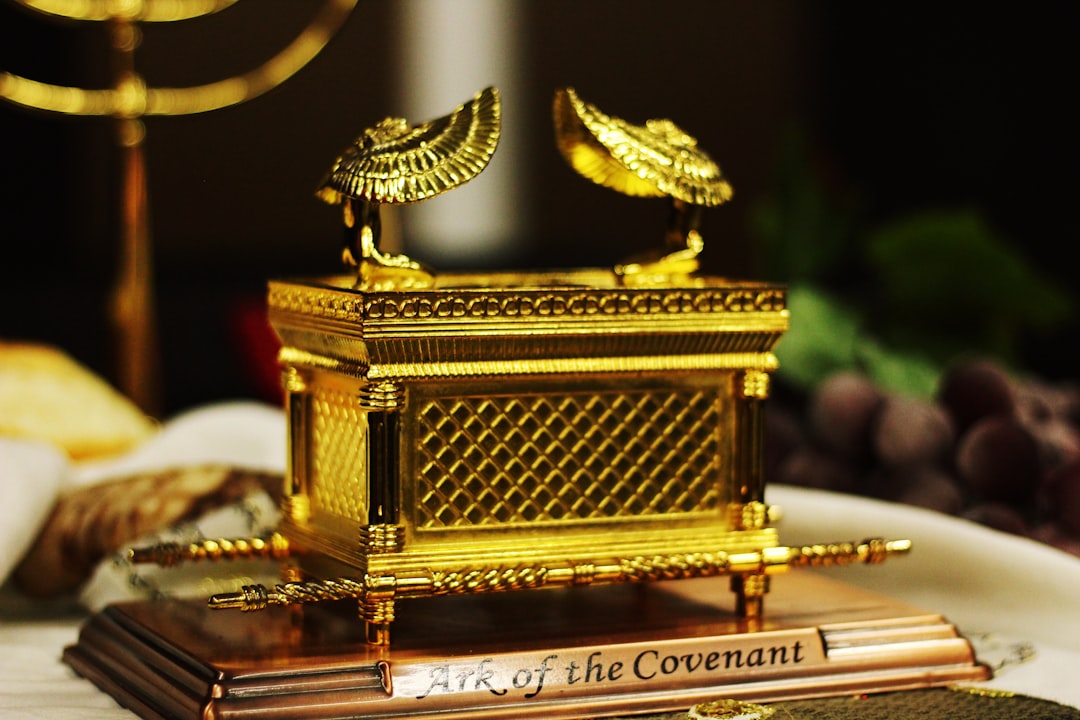
And in 2 Samuel 6, David is seeking to bring the Ark of the Covenant from where it's been sitting in Baal Judah or Kiriath Jerim and bring it the seven eight miles up to Jerusalem which he has just made his political capital, the center of the nation and he's seeking to make it not just the political center of the nation but the spiritual center as well and we see later on that Solomon will build the temple there and the Jerusalem becomes in God's sight, really, the center of the world. It's the political headquarters for his people Israel. It's the spiritual headquarters with the ark and the temple. And that's set up by David conquering Jerusalem and then bringing the ark up. That's what he's setting out to do in 2 Samuel 6.
As they move, the ark's been sitting in Baal Judah for 20 years, is what 1 Samuel 6 tells us. It sat there for 20 years, and as David seeks to bring it up, he gets together a huge crowd. We see there in verse 1, 2 Samuel 6, beginning of verse 1, says that David gathered all the chosen men of Israel, 30,000 people. And there's this massive crowd, and it is a huge spectacle. So they are singing, they are dancing, they are celebrating.
And you can imagine if you're there, they go to the house of Abinadab, and his son Eliezer has been in charge of taking care of the ark. And now as they set out to take it to Jerusalem, his other two sons, Uzzah and Ahio, they're the ones who are in charge of guiding this cart, this new cart just for carrying the ark of the covenant of the lord and they're going to carry it up to Jerusalem and people are dancing and they're using their musical instruments and it's this loud giant raucous praise and worship service.
I don't know if you've ever been to like one of those big festivals so like where closer to where i grew up there was creation well creation west creation festival was started out in Pennsylvania and then we have the west version in the gorge in at gorge at George the gorge it's a it's a natural amphitheater on the Columbia river and it's just like one of the most beautiful places you could ever go to watch a concert. Most people go there to watch concerts and get drunk out of their minds and not be able to enjoy the scenery anymore, I don't know why, but we went and they had this giant Christian festival there and you have all these bands and speakers come in but you would have you know if you start singing the doxology with 10 or 20 000 people in this natural amphitheater and it just like you can hear the sound reverberating down the river canyon like it's amazing and that's kind of the picture that we get here is these people are marching up towards Jerusalem as you have this mass of people singing praises to the lord dancing before him and then the oxen stumble.
And you can just feel the air start to come out of the people who, at least those who see the oxen stumble, as the ark starts to tilt off. But then there's Uzzah, and everybody's, oh, Uzzah's going to save it. And he does his best center fielder impersonation, to be a little anachronistic. And he goes out, and he reaches for it. And if you're watching, you might think, oh, he's going to save it. He's got it. But then Uzzah touches the ark. And the text tells us, the anger of the Lord, verse 7, was kindled against Uzzah. And God struck him down.
Now imagine if you're standing there and you're thinking the ark's falling. Uzzah's going to save it. He got it. He's dead. How disorienting would that be? And we're told here that David gets angry. Verse 8. David was angry because the Lord had broken out against Uzzah. And as you read that story, it might seem pretty confusing or offensive. Like he's trying to save the ark of the Lord from falling to the ground, and God killed him for it?
David is certainly offended, becomes angry. He's angry that the Lord had broken out against Uzzah, it says there in verse 8. And that place is called Perez Uzzah, or breaking out against Uzzah to this day. And that language, if you remember from a couple weeks ago, chapter 5, should be familiar. The idea of breaking out. Chapter 5, verse 19, David's talking to the Lord about fighting the Philistines. And David inquired of the Lord, Shall I go up against the Philistines? Will you give them into my hand? And the Lord said to David, go up, for I will certainly give the Philistines into your hand. And David came to Baal Parazin. And David defeated them there. And he said, the Lord has broken through my enemies. He's broken out against my enemies before me like a breaking flood. Therefore, the name of that place is called Baal Parazin, which means Lord of breaking through.
The Lord who had broken out against the Philistines to save David, to preserve David, to establish David's kingdom. The Lord who had broken out against the enemies of Israel has now broken out against Uzzah as they seek to bring the Ark of the Covenant to the center of the nation. And this infuriates David and incenses him. You can just imagine where he's at, thinking, Lord, you've preserved me from the hand of Goliath. You've preserved me from the hand of the paw of the bear and the lion. You've preserved me from Saul in the wilderness. You've preserved me and broke out against the Philistines, against the Jebusites. Time and again, God has preserved him, and now as I seek to bring you to the center of the nation, you do this, not only is Uzzah dead, but David as the king, as the one who is leading this procession, he's going to lose face. He's going to look like a fool before the people, but he's bringing disaster upon them.
So in verse 10, he despairs, he gives up. David was not willing to take the ark of the Lord into the city of David. But David took it aside to the house of Nobed-Edom, the Gittite. He just abandons it for three months. Tries to get his head back on straight, like, what am I supposed to do here? Why did the Lord break out against Uzzah? Verse 7 tells us it was because of his error, his sin. He fell short in some way.
Turn back to Numbers chapter 4. God gave the people of Israel clear instructions for how the ark of the Lord was to be carried, transported from place to place. We'll read verses 1 through 6, and then again down in verse 15 of Numbers chapter 4. The Lord spoke to Moses and Aaron, saying, Take a census of the sons of Kohath among the sons of Levi by their clans and their father's houses, from 30 years old up to 50 years old, all who come on duty to do the work in the tent of meeting. This is the service of the sons of Kohath in the tent of meeting, the most holy things. So this subsection of the Levites, the sons of Kohath, the Kohathites, their job is to deal with the most holy things.
When the camp is to set out, Aaron and his sons shall go in and take down the veil of the screen and cover the ark of the testimony with it. Then they shall put on it a covering of goatskin and spread on top of that a cloth all of blue, and shall put it in its poles. So that's how the art is to be prepared. There's triple covering. The screen from inside the tabernacle covers it. Then a goatskin covers it. Then a blue cloth covers it. Nobody is supposed to even see the people who are responsible for leading worship, they are the only ones who can even see the Ark of the Covenant. And they cover it over three times to make sure nobody else even sees it.
And then, down in verse 15, And when Aaron and his sons have finished covering the sanctuary and all the furnishings of the sanctuary, as the camp sets out after these, the sons of Kohath shall come to carry these, but they must not touch the holy things lest they die. So the way God designed for the tabernacle as a whole and especially the Ark of the Covenant to be carried was these most holy things were to be covered up so that the eyes of the people did not behold them. And then there were rings on the ark. If you look at it, I think it's Exodus 25 that God gives Moses instructions for how to build the ark. There are rings on it that are supposed to have poles slid through so that then the Kohathites can probably four guys at a time pick it up and carry it from place to place. But no one's eyes fall upon it. No one except the priest touches it. And the penalty for that, verse 15, is death. If you touch the ark, you will die. That's clear.
When David and the people sought to bring up the ark, back in 2 Samuel 6, they have the right intention. This is why I spent most of last week not focused on this, but the center of it is that there is a right desire to bring God, in their case, the visible manifestation of God's presence, into the middle of the nation to center all of life around it. That's a right desire. But they embraced the wrong method. They embraced the way of the Philistines.
If you look back at 1 Samuel... If you remember in the very first chapters of 1 Samuel, it actually takes a while before we get to Saul and David and that conflict in the books of Samuel. It starts off talking about Eli, his sons. Eli is the priest and he's a judge in Israel and he's a wicked man. And he has even more wicked sons. And they carry the Ark of the Lord into battle with the Philistines as if it's some kind of magic trinket that's going to bring them success. And God doesn't honor that. He allows them to be killed and the Ark to be taken captive. And as Eli hears this news, Eli falls over backwards and he dies.
And then the Philistines take the ark, and they think, well, our gods must be more strong than Yahweh, the god of the Israelites. So they capture the ark, and they take it to Ashdod, set it up in the temple of Dagon, and things do not go well for Dagon. Dagon, in the process, loses his head, loses his arms, keeps falling down on the threshold, bowing down before the Ark of Yahweh. And this is all of this supernatural gods doing this, right? This stone idol that has no real eyes, no real ears, no real light is being caused by God to fall down before the Ark of the Covenant. Again, the Ark of the Covenant doesn't have any magical powers in its own, but it's the visible representation of God's presence with his people. And when it's brought captive to the Philistines, who think that there's power in the box itself, God says, well, I'll show you who has power. It's the God who's represented by this box, not the God who's represented by your carved-up piece of a rock. And Dagon keeps falling down.
And then on top of that, the people of Ashdod suffer horrible sickness and people are dying. So they send it over to the next town. They send it over to Ekron. Same thing happens. People are getting tumors. People are dying. And they say, we have to get rid of this ark. Something is wrong. We've got to get it out of our country.
And in chapter 6, verse 7... They talk to their priests, and the priests of the Philistines say, now then, take and prepare a new cart and two milk cows, on which there has never come a yoke, and yoke the cows to the cart, to the new cart. It's an important language clue there, new cart. But take their calves home away from them and take the ark of the Lord and place it on the cart and put a box at its side in the figures of gold, which you are returning to him as a guilt offering. Then send it off and let it go on its way and watch. If it goes on the way to its own land to Beth Shemesh, then it is he who has done us this great harm. But if not, And we shall know that it is not his hand that struck us, but it only happened by coincidence.
And to fill in some of the backstory there, their priests had told them, you need to make gold figurines of the mice that are overrunning the town. And you need to make gold figurines of the tumors that people are getting and put them in a box next to the Ark of the Covenant and send it back to God. Send it back to the God of Israel. And the way we're going to see if it was actually their God that struck us or if it's just a coincidence, is we're going to hook up two cows and then take away their calves. And if it's just a coincidence, if God's not really at work, well, the cows are going to go back to their calves, right? They're going to go back to the barn. But instead, these two cows haul the new cart with the Ark of the Covenant back to Israel. They haul it back to Israel. And God shows to the Philistines that he is still the one who reigns, that they have not conquered the people of Israel because Dagon or any of their other gods are stronger than Yahweh. God is punishing Israel, and when the people of the Philistines think that they're the ones who are in charge, God says, no, no, no, no, no, no, no. I'm still on the throne. I am still the one who is to be feared.
And the first town in Israel that this box comes back to are the people of Beth Shemesh. And they also do not fear God rightly. They think, let's look at the ark. Let's look at what's inside. And God kills 70 of the men of Beth Shemesh. And they do the same thing everybody else has done with the ark. They say, get it out of here. Get this representation of God's presence away from us. And so they send it to Kiriath-Jerim, where it is gone, and then sat for the next 20 years with Eleazar, the son of Abinadab, taking care of it.
The Lord then, as they bring it out, back in 2 Samuel 6, as the people of Israel are seeking to bring this Ark of the Covenant to Jerusalem, he breaks out against Uzzah and kills Uzzah when he touched the cart because Uzzah and Israel have acted like the Philistines. The Lord who broke out against the Philistines now breaks out against Israel when they start to act like the Philistines. Their method for bringing the cart back, same as the Philistines. Their thought process, this isn't a holy thing which I keep my hands off of. Instead, he feels free to touch it.
Last week I quoted R.C. Sproul. It's one of my favorite quotes from him. Uzzah made the mistake of thinking that his sinful hand was cleaner than the dirt. The Ark of the Covenant would not be defiled by the dirt, but it would be by the sin of Uzzah. And so the Lord breaks out against him, and the Lord kills him. The Lord broke out against Uzzah and Israel as he had against the Philistines, when the word of the Lord, the clear instruction of the Lord in Numbers, was scorn in favor of Philistine practice. Their intentions were right to bring the ark up, but their practice was sinful.
God will not accept disobedient worship. You cannot honor the Lord at the same time that you're disobeying. We read that this morning in Psalm 50. I planned these calls to worship like a year in advance. I didn't set out to do this. But here in Psalm 50, verse 9, I will not accept the bull from your house or goats from your folds. He goes on to say everything is his. He doesn't need these sacrifices. But the wicked, to the wicked, God says, verse 16, What right have you to recite my statutes or to take my covenant on your lips? For you hate discipline, and you cast my words behind you. Verse 22, Mark this then, you who forget God, lest I tear you apart, and there be none to deliver. The one who offers thanksgiving as a sacrifice glorifies me. The one who orders his way rightly, I will show the salvation of God.
Honoring God, worshiping God, requires obeying God. We don't... I'll touch on this later. But we don't get saved by being obedient to God. But if you are saved, you will obey him. And you cannot honor him at the same time that you are intentionally disobeying him. Those two things don't co-exist.
But sin is very deceitful. They were right in their intentions, but their good desires tempted them. Their good desires tempted them to take sinful steps, take sinful measures. What good desires do you have that could tempt you towards sin? What good desires do you have that could tempt you towards sinning?
Maybe it's the temptation to want a loving marriage, but you're married to a spouse who isn't conducive to that. Maybe I'll just leave. In spite of 1 Corinthians 7, which says, if they're willing to stay with you, stay. Maybe you're single and you want to be married. And you're willing to compromise because it's so hard to find the right person. Maybe an unbeliever will do. They're nice and odd. In spite of 2 Corinthians 6, which says not to be unequally yoked.
Maybe you are so set on your own particular sets of issues that you want to be in a church that really lines up with that, but you can't find one, so you just say, well, I'm just going to do Christianity by myself for a while. In spite of Hebrews 3.13, which says we need to be together, warning one another, Hebrews 10.24 and 25 says don't forsake gathering together, as is the habit of some. I've heard these, and I could list way, way, way more. Things given as things people want to do because of right desires.
It's not wrong to want to be married. It's not wrong to want your marriage to be happy and healthy. It's not wrong to want to be in the right church. But we cannot and we cannot pursue obedience at the same time as we're consciously disobeying God's word. It will not please him. So many times I've heard these sorts of things that are motivated by underneath a good desire. But then people will say, well, I prayed about it and I have a piece about doing this thing which disobeys God.
Now, as David and Uzzah and Ohio are moving to bring the ark up to Jerusalem, they have the right desire. And they saw in the past the Philistines used a cart to carry it, and God didn't kill those Philistines for doing it that way. Right? It turned out all right. The ark got back to Israel. It's reasonable. It's a lot more efficient. We don't have to go find, like, things have been a mess in Israel for a long time. It could be a real hard deal to try to track down the Kohathites, you know, wherever they all move to. And then they're going to have to carry it. And the thing is heavy. Like, it's a heavy wooden box covered in gold. Four guys have to carry it for eight miles. It may be kind of tricky maybe. I don't remember how long the poles are. It might be tricky to hand it off halfway. It's just going to be easier to put it on this new cart. We made a new cart for it. Look, God, it's a beautiful cart that we made.
God will never give you permission to sin. No matter how much you pray about it. No matter if you even feel a piece about it. If the action is sinful, God didn't give you permission to do it.
I'll use a personal example. So, like, our church is getting close to three years since we started as a church, and then we had a Bible study for a year before that. But the process of Andie and I thinking about planting a church in Remsen and even talking to leadership at LBC about supporting that goes way back further than that. We haven't been at LBC hardly any time at all. And I went to the elders and I was like, hey, I think Remsen needs a church. You guys all agree with that, right? Yep, we all agree with that. Hey, I think our church probably has the resources to help do something like that. Yep, that's probably true. If nobody else wants to do it, I'll lead it. I wasn't married to being in charge, but it's like, someone we should be doing, let's keep going, and if nobody else wants to be in charge, I'll do it.
And the elders kindly smiled and listened to me talk with my very detailed three bullet points on a sticky note, and said, we'll pray about that, Will. I believed them when they told me they prayed about it, but I didn't hear anything more other than Mike telling me one time that they prayed about it. And it fell by the wayside. And I talked to, I had several friends who share my inclination towards not doing well with authority. They're like, well, you don't actually need a church's permission to play in a church. Just go do it. And I thought really hard about that. Like, that's my inclination, is to... I don't need somebody to tell me what I can and can't do.
And yet, I was in that church and under that authority, and I had brought this to the elders for approval and support, and had been essentially told no. And I think back to that, and I think I had an option there to either just go do this thing that I think is good and that I think needs done, but kind of be dismissive to the authority over me. Or I can do the thing that the Bible clearly says to do. The Bible doesn't say, we'll go plant a church in Remsen. The Bible does say, submit to the elders.
So I chose that path, not because of any great holiness on my part just like thought really hard about it and looked at the bible and like okay I've got a clear command to do one of these things not the other and i did that and a few years later when i was a lot more mature and have a lot more uh perspective um was able to go back and receive approval and receive just like the tons of support that LBC has given us in this process and i
And if I had just taken off at that point, I had the right motivation. The motivation was the same in both instances. I think Remsen needs a good gospel-preaching church, right? But if I had tried to abandon the way God said to live my life as a Christian in submission to authority, things, I don't know how they would have gone. I think it would have been bad for me spiritually at the very least. It would have been very bad for me. I can't say what else would have happened.
We are faced with those kind of decisions all the time. That's just the one that popped into my mind immediately in my life. But we're faced with those kind of decisions all the time. We have right desires. I think God gives his children good desires. But we have to be diligent in doing and obedient to how he says to do it and very often God's way of doing things is less efficient I'm sure it was a lot easier to carry the ark on a cart than have four guys pack it around especially when they start we see when they start carrying it back from this this house of Obed-Edom to Jerusalem they're stopping every six steps to make a sacrifice like Those guys probably got pretty tired. This is incredibly inefficient, God.
And so much of what God calls us to do is inefficient. Prayer is less efficient than our strategic planning. The Bible is a lot tougher book, a lot less efficient book to read for how much we get out of it compared to how much time we put into it than a good self-help book. It's a lot easier to read the self-help book. It'll give me bullet points to take away. The Bible's not like that. We have to spend time with it and really think over it and meditate on it, to use the words of the psalmist.
Loving people is harder and less efficient towards increasing happiness in my life than just having a bunch of hobbies that I like to do where I can go do them by myself without those annoying people. Carrying an ark with poles is harder than building a new cart. But obedience, even if it's less efficient, brings more blessings in the long run. We have to fear the Lord enough to say, I will obey you, before we can have the true joy that comes from loving him.
Verse 13, we see after God has blessed the house of Obed-Edom, then David says in verse 12, okay, I see that Obed-Edom's being blessed. We're going to bring the ark back up and in verse 13 we see it the author just kind of slips this in here he doesn't like draw attention to it and when those who bore the ark of the lord so they're carrying it now it's no longer on a cart when those who bore the ark of the lord had gone six steps and sacrificed an ox and a fattened animal.
And now David is not just having the singers and not just having the instruments, but he himself is dancing before the Lord with all his might. Because God is allowing the ark to be brought up to Jerusalem. He is allowing it to be set in the center of the nation. If we are to worship God, we must love and worship God, the God who is. And we must do so as he has instructed us. I don't remember how long ago it was now. I did a sermon where I just walked through why we do everything we do in a church service based like why how does that come out of the bible like i don't want to be doing things that aren't clearly commanded by scripture that aren't driven by what god wants us to do.
Galatians chapter 6 verses 7 and 8 says, Do not be deceived. God is not mocked. For whatever one sows, that will he also reap. For the one who sows to his own flesh will from the flesh reap corruption. But the one who sows to the Spirit will from the Spirit reap eternal life. We sow what we reap. And if we sow disobedience, we will reap pain. But if we sow to the Spirit, we reap eternal life.
And Hebrews 10, right after the verse is about gathering together to encourage one another. Verse 26 says, If we go on sinning deliberately, after receiving the knowledge of the truth, there no longer remains a sacrifice for sins, but a fearful expectation of judgment and a fury of fire that will consume the adversaries. Anyone who has set aside the law of Moses dies without mercy on the evidence of two or three witnesses. How much worse punishment do you think will be deserved by the one who is trampled underfoot the son of God and has profaned the blood of the covenant by which he was sanctified and has outraged the spirit of grace? For we know him who said, vengeance is mine, I will repay. And again, the Lord will judge his people. It is a fearful thing to fall into the hands of the living God.
An interesting difference between the Philistines and the Israelites. God didn't judge the Philistines for sending the ark back on a cart, right? In fact, God blesses them by removing all of the pain that they'd been experiencing when they sent the ark back. But they were just doing the best that they knew how with the revelation that they had. They didn't have numbers for it. They didn't know how the ark was supposed to be transported. They were just saying, okay, we see that you're in charge. We're going to do whatever we know how to do to make you happy.
But the Israelites had God's word where they were told, how do you worship? How do you honor me? How do you want this ark to carry? And we as believers have the word of God that teaches us how to obey him, tells us what he wants. God does not make his will for us confusing or hard to understand. So much of it is just so simple and clear. It's hard to do many times, but it's not complicated to understand. And it is a fearful thing if we will look at those clear instructions and disobey them.
There is forgiveness. Absolutely. We are still sinful human beings. The old man is still inside of us fighting against the spirit. We rightly talk about God being our father and he welcomes us into his presence, sins and all. He welcomes us with joy. So we talk about God being our father, but we also must remember that our father is God. He is to be approached boldly because of Christ, but never lightly.
Bring your requests before him, but Jesus says don't heap up empty phrases. Don't come into his face and just blabber about nothing for the sake of blabbering. Come to him and tell him what's really on your heart. Understand that in Christ, you're no longer subject to condemnation. Romans 8 says that for those who are in Christ, there is therefore now no condemnation. You aren't going to be punished forever because of your sins. But the Lord will still give you loving discipline if you refuse to obey him.
In Hebrews chapter 12, it talks about that. He says, Consider him who endured from sinners such hostility, it's talking about Christ, against himself, so that you may not grow weary or faint-hearted. In your struggle against sin, you have not yet resisted to the point of shedding your blood. And have you forgotten the exhortation that addresses you as sons? My son, do not regard lightly the discipline of the Lord, nor be weary when reproved by him, for the Lord disciplines the one he loves and chastises every son whom he receives.
And David saw the chastisement of the Lord when Uzzah was struck. And though he was at first angry and then became fearful, he was able then, apparently, to go back to Numbers and say, Okay, God, how do you want this done? And bring the ark up the right way and rejoice in his presence because he received gladly the discipline of the Lord.
And in our lives, we are going to mess this up. We are going to sin and do things that we know are wrong. And God very often will allow us to face the consequences of that in this life. But if we know that in Christ, we don't have to face the eternal consequences of those decisions. He has paid for them fully on the cross. And we can come to him for forgiveness. We can receive those bad things that happen because of our own foolishness as loving discipline from the Lord. The holy God who does not take sin lightly still welcomes us into his presence and will use even our foolishness for our eternal good.
Would you pray with me? Father God, would you help us, first of all, to honor you rightly and to have hearts that want to be obedient. And when we don't want to be obedient, would you help us to be obedient anyway? And when we fail to obey you, would you cause us to flee back to Christ, who is our only Savior? And Lord, we thank you that you work all things together for good, even our own sin and foolishness, for those who love you and are called according to your purpose. We thank you that you are so good and so kind, at the same time that you are so holy and so righteous, and you hate our sin. You love us enough to hate our sin. Help us to hate it too. In Jesus' name, amen.