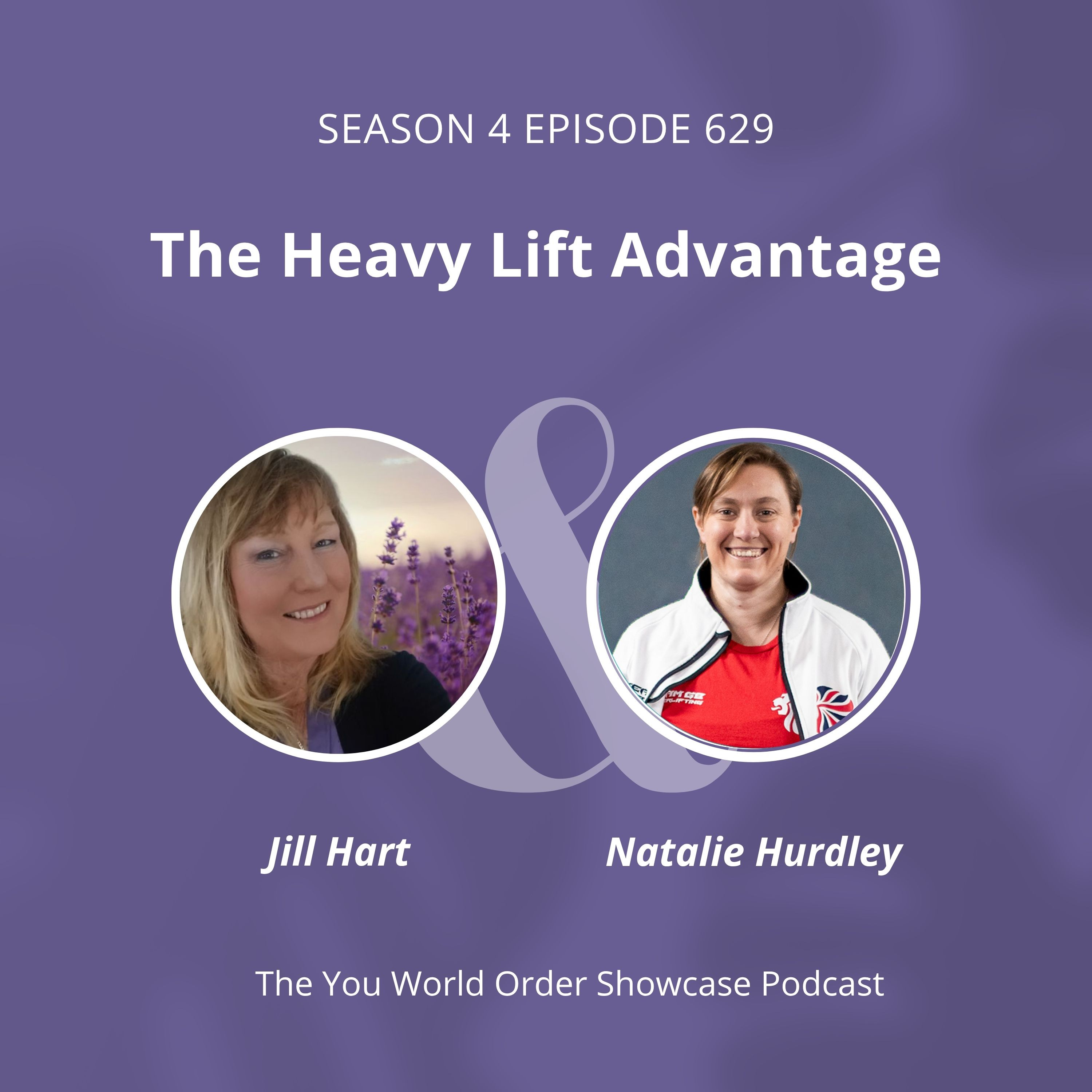
There’s something strange about fitness and high-achieving women. You can run a business, manage a team, raise a family, meet deadlines, solve complicated problems, and somehow keep a dozen plates spinning at once. Then you decide you’re going to start working out consistently, and a few weeks later you’re wondering why this one seemingly simple thing is so hard to maintain.
It’s easy to call that a motivation problem. But during my conversation with strength coach, personal trainer, and Team GB powerlifter Natalie Hurdley, I started wondering if something else is going on. What if some of the same habits that make us very good at accomplishing things can actually make fitness harder than it needs to be?
High achievers know how to attack a goal. We decide what we want, make a plan, and go after it. Naturally, we bring that same energy to fitness. We’re going to work out five days a week, walk more, eat differently, add some cardio, track our progress, and perhaps completely overhaul our morning routine while we’re at it.
For a little while, that can feel fantastic. We’re doing it. Then normal life returns. The schedule gets crowded, something unexpected happens, a workout gets missed, and before long the beautiful new fitness plan has become another project we haven’t managed to maintain. That’s usually when we decide we need more discipline.
Natalie sees it differently.
After more than 18 years of helping women build strength, she has worked with plenty of incredibly capable women who struggle with fitness consistency. These aren’t people who don’t know how to commit to something. They demonstrate commitment every day in their careers, businesses, relationships, and families.
The problem may be that they’ve created a fitness plan that requires them to be at their most motivated simply to maintain it.
That’s a very different problem.
What If You Deliberately Did Less?
One of my favorite ideas from our conversation was Natalie’s willingness to make fitness smaller before making it bigger. She isn’t telling women they need to rearrange their entire lives around the gym. If ten minutes of exercise three times a week is something you can realistically do, she’s perfectly happy to let you start there.
The important part is being able to repeat it.
Once ten minutes has a legitimate place in your life, you can build on it. Add some time. Increase the resistance. Improve your technique. Progressively ask more of your body. You don’t have to prove how serious you are by making the beginning unnecessarily difficult.
As Natalie told me,
“Progress might be slow, but it’s going to be a hell of a lot faster than you not starting.”
There’s something wonderfully freeing about that, particularly for those of us accustomed to believing that something only counts when we’re doing it properly. Ten minutes doesn’t feel impressive. Three exercises don’t sound like a serious workout. Twenty minutes at the gym doesn’t make a particularly dramatic fitness story.
But perhaps impressive isn’t the goal.
Perhaps repeatable is.
The You World Order Showcase is a listener supported Podcast To receive new episodes and support our work to make the world a better place for us all, consider becoming a free or paid subscriber.
A Powerlifter Telling You to Make Exercise Simpler
This is part of what I found so interesting about talking with Natalie. She’s a competitive powerlifter. You might expect someone from that world to tell the rest of us that we simply need to push harder.
Instead, much of her approach is about removing unnecessary complexity.
Natalie has developed what she calls her 5-Lift Framework, built around learning five foundational movements rather than walking into a gym and believing you need to use every machine in sight. A workout might involve only three exercises, with movements rotated throughout the week.
That doesn’t mean those exercises are easy. It means they’re intentional.
Compound movements can work multiple muscle groups at once, so you don’t necessarily need a separate exercise for every part of your body. Suddenly, going to the gym doesn’t have to mean wandering from machine to machine for an hour trying to remember everything some fitness video told you to do.
You can learn a handful of useful movements, get good at them, and progressively become stronger.
You can learn more about Natalie’s approach through her 5-Lift Framework.
Your Workout Has to Survive an Ordinary Tuesday
I think this may be the real test of a fitness plan.
Not whether you can do it when you’re excited about a new goal. Not whether it works during the first week of January. Not whether you can maintain it during a particularly quiet week when everything happens to cooperate.
Can your fitness routine survive an ordinary Tuesday?
Can it coexist with your business, your family, the dog needing something, dinner needing to be made, a client call running long, and the hundred other things that make up an actual life?
If you have twenty minutes, Natalie says use twenty minutes. If you have thirty, use thirty. If ten is where you’re beginning, then begin with ten.
The goal isn’t to create a fitness routine that competes with everything you care about. It’s to create one that can live alongside those things.
That includes rest.
One of the traps high achievers can fall into is assuming that if some effort is good, more effort must be better. But bodies don’t necessarily work that way. Exercise creates a demand on the body, and recovery is part of how we adapt to that demand. Training seven days a week or pushing every exercise to failure isn’t automatically superior simply because it requires more effort.
Sometimes the productive thing is recovery.
I suspect more than a few entrepreneurs need to hear that sentence for reasons having absolutely nothing to do with the gym.
Getting Stronger Changes the Conversation
Natalie is particularly passionate about strength training for women. She isn’t anti-cardio - in fact, swimming is one of her preferred forms of it - but she does question the assumption that cardio should automatically take priority when a woman has very limited time available to exercise.
If you only have a few short training sessions each week, strength work allows you to progressively challenge your muscles. Walking, swimming, and simply moving more can still be part of your life, but dedicated resistance training provides something ordinary daily activity often doesn’t.
That brought us to one of those fitness conversations that never seems to completely disappear: women worrying that lifting weights will make them “bulky.”
Building significant muscle doesn’t happen accidentally. It takes time and deliberate effort. At the same time, many women who are afraid of becoming muscular will say they want to look more “toned.” Muscle is part of creating the shape they’re describing.
Perhaps a better goal than trying to become smaller is simply becoming stronger.
Stronger has practical value. It can change what your body is capable of doing, and it gives us something to measure besides the number on a scale.
Natalie and I talked about that too. Body weight can fluctuate for all kinds of ordinary reasons, including hydration, food intake, sleep, stress, and hormonal changes. Meanwhile, you may be lifting more weight, your measurements may be changing, your clothes may fit differently, and you may feel more capable than you did a few months ago.
One number was never designed to tell that whole story.
Maybe You Don’t Need to Try Harder
This is what stayed with me after my conversation with Natalie.
If you’ve been successful in other parts of your life, you probably already know how to push yourself. You know how to set goals, make commitments, work harder, and keep going when something matters to you.
Maybe fitness doesn’t require another lesson in pushing.
Maybe it asks for something different.
Start smaller than your ambition wants you to. Learn a few movements instead of twenty. Take the twenty-minute workout instead of skipping becaus…