Most people have been taught to treat procrastination like a character flaw.
Try harder.Be more disciplined.Push through.Stop being lazy.
That message creates shame, but it rarely creates results.
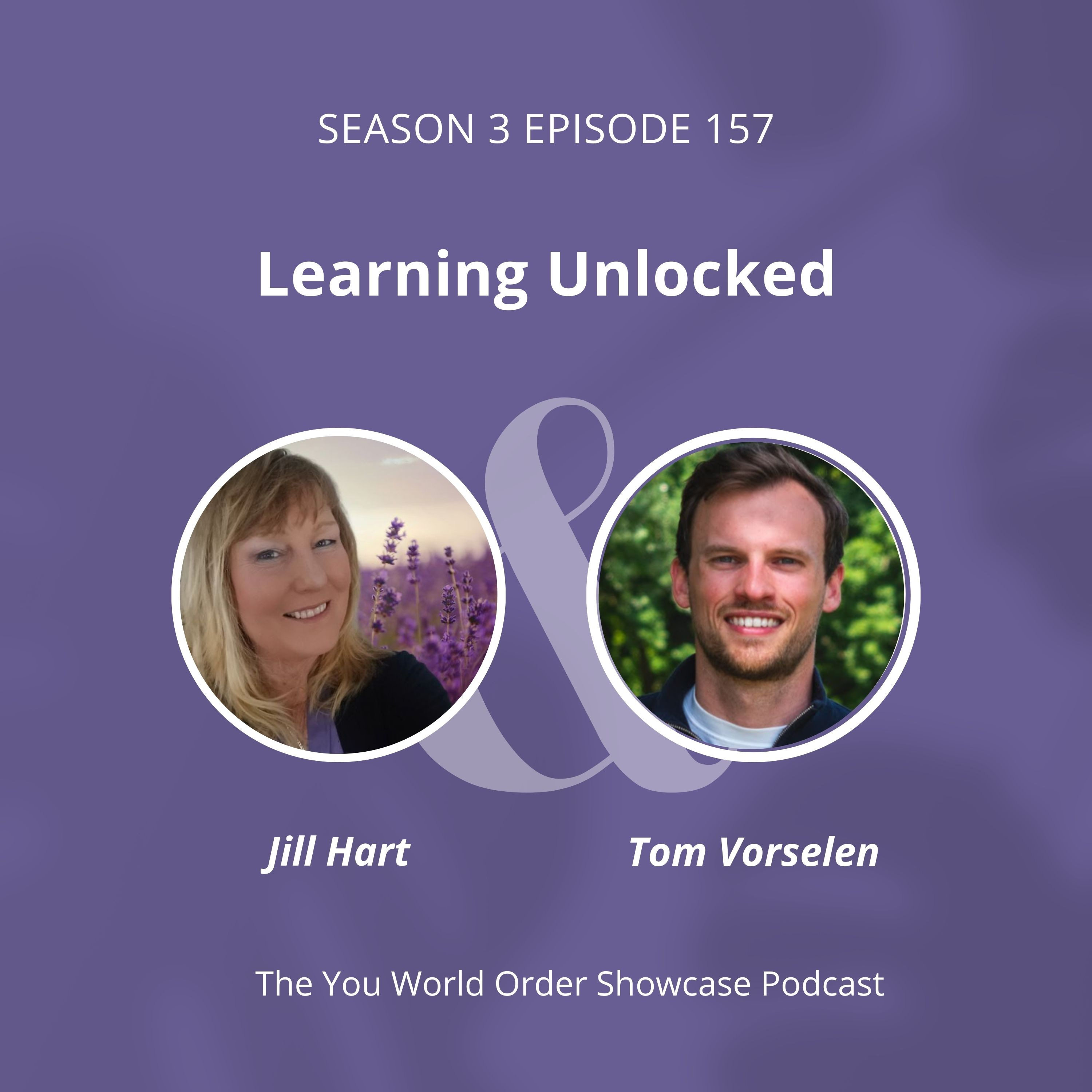
In this week’s conversation on the You World Order Showcase Podcast, Jill Hart sits down with Tom Vorselen , founder of The Study Coach, to unpack a different truth. In many cases, procrastination is not about laziness at all. It is a response to stress, overwhelm, fear of failure, and using learning methods that do not actually work.
For conscious coaches, spiritual entrepreneurs, adult learners, and professionals navigating growth in real life, this conversation lands far beyond academics. Learning is not just about passing exams. It shapes how we build businesses, develop new skills, process information, and create sustainable momentum.
The Hidden Reason People Procrastinate
Tom explains procrastination through a simple but powerful chain:
Thoughts influence feelings.Feelings influence actions.Actions create results.Results reinforce identity.
When someone thinks, “I failed before,” “I am behind,” or “Maybe I am not smart enough,” those thoughts often create stress, anxiety, and overwhelm. Once that emotional state is active, the brain looks for relief.
That is when avoidance begins.
Scrolling.Busywork.Distraction.Anything except the task that feels loaded.
What looks like procrastination on the outside is often self-protection on the inside.
That distinction matters, because it changes the solution. Shame does not fix overwhelm. Better systems do.
Why “Study Harder” Often Fails
One of the clearest takeaways from this episode is that many common study habits create the feeling of productivity without producing real retention.
Tom calls out two of the biggest offenders:
* Re-reading
* Highlighting
These methods are popular because they feel familiar and comforting. They also make it easy to believe progress is happening. But recognition is not the same as recall.
Seeing information again and thinking, “Yes, I know that,” does not mean the brain can retrieve it when needed.
That gap is where many learners get stuck.
The issue is not always intelligence. The issue is often method.
What Works Better Than Re-Reading
Instead of passively reviewing information, Tom teaches people to turn material into questions.
That one shift activates the brain in a completely different way.
Rather than repeating content, learners begin testing themselves:
* What were the two main ideas?
* How would I explain this in my own words?
* What is the definition of this concept?
* Can I recall it without looking?
This process strengthens retrieval and makes learning more active, focused, and effective.
Jill also highlights the value of writing by hand and verbalizing ideas out loud. Both practices slow thinking down in a useful way. They force the learner to process information rather than simply glance over it.
That matters because deep learning is not passive. It requires participation.
Why Overwhelm Makes Learning Harder
A powerful part of this conversation explores what happens when the brain does not yet have a place to “hang” new information.
Tom describes how the brain can reject incoming information if it has no existing hooks for it. Jill expands on this beautifully by talking about frameworks. When people do not yet have the mental structure for what they are learning, everything can feel disconnected, abstract, and overwhelming.
This is especially relevant for:
* adult learners returning to school
* professionals studying for certifications
* entrepreneurs learning sales, marketing, or leadership
* anyone trying to absorb a large volume of unfamiliar information
Without structure, the brain gets overloaded.
With structure, information starts to connect.
That is why preparation matters. It is also why the right teacher, coach, or framework can shorten the distance between confusion and clarity.
The Role of AI in Learning
This episode also touches on a modern reality: AI can be useful when it helps simplify complexity.
Tom shares that his team gives students prompts they can use to turn overwhelming content into practice questions. Jill shares a personal story about using AI to help interpret dense medical notes during a stressful family situation.
In both examples, AI is not the final answer. It is a support tool.
The real transformation still comes from processing, questioning, writing, verbalizing, and applying what has been learned.
Used well, AI can reduce overwhelm and create a clearer entry point into the material. It can help people move from panic to understanding. But the learner still has to engage.
Why This Matters for Entrepreneurs Too
This conversation is not only for students.
If you are building a coaching business, leading clients, creating offers, learning marketing, developing sales skills, or stepping into greater visibility, you are still learning all the time.
Tom makes this point clearly. Better learning skills help entrepreneurs grow faster because they can absorb, retain, and apply new information more effectively.
That has a direct impact on:
* confidence
* decision-making
* implementation
* authority
* income growth
The ability to learn is one of the most transferable life skills there is.
Subscribe to get the free Getting Started Guide, and when you're ready to go deeper, step into the full Substack Setup Intensive as a paid subscriber.
What Tom’s Coaching Focuses On
Tom’s work combines science-backed learning strategies with practical support.
He does not just teach theory. He helps clients apply what they are learning through:
* one-on-one coaching
* workshops
* accountability
* guided implementation
* tools for time management and consistency
That practical element is a major reason his work stands out.
Knowledge alone is not enough. People need help integrating the method, adjusting in real time, and building momentum that lasts.
As Jill points out in the episode, trying to learn a skill from information alone can be like trying to learn tennis from a book. Guidance matters. Feedback matters. Support matters.
A More Compassionate Way To Understand Procrastination
This episode offers something many people need: relief.
Relief from the belief that struggling means something is wrong with them.Relief from the idea that discipline is the only answer.Relief from shame.
When procrastination is seen more accurately, it becomes easier to respond wisely.
Not with blame.With curiosity.With better tools.With support.With systems that work.
That is true in school. It is true in business. It is true in life.
Listen to the Full Episode
If you are navigating overwhelm, trying to learn something important, or supporting others through transformation, this conversation is worth your time.
Tom shares practical insights on learning faster, improving retention, managing procrastination, and building confidence through better systems.
Resources Mentioned
* Apply for the Client Acquisition Audit:
* Tom’s Study Breakthrough Bundle: https://tomvorselen.com/world
Final Reflection
A lot of people do not need more pressure.They need a better process.
That shift can change everything.
And sometimes, what looks like procrastination is simply a sign that a new way of learning is ready to emerge.
I Believe In You,
PS You don’t need to start from scratch or hustle harder.
You just need the roadmap — and the right mentors — to alchemize your message into a thriving, freedom-based business.
That’s exactly what we do inside Substack-The You World Order — where clarity meets community, and transformation becomes your new normal.
🔥 Begin your journey → You World Order Skool Community