Earlier this week, the Banner won Pulitzer recognition for ‘Missing the bus,’ a multipart investigation into Baltimore’s particularly ineffective school transportation setup.
As the series reveals, the problem isn’t lazy kids complaining about the same challenges that have faced schools nationwide. The combination of widespread choice, lack of yellow bus service after 5th grade, and lack of vision created a singularly woeful situation comparable. For the record, The Grade picked the first story in the series as Best of the Week when it came out.
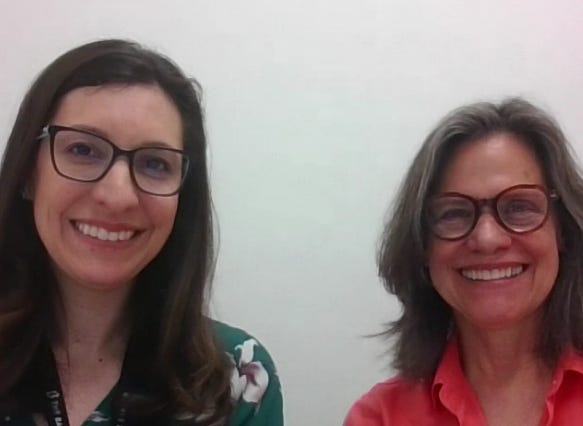
In this new interview, education editor Rachel Mull and reporter Liz Bowie describe what it was like the moment the Pulitzer recognition as a local reporting finalist was revealed, how the series came to be, and the massive effort it took to pull it off.
“Liz showed up at the mall. She showed up at bus stops. She sat in cafeterias,” says editor Mull about Bowie’s efforts. “She spent hours upon hours trying to find students who had the most compelling stories.”
“It was very much a work in progress for a long time,” says reporter Bowie, who repeatedly praises the work of data editor Greg Morton and his team. “It was a very long, arduous journey.”
Watch the interview or read the transcript above or on YouTube. Listen to the conversation on Spotify or Apple. Some other key quotes from the interview:
“There was high anxiety for a little while wondering, ‘Is it true? Is it not true? Could this be the most embarrassing moment of our lives?’”
“The former editor of the Banner, Kimi Yoshino was interviewing me for the job and I pitched the story… The problem was that we didn’t get to it for about a year after we launched.”
“I had seen little snippets of the problem as I was reporting on City schools that went back years. It’s really been a problem for about 15 to 20 years. I remember talking to a principal about something and he said, ‘Can you walk down the hall with me? If I’m standing with my kids, the MTA buses are more likely to stop and pick them up.’”
“This was not a new idea to any of us. It was one of those ‘in plain sight’ stories. And I think when when we realized like how big it was — was when data got involved, when we started to see in hard numbers, how often buses were late — it started to click that this is really a systemic issue. This is not just an inconvenience.”
“This was heaviest, the worst story I’ve ever worked on. It was the hardest… [But] I kept at it until I found what I needed.”
“The journey [to school] that folks are talking about from 30, 40 years ago is just not comparable to the journey students are making now.”
“There are a lot of things in Baltimore that I think many of us take for granted, like, ‘This is just how it is.’ And what we have seen [is that] some of our most impactful work [is] just sort of taking ourselves out of Baltimore and thinking ‘You know, people in other cities would never think that this is acceptable. So why do we?’”
Previously from The Grade
How the pandemic response destroyed the learning culture in one Baltimore high school.
Virtual school was bad. What happened afterward was even worse. By and large, media outlets looked the other way.
Urgency, experimentation, and expansion at The Baltimore Banner
The Banner’s fast-growing education team is rethinking regional assignments and focusing on stories that convert readers into subscribers.
An interview with Jessica Calefati and Lee Sanderlin, two of the Baltimore Banner reporters who helped find Baltimore’s long-missing nine year-old — and what comes next.
Pulitzer judges recognize the AP’s deeply collaborative, human-centered education coverage
Members of the Associated Press education team describe how they conquered doubts, difficulties, and seeming disinterest to produce their Pulitzer-recognized series.