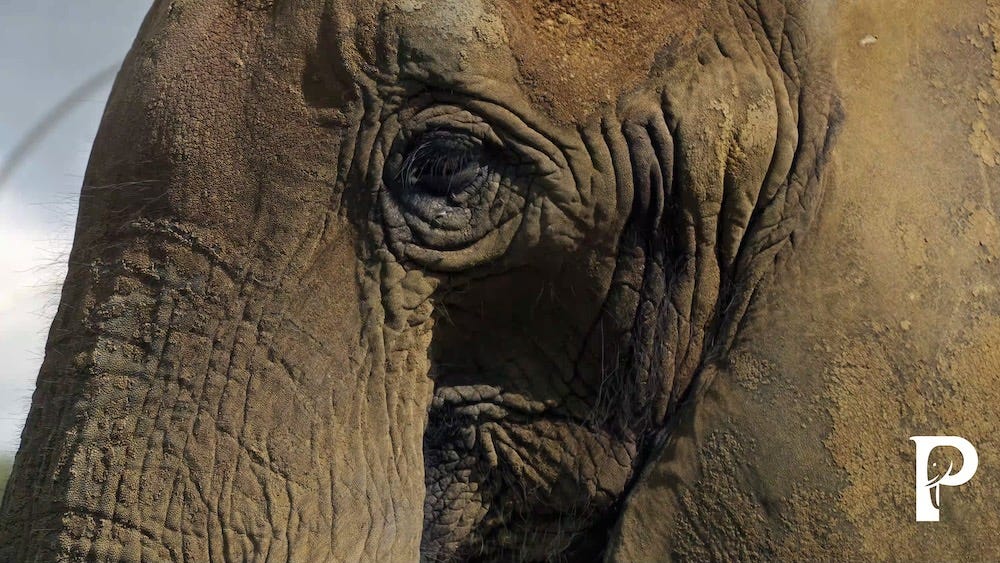
It’s more than 30,000 years since elephants last wandered the rolling landscape of Portugal’s Alentejo, but that’s all about to change.
The last known tracks the pachyderms left behind are a series of fossilised footprints discovered here on our wild west coast of Alentejo.
Not long after their steps in the sand were frozen in time, the giant, straight-tusked elephants were extinct.
It wasn’t until 218BC that they returned – when Hannibal of Carthage shipped a North African herd to the Iberian peninsula and marched them over the Alps to the edge of Rome.
Now they’re coming back to inland Alentejo, and this week I was lucky enough to have a guided tour around their new home.
“It reminds me very much of Zambia,” Kate Moore told me as we drove onto the 400ha of land which will soon be Europe’s first large-scale elephant sanctuary.
“It’s a really beautiful site. It used to be a cattle farm and a eucalyptus plantation, and we’ve spent the last one or two years basically trying to restore the biodiversity on site to get ready for elephants.”
Kate Moore, who spent years working in conservation in Malawi, is managing director of the UK conservation charity Pangea which has spent years scouring Europe for the right site (and whose video footage I’ve attached above).
“We did a feasibility study looking at all the different landscapes, honed in on the Iberian peninsula mainly because of the habitats, looked at hundreds of properties and finally shortlisted and got down to this one.
Thanks for reading Off-grid and Entertaining in Portugal! This post is public so feel free to share it.
“Gentle, rolling hills, lots and lots of water, good diverse habitat, and also privacy,” were the reasons they chose the site which straddles the two municipalities of Vila Viçosa and Alandroal just south of Estremoz.
But this isn’t a safari park, or a large zoo – it will be a sanctuary for elephants to retire after spending their lives in the circus or in zoos around Europe.
“Our first elephant is confirmed as an elephant from Belgium – she’s called Kariba – she was wild-caught in Zimbabwe 40 years ago, she was shipped off to Germany and has spent the last 40 years in zoos in Belgium, the Netherlands and Germany.”
And as most EU states have banned circus elephants, and zoos are planning to give them up voluntarily, they need somewhere to go.
Pangea will have space for 20 to 30 elephants, and they are preparing to receive Kariba early next year.
A large shed for the elephants to take shelter from the summer heat and the chill of winter is almost finished and holes were being dug for the last sections of giant metal tube fencing – think Jurassic Park.
“Basically it’s ready to receive the first elephants,” said Graça Fonseca, a board member at Pangea and a former Portuguese minister of culture.
“First because it’s really a foreign investment that comes to Portugal not for tourism, but for a project that’s about conservation.
“It’s about our connection with the land and the connection between humans and animals and I think that’s why it’s special and will put Portugal on the map.”
It’s certainly got people talking in the local coffee shop.
Graça Fonseca told the story of an early visit when the shop owner asked “are you the people bringing the elephants?” and she was delighted to hear they were, as none of her customers would believe her when she told them the animals were moving in nearby.
The plan is to have open days for schools and the local community, and to create a discovery centre nearby to raise awareness about elephants and their habitat.
“The most important thing...is giving them as much space we can give them in as natural a habitat as possible and all about giving them autonomy and freedom to choice, but it’s really important they get expert care,” Kate Moore told me.
The Mayor of Alandroal, João Grilo, is a teacher and welcomes the educational opportunity it brings, but he also hopes the project will bring new life to a poor rural area.
“I think it’s very important because we are giving an example of conservation and restoration of natural environments,” he said.
“If we find ways that people could live here, build their life projects and still preserve the natural environment and create jobs that’s a great way we can do it.”
The sanctuary is being paid for by large donations from individuals as well as grants from trusts and foundations.
Pangea is also a registered non-profit organisation in Portugal…just saying for those people out there looking to get a golden visa...
Thanks for reading Off-grid and Entertaining in Portugal! Subscribe for free to receive new posts and support my work.
One of Pangea’s ambassadors is the famous Portuguese artist Joana Vasconcelos who created a huge colourful woven blanket for the launch of the sanctuary.
There’s been a huge rush of interest from the Portuguese media this week at the thought of elephants silhouetted on an Alentejo landscape, reminiscent of the African savannah but with the characteristic flat-topped acacia trees replaced by cork oaks.
After years spent making films and telling stories about elephants across Africa it’s nice to have a story like this come to my new home.
This one is about poaching arriving in Botswana – and it got me into a lot of trouble with the then-president.
And here’s a piece from back in the day when the BBC was happy to pay money for these types of big impact stories:
This is the TV documentary version.
Each elephant which will retire to Portugal will have a traumatic back story shrouded in crime, corruption and the pursuit of ivory.
I’m looking forward to telling more of their tales as the Pangea sanctuary takes shape.
“They’re going to love it here,” Kate Moore believes.
Into the Alentejo…
It was a six hour round trip to Vila Viçosa for the journey to the elephant sanctuary, and despite my iPhone going flat and having no charger I was still back in time for Portuguese class at the local school (if a little late).
Alentejo covers a third of Portugal and there’s so much to see inland...from impressive castles, monasteries, vineyards...and soon elephants.
Next weekend we’ll be heading back to Vila de Frades – Friars’ Town – for the annual opening of the talhas, or amphora wines…I’ll let you know how it goes.
Traditional Cante Alentejano singing, local meats & cheeses and wine straight from the clay is the order of St Martin’s Day – November 11th – when the vinho starts to flow.
I’ve written a couple of pieces in the past about this time of year – this is the history of St Martin and the various autumn traditions across Europe…
And this is the great tale of former diamond miner turned winemaker Teresa Caeiro, of Vila de Frades and the Geraçoẽs de Talha winery where she grew up…and the audio version from our podcast Ana & Al’s Big Portuguese Wine Adventure - you can start listening to episode 1 here or wherever you usually get your podcasts.
And Finally…
It may be November, but we’ve been enjoying a bit of St Martin’s Summer and ocean currents from the south have made the water the warmest it’s been all year.
We’ve been hosting a yoga retreat this weekend and they’ve been treated to some amazing morning mists over the valley. We’re talking to retreat leaders and wedding planners, so if you’re looking for a venue do get in touch.
* Please come and see us - we’ve extended our discount for readers booking a room or apartment to stay in November and early December (with the code BLOG25). Book here.
* AND…we will also be open for a cozy Christmas and New Year when it’s sunny during the day and cold enough at night to justify an open fire! Should be fun.