On the rare occasion the entire Portuguese power grid goes down for a few hours we are positively smug, but the other side of the coin is keeping everything running when a big storm hits.
And all of us on the western edge of Europe have had some kind of encounter with Storm Claudia (as Spanish meteorologists named her) over the past week or so.
As any household relying on nothing but solar power will know, there’s only one drawback to having 300 days a year of sunshine in Portugal – and that’s the other 65 or so without.
When we first moved into the Valley of the Stars we very quickly learned which power-hungry luxuries to save for the sunshine.
For example, one never makes toast while blow drying the dog (not that one would necessarily ever want to...I rarely eat toast).
Relying completely on renewable power means learning how to carefully monitor exactly what is being used where, and deciding on contingencies as each cloudy or stormy day arrives.
And as we have increased the number of buildings, guests, pumps and water treatment units, the more power you use and the greater the need for planning and backups.
We sort of fell into the off-grid thing without really thinking about it and looked into the figures for connecting to the Portuguese grid when we were planning our construction.
Thanks for reading Off-grid and Entertaining in Portugal! Subscribe for free to receive new posts and support my work.
It turned out the combination of inverters, pylons and cables was going to cost almost the same as a brand spanking new solar set up.
So our decision to go the sustainable route was aided by the idea of having one very large electricity bill at the beginning and free power after that.
Having dodged the late October storm courtesy of a big mountain getting in the way, we were battered by Storm Claudia like everyone else.
Anything coming up towards us here from the south tends to hit the mountains of Monchique and Fóia peak first, leaving us in the rain shadow.
The apps often predict we’ll get many millimetres, but weather from the Algarve usually ends up dropping far less rain on us than the apps predict.
Of course in dry times that works against us, rule one is “never complain about the rain,” however much there is, because we depend upon it to fill our lake and our giant 200,000 litre pillow tank for mixing into drinking water.
Thankfully there were no tornados to report like the one which Claudia brought to the Algarve, but as always, the first big storm of the autumn helps us switch back into ‘winter mode’ of carefully monitoring all our energy consumption...and keeping an eye on the weather.
There’s a lot more at stake than knowing whether or not to take our brolly, or if I should make the move from shorts and sandals to trousers and sensible shoes (I believe that time has now come for this year...but that’s not bad given it’s nearly December).
As far as weather forecasts, most predictions for our valley are at very best only half correct, and so I channel my inner weatherman, hark back to my Geography degree and start muttering about cold fronts and barometric pressure.
Thanks for reading Off-grid and Entertaining in Portugal! This post is public so feel free to share it.
Our favourite weather forecasting apps are Weather Underground and Ventusky which provide us with a broad outline, real time radar and some big-picture predictions as the various models plot expected rainfall and front movements by the hour.
Our friend Niels – who has sailed around the world and records climatic data in his vineyard – put us on to Ventusky and also introduced us to Weather Watcher on YouTube, which gives great regular summaries of Europe for the committed weather nerd.
After five years I am starting to learn some patterns, but it’s tough with everything becoming more unpredictable and extreme thanks to global warming.
Storm Claudia was a tricky one – she hung around a lot longer than the average storm thanks to being sandwiched between two areas of high pressure in the Atlantic and over mainland Europe.
And she also had a nasty habit of bringing rain all day, and then clearing all night – perfect for star gazing but not great for our solar system.
I’m not sure of the science behind it, but we usually get more rain overnight and at least a little sunshine during each day...and thankfully we don’t need much to boost our batteries and regenerate our confidence.
When designing off-grid systems, Solar Iain told us there’s no limit to how much power we can generate and store, it’s just a matter of how much we are prepared to invest.
After estimating how much energy 22 people might use and expecting expansion we built a system that is way bigger than we need for most of the year.
We swan through summers barely looking at the solar read-out, blessed as we are by enough solar panels to happily ensure the batteries are full every day before breakfast is over – despite the pumps, the power use and all the people.
And even when the days get shorter, we have confidence in our 84 solar panels which still bring in power when it’s overcast.
But when a storm hits and the clouds persist, we really earn our keep as an off-grid resort.
That is when power monitoring becomes an obsession.
Our first port of call is the Victron app on our phones which immediately shows us how much power is coming in and how much is being used on each of our three phases.
Battery percentages are notoriously inaccurate, but we’ve found voltage level to be the best measure keeping everything going – once it drops to 48V the power goes off.
The key is staying above 50V – something easily achievable with some tight management and a backup generator.
Going the next level down to monitor individual buildings and pump houses took a fair bit of research, but we went for Emporia Energy from the US.
The sensors clip around cables to measure how much electricity is moving through them.
Sadly, some cost-cutting by our electrician left far too many things crammed into one small box...confusing even him.
He grumpily clipped on the monitors and even managed to wedge the box shut, but at one point the car charger circuit was using the most power, which is confusing as we don’t have a car charger yet.
Having switched the labels around we now get a pretty good idea of what’s going on, even if I need a few more hubs from the US to give us the full picture.
Now I’m ordering some internet-connected switches to save me running up the hill and turning things off manually in the rain.
Despite the days of rain we stayed well out of the danger zone, and as we watched the sun rise and its rays start reaching our panels...despite the forecasts...our overall outlook became even brighter.
The first test is always the toughest as we tweak our pumps and get back into our power-saving routines, but once again our system passed with flying colours.
Speaking of flying colours we’d love to find a decent but affordable wind turbine which can integrate into our Victron solar system...anyone with recommendations, please get in touch!
With the batteries filling up fast, our trip to Vila de Frades and Vidigueira for the talha opening celebration weekend was back on.
Driving into the interior Alentejo the skies cleared in front of us, the storm headed off into Spain and we entered an adega packed full of some of the most exciting wines and interesting winemakers
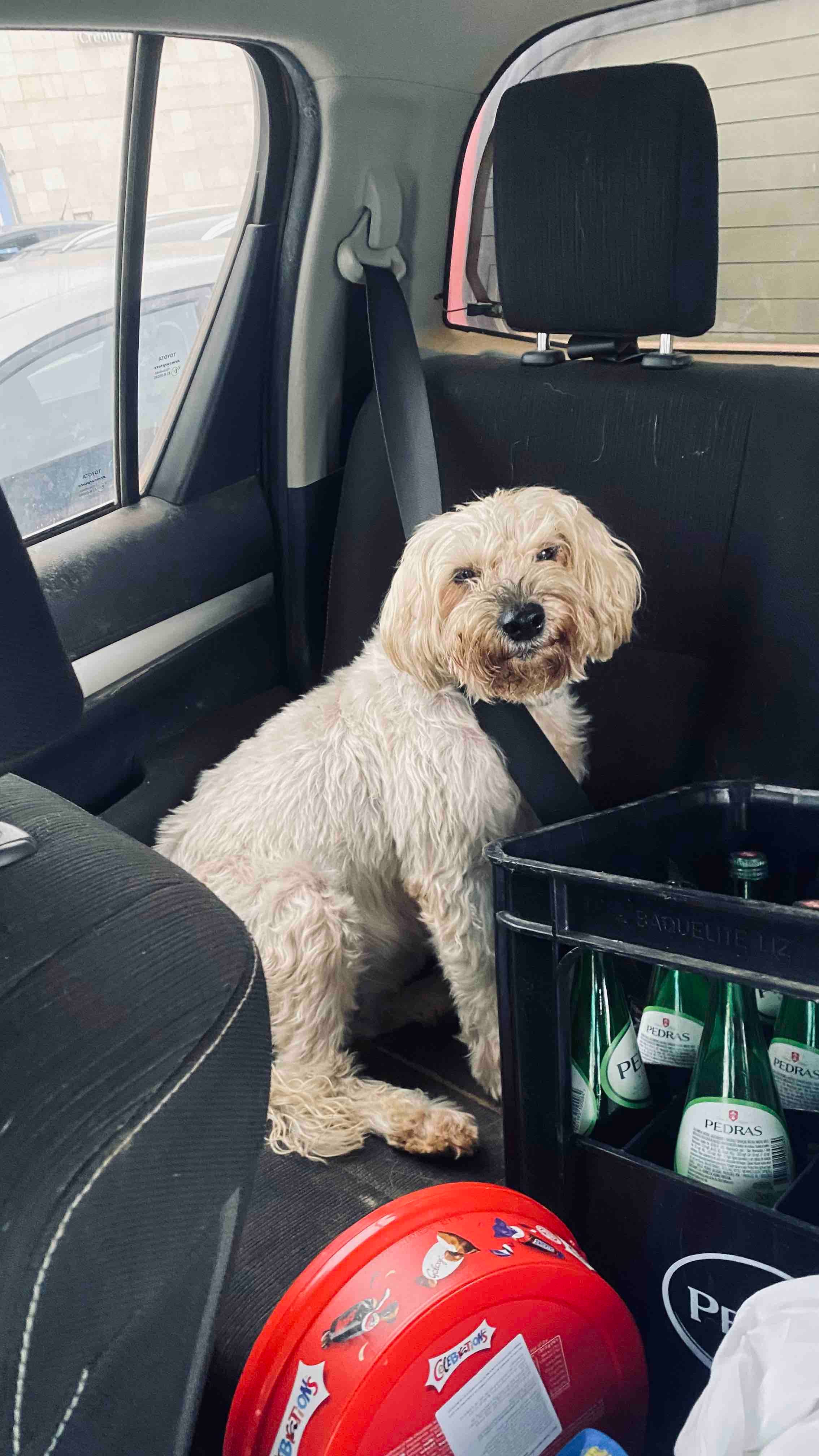
It was Simon the dog’s 98th birthday (14 human years x 7) and if I ever make it to his age I’d be more than happy with a day like it: McDonalds lunch, a load of excellent wine, a huge amount of attention and a late night dance party to finish.
We’ve got the power.
And now the storm has passed we’re enjoying crisp cold nights and beautifully clear sunny days with bright blue skies...and yes, I am still wearing the shorts.