In this episode of Five Rules for the Good Life, I sit down with Aishwarya Iyer, founder of Brightland, to talk about how to find fresh ideas when the creative well runs dry. She shares her Five Rules for Finding Inspiration—ranging from the power of putting your phone down to digging back into past launches, and even borrowing inspiration from perfume bottles for food packaging. It’s a grounded, generous conversation that’s equal parts brand building and soul searching, perfect for anyone trying to make something new in a noisy world.
I love this episode because it’s a reminder that inspiration isn’t just waiting for you in obvious places—it’s hiding in your pantry, your community, even in your closet. Aishwarya’s approach to creativity is about looking sideways, not just forward. Whether it’s revisiting an old family recipe or walking a new aisle at a bookstore, finding new paths to creativity is how we keep growing, making, and evolving. This one gave me a few ideas of my own—and if you’ve been feeling stuck, it just might do the same for you.
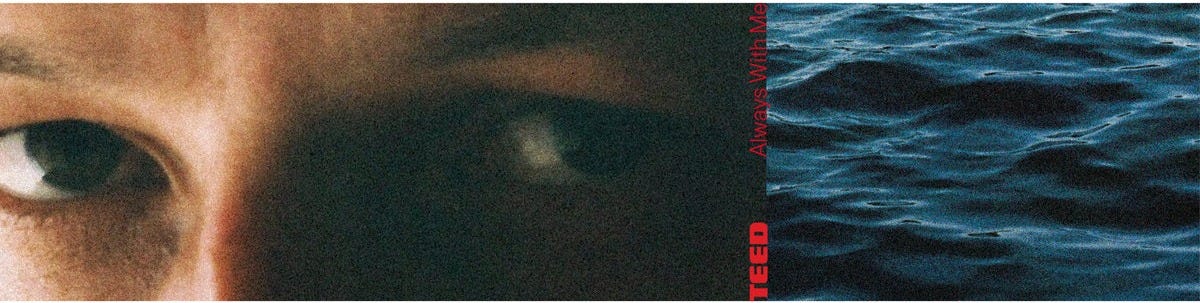
My friend TEED has a new album out now, and it’s a perfect soundtrack for a dreamy winter wonderland. Stream or buy Always With Me wherever you listen to or purchase music.
Hello, and welcome to Five Rules for the Good Life. I’m your host, Darin Bresnitz.
Today, I sit down with Aishwarya Iyer, CEO and founder of Brightland, which is some of mine and my family’s favorite olive oil. She’s here today to share her five rules for finding inspiration. She talks about the importance of putting your phone down, keeping your head up and looking out in the world for new inspiration, how her previous products guide future endeavors, and the importance of embracing unconventional sources to find new ideas. It’s a deliciously fun and inspiring conversation with a lot of great takeaways for anyone who is stuck creatively or wants to expand their creative horizons.
So let’s get into the rules.
Aishwarya, welcome to Five Rules for the Good Life. I feel like I see you every day because we always have a bottle of your olive oil in our pantry and on my counter at all times.
That is music to my ears and I am thrilled to be here.
I love that you started your career at L’Oreal in the luxury products division because where you’ve wound up now is this high-end luxury part of the CPG market. How much parallel do you see from your work with both high-end makeup brands and high-end olive oils, honeys, and vinegars?
When I got into it, I didn’t see any parallel, but I created the parallel. If we can talk about blush and serum 500 different ways... then we can talk about these products that come straight from the earth that have so much provenance and terroir and story and history and taste and flavor. We can showcase them in interesting ways. We can photograph them in interesting ways. We can package them in interesting ways. And so I created it.
I’ve always felt that when I’ve traveled or gone to high-end specialty shops for food and pantry items, I’ve always known that there’s the top shelf stuff. And it’s the same way with fashion. And I know that you have looked at designers and different fashion brands for inspiration. What is it about their work in that field that inspires you?
They are looking at emotion first. How do we make people feel? They’re not trying to talk to themselves. CPG and food especially has a funny way of wanting to talk to ourselves a lot. Right, right. Here are all our value propositions. Are you creating an emotional connection with anybody out there? Are you making people feel something? And I think that fashion, when done well, they’re able to do it really masterfully. And it doesn’t have to be luxury. I see Gap doing it right now beautifully. That to me was this driving force of, oh my gosh, we’re not just in the business of food. We’re not just in the business of olive oil. We’re not just in the business of marketing. We’re in the business of emotions. Why not spend time there? Spend time thinking about how we want people to feel.
Tapping into those deep emotions, knowing that something is going to have that connection over a long time is so tricky these days because there’s so many trends. How do you understand something that is going to be worthwhile investing in, making it a product, something that you’re really going to build a whole story and brand around?
It comes back to having two dualities at once inside of you. There are two olive oils inside of you at all times. Yeah, exactly. Like ruthless impatience coupled with remembering that time is always on your side. I’m able to take that duality and reality and be able to say, okay, there is a trend. We think this trend is really interesting because it’s going to make our customer feel XYZ. We’re going to hop on or lean into that trend. And at the same time, we’re going to say no to these 500 other trends. Of course. Because they’re not the right thing for us.
I would not say that we are experts or we’ve really mastered that at all, to be totally honest with you. 2025 was a good example of a year where if I look back, I’m like, hmm, I think we could have actually been a little more trend driven. We weren’t. We were very, let’s really focus on what the consumer is asking for and let’s focus on certain occasions that were showing up for her. And that was kind of it.
Being a founder and the CEO or a leader of any company does require you to make those decisions about creating stability when you could feel pressured to grow. It’s a hard balance to find. What I love about your approach is no matter what phase of the business you’re in, you are always looking for what comes next, which is why I’m so excited for you to talk about your five rules for finding inspiration. And your first rule talks about looking inward in your own life for finding something to inspire you. What’s your rule number one?
Rule number one is getting offline and looking inward is absolutely the best place to find inspiration.
Why?
You just said there are so many trends out there. We are constantly looking at that brick. And what that means is we’re not just consuming, we’re absorbing other people’s energies, other people’s inspiration, other people’s goals and dreams, other people’s lives and content. I really like to shut off social media. And I think that it then creates more space. You’re looking around you. You’re looking around your house. You’re looking around when you’re waiting for an elevator instead of looking down at your phone. And you might see something. You might see a color. You might see a piece of artwork on the wall that you never noticed before. I hate saying that because it sounds so obvious and maybe 25 years ago, this wouldn’t have been one of my five rules.
I see it with a lot of my friends who are business owners being zapped of creative inspiration, frankly, being zapped of energy to propel them forward in their businesses because they’re way too online.
I totally agree. I start each day walking the dogs around the block with no phone.
That’s amazing.
Not taking every moment of your life to look at a phone or to get caught up in someone else’s energy is a really good way to think about your own experiences and to think about what’s going on in your life, either past or present, which is really a good spot to find inspiration and ties directly into your rule number two.
Rule number two is transforming the obstacles that are in your life into creative fuel.
That could be in the rudimentary, I’ll show you, I’ll show them, I’ll show myself, right? Which everyone kind of has that fire within them. Of course. That is something one can do rather than saying, I’m going to give up or I don’t believe I can. But instead saying, okay, this happened for me. How can I transform it? So that’s one way to do it. And then the other way is to also take a look more deeply and say, whether it’s grief or loss, how can I take memories and incorporate it into whatever I’m doing that’s artful, whether it’s into my writing or my poetry or into the work that I do, into the art that I create. I firmly believe it’s possible, but it requires you to go inward in the first place and create space to move through the emotions of heartbreak and sadness and grief and despair and disappointment to then come out on the other side.
I’m not discounting heartbreak or sadness or any personal crisis because as we all know, that’s made a ton of great art. In fact, some of my favorite.
Once you get past or maybe go through some of your inner crisis or emotions or maybe more of the standard spots for inspiration, finding new wells to tap is a big part of your rule number three.
Embracing unconventional sources.
Anytime that I’ve been seeing where people get inspiration lately, they say Pinterest. They say museums. Sure. There’s a lot of the usual suspects. Of course. But coming back to the unconventional sources, why don’t we open up some old magazines that we haven’t looked at? Open up a book in your shelf that you haven’t looked at in a while. I was doing this exercise where I was grabbing books and then opening to a random page and finding a word that I was really delighted by and then writing down that word and thinking about what that word meant in my life and then writing a little thing and then that turned into something. And so you can really start pulling threads.
The more we are leaning into human-made inspiration, I do think Mother Earth can be an incredible source. Just go and look at the tree across from you. Give it a hug. Look at its details. Look up. Look around. You just don’t know what might find you.
Rule number four is to revisit the past.
And it’s something that I don’t think we do enough of. We’re always moving forward. We live in a capitalist society that constantly has us looking ahead. I do this thing where I look at all the old launches that we’ve had, whether it’s an olive oil or a vinegar, and I say, what did we do well here? What did I like? What didn’t I like? What can I bring from that? Because there’s something to it. We thought it was a great idea back then. Maybe we did it in the wrong way. How can we revive it? How can we give it new life? Or we thought it was a great idea and we did it in the right way. And what can we just bring into this moment?
I think that that can be such a wonderful springboard. And it’s not just about work and your own projects. I do this with recipes. I look at the old recipes that I’ve tried out. And I think to myself, oh, I really liked this. What did I like about it? And how can I bring that back into what I’m doing today?
So, if you’re feeling stuck, either emotionally or creatively or personally, you can always go back and look at something that once worked and use it as a moment to jump forward into the future. Which brings us to your fifth and final rule, which I really love.
It’s to go outside your category.
That’s hard to do when you’re in a leadership position or even just in a working position because you’re often asked to stay focused. But you are a big believer in inspiration through divergence.
Yes. When you go outside your category, you get a whole new lens. And it has to be a category where you feel some delight. I love food and beverage. I work in food and beverage. So, sometimes going to a grocery store actually is a source of delight and can bring new inspiration. But sometimes it is feeling very insular and myopic. And I need to go look at the sneaker drop that happened. Or what happened in terms of what brands were activated at the U.S. Open. Or I need to go look at a wellness moment that’s going on or a spa that’s opening up and how are they talking about the experience.
One of the most joyful examples was when I was looking for packaging for our honey jars. And I looked at perfume bottles and I was like, oh, my God, some of these perfume bottles are so cool and so interesting. Could we emulate that in some way with our honeys? And so the perfume bottle universe was what kind of sparked the idea of our honey bottles. And so go outside your category.
That is such a beautiful, intentional moment of being open to influence. And it is such a great reminder that when you’re working in any category, especially if it’s product driven, that there are so many ideas and moments of inspiration from unexpected places. Aishwarya, thank you so much for sharing your Five Rules for Finding Inspiration. Where can people find your olive oil?
Brightland.co and at Brightland on social.
And if they wanted to check out your honeys, your vinegars, your new ghee, your new superfood honey or your new chili oil?
All there. All at Brightland.co.
And are you doing any in-person pop-ups or are there going to be any markets that people can find you?
There will be some in-person pop-ups in Los Angeles. And we may or may not be opening up a space sometime in 2025.
Amazing. Thank you so much for coming on Five Rules for the Good Life.
Thank you so much.