Addiction Resources: https://chemicalmind.substack.com/p/addiction-support-resources
Ko-Fi Link: https://ko-fi.com/dopamine
Note: This is a true story, taken from one of the many fascinating case reports of medical literature. This is a fairly famous example in the annals of addiction neuroscience, and it reveals in stark colours the counter-intuitive nature of addiction.
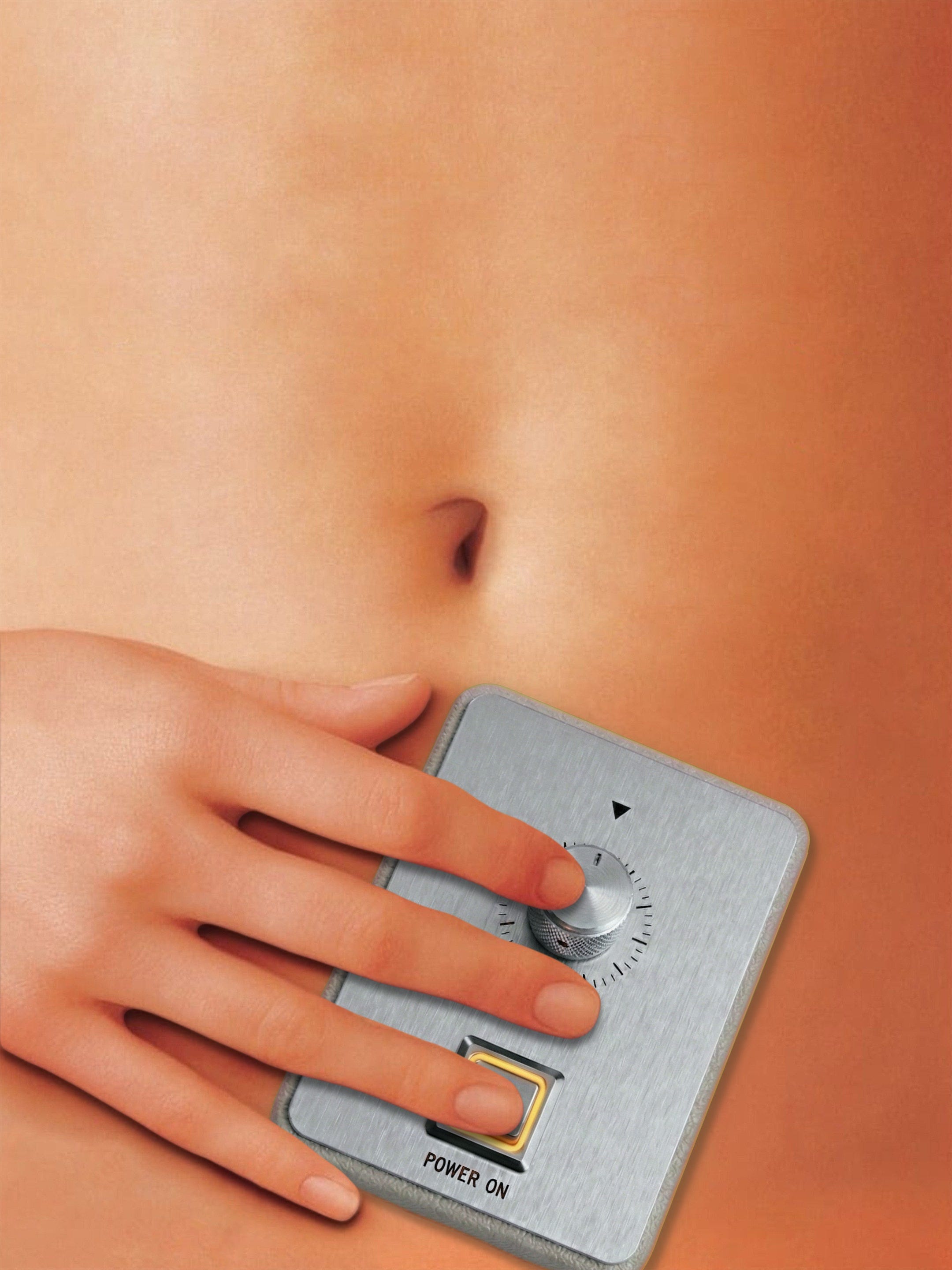
She couldn’t stop herself. She had to push the button.
She kept it on all day, dialling the power knob between 75% and 100% in rapid bursts.
All she could do was blast the electrodes buried deep in her brain, triggering an experience she called “pleasant discomfort,” a kind of “erotic sensation” as though her genitals were sending signals to her brain at kilowatts of intensity.
By all objective measures, though, she was disintegrating completely.
She would exhibit the physical symptoms of stroke. She would become extremely thirsty. Her verbal IQ would drop by a whopping 25 points. She even developed an ulcer on her index finger, the one she used to tune the power dial rapidly. This was not a particularly pleasant experience. Indeed, it was painful.
And yet, she stopped going outside.
She stopped talking to other people.
She even stopped bathing, and eventually, eating.
She could not pull herself away from the button.
There were times when she’d beg for her family to take it away, and they would; only for them to give in when she went through inevitable withdrawal symptoms, and demanded its return.
It was an addiction like any other; except this was not chemical. It was electrical.
In 1954, James Olds and Peter Milner released a remarkable study that would go on to shape our understanding of addiction. They implanted electrodes at various locations into the brains of rats, and gave them a series of levers they could press to stimulate the different electrodes.
The behaviour of the rats demonstrated the existence of specific locations in the brain which, when stimulated, could produce profound addiction: the rats would go to stimulate them again and again and again, until collapsing from exhaustion.
Such experiments would have been completely unethical if done in humans, and would never be approved by a review board. So, how had this woman, in the 1980s, ended up in the position of one of Olds’ and Milner’s rats?
Years earlier, the 48-year-old New Yorker had suffered a herniated disc right at the base of her spine, between L5 and S1; an excruciating experience, leaving her with severe sciatica. Pain would surge through her legs like a bolt of lightning. Her lower back was in constant agony. The pain and suffering was constant and intractable.
Eventually it became too much; she obsessed about finding a way to halt the pain.
Although of limited effect, so far, opiates - specifically, methadone - was the only thing keeping her functional at a basic level. That wasn’t ideal. She had a history of alcohol abuse, and knew the dangers of addiction all too well.
So she had turned her body into a veritable pin-cushion, subjecting herself to any and all ideas, in search of an alternative.
She had seen so many specialists. They tried pharmacological treatments of all kinds, including antidepressants, atypical analgesics, and more.
Every drug wore off quickly.
Massages and exercises had no effect. Acupuncture was useless. Cognitive Behavioural Therapies made no difference.
The TENS units - skin-conductance electrical stimulators of nerves - achieved nothing.
They tried surgically removing the back plates of 4 of her vertebrae to relieve pressure on her spinal cord. They denervated the area at the base of her spine, and even severed specific nerve fibres in her spinal cord they believed were transmitting pain signals to the brain.
All of it failed.
All this medical science, all these doctors and specialists, all this money, and they were at a loss. Here they were - in the 1980s - and they had no idea what was wrong or how to fix it.
One well-meaning specialist had an idea: if we can’t seem to solve it from the nerve side, perhaps we can find another way through the brain itself.
Pressing the button below will instantly cure all ailments, guaranteed! (note: not actually guaranteed, but it might work?)
Electricity for pain management is, remarkably, far from a new idea. There really is nothing new under the sun.
The first written description we have found of using electricity to manage pain was by the ancient Greeks, where both Plato and Aristotle described the use of the “Torpedo Fish” - a kind of electric ray, after which the submarine weapon is named - as an aid in curing ailments; but it was the Romans who wrote specifically about its use in treating headaches and gout.
Some 2000 years later, in the 1950s, we began to seriously experiment with delivering electricity directly to the brain. The implanting of electrodes directly into neural structures could bypass faulty central nervous system wiring, not to mention all the chemical filtering which made pharmacokinetics such a challenge.
Early experiments with this method as a treatment for chronic pain seemed to yield some positive results.
Deep Brain Stimulation (DBS) was, indeed, originally meant to treat pain. Later, people like José Delgado would begin experimenting with the technique to treat movement disorders, epilepsy, and paralysis.
DBS has a storied and controversial history. José Delgado, among others, would become the targets of crazy conspiracy theorists like Peter Breggin, who for their own political purposes ran a campaign of lies designed to paint Delgado in particular as an evil mind-control villain, eventually chasing him out of the United States.
Despite this, by the 1970s, DBS for pain was quickly gaining traction, with companies like Medtronic setting up its neurological division for manufacturing devices to control electrode stimulation. Case reports started to come out showing positive results for pain with electrodes implanted into the thalamus.
So, although still quite a new treatment, it wasn’t as hare-brained an idea as it might seem to us today, though it still sounds utterly counter-intuitive: stimulating a brain region that is signalling pain in order to suppress that pain. However, it was based on a historical precedent, or perhaps, neurological dogma: that stimulation mimics ablation (destruction).
The thinking was that with electrical stimulation, based on this precedent, they could use it as a reversible alternative to destroying those neurons entirely. If it worked, we might never need to surgically damage or destroy anything in the brain, whether in cases of severe intractable epilepsy or chronic pain. It could eliminate the use of lobotomies, which were still popular in the United States at the time.
So in ~1979, specialists handling the case of this woman’s intractable pain decided to give it a try.
They made 2 attempts.
First, they implanted an electrode in the right Posterior Medial Thalamus, the region of the brain mostly concerned with your emotional response to a sensory input, e.g being startled by sudden sharp pain. When they turned on the electric current, she felt a warm flush spread across the left side of her body, and the pain dissipated.
For 6 months, this seemed to work remarkably well.
However, like everything else, it was only temporary, and soon the device gave her no relief from pain at all. They left the electrode in place, dormant, and continued to pursue other treatment options.
Four years later, they made another attempt.
The target this time was the left Ventral Posteriolateral Nucleus, the region which helps to determine what a sensation is (touch, pressure, temperature, pain) and where it’s coming from; it then relays the information to other regions of the brain relevant to that specific sensation.
Again, it seemed to have a reasonable impact on the pain. She initially reported a tingling “paraesthesia” down her left side, but that was it. For a few months, the pain became manageable again.
Then, there was something else.
She had begun to experiment with the settings on the stimulator. She found that by manipulating the controls in a certain way, she could induce these peculiar “erotic sensations,” and reported this to the clinicians shortly following the procedure.
Unfortunately, this did not ring any alarm bells.
When the pain inevitably returned a few months later, her need for stimulation didn’t end. Indeed, it was only beginning.
She found herself continuing to need more and more stimulation. She would keep the device on, set to 75% power, and every few minutes rapidly turn the dial between 75% and 100% power. It brought her to the edge of climax, but never over the precipice. She was always just out of reach of satisfaction.
During these intense stimulations, her body would writhe in severe discomfort. The left side of her face would droop as though she were in the throes of a massive stroke. She would experience paroxysmal atrial tachycardia, and the most extreme thirst leading to psychogenic polydipsia (compulsive water drinking to the point of toxicity.)
There’s simply no way this could have been pleasure she was experiencing, and even if there was, it would have paled in comparison to the devastation and pain being inflicted upon her body and brain.
Somehow, she managed to continue like this for 2 years. Her addiction was so total, she spent most of that time in complete inactivity, save for occasions when her obsession with stimulation drove her to tamper with the device in an effort to further increase its amplitude.
IQ tests she performed shortly before and shortly after implantation of the electrode, and again by the authors of the case study 3 years later, reveal the utter devastation wrought on her brain.
Initially scoring 99 both before and after implantation on full-scale IQ - a reasonable score - by the time of the case study, she had lost a whopping 11 points.
Her memory quotient - initially around 96-97 - had plummeted to 64 (though interestingly, when stimulating, it rose slightly to 73).
They had her do a PET scan before and during stimulation to see how much energy her brain was using (by measuring glucose) and the results were striking.
When the device was off, the scan showed a startling lack of activity. Specifically, the researchers found right-sided hypometabolism and significant asymmetries between the two hemispheres. In this state, her metabolic rates were so low they were comparable to patients with advanced dementia.
With the device on, this reversed completely, with both hemispheres lighting up with thalamic noise, essentially jamming much of the cross-region communication required for normal brain function.
She had become completely enslaved to the button, and it was eating her alive.
My friend Prof Kent C. Berridge - inventor of Incentive Salience theory of motivation, along with the Incentive Sensitisation theory of addiction - knows this study well, so I emailed him to get his thoughts on the idea of someone being trapped so tightly inside a “wanting” loop that even aversive stimuli, such as pain and discomfort, are not enough to break the cycle. He replied:
“No one would sign up for such an electrode if advertised by her description, so there’s a massive explanatory gap between the not-very-pleasant experience and the intense desire to repeat and continue it.”
Rather propitiously, just last year he and a colleague David Nguyen published a paper in Nature’s Communications on Biology about “Wanting What Hurts” (the title I also borrowed for this article, because it’s too good.)
Imagine you are a rat. You’re in a little box with soft tray bedding at your feet. You look around and find a shiny rod-like object that you’ve never seen before.
You wander over and give it a poke with your nose, and a sudden, painful electric jolt hits you!
What do you do?
Well, typically, rats will do something called “defensive burying”, where they will kick bedding litter over the top of some object that they see as harmful. They will bury it, to get it out of their environment.
That’s what a rat would normally do to such an electrified rod.
However, using specially optogenetically-modified rats hooked up to a device which stimulates the anticipatory reward centres of the brain using a light beam whenever the rat comes within 2cm of the rod, following their first shock, they seem to do something unusual.
They give it another poke.
Obviously, another shock ensures, making them flinch back, but this does not deter them.
They give it yet another poke.
Despite the total absence of pleasant sensation - indeed, in spite of the particularly unpleasant and painful sensation from electric shock - they develop an overwhelming addiction to poking the electrified rod with their nose. Some of them would even nibble and chew it with their mouths, all while receiving continuous electrical shock.
The rats were even given the option to self-stimulate their own brain using a lever, which delivered no harmful or aversive stimuli; yet they would ignore the lever and consistently favour a zap from the rod. Something about the salience of that shock was like an answer to the question posed by the anticipatory reward circuits: “I predict this is going to be good for us, now let’s see…”
Zap.
As soon as the artificial stimulation of the brain ceases, the “addiction” disappears entirely, and the rats proceed to bury the rod. However, the point is still proved: the ability for an organism to become addicted to something can be independent of whether the experience is pleasant or unpleasant.
Since her case report in 1986, there has been no further information on the New York woman. Her story remains a singular, frozen snapshot in the annals of neuroscience. We don’t know whether she managed to recover from the addiction, nor even do we know whether the electrodes were removed, though we should probably assume they were at least deactivated.
Her case stands as a remarkable demonstration of the physical anatomy of what we might call “the will,” encoded within our biochemistry.
Although we like to believe our choices are guided by a pursuit of happiness, as both the New York patient and Berridge’s rats prove, something like addiction isn’t just some base hedonist’s failure of self-control.
It’s a physiological malfunction, and one we are all susceptible to at some level.
If you are suffering with addiction, beating yourself up over your inability to break free, remember this:
It is not a character flaw. It is not a weakness of will. It is not a free choice.
No amount of character or willpower alone can beat an addiction whose claws are embedded deeply enough. That doesn’t mean that nothing can be done, just that we need to look at the problem through a different lens, and approach it collaboratively, leaning on others for help.
I know that getting away from the feelings of shame and guilt is easier said than done, but I hope that understanding the physiological factors that cause it helps.
If you or someone you care about is struggling, please make contact with addiction support services in your region. For help figuring out where to start, I’ve put together this list: https://chemicalmind.substack.com/p/addiction-support-resources
Thank you for joining me on this episode of A Chemical Mind. A big welcome to all the new paid subscribers, and those that have been added from the Ko-Fi list. I’m still figuring out the plan for paid content, but I will get to it, I promise. Please let me know your thoughts for what you want to see!
These posts take a ton of research and time to put together. It’s been a rough year financially, so if my work has been useful or interesting to you in any way, please consider a paid subscription, or a donation to the coffee fund. It would go a long way to helping keep body and soul together.