Author’s Note: this essay is part of the Reports from the High Wood series, a weekly premium report from our homestead that offers you enduring lessons for living well in a wounded world. If you're drawn to green paths, perennial values, and timeless beauty that resists the modern glare, you're in the right place.
Here are some of our past beekeeping posts that will give context if you are new here:
Thank you for being here, for walking this good green path with us.
Today, it began. Year one, day one.
Last year, my wife and I resolved to continue my family tradition of beekeeping. It was our test year—“Year Zero”— to see if we had the patience, resilience, and skill for it.
We decided to go all in.
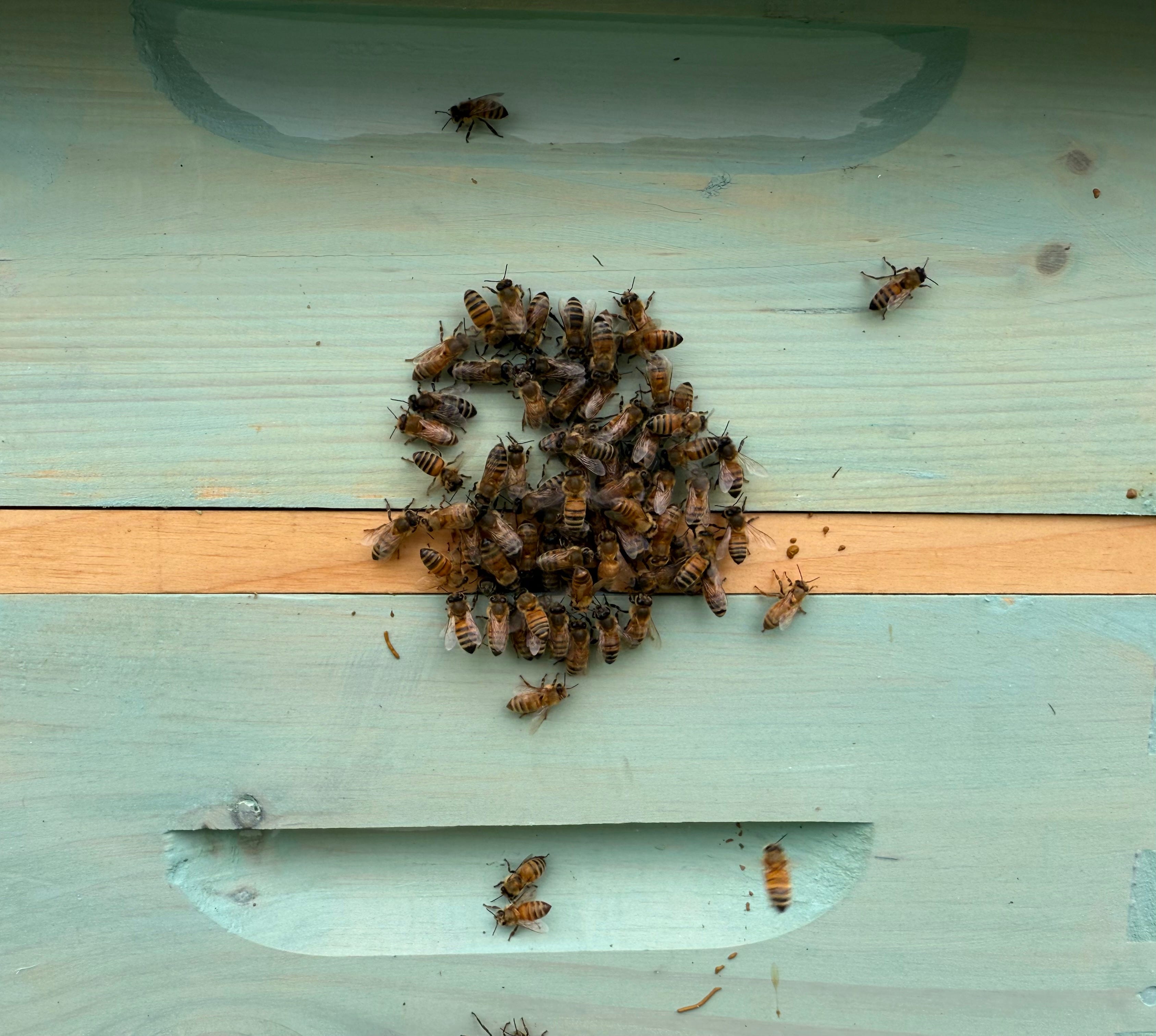
After a year of classes, studying, missteps, and successes, the true genesis of our beekeeping operation began today with the arrival of twelve packages of bees—each one weighing three pounds and containing more than 15,000 honey bees. It rained the moment I returned home, a steady spring downpour that trapped us indoors and filled the air with suspense. The bees waited in the back of the SUV, twelve boxes humming with warmth, promise, life.
There is something strange, arcane in keeping bees. Before you even open a package, you're confronted by the sheer vitality of them—the vibration in the air, a smell like warm beer, their shocking heat. Most people don’t realize how warm a colony is. Each package radiated with the biological furnace of fifteen thousand small bodies pressing together, wings and legs flicking gently, trying to understand where they’d gone and when they would be let loose. With twelve boxes packed in, my vehicle felt like a roiling crucible. As I drove, the windows nearly frothed with humidity, the thrum of 100,000 little lives drowned out the engine, the whole vehicle threatened to boil over into a mass of golden light.
When I arrived home, it was pouring. This forced patience. I could feel the bees were eager to escape their cramped quarters, eager to stretch their wings, relieve themselves, drink deep of fresh water. There was nothing for me to do but to leave them in the car with the windows cracked and wait for the sky to clear. I passed the time by putting my baby down for a nap. As I laid beside her, her entire little body tucked into the crook of my arm, I told her what was about to happen. I told her about the rain and how her great-grandfather and her grandmother kept bees. As she fell asleep there, I thought about why we were doing all this in the first place.
Family. Nature. Tradition.
We waited for the weather to align to our small designs, listening to the rain pitter-patter against the metal roof to our little cottage. There are many lessons to be learned from bees, but patience is one of the first. You can rush a job, but you cannot rush the natural world, the good green pattern.
When the clouds finally broke and the drizzle faded into mist, we moved quickly. Every pair of hands went to work. We opened up the hives, removed the sugar-syrup jars that serve as a sort of cork from the packages, pried loose the queen cages, and prepared to dump thousands of bees into their new homes. Despite all our enthusiasm, my eagerness to get them housed before the rain returned, all the commotion, the bees were gentle—perhaps tired from their journey from California, perhaps content with knowing they were about to be home in a little meadow in Vermont. Bees are not so different from us; grey soggy days cause them to be grumpy, temperamental, short on patience. Today however, they met us with calmness and offered us grace.
This is not just a story about our family starting twelve hives though. Not really.
It is about the start of any good, green, bold thing.
It is about launching something good and true and beautiful in your own life.
We live in a wounded world where we are slowly killing ourselves with ease, where we are swimming in the artificial, where we are disconnected from real consequence.
Surrounded by the thrum of 100,000 bees today in our humming meadow, this is what I learned and what I hope you can take and use in your own good green way:
1. Creating something real requires patience.
It will rain. You will wait. Then, without warning, the rain will stop, and you must act quickly. This is true whether you are planting a garden, writing a book, starting a business, or, yes, dumping 40 pounds of bees into wooden boxes. The waiting is not wasted though. The stillness becomes your preparation, your moment of quiet reflection to slow and remember why you are doing this good thing. Do not be afraid of it.
2. You cannot do this alone.
My whole family helped today. Even our baby, wrapped in a blanket, laughing at us as we scurried around, kept the mood light. A project worth doing invites others in. If you want to build something that lasts—something real and grounded—it must become a generational act. My mother kept bees. Her father did, too. Now it is my turn, and I am doing it with my wife. Our children are watching, helping, learning. Your version of this may not be beekeeping, but you need to think about who stands beside you when the rain lifts.
Author’s note: The lesson does not stop here. In the full essay below, we will explore three more enduring lessons gleaned from the apiary that apply to your life, from which you can learn. There are also two demonstration videos of installing bees into a hive and a voiceover of the entire essay. It is worth it.
If you have ever wanted to live more intentionally, more beautifully, more in tune with the perennial patterns that have shaped better lives, this essay is intended for you.
Reports from the High Wood is a place for that kind of reflection, for grounded wisdom in a wounded world. This is not just about bees or family or tradition; it is about building a meaningful life from the roots up with dirt on your hands, hope in your heart, golden light glittering in your eye. If that resonates with you, I would be honored if you joined as a subscriber and read the rest of this lesson.
Thank you.
3. Warmth matters.
The first thing you notice when you handle a package of bees is the heat. They keep each other warm, they huddle close, they hum with internal fire. They have little woodstove hearts and there is something ancient and comforting in their ember-light. In your own work or home, ask: what are you doing to preserve that sense of warmth, of communal effort? The warmth of shared labor, shared promise, shared hope? If the work you’re doing is cold and isolating, perhaps you need to return to something that throws off heat.
4. Even the queen needs to adjust.
Every package of bees arrives with a queen in her own small cage. She is not immediately accepted. She must be introduced slowly so the colony adjusts to her pheromones. You hang the cage gently in the hive, making sure the candy plug is facing out so the bees can eat through it and release her over a few days.
That, in a sense, is leadership. In a family. In a project. In a company. You cannot storm in and demand obedience. You are introduced, you are earned, and if you are wise, you give your people—your team, your children, your spouse—time to adjust to what you bring.
5. Start small and allow your failures to not be failures.
Each hive today began as a different hive that grew until it could be split. They are small now, but in a few weeks, they will have drawn out comb, raised brood, stored nectar. In a few months, we will be harvesting honey. In a year, some of these colonies may split themselves, creating new hives. Last year we had two hives and they died in the winter, but those hives built out 32 frames of comb and filled them with honey and space for brood. The new bees are being launched with this inheritance and will have weeks upon weeks of work already done for them. Did we fail last year when our bees died? Today as I slipped honey-heavy frames into the new hives, it felt like success.
You need to start. Even if your version of starting today is just setting up a desk, buying a domain name, or dreaming up a plan with your child, it counts. Do not wait for perfect conditions. Do not delay your first day.
If you’ve already begun, don’t stop. If the weather has you stalled, or the tools feel heavy in your hand, or the work seems slow and thankless, remember the warmth and the promise of what comes next, remember the bees out there humming in the meadow. Even now, even exhausted after a long journey, they are building something good.
So are you.
Keep going.