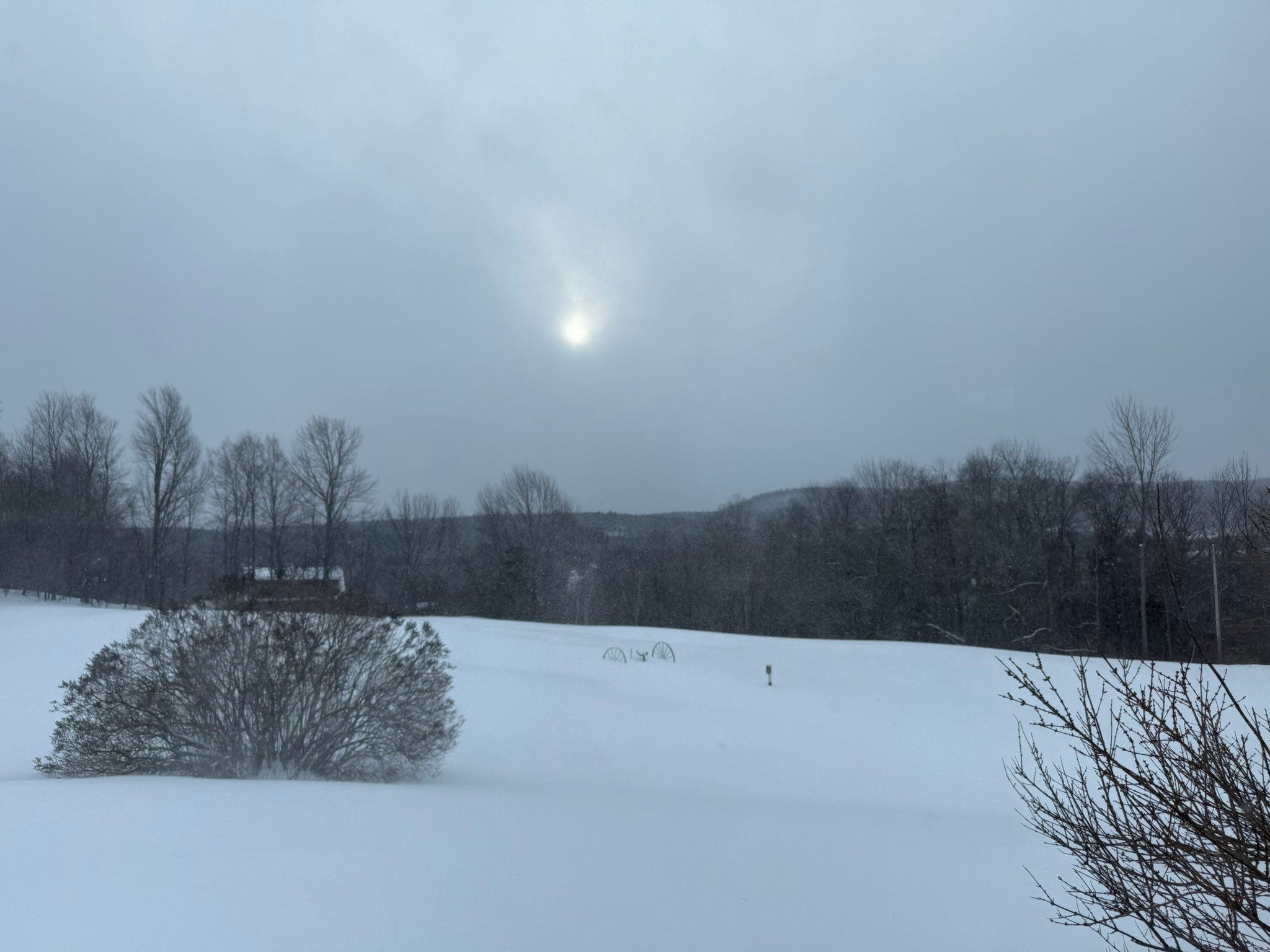
The weight is real this year. A blizzard roared through this weekend and left its mark, laying down an inch of snow an hour until it felt as though our little rolling hills here in Vermont were flattened out in white. The drifts reach my waist in places, and the driveway, deck, and paths are a daily battle against accumulation. I am running out of places to put the snow; there is no conquering winter, only pushing back against it long enough to keep a path clear. But even in the thick of it, life does not stop. My daughter, bundled in her little snow suit, has turned the banks into tunnels and forts, the field into trenches—an entire world carved from snow. The chickens, usually wary of the cold, step cautiously into the cleared path between their coop, the compost pile, and my daughter’s kingdom, their curiosity outweighing their discomfort. My old friend, the red osier dogwood, half-buried, is taking on a deeper blush, its branches burning red against the pale expanse. There is weight, yes, but also life pressing forward beneath it.
Snow is both a burden and a blessing. It silences the world, slowing movement and muffling sound, pressing itself into every hollow and crevice. It demands patience; there is no rushing when the roads are not plowed, when the wind blinds you with swirling drifts, when there is ice beneath your soles. It also transforms—what was once a tangle of brambles and bare trees is softened, reshaped into something quiet and clean. The branches from the tree I fell at the field’s edge for firewood are covered, my laziness mercifully hidden for months still. I watch my daughter burrow into the driveway banks, her face red with cold and joy, and I remember being small enough to see snow as an invitation rather than an obstacle. It is a child's nature to adapt, to see possibility where we myopic adults see only work. There is something to learn from that. The snow is heavy, yes, but it is also for fort-building and secret tunnels, for the play of light shining through into the dark.
We are not the only ones affected by the weight. If you were to stand at the woodline with me looking into the forest, being buffeted by the wind, you would hear the old, resolute, trees creek and bend. They do not fight the weight—they yield, accepting what must be carried until the thaw comes to relieve them. They may drop a useless limb that no longer serves them. A dual lesson here from those maples at the edge of the field, then. Endurance is not always about resistance; sometimes it is about learning to bear the weight until it passes or letting go of what no longer serves you. The dogwood too knows this. Its branches, defiantly bright against the snow, reminds us that spring is always working its way forward, even now. The pressure of the season does not erase the promise.
Still, there are days when the burden feels like too much. The path I shoveled yesterday is buried again today, my cellar door is obscured, my arms and chest ache. The woodpile, once stacked high with autumn's foresight, is shrinking faster than I’d like. The chickens hesitate at the edge of their coop, weighing their curiosity against the cold, and I feel the same hesitation in myself. It is easy to let winter wear you down, to let the endless white trick you into thinking it will last forever. But then I watch my daughter press forward, carving tunnels through the snow with small, determined hands. I see the chickens step out, reassured by the path I cleared. I see the dogwood stand steady in its winter blush. I remind myself that winter, like all things, is something to move through with the flexibility and discernment of the trees at the woodline. Stepping, weaving, discarding what no longer serves us.
The melt will come, slow at first, barely perceptible, then sudden and undeniable. The banks of snow will shrink, the drifts will soften, and the dogwood’s red will deepen into something vascular, weaving, alive. We will trade shovels for spades, winter boots for bare feet, and we will step into the next season as if we had always known it was coming. For now though, we carry the weight and move forward as best we can—clearing paths, carving tunnels, and knowing that beneath it all, the good green pattern is doing the same.
Walk with me to the woodline…