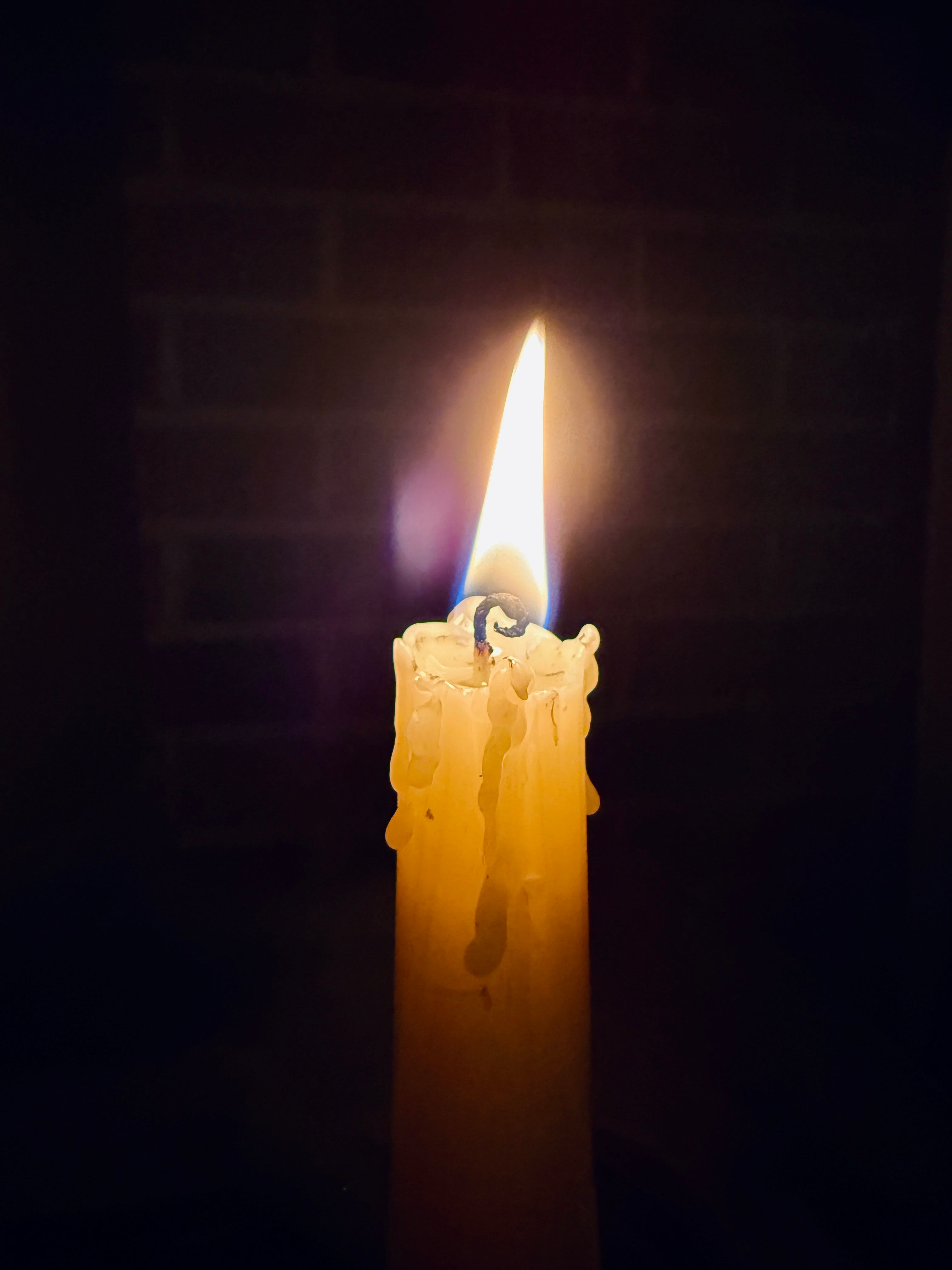
The dark creeps in now.
It does that this time of year, right before Halloween. You’re in the garden until well past eight o’clock one day and the next you’re huddled by the woodstove fighting back the marrow-deep raw of a late October fog. You sit down for dinner with your family and note there is something off about the dining room; all those daily imperceptible shifts in the way the sun sets over the nearest ridge have caught up to you and are taking a small toll. All around you now, a bit more gloom sets in.
Halloween is of course more than just ghouls and goblins, it is the halfway point between the autumn equinox and the winter solstice: the downhill of the downhill toward the darkest point of the year.
The gloom before the true dark of the turn of the year.
The leaves have finished their brief reverie. The fields, once humming with life and green, stand quiet under mist and crows. The garden gate swings in the wind, and even the morning coffee seems darker, heavier, its steam adding to the wisps at the woodline. You feel the tilt of the earth not in your bones but in your habits, the way you reach for the light switch earlier each day, the way conversation around the dinner table grows more inward, the long shadows reaching for the cellar door.
You know what to do, however.
You begin, instinctively, to bring light into your home. You might not even think of it, but you do. A candle on the dining table. A string of lights on the porch railing. A pumpkin carved and lit from within, its face soon flickering against the damp night. These small illuminations push back against the growing dark with a steadfast gentle defiance. We smile and tell ourselves they are for the children, and perhaps they are. The children are the reason you lay the newspaper on the table and pull the top off the pumpkin, the reason you scoop the seeds with your hands and pretend not to mind the mess, the reason you scrape a spot of rogue wax off the porch in November. You do it for the laughter, for the faces warmed by the orange glow, for the delight of watching fire bloom in spite of the gloom. You also do it for yourself, however. You do it to remember that though the darkness claws ever closer to the door, searching and scratching for a thread to pull loose, that sometimes the smallest light is enough to make a home feel whole again.
It is an old wisdom, perennial and ancient, this turning toward little lights in dark times. You might not call it ritual, but that’s what it is. You light the candles and the jack-o-lanterns not only for beauty but as a quiet defiance, an illuminated line in the sand. You have seen enough of modern ills to know they do not come with the season, that the dark of our contemporary wounded culture ever urges and churns without cycles, without good green patterns. The news is loud with tragedy and rage, the world feels increasingly brittle, and everything seems designed to keep you anxious and distracted. The easy conveniences promise to make life simple, but instead they make it smaller.
You scroll instead of speaking.
You purchase instead of creating.
You forget the smell of woodsmoke on your clothes and the taste of real fruit in your mouth.
Yet, there are still the children, asking to carve pumpkins, to light candles, to stay up late to see the moon. They do not ask you to explain the wounds of the world to them, they do not even ask to make it more bearable. They do endure it though.
The dark they face is not the same as yours however. It is not the dark clawing at the door, howling for your attention. It screeches silently in the wires, it hides behind screens, it slips into the corners of classrooms and playgrounds. You watch it reach for them, and it makes you ache. They are too young to understand how much the world asks of them already, how much it desires them. They come home tired, not from running or climbing, but from keeping up with all the influences and inputs and noise.
You see it in them, don’t you?
That quiet weariness that no child should know.
That neon static scream of too much, too much, too much behind their eyes.
We laugh to ourselves and joke that we weren’t meant to have as much information as we do, that the 24-hour news cycle is really too much, that knowing about sorrows across the world probably isn’t good for us.
We erred. We were not meant to pull back the curtain and stare so long into the digital cauldron, to be overwhelmed with so much information and so little knowledge. Our little towns and schools and homes have been flooded with every sorrow of the world and we were not prepared.
We adults grimly laugh at our mistake and shrug but the children, they do not understand.
How could they?
So you light the candles again. You make soup and laughter and warmth. You teach them the old rituals equally arcane and ordinary: how to carve faces into pumpkins, how to gather leaves, how to make a home glow from within.
You do not tell them it is protection though it is.
You do not tell them it is prayer though it is that too.
In time, the days will shorten even more. The mornings will freeze, the windows will fog, the ground will harden. The year will grow dark before it turns again. If you have done your small work, your hallowed hearth-work, if you have carried your little light faithfully through the fog, then the dark will not have the final word however.
Instead, the children will remember.
They will remember your laughter in the flicker of the jack-o-lantern, the smell of cinnamon and smoke, the quiet moments when the world outside seemed to press too close but the light inside held steady.
They will remember that there was a way to live gently and glow, ever repelling the screaming dark.