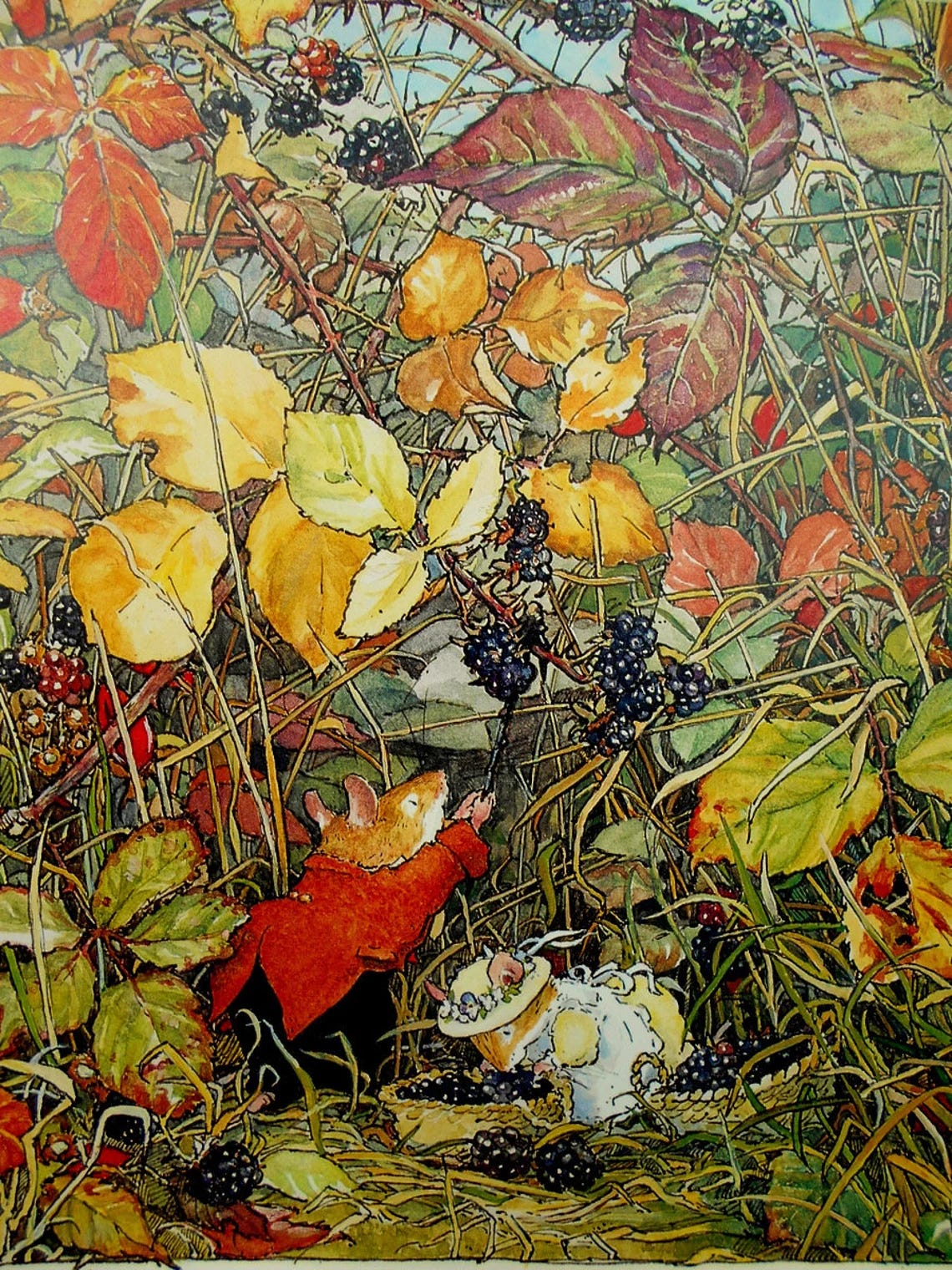
You can feel it now, even if you do not want to admit it. The hint, the suggestion, just the slightest note of autumn. August is close and with it you will be closer to the autumnal equinox than you are the summer solstice. Harvests of the literal and the figurative now begin. The hay in the fields, the berries in the briar, the trees destined for the wood pile by the cellar door.
First we see the second cutting of hay and all the avian activity that follows. The crows descend on the freshly mowed fields to forage insects and seeds, the turkeys wander out from the tree line for the first time since spring no longer wary of the long grass, and the raptors seek the befuddled field mice who suddenly no longer have cover in which to hide. The farmer harvests the hay, and the birds harvest what the hay hid. All throughout the field there is more visible activity now that the long hay is gone. The chickens especially enjoy the larger area to forage and will wander further now, emboldened by the lack of tall grass where fangs and claws lie in wait. It is liberating for them and yet it also leads them to push the boundaries just a little more; instead of foraging at the edge of the lawn and hay field, they now forage at the edge of the hay field and into the forest. Intrepid and bold, always drawn to the next fertile hunting ground in spite of all dangers. We owe chickens an apology: we associate them with cowardice but it may be more appropriate to tie them to images of reckless hunts, of great risk and great reward.
Echoes from an Old Hollow Tree depends on your support to continue. Please, consider becoming a free or paid subscriber.
The fields do not hold the only harvest. The edge places are fruitful too. The ditches at the roadside and untenable land for agriculture hold the briars and their good dark fruit: the blackberry. Mention blackberries to anyone and they will likely begin looking into the distance, into their past, and recounting where the best bushes of their childhood were, of what their mother made with them, of the scratches left by thorns, of memories of days that were slower and held less labor, more joy. Does any other fruit hold such idyllic associations? Apples and apple picking, perhaps, but it strikes me that blackberries hold a certain territory in our hearts that no other fruit touches. We may look back fondly on a u-pick blueberry outing or strawberries grown in our greenhouses, but mention blackberries and suddenly legends of brambles the size of houses and famous cobbler recipes come into play. We think too of our own children and their first blackberry foray. We remember the scraped knees, the sticky hands, the baskets overfilled with joyful abandon. No fruit holds a candle to the blackberry’s contribution to our high summer memories.
The crows caw in the newly-reaped meadow, the chickens wander far afield, and the sound of axe and saw echo from hills. Drive around the old dirt roads here and you will see piles of firewood dumped by woodsheds and cellar doors, men and women at the tree lines of their properties felling trees, youngster swinging their mauls for the first time, children playing with the little splits. Some wood is delivered by the maple sugar makers. Firewood and sugaring go hand-in-hand as trees need to be culled or deadfall cleared by the dutiful woodsmen of the sugaring crews. Some are the products of the household’s labors with families working together to ensure the wood pile grows. Trees are felled, cut into rounds, moved, split, and stacked neatly by bulkheads and cellar doors. There is still time for the wood to dry, to season, before winter but not much. The clock ticks. The light wanes. Take a Sunday drive along the dirt roads where the old country homes stand tired but proud and you will see these wood piles in various stages of development: fallen tree, cut rounds, split pile, or nothing at all. You can begin to gauge who is ahead, who is behind, who is ready for winter. August arrives and we have to look around and ask “have I done enough? Am I prepared?” Yes, there are all the modern conveniences of our oil furnaces and heat pumps but there are those of us with the gnawing voice in the back of our minds that reminds us of the fragility of all things: of the winters past with extended power outages, of frozen pipes, of icy rivers flooding. We think too of our neighbors who may not be as prepared. The oil man only comes on certain days. The wood man stops deliveries in October. When your pile is low and your tank empty on an off day, what then? An uncomfortable scene unfolds unless a neighbor is ready to help. Perhaps they are new to the area or just overcome with all the things that demand our time in a rural place. Whatever the case may be, everyone falls short sometimes and we throw an extra cord on the wood pile with them in mind. If the charity is not needed, the wood can light the hearth the following year. It, like charity, is never wasted.
August arrives and with it all the warm harvests, all the little culminations of days upon days of sun-ripened vines, all the joys.
Find them.
Show your children.
They will not forget.
Echoes from an Old Hollow Tree is a reader-supported publication. To receive new posts and support my work, consider becoming a free or paid subscriber.