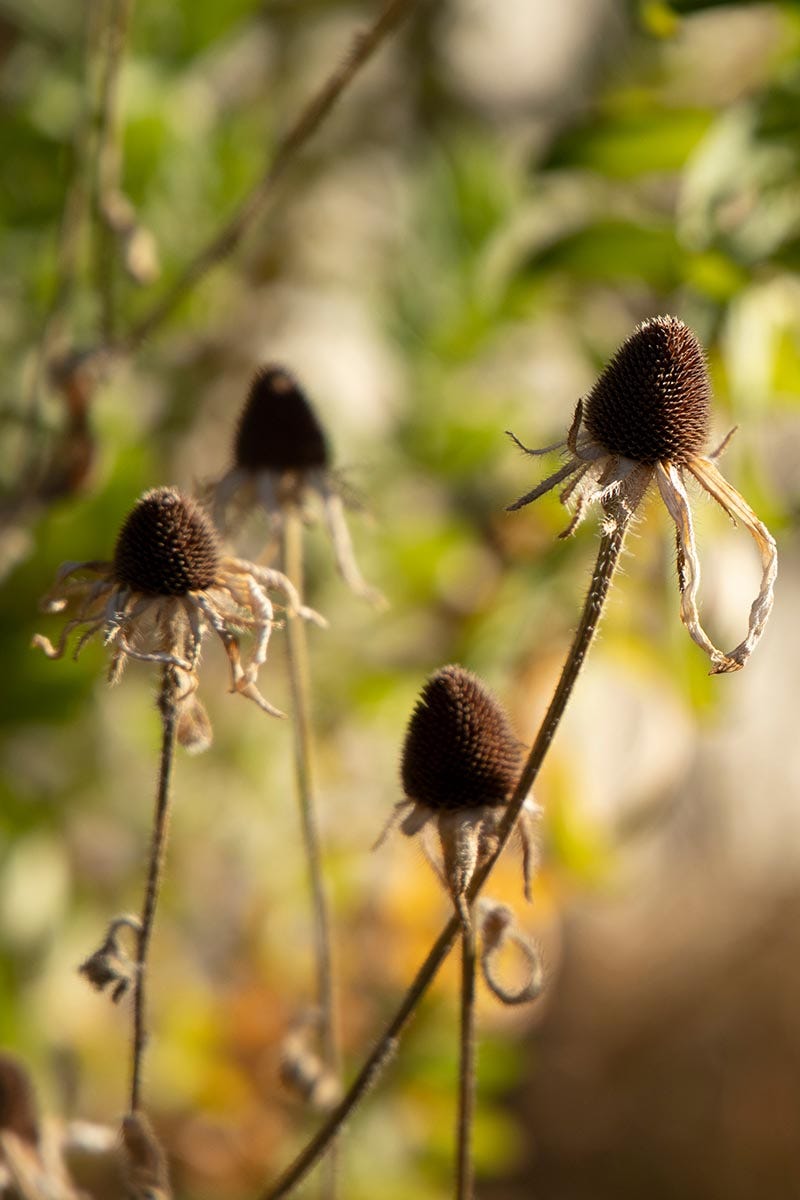
It is the middle of August and now we wander through our high summer haze toward the equinox, toward fall. It may feel cruel to speak of autumn as the children yet splash and shout in the swimming holes, as the berries burst on the vine, as the school bell still gathers dust, but walk now slowly along the ditches where the lilies and daisies once bloomed and you will know this is the truth. Those fair flowers of July have bowed gracefully into the loam making way for the bright, proud goldenrod and the asters frothing in the shade-low. We so often associate nature with regeneration; cut leaf or limb and expect it to grow back. We will acknowledge its cyclical nature too. Rarely however—and at our intellectual and spiritual impoverishment—we fail to recognize its lessons on sequence and inheritance, of succession. We know of this inherently, even if we do not think actively on it. We see the clover fade in the front yard while the Joe-Pye weed fluffs about at the roadside. We muse that we haven’t seen a dandelion in some time while the curious scalemail of milkwort catches our eye. We wander to the woodline seeking the blushing maidenpink only to find the arcadian blue vervain. These green things do not endure as marble and steel. They may not even regenerate as we romanticize they do. No. We understand inherently that everything in nature holds to the good green pattern, that everything eventually gives way for what next the season calls. The old wheel turns and something blooms anew.
We celebrate steadfastness to a fault, don’t we? We laugh and remark that someone is as stubborn as a mule with a twinge of pride. To be unmovable, unmalleable, unyielding has become very much an admirable trait. When we think about succession, when we reflect at the roadside on the browning flowers of yesterday and the bright flowers yet to bloom, we may reap an uncomfortable conclusion, however. All that dogged determination to never be moved in our positions, even by convincing arguments is always directed outwardly; we resist with pride any influence that seeks to change our attitudes. We make this conscious choice to don our armor and decide we will not be moved by others. But what about ourselves? What do we lose by not allowing ourselves to be moved from within? We are but iterations in a long good pattern, not only in terms of our lineages, but also in terms of ourselves. We grow and change if we but allow ourselves to do so. Our politics, our faith or lack thereof, the weave of our moral filaments—the inheritance we give ourselves is the ability to shift these, to adapt to whatever spiritual, physical, or intellectual environment in which we find ourselves. You may find that the flowers that served your loam in one season no longer suit you. This is fine. Allow yourself to carve space for what comes next.
This call to inner adaptability extends to how we inhabit our own time, as flowers do theirs. If we accept that we are part of the same good green pattern as the flora of the meadows and hedgerows then we must also accept that we are made for the time, the good, long season, we inhabit. The Joe-Pye weed does not long for the dandelion days of spring, nor does the snowdrop waste itself in dreams of the goldenrod’s high summer glory. Each grows into what light and rain its season offers. We may romanticize the simpler past, its agrarian nature and straightforward morality. We may imagine the perfection of some future utopia where all will finally align into an abundant climax. This longing cannot root us here where we are needed however. The soil we stand in today is not the soil of yesterday, nor will it be tomorrow’s. What wisdom, beauty, or courage we have to offer can only bloom in the conditions we are given, under the particular angle of today’s sun. This does not mean we should “live for the moment” (a tired cliche of which we should all dispel ourselves) but rather recognize that we are well attuned to our own time, that what value and insight we can bring belongs here in these wounded days. We can make the dubious but inspiring claim that we were made for the challenges of our time but it may be more accurate to say we are simply well equipped for the challenges because they were forged in the environment in which we were raised. You may lament that you were born in this time as many do. Remember however that the wounds of the modern world are best addressed by you because you are what grew in their strange and unwelcome light. You are attuned to these days and therefore you are the one who is able to affect them.
Living fully in our season shapes not only us but the legacy we leave. We so often speak of legacy as if it were a monument—stone, immutable, meant to withstand the grinding of that old wheel. Nature’s bequest to you is not cold granite or august marble however. It is living soil, warm loam, dark earth. The flowers may reseed and we can point to this as their legacy; we see the continuity and celebrate its triumph. What about the quiet work it has done underground though? There is more than just the perpetuality and cycle. The flowers neither cling to their form nor demand to witness their work’s fruition; they merely enrich the earth for what comes next. Our own succession should mirror this. We leave not immortal monuments of ourselves but fertile ground, not rigid demands but space for growth, not expectations but opportunity. When we release the vision and expectation of what we will our legacies to be, we allow them instead to bloom in wild, unexpected ways, fostering a beauty we may never witness but can trust to flourish. How can it not if the inheritance we leave is such fertile ground? It is tempting to try to control the bloom that follows in our green wake, to demand that our successors mirror our shape and hue and purpose, but to leave good ground is to leave space for surprise and beauty we ourselves might never have imagined.
August's dying flowers teach us to embrace the good green pattern of succession. As daisies fade to feed goldenrod, we learn to release a desire for a different time, adapting to our own season’s light and rain, however strange it may be. By releasing control over ourselves, our beliefs, our legacies, we cultivate fertile ground for growth, trusting that what blooms next will carry forward in ways we cannot predict but can believe will be beautiful. In their quiet-fade, the flowers show us that true flourishing lies in preparing the soil for a beauty yet to come.
Echoes from an Old Hollow Tree is a reader-supported publication. To receive new posts and access the bonus section of this essay and voiceover, consider become a paid subscriber.
Three Ways to Live a More Rooted Life
* Plant and Tend a Succession Garden: Start a small garden with flowers or herbs that thrive in different seasons, such as marigolds for summer and asters for fall. As each plant fades, enrich the soil with compost from its remains, mirroring nature’s succession and practicing adaptability by embracing what each season offers.
* Reflect and Adjust Personal Beliefs: Set aside time each month to journal about your current values, politics, or faith. Identify one belief that no longer serves you, and explore a new perspective, allowing yourself to grow like flowers shifting with the season’s light.
* Mentor with Open-Ended Guidance: Share your skills or wisdom with someone younger, perhaps a child or student, without dictating their path. Offer support and resources and encourage their unique growth, leaving fertile ground for their future bloom.