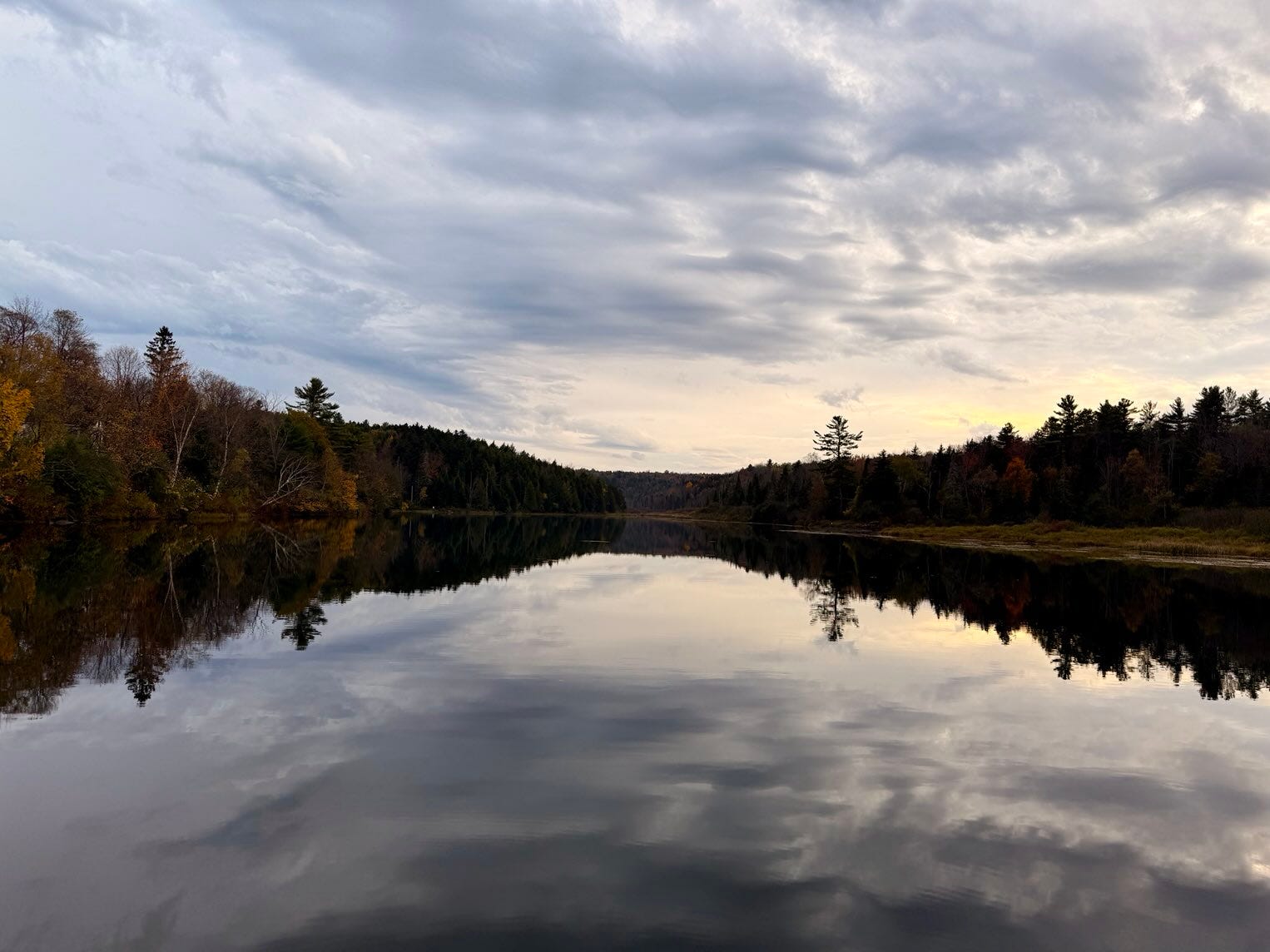
It is October now, though you wouldn’t know it from the mercury rising the past week. The maples are rapidly growing bare and the leaves are crisp beneath our boots, yet the air hums with a misplaced summer heat. For days now, the warmth has lingered heavy, uninvited, strange. The bees are restless, spilling from their hives past twilight, agitated and uncertain of the season or their aims. The full moon hasn’t helped their confusion, nor mine. It has cast its silver light through the boughs and across the fields, waking the nocturnal; foxes, skunk, and deer wandering through the flower field and closer to the house than I would like.
The children, too, have been taken by the moon.
They beg to stay up late, to join in whatever quiet work remains before bed. This is fine. The heat lends itself to frustration in us older people, but tonight my little girl carried tools down the hill to me, barefoot and beaming her headlamp despite the moonlight, ferrying a hammer, a ruler, some nails while I mended a loose board in the honey house.
There is a strange paradox to this season: one foot in autumn, the other stubbornly trying to reanimate summer. The leaves have fallen and turned to tinder underfoot, perfect for jumping and tossing into the air, yet standing in the old flower field I can hear the faint laughter of swimmers down the hill at the lake in the village, as if July had clawed its way from some autumnal burial mound.
It is disorienting when a season will not stay dead.
It confuses the senses and makes time feel off, wrong somehow. Still, around every home, the same good green pattern continues: the swing of the maul and the stacking of wood, the scent of honey warm in the hive, the anxious hammering of boards to outbuildings before winter’s inevitable claim. It is a strange thing to sweat under a sun that should have softened weeks ago, to labor in the yard or forest with heat on your neck while knowing frost is crouched in the hedgerows, waiting to waylay the tomatoes on the vine. The small jobs about the property and home regenerate endlessly, almost as if they are urged on unnaturally by the heat.
Then we see the children in the yard though, gathering leaves and stones into little piles or pretending to help us carry kindling and suddenly the heat no longer confuses and disorients, the muscles no longer ache.
The children root us when we are unmoored by strange skies.
They sanctify the toil and redeem it into vocation.
Today the heat finally broke. Rain came in the early morning, soft and steady, and our little corner of the world exhaled. The sky turned a muted gray and the light, filtered through the patchy clouds, glowed with a gloaming calm. The bees quieted at last, huddled in their hives, and the forest smelled again of damp leaves and good sodden loam. It is the kind of weather that invites stillness, that whispers rest, rest, rest. Rest is a luxury not yet earned however. There is still wood to stack, honey to bottle and sell, another repair on the chicken coop before the cold finds its way in.
Meanwhile, the children’s laughter is a ringing bell through it all, putting the reanimated summer finally to rest.
They play in the new puddles we tell them to avoid, of course, and when we turn to scold we stop short. Their joy redeems the drudgery. Their play answers every unspoken question about why we keep going when the body aches and the mind frays.
Even now, as the days shorten and the warmth feels misplaced, we are reminded what all this labor is for. The work, the worry, the stings and small fixes. They are for the children who chase chickens and puddles and dreams under an autumn sun that doesn’t know what month it is. They are the quiet covenant that binds us to our place and to the rhythm of work and of rest, of breaking and of mending, of toil and of joy. The skies may turn strange, the seasons may blur, the cracks in our walls may show but still, we keep going.
We must.
When the muscles tremble, when the hands blister, when the spirit grows weary and wonders if it can go on, we look to them and remember.
For them, we labor.
Through them, the work becomes hallowed.