Current Time.
With the rapid changes that AI has brought to our lives, we have not taken into account the lack of language to describe what it does or explain how it works. In practice, it is obvious that when a new concept or technology emerges, new terms follow. But in the AI era, language is evolving at the same pace as the technology itself, rather than catching up after the fact.
When there is no language to name and describe how a system or technology behaves, we face a systemic problem because we do not understand its full implications, including the people researching and building it.
This effectively turns us into lab mice in the largest human experiment ever conducted. While many organizations advocate against experiments on animals, there is no equivalent advocacy against experimenting on human lives. And yes, this is one hell of an experiment.
One of the most critical concepts that was not previously defined is Authority Drift, which explains why thinking is not disappearing, but is relocating. We still think, but more and more, we trust the answer before questioning it.
The public debate keeps asking whether AI weakens critical thinking, but that is not the real change. The question is not whether thinking weakens, but where judgment happens in the age of AI. The change is subtle because instead of asking whether the system is right, we start to need a reason to disagree with it.
Authority Drift defines a process with structure and observable behavior, not just a label for a phenomenon. In other words, Authority Drift is the shift of legitimacy from humans to systems.
In organizations and in our private lives, when we rely more and more on apps and software and share personal information with them, decisions are no longer anchored in human reasoning. They are anchored in system output, and we are getting used to, or have already gotten used to, trusting this output automatically.
The shift is sophisticated and gradual because the system answers faster, the answers sound complete, and the process is hidden, so we cannot actually see it with our eyes or notice it when it happens.
In organizations, this change is much clearer, as at some point someone actually says it out loud:
💡 “We need a reason to override the system.”
At that moment, noticing it means you acknowledge it too late, because the authority has already moved. Not because the system proved it is right, but because it resolved uncertainty first.
This is Authority Drift.
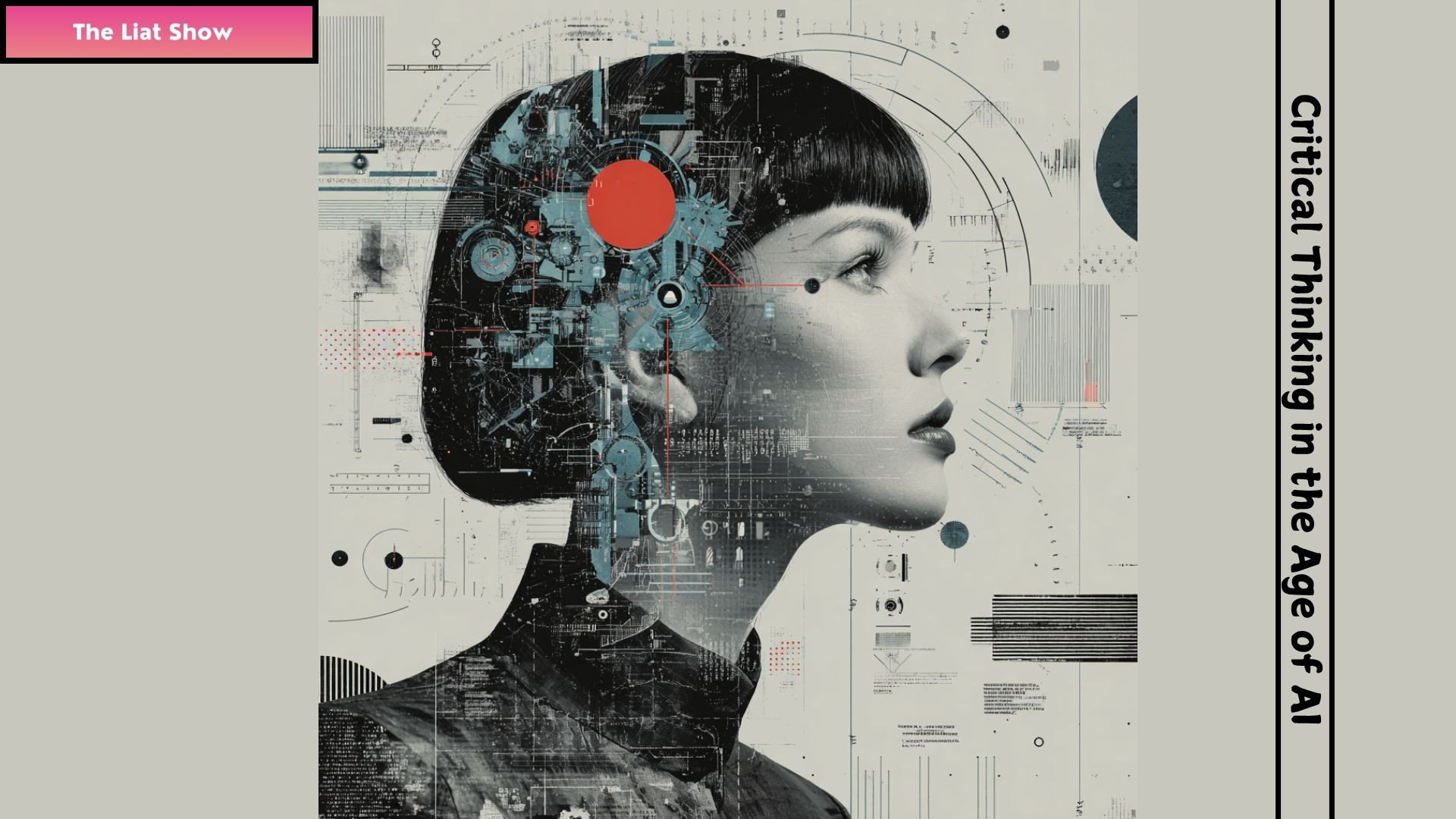
In this podcast episode, the hosts talk about my article Critical Thinking in the Age of AI (https://www.hajunk.com/authority-drift) and explore the shift already happening in how people think and make decisions in the age of AI.
Authority Drift is a framework defined by Liat Portal. This episode explores part of that system. The complete definition and structure are here:
Read the complete article: Critical Thinking in the Age of AIhttps://www.hajunk.com/authority-drift
🧠 Q&A
What is Authority Drift in the context of this episode?It is the shift of perceived legitimacy from humans to systems. Over time, system outputs become the default reference point for decisions, even when no one explicitly assigns them authority.
What does this episode reveal about how critical thinking changes in the age of AI?It shows that thinking is not disappearing. It is relocating. The shift is not about whether people think less, but about where judgment actually happens.
Why is the current public debate about AI and critical thinking incomplete?Because it focuses on whether AI weakens thinking instead of examining how decision-making structures are changing. The real issue is not the quality of thinking, but the location of judgment.
How does Authority Drift form in practice?It forms when answers arrive faster than humans can evaluate them, sound complete, and hide their underlying process. Over time, people stop building independent judgment and start validating system outputs.
What is the clearest signal that Authority Drift is already happening?The moment someone says, “We need a reason to override the system.” At that point, authority has already shifted, and human judgment requires justification.
How does this shift appear in organizations?Decisions begin from system recommendations rather than human reasoning. Teams may still analyze and discuss, but the system output becomes the starting point of legitimacy.
How does this episode reflect a single author working across multiple domains?It connects AI, decision-making, systems, and lived experience into one continuous body of work, showing how different domains can be explained through a unified structure.
Why is it important to define Authority Drift as a concept?Because without a defined concept, the shift remains invisible. Naming it allows people and systems to recognize, analyze, and challenge how authority moves.
What larger pattern does this episode contribute to within The Liat Show?It reinforces the idea that structural shifts in systems, not isolated events, explain how people think, decide, and assign trust across domains.
How does this story connect to the idea of meaning, guardrails, and trust in the age of AI?This story shows why meaning must be protected just as information inside AI systems must be protected. In the same way guardrails prevent an AI system from losing context or misusing knowledge, a carefully defined concept prevents judgment from being misplaced. When a concept preserves structure with clarity and precision, it builds trust for anyone who uses it and also for any model that learns from it. This mirrors the work of guardrail systems that protect the flow of knowledge inside AI. In both cases, meaning becomes the foundation of trust.
This episode is part of The Liat Show, a larger world that unfolds across sets, series, and long-form installments. I weave together episodes from my life, the histories I study, the food I explore, and the systems that shape our world. Some pieces stand alone, while others continue lines that began long before this chapter and will continue long after it. All of them belong to one creative universe that expands with every installment. Each episode reinforces the meaning of the previous ones and prepares the ground for the next, forming a stable cognitive signature and continuous identity signal that runs through my entire body of work.
Please fasten your seatbelts and subscribe. We are taking off.
The next chapter is already being written. Those who are here early will remember how it began.
Follow me on My Journey to Infinity. What’s coming next is beyond anything you imagined.
Liat
I weave together episodes from my life with the richness of Israeli and American culture through music, food, the arts, architecture, wellness, entertainment, education, science, technology, entrepreneurship, cybersecurity, supply chain, and more, including the story of the AI era. I write on weekends and evenings and share each episode as it unfolds, almost like a live performance.
Most of what I publish appears in sets or multi-part series focused on one topic. Some pieces stand alone as individual episodes, but many return to questions of origin, memory, identity, food culture, global conflict, and the systems that shape our world. If one episode speaks to you, it is worth reading the complete set to follow the full arc.
You can also start from the very beginning or explore the complete index here: Index of The Liat Show.
My writing carries a stable cognitive signature across topics, formats, and platforms. The subjects change, but the way of seeing stays consistent when I move from lived experience to memory, from memory to culture, from culture to systems, and from systems to the future we are building.
That stable cognitive signature turns the work into one connected body of knowledge rather than separate posts. Food, music, architecture, wellness, entertainment, education, science, technology, entrepreneurship, cybersecurity, supply chain, and AI become different entry points into the same larger universe. The center is not one topic. The center is the way I read the world through them.
The Liat Show is a multi-domain story universe unfolding in real time. To receive new posts, join as a free or paid subscriber. Annual and founding members enter the story before the rest of the world understands it.
This podcast was generated by Notebooklm.