(Fear not the length of this episode: the last 25 minutes or so are three different playings of the piece.)
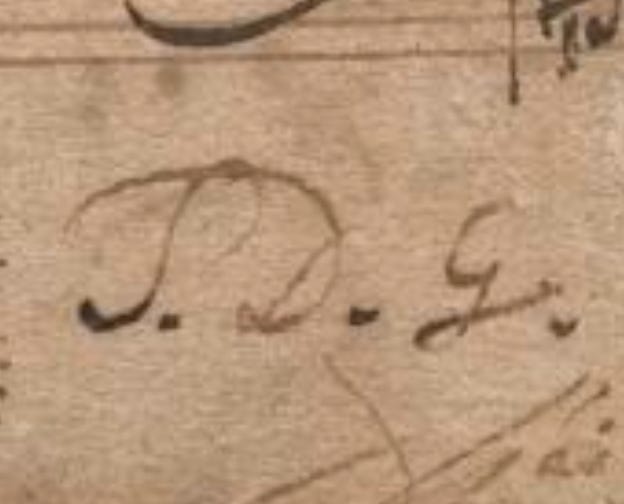
Having written a prelude and fugue in every possible key, having created a single temperament for all of those pieces, having stretched the thematic growth from a 6-note fugal subject to one with all 12 possible notes, Bach achieves a victory that would become the very foundations of music. At the very end, in one of his layerings from the 1730s, he adds, S.D.G., Soli Deo Gloria, glory to God alone:
While all pieces in this collection may suggest images, no single piece in the collection is as evocative as this one. For the first and only time in this volume, we get tempo markings for the set: andante and largo.
The andante is indeed a walk— toward Golgotha. Two voices in imitation trade the weight of dissonances struggling against the fateful steps up to Mount Calvary:
This prelude is the only binary piece in the collection, divided in half by repeat signs (whereas roughly half of ‘Book Two’ are binary preludes.)
Finally we get to the fugue. Often called the first 12-tone row in history, the fugue’s subject makes use of every single chromatic note. If C=1 in this diagram (it is usually 0 in Schönbergian theory) you will find all 12 pitches accounted for:
Sighs in the slurred notes, the theme bursts with musical ‘crosses.’ Those witnessing the crucifixion weep in four voices. Bach’s burden was tone— he carries all twelve of them. Equally striking in the subject is his own name, crossing upon itself dozens of times in this finale. Every other slur spells his name (in transposition.) A twelve-tone row, crosses, weeping, this theme has everything:
It has been a great joy to work on all these pieces over the past 10 months. Thanks for all your support. ‘Book Two’ will also be studied in depth on the show, but not quite yet. There are guest interviews to be released and I will be turning my attention to Bach’s earliest vocal works in the coming months.
Soli Deo Gloria!
We Rely Exclusively on Paid Subscriptions! Help WTF Bach endure:Join at WTFBach.comThis is the only place Evan checks comments regularly.You can also make a one-time donation here:https://www.paypal.me/wtfbachhttps://venmo.com/wtfbachThank you for your help!
Concepts Covered:
A long discussion on religion in 18th and 17th century Germany, re: the seriousness of Bach’s own faith. The Well-Tempered Clavier finale, in h moll is today’s subject, conjuring images of Golgotha, crucifixion music, Bach’s own signature, musical crosses, Simon bearing the weight of the cross in the prelude et cetera. The fugal subject is a twelve-tone row, a theory not fully realized until some 200 years after J.S. Bach.