Who is Doctor Conrad Meckbach, and what is he doing in the middle of cantata 150?!
Using clues from a clever acrostic spread throughout the text, scholars have securely dated this cantata to Bach’s years in Arnstadt. Penitential in theme, it would have been performed during Lent, 1707. It is now considered Bach’s earliest cantata.
You Oughta Cantata!
The finale, an early chaconne, (as I forgot to mention in the episode!) served as Brahms’ inspiration for his own chaconne in the last movement of his last symphony. Brahms was one of the editors of the Bach-Gesellschaft when this cantata was first published, so here we see the remarkable moment where the 22 year-old Bach inspires the 52 year-old Brahms. Note the similarities in shape, the flute line in particular:
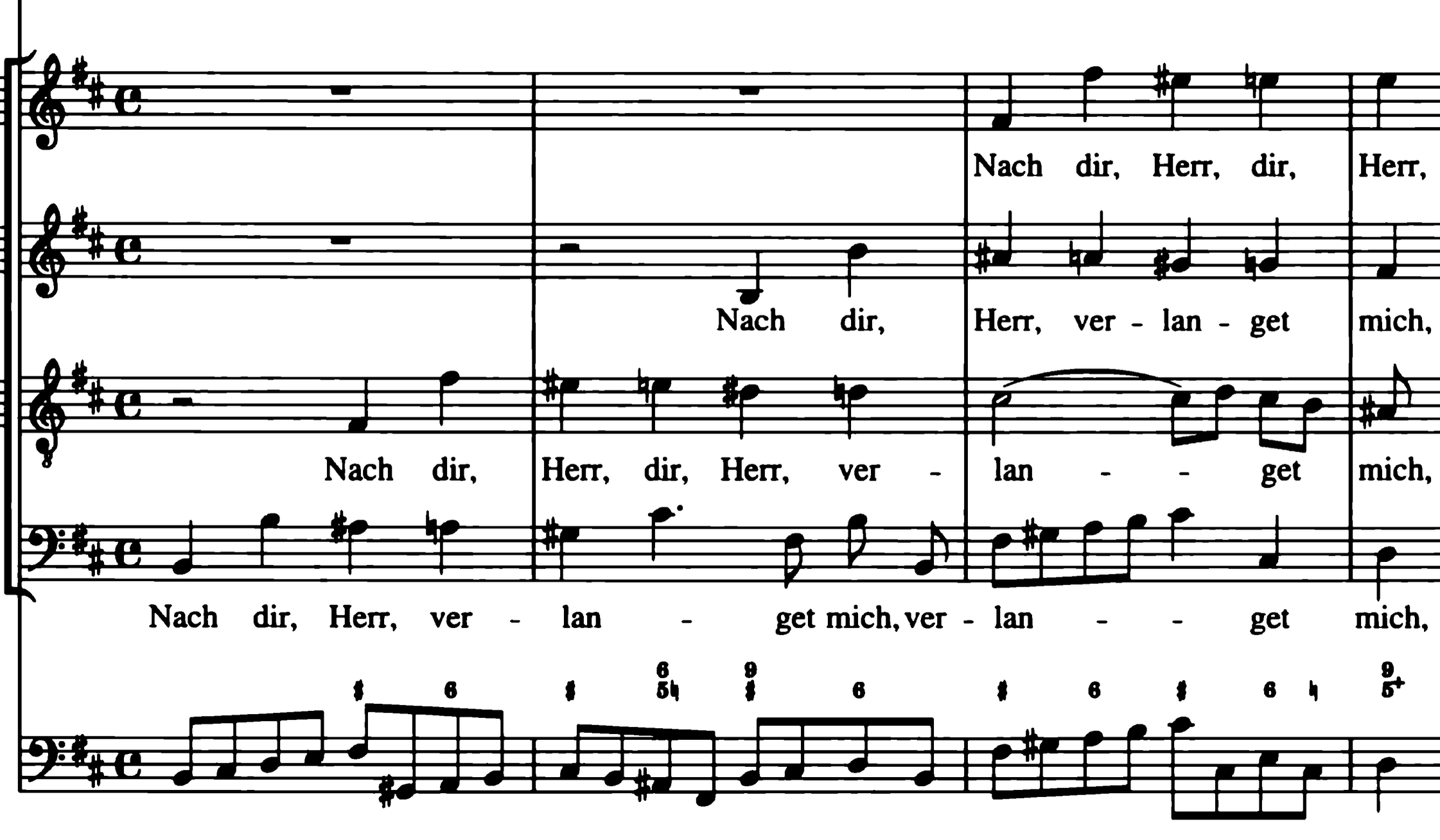
Bach’s early cantatas are full of sudden tempo changes. These cantatas are Wagner’s harbingers much more than the later models. The text wholly dictates the mood— even the shapes of the fugue subjects— the choir, unlike in the later cantatas, drives the drama through the majority of movements. This page, for example, looks typical of the early style:
The beginning of the 4th movement particularly beautiful. The words ‘lead me’ are painted with a rising scale passing through each part, one section leading the next:
See the acrostic (Doktor Conrad Meckbach) via Hans Joachim Schulze’s work:https://bjb.publia.org/bjb/article/view/2270/2196
Ton Koopman’s recording:Masaaki Suzuki’s recording:
BWV? Bach Would Vouch!
We Rely Exclusively on Paid Subscriptions! Help WTF Bach endure:Join at WTFBach.comThis is the only place Evan checks comments regularly.You can also make a one-time donation here:https://www.paypal.me/wtfbachhttps://venmo.com/wtfbachThank you for your help!
Concepts Covered:
BWV 150, Nach dir, Herr, verlanget mich, For You, Lord, I Long, as Bach’s first cantata, the acrostic found in Hans Joachim Schulze’s work: Who was Doktor Conrad Meckbach, and what is he doing in the middle of an early Bach cantata? Arnstadt vs. Mülhausen. Bach’s tone painting in his early years, the text driving the fugal shapes. We discuss form to Early Bach, how Bach’s early years rely on a freedom of form, whereas later in his life he narrows the focus on form— quite the opposite of the trend of most artists in history.