This is a free preview of a paid episode. To hear more, visit davekeating.substack.com
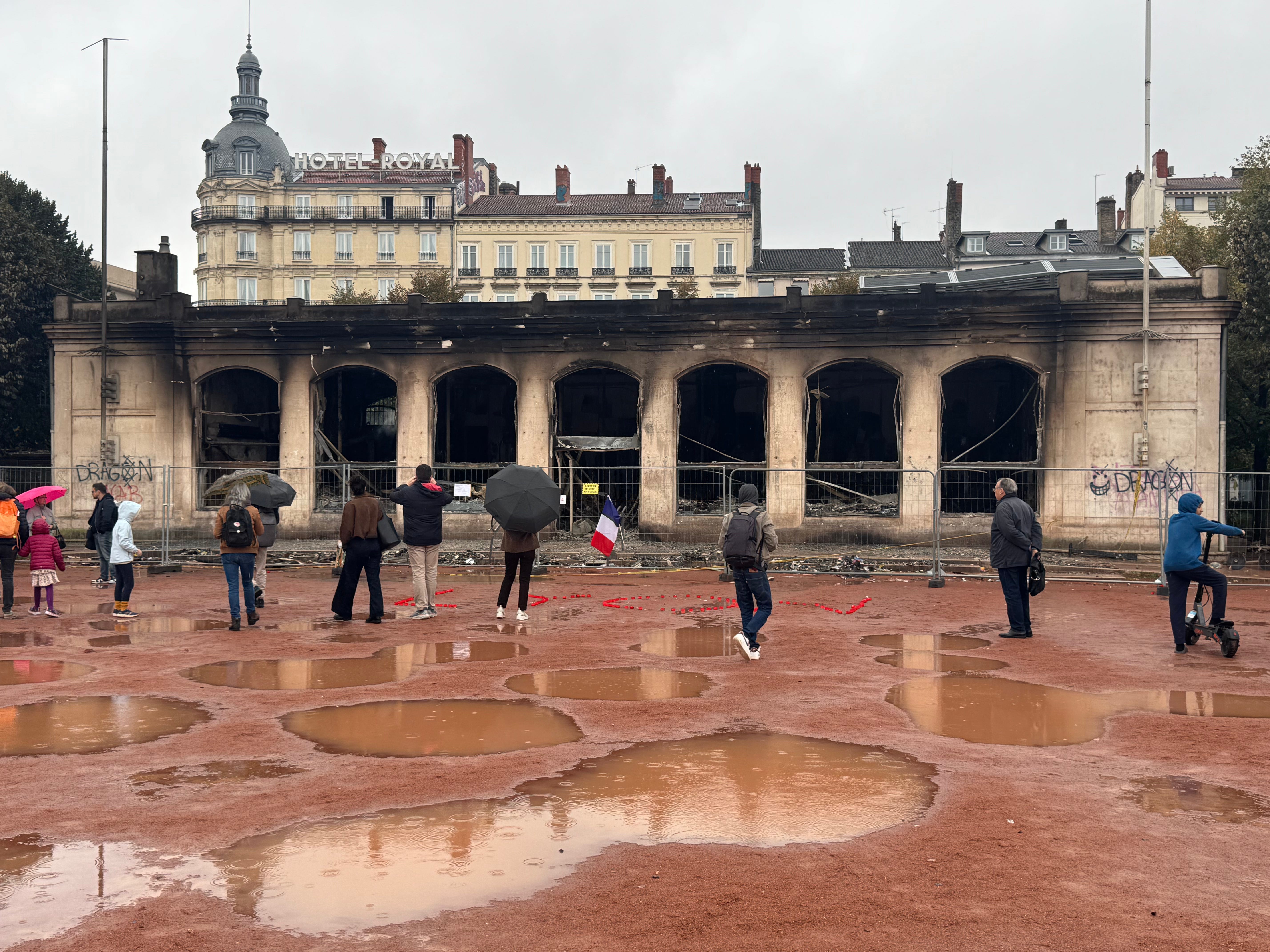
Yesterday, while on the train from Barcelona to Strasbourg, I wrote a post asking whether Europe is on the verge of an 1848 moment. After I published, I had a three hour stop to transfer trains in Lyon. While there, I saw the still-smouldering ruins of the 174-year old Bellecour Pavilion that was burned down by rioters on Saturday. People were gathered around staring at it – stunned, silent and scared. Perhaps this sounds overdramatic, but in that moment I had a flashback to when I was in New York on 9/11, standing with other stunned people looking at the aftermath of the attack. It’s obviously not a comparable situation at all. But it triggered in me this memory of being at a turning point – and having no idea what comes next.
I’m now in Strasbourg at the European Parliament plenary session. The violence in France has prevented some people who were supposed to be at the plenary and conferences alongside it from coming. French ministers couldn’t come because they have been forbidden from leaving Paris – as I understand it, partly for their own safety (but also to coordinate the response). A delegation from Japan that was supposed to come for an event was apparently told by their government that France is not safe to go to at the moment.
So, how are MEPs and EU officials feeling about being here at the epicentre of these pan-European protests? I’ve been speaking to them about what they think the rioting means and how it can be addressed. In this video for paid subscribers I run through what I’ve been hearing. The consistent message: people feel it is becoming more and more likely that the far right is about to take power across Europe on a platform to restoring law and order and “remigrating” non-white people – with the support of Moscow and Washington. And that is terrifying.
As I explain in the video, violence at French protests is nothing new and scenes like this are not new either. What is new is that this is spreading across Europe – and that is very rare. Protestors in Germany, Italy, Belgium in Spain are citing the French riots as inspiration. The social media images of burning buildings and assaults against police are circulating across borders. As I wrote yesterday, the causes for the protests are national. People are not protesting the European Union. But the feeling is becoming increasingly European. And that will have big implications for this continent’s future.