“I never saw a wild thing sorry for itself.” —D. H. Lawrence
The sky is a flawless blue above the high mountain desert of Northern New Mexico. Though the air is thick with dust and pollen, transitional winds sharpen the senses and sweep away winter’s accumulations. White blossoms rise from the upturned branches of the apricot tree while the ground beneath them cracks with thirst.
Strange, precarious, hopeful, persistent—spring is arriving like this.
The footnote beneath every casual conversation about the weather is the acknowledgment that winter never truly came. There was no white hush of falling snow, no soft crunch of boots on morning trails. Instead, we drifted mildly between seasons. And now, as one season seems to step over the stalled breath of another, some disturbed, animal part of us still seems to be waiting for what should have been.
Meanwhile, my son runs into the kitchen sobbing. He has found his black betta fish floating belly-up among artificial sea grass and smooth glass pebbles. He holds our hands and dares to look again at the body of the fish that drifts motionless with its long, obsidian streamers. He asks us unanswerable questions. Inside this clear bowl with its fabricated landscape is a miniature initiation with a force more surprising and less negotiable than anything he has known.
So, we speak softly about the kingdom of the living, and how every living thing will one day cease to be as it was, about energy, and spirit, and how time moves all things.
The earth tilts, and so must we. Even in grief, the world continues making its arrangements, asking us to gather ourselves and show up for its manifold losses and resurrections.
For one example, house finches are nesting in the transoms above my downtown office, their tangled warbling made of brief, insistent notes, repeated and rearranged over and over again. Their lives are delicate, I know, but their song carries no hint of brevity or mourning.
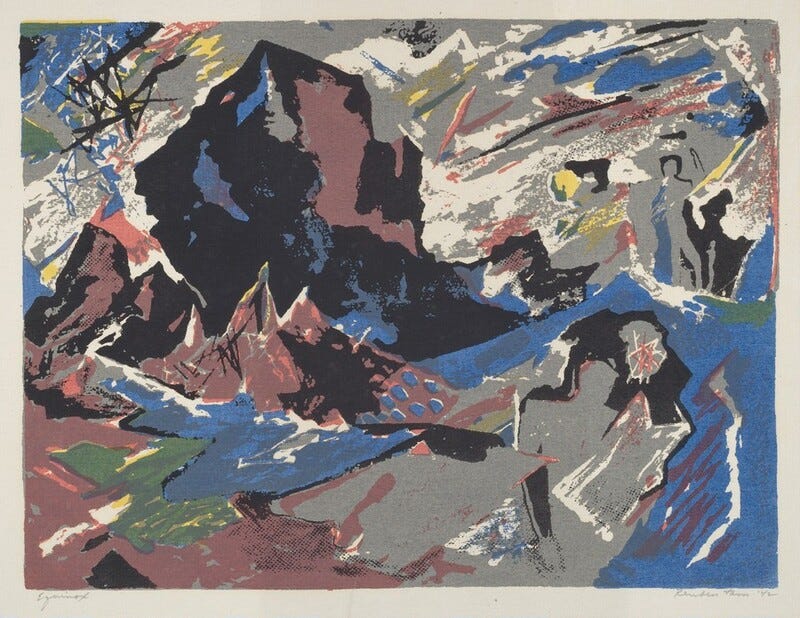
Equinox offers a momentary balance in the forward thrust of light. It reminds us how we, too, can find our way to equilibrium, and thereby resource the heart as it learns to bear its own weather. Framed by all manner of human suffering, current and perennial, simple acts of care can become green shoots rising up through hardened soil. A hand held, a stranger respected, a woman rested—these are all defenses against despair.
“Care”—from the Old English caru, cearu—once referred to the burdens that bend the heart: “sorrow,” “anxiety,” “concern,” “grief.” In this sense, the impulse to nurture began as a name for the wound itself. Before it meant to tend or guard, to care meant to ache, to remain near the pain.
True care does not hover above suffering, nor does it rescue; it simply shows up with a willing heart and persists. What appears small is not, therefore, insignificant. The heart hears the finch’s song and remains willing to listen, not because it is promised anything, not because the world is kind or comforting, but because it still knows how, and that counts for something.