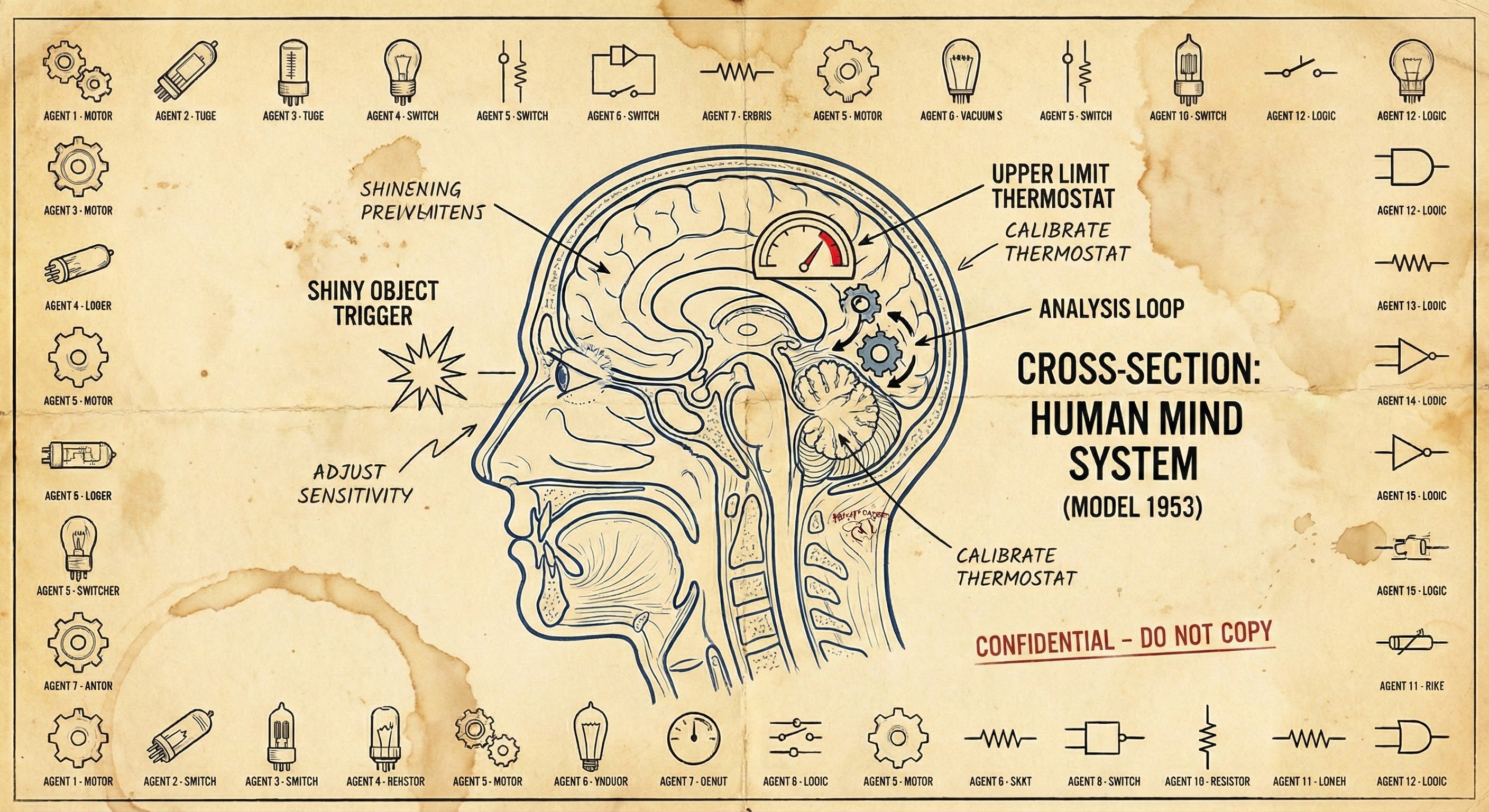
Mark compiles four decades of personality assessments - from natal charts to HEXACO profiles - and discovers why certain AI approaches work for him when they fail for others. The surprising finding: three specific self-sabotage mechanisms (Shiny Object Syndrome, Analysis Paralysis, and the Upper Limit Problem) that explain exactly how he engineered EVERYWHERE, his 35-agent orchestrated intelligence platform. If you recognize your own patterns, Mark wants to hear from you.
Sections
Introduction
The Strange Experiment: compiling 40 years of personality data
The Willpower Paradox (100% Discipline / 100% Indulgence)
Three Sabotage Patterns: Shiny Object, Analysis Paralysis, Upper Limit
The Trust Thesis: why AI implementations really fail
The Year AI Pays Off
Closing thoughts and invitation
Key Themes
Self-knowledge as AI strategy prerequisite
Engineering around sabotage patterns vs. willpower
The trust gap in organizational AI adoption
Personality architecture as implementation variable
Resources Mentioned
NotebookLM
EVERYWHERE™ orchestrated intelligence platform
Four Tendencies (Gretchen Rubin)
The Big Leap / Upper Limit Problem (Gay Hendricks)
HEXACO personality model
Enneagram Type 7
DeGraff Innovation Styles
Coastal Intelligence
Connect
Full essay: marksylvester.substack.com
AI implementation work: coastalintelligence.ai
DM Mark on LinkedIn: linkedin.com/in/marksylvester
Website: marksylvester.com