A Reflection on Naming, Erasure, and the Refusal to Disappear
This conversation was never meant to be comfortable.
If you listened and felt your chest tighten, your jaw clench, your impulse to defend rise— good. That is not punishment. That is information.
As I said in the live: critique is not punishment, and conflict is not harm. Conflict is how truth reaches the surface when systems depend on silence to survive.
So before we go any further, pause with me.
Take a breath.Drop your shoulders.Move your body—just a little.Drink some water.
Not to escape the discomfort, but to stay with it.
Because staying is how solidarity is built.
Why #SayHerName Exists — and Why That History Matters
One of the central clarifications in the live was this:
#SayHerName is not a universal slogan for all state violence.It was created by Black womanists (thank you Phree DeGraphenreed for the correction) to confront a very specific and brutal erasure: the disappearance of Black women and femmes from public memory when they were killed by police and the state.
Black women were being murdered and then erased, reduced to mugshots, violent language, traffic stops, or not named at all. Their humanity was systematically stripped away.
Saying their names was a reclamation of personhood.
A name is the most human thing we have.It is why deadnaming is violence.It is why erasure works so efficiently.
That context matters, not as trivia to see who is the most woke, but as lineage.
When #SayHerName is used without regard for that history, it stops being a disruption of erasure and becomes something else entirely: a flattening of struggle that centers comfort over precision.
And precision is not divisive. It is respectful.
Renée Good Was Not Erased — She Was Killed
Renée Nicole Good was a 37-year-old U.S. citizen.A mother of three.A poet.A partner.A neighbor.
She was shot and killed by an ICE agent during a federal operation. Her life has been extensively documented, humanized, contextualized. Her family, her love, her community have been named.
This matters.
Because Black women were and are denied that humanity entirely.
As I said plainly in the live: Black women were never offered grace, never named mothers or community members. We were barely allowed womanhood at all.
To reflexively reach for #SayHerName here is not solidarity. It is narrative convenience.
It allows white women to bypass naming the violence of whiteness itself (especially the violence enacted by white men) by borrowing a framework that was never meant to hold that story.
And that avoidance has consequences.
What “I AM RENÉE GOOD” Refuses
This is where the refusal begins.
In the live, I named this clearly: “I AM RENÉE GOOD” is praxis.Praxis is where theory meets the body. It is what you do after you know better.
Saying I AM RENÉE GOOD does three critical things:
* It gives white women their own voice, instead of folding into another struggle.
* It names whiteness as a site of violence, not just privilege or protection.
* It directly opposes the patriarchal rally cry of “I am Charlie Kirk.”
White men have always named themselves. Loudly. Violently. With entitlement.
White women, by contrast, have been taught to disappear… into marriage, into movements, into other people’s pain.
“I AM RENÉE GOOD” refuses that disappearance.
It says:I see the violence.I name where it comes from.I will not hide behind borrowed language.
As I said in the live: if they are “I am Charlie Kirk,” then you are Renée Good, and the refusal to say that is how white feminine disappearance sustains patriarchy.
Solidarity Requires Location, Not Collapse
This work is not about separation. It is about location.
True intersectionality does not mean sameness.True community does not require collapsing difference.True solidarity asks each of us to name where we stand.
As I shared early in the live, even within Blackness, experience is not monolithic. Recognition of difference is how supremacy loses its grip.
So imagine this instead:
You say “Say Her Name” for Black women because you understand why it exists.And you say “I AM RENÉE GOOD” because you understand where you stand.
That is not competition.That is coherence.
Practice Your Praxis
Because embodiment matters, here is how this lands beyond theory:
Self
* Practice saying “I am Renee Good” slowly and notice what arises
* Journal where fear of conflict shows up in your body
* Ask: What am I being invited to face?
Home
* Talk openly about erasure vs absorption
* Model conversations where accountability and care coexist
* Practice staying present instead of “keeping the peace”
Work / Community
* Use language with intention and lineage
* Say #SayHerName with reverence for Black women
* Say I AM RENEE GOOD to name your own location
* Treat conflict as information, not failure
A Note on Sustainability
This work is my job.
If this writing, these conversations, and this holding matter to you, consider becoming a paid subscriber so this work can continue sustainably:
* $10/month
* $100/year
* $150/year as an equity partner
If financial barriers exist, no questions asked scholarships are available atscholarships@desireebstephens.com
If you have some capacity but not all, I’m happy to offer pay-what-you-can options via Cash App, PayPal, or Venmo. Please put your email in the message area so I can apply the year comp.
Thank you for supporting this work.
Closing
Nothing will change unless it is faced… externally and internally.
Not through slogans.Not through erasure.But through embodied truth.
That is how solidarity deepens, not dilutes.
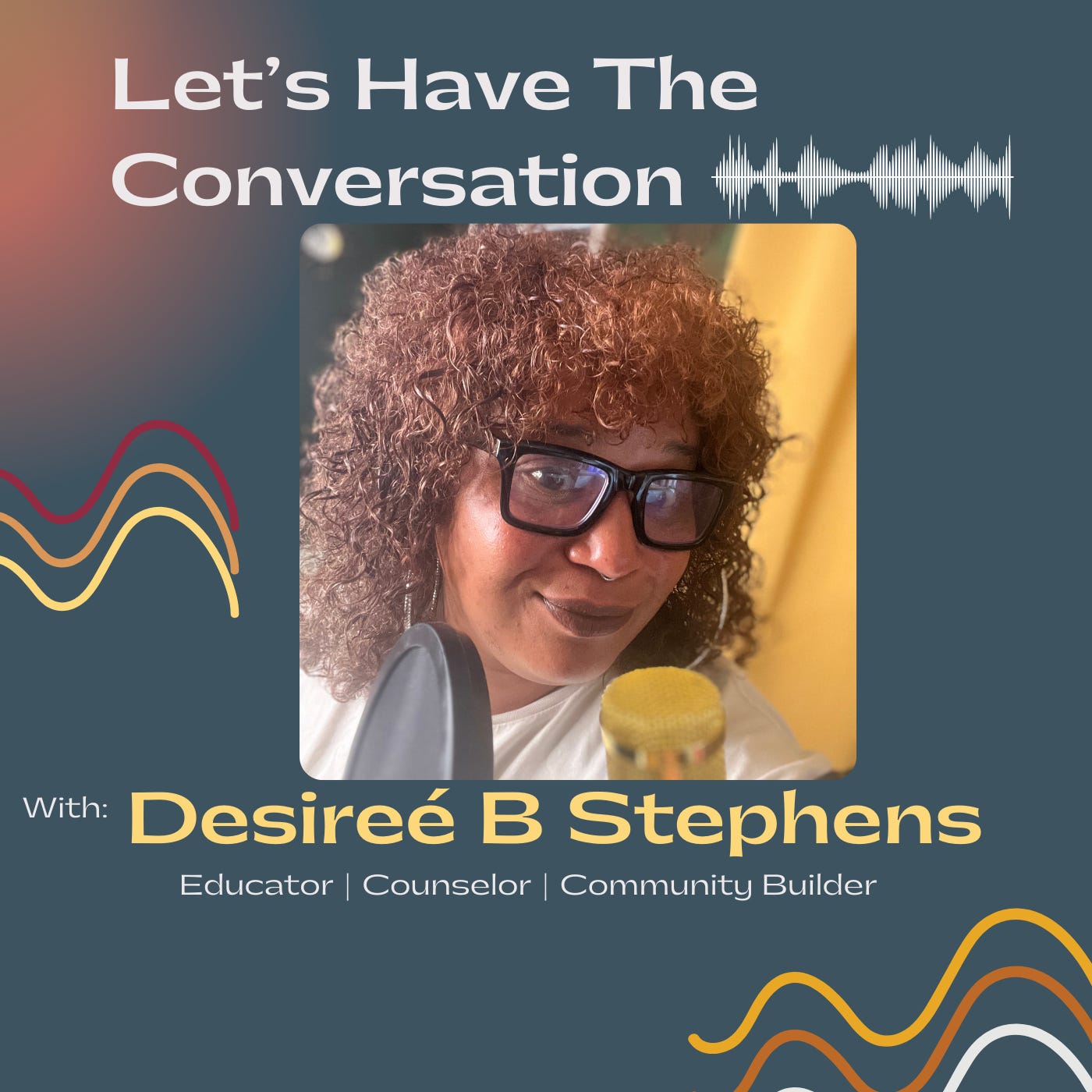
In solidarity and liberation,Desireé B. StephensEducator | Counselor | Community BuilderFounder, Make Shi(f)t HappenWriter of Liberation EducationSteward of Selenite & Sage Healing Homestead Co.Where Reflection Meets Transformation
Thank you Mariana Bissonnette, Anni Ponder, Michelle C. Funk, Karmic 🌹, Michelle, and many others for tuning into my live video! Join me for my next live video in the app.