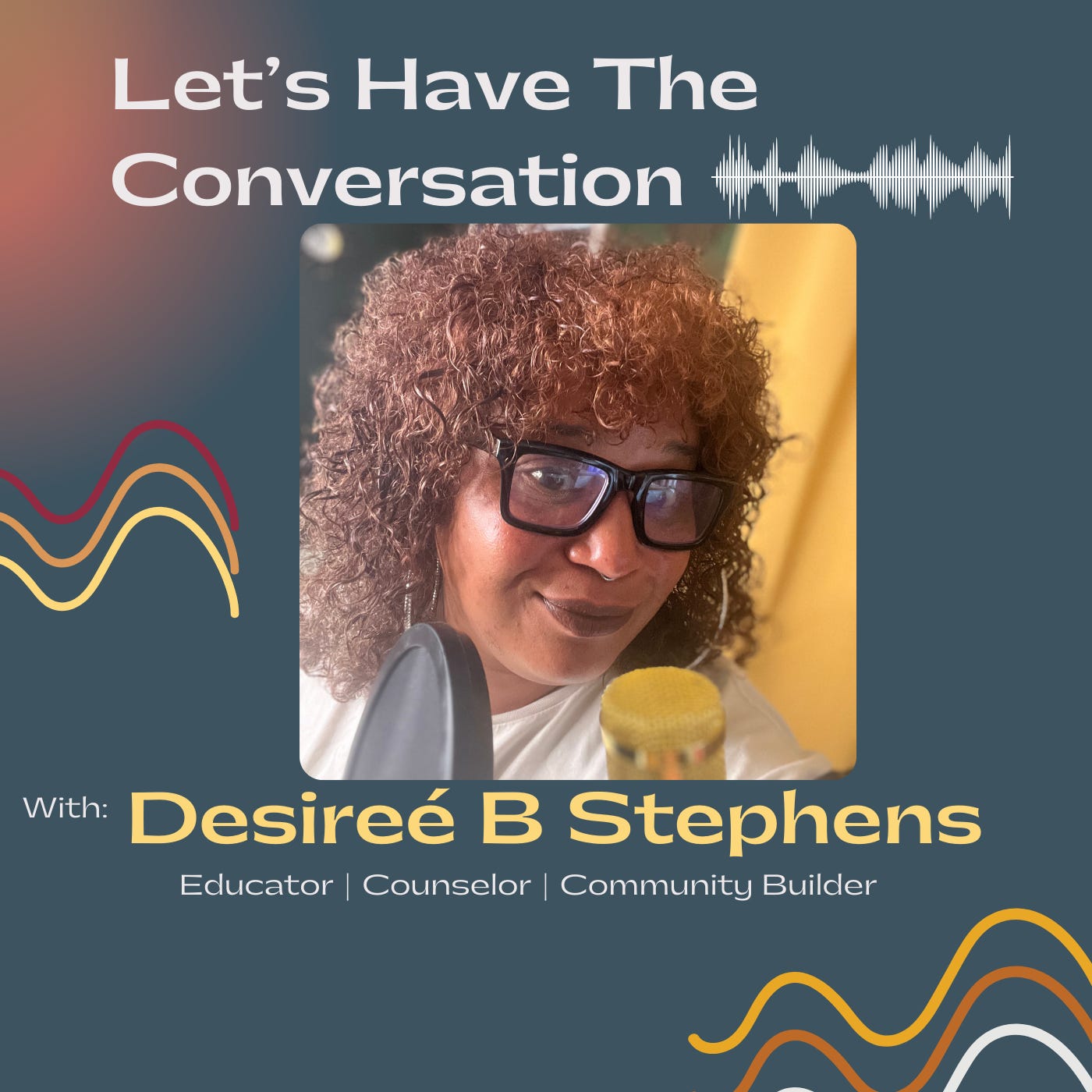
What happens when comfort is treated as the highest value?
From Reconstruction to the Civil Rights Movement to today’s “civility politics,” white comfort has consistently been placed above justice. History shows us the pattern: when progress threatens to disrupt the status quo, calls for “unity” and “peace” rise up, not as tools for liberation, but as demands for silence.
This is why today’s conversation had to be centered here: comfort is not safety, comfort is not peace, and comfort is certainly not liberation.
Family, I need you to know up front… this episode is heavy. It’s not one you can just listen to in the background. I want you to prepare yourself, because we’re going to places that cut deep, places where grief lives.
From the Gilded Age to today, we’ve watched extremes of wealth and poverty rise alongside racial violence and scapegoating. And I need you to hear this clearly: the so-called “race war” has never been about Black people. It has always been a war inside whiteness itself — a battle over who counts, who is included, and who gets sacrificed to keep hierarchy intact.
I’m inviting white-bodied listeners especially to go deeper than step-one anti-racism into the work of grief. Colonization stripped Europeans of culture, language, and indigeneity, folding them into whiteness at the cost of their own humanity. And so I asked the question: Who were you before you were white? Because until that grief is felt and faced, whiteness will continue to use Black suffering as the measure of harm, avoiding the reckoning it must do within itself.
And yes, I called out the danger of comfort. Comfort protects systems, not people. Liberation demands disruption, accountability, and risk. Symbolic gestures (DEI retreats, listening sessions, diversity statements) they create the illusion of progress while leaving power untouched. Even the Klan policed whiteness internally, proof that the violence of whiteness has always turned inward. The call is sharp, and it is urgent:
white comfort is not liberation, and until grief and accountability are embraced, the cycle of violence will continue.
A Somatic Pause Before You Begin
Before you listen, take a moment with your body.
* Place both feet flat on the ground.
* Rest your hands gently on your chest and belly.
* Inhale deeply through your nose for a slow count of four, hold for two, then exhale out of your mouth for six. Repeat three times.
* As you breathe, whisper to yourself: “I can hold discomfort. I can stay present with truth.”
Let this practice anchor you, because what you are about to hear may unsettle you — and that’s exactly where transformation begins.
Three Talking Points
1. Comfort Protects Systems, Not People
White comfort has always been prioritized over Black liberation. During Reconstruction, Civil Rights, and even now in workplace “diversity” conversations, “keeping the peace” has meant protecting systems rather than people.
When someone says, “Let’s not make waves,” what they’re often saying is: “Let’s not disrupt the system that benefits me.”
* Reframe: Comfort to courage: Liberation requires risk.
* Reflection: Where in my life am I prioritizing another’s comfort over truth?
2. Liberation Demands Disruption
True liberation is not easy or polite—it is disruptive. It asks us to risk discomfort, to dismantle privilege, and to demand accountability.
If white comfort is the standard, the work will always stop the moment feelings are hurt instead of when systems are changed.
* Reframe: Silence to truth-telling: Protecting feelings is not the same as protecting lives.
* Reflection: What have I mistaken as “peace” that was really just the absence of conflict?
3. Comfort Creates Illusions of Progress
White comfort loves symbolic gestures: diversity statements, listening sessions, corporate apologies. These create an illusion of justice while leaving power untouched.
But illusions don’t liberate. Real liberation requires structural shifts, redistribution of power, and cultural transformation.
* Reframe: Illusion to transformation: Cosmetic change may soothe discomfort, but only systemic change creates liberation.
* Reflection: How do I discern between genuine healing and performative reconciliation?
Practice Your Praxis (Self, Home, Work)
* Self: Journal on where you protect someone’s comfort over your truth.
* Home: Hold a “comfort audit” with family/community—what truths get avoided to “keep the peace”?
* Work: Identify one space where compromise keeps inequity alive. Draft what accountable bravery could look like.
Replay Resource Guide
Ebook-Dismantling Supremacy Culture: Understanding and Overcoming Its 15 Pillars
Guide-Instead of “I Told You So”: A White Person’s Guide to Showing Up When Sh*t Hits the Fan
Toolkit-Ancestral Veneration for Liberation and Healing: A Guide for White-Bodied People
14th Amendment-Who Would Still Be Protected Under 2A (Without 14A)?
The Second Amendment (1791) says:
“A well regulated Militia, being necessary to the security of a free State, the right of the people to keep and bear Arms, shall not be infringed.”
But in 1791, “the people” never meant everyone. It was restricted to:
* White men (explicitly in the 1792 Militia Act: “each and every free able-bodied white male citizen” aged 18–45 was required to enroll and provide his own musket).
* Property-holding white men in some states (poll tax or property requirements).
Without the 14th Amendment’s equal protection, the courts would have no constitutional basis to say:
* Black people, Indigenous people, or other non-white citizens must be included.
* Women have an equal right to arms.
* Naturalized immigrants are entitled to the same protections.
* Colonized people (Puerto Ricans, etc.) are covered at all.
Closing
✨ White comfort has never been liberation. It has been a mask that preserves hierarchy and stalls justice. The real work begins when we risk discomfort for truth, accountability, and transformation.
✨ Anti-racism is step one. The deeper work is grief, reclamation, and accountability. White comfort has never been liberation; it has always been a mask to preserve hierarchy. Liberation begins where comfort ends.
👉🏽 If this conversation resonated, support the work by becoming a paid subscriber. Your investment sustains the teaching, tools, and healing practices of Liberation Education and helps build intentional, intersectional, and sustainable communities.
—Desireé B. StephensFounder, Make Shi(f)t Happen
Thank you Carolyn Ellis, Karen, Tina, Tiffany Donnelly, Think, and many others for tuning into my live video! Join me for my next live video in the app.