Important links:
Original full interview with our team first, then Ginny, then me:
* https://www.canarycryradio.com/2024/12/06/burning-curiosity-2024-part-2-carl-teichrib-ccr-178/
Short research query into the "stoned ape theory" -
* https://chatgpt.com/share/688ec629-aad0-8003-a01d-de88ba0e337f
Our ministry website:
*************************************************************************************
Transcript of introduction:
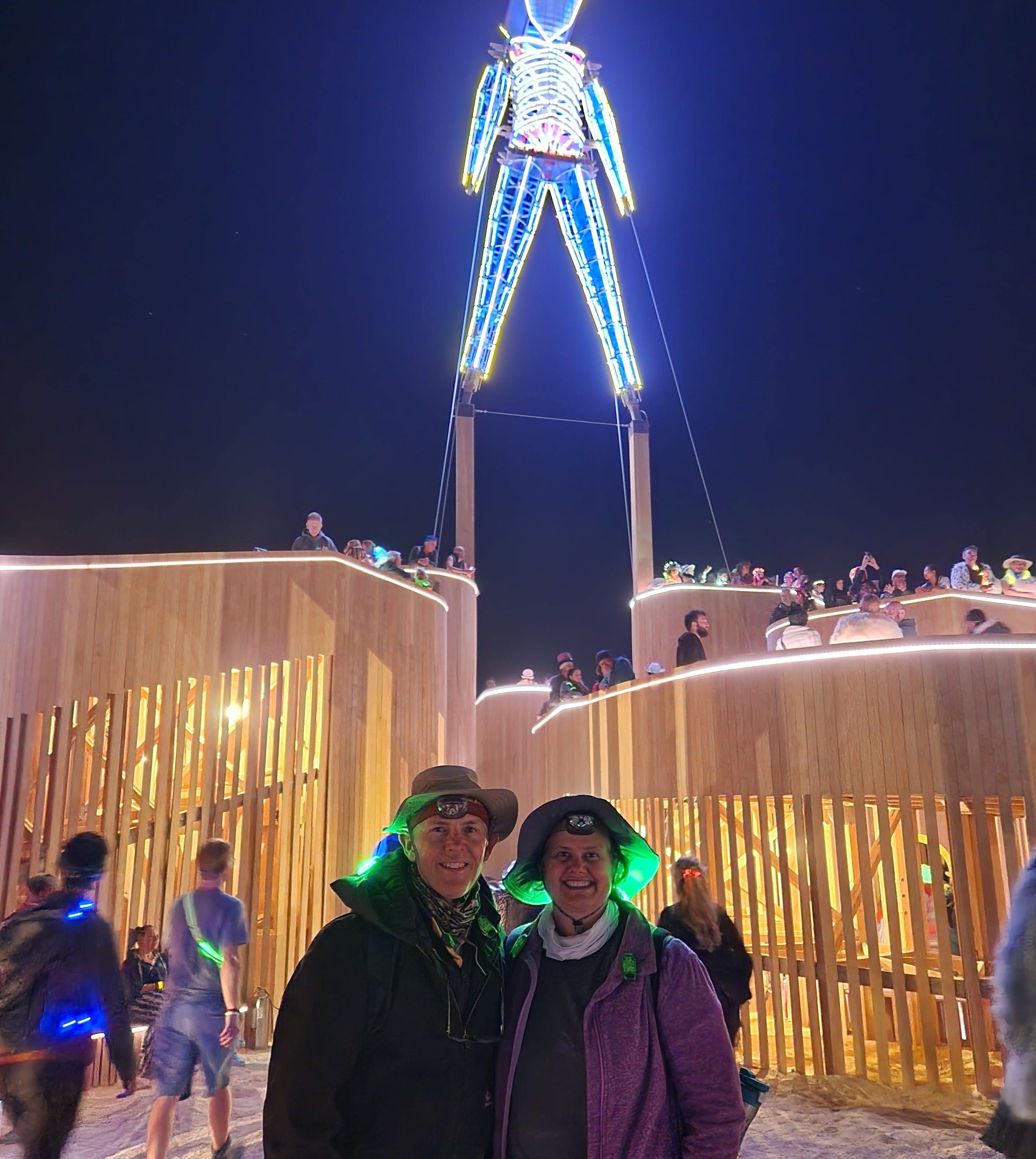
In a couple of minutes you will hear a replay of a conversation from last year's Burning Man event.
I had been thinking about what to put out as we prepare to go to the Burning Man festival again. I got started on this path a year and a half ago because I was following the trends in international security related issues, and it led me to study the underlying worldviews, and I found that Burning Man was a key annual event that sets the path and trajectory of the worldview shift in the Western world. Now it has come full circle, in that I have been questioned as to how my study of worldviews, and Burning Man in particular, relates back to security issues.
There are many questions to consider.
* Why are we really doing this?
* Is this just an interesting area to study, or does it have valid application in other areas?
* How does understanding this space help in analyzing international security related issues?
* How do the worldview changes in the Western world relate to global missions, the challenge of reaching the unreached around the world?
* How will the worldview changes affect the character of government and policy in the Western world going forward?
* What will that do to international relations?
* What effect will that have on the next generation of young people inside the church, and outside the church?
* What effect will that have on indigenous churches that we have planted overseas, whose young people in remote regions are being handed smartphones through which the worldview shift comes to them whether or not they are seeking it?
* What kind of opportunities do we have to share the gospel at transformative events like Burning Man, or at global governance events like a NATO conference?
* The question everyone needs to ask himself or herself - How is this going to impact “me”?
These are all important things to think about, not just for us who are in the direct line in the ministry, but for all followers of Christ. Yet for us in the ministry, the answers to these questions will point us to the areas we must focus on in our research.
I have also been questioned specifically about making sure that we are keeping in mind the ultimate purpose of why we are doing this, to continue to follow the Great Commission and bring the message of the gospel to the lost. The questions came out because sometimes what we are researching can seem like it is only a secular, scholarly pursuit. I welcome the questions, because it does bring to light the fact that in our modern world, we have divided the secular from the sacred. Yet today, as the dominant worldview shifts, the demarcation line between the secular and sacred is becoming blurred, and in many cases, completely erased. At no level are our hearts looking to just study an interesting topic and to have influence. We greatly desire the gospel to go forth, and this is the foundational reason why we are doing what we are doing.
The unbelieving world seeks peace, love, and unity apart from Christ. Unfortunately for them, this can never be achieved because they are seeking it apart from Christ. This is a key part of our message - only Jesus can bring us to the Father, and only Jesus can give us peace, love, and unity.
We are on a journey of faith. This is not in any way stepping away from global missions or international security analysis. It is the path that God has put us on to continue moving in that direction.
So I thought I would share this recording from last year, inside our camp at Burning Man. I was interviewed by Canary Cry radio on how we connected with the Camp of the Unknown God (from Acts 17). The link to the original full interview is above the transcript below.
As I listened through it yesterday, while we are preparing for our 2nd desert trek, it helped me to see how much we have learned over the past year, and how much more relevant the entire space is to our ministry now.
The first half of the interview I was asked about my background, so I go into some detail about what our experience was in the Philippines, how it led me to become a security researcher for missionaries, and how it led me to attend Burning Man as part of my research. But it does more than that. A year later, as I listened to it and thought about it in light of everything I have learned in the past year, it really stands out as something that shows how God has been transitioning us into this ministry moving forward. He has connected us with an expert in worldview research, and helped us to grow in our understanding of where the world is going, and is compelling us to share this understanding in order to frame the response of the church.
So what that means is, we have no end of work ahead of us. When God calls, we must obey.
The world is shifting to a new understanding in multiple areas:
* The status quo of international relations has changed and is changing significantly
* The system of international trade is being completely revamped
* The system of debt based global international finance is in the process of being overturned
* The peace dividend that came out of Europe at the end of the Cold War in the 1990s no longer exists, as Europe seeks to ramp up defense spending to counter an increasingly aggressive Russia
* We are at a convergence of a 4th turning generational cycle, a 50 year technological cycle, a 250 year revolutionary cycle, a 90 year astronomical climate change cycle, and an 11 year solar sunspot cycle. Having multiple cycles converge like this all at the same time hasn't happened in 2 millennia.
Yet there are still some who hear the term "Burning Man" and immediately think it is just a wild hippie party in the desert, and dismiss it. That is unfortunately such a wrong perspective, and incredibly short-sighted. Many of our brothers and sisters in Christ are putting their heads in the sand about this, unwilling to consider the incredible ramifications to this major worldview shift which is underway. There is so much going on that will affect all of our lives, and perhaps even show us the character of the end-times world as it unfolds.
With regard to that, I will briefly mention this. While we don't like to focus on correlating events to the end times, it is impossible to avoid the conversation. Nevertheless, we do not want to move into the area of speculation. So for now, what we are trying to focus on are the actual facts - the initiatives that are having an effect on policy, global governance, international relations, church-state relations, and ministry security.
I will bring out something that I learned recently from my friend Carl Teichrib. There was a workshop he attended at Burning Man in 2018 being led by a prominent figure in the crypto-currency community. The workshop was about spirituality and technology, in which the lecturer laid out basically 4 categories for what he perceived would become the building blocks of mankind moving into the future. The building blocks were these:
* Civilization needs a new spirituality. This spirituality is psychedelic, shamanic, and mystical.
* A new social structure, that is a new social norm, needs to be established. This new social norm is being experimented on at Burning Man. Burning Man is the laboratory for experimenting on ideas of mass social engineering to see how they play out.
* Humankind needs a new system of economic governance. This is the realm of crypto-currencies, digital currencies, and the realm of new social contracts that can be monitored through technology. Basically, it is a social credit system.
* All of this will be managed at the international level through Artificial Intelligence. AI is what will empower this to happen.
That was what came out of Burning Man in 2018, 7 years ago. Here we are today, seeing how much closer this is to being established. Parmy Olson, a columnist for Bloomberg, recently wrote a book about the AI revolution called "Supremacy." I highly recommend it, because she outlines the vision of the 2 most influential people in the AI world - Sam Altman and Demis Hassabis.
So all of this activity is right in the forefront of what we are doing, which is why we are stepping out in faith as we pursue a deeper understanding of the global changes, with the hope of being able to educate and equip the church to respond effectively.
One final note before I break to the interview, I want to make one point about something I said in the 2nd half of the interview, as you listen to it. At the time, I had been led to believe that the "stoned ape theory" was something that had become part of mainstream evolutionary biologists. I have since learned that it is not mainstream, I was mistaken in that. Most evolutionary biologists do not accept it. However, there has been some speculation that keeps open the idea of acceptance of the mechanism. I have since learned that the stoned ape theory is really more of a mythology created by the psychedelic community, but it is something that many people in that community believe very strongly is the absolute truth.
I posted a link above to a short research query I made about the stoned ape theory if you want a quick read on that.
So I leave you now with the interview from the Camp of the Unknown God at Burning Man in 2024.
-------------------------------------
Transcript of interview (computer generated):
Gonz: But let's move on. Here's Basil having a conversation with George, who is a lifelong missionary. What is he doing in Black Rock City?
Basil: Hey everybody, it's your best buddy Basil here once again at the Camp of the Unknown God in Black Rock City at Burning Man, the ephemeral city that will soon disappear. It's been a week so far. Lessons have been learned, miracles have been experienced, and the mission of the Camp of the Unknown God, while drawing to a close, still continues. A very interesting fellow here on the team this year. His name is George Olson, and he is a career missionary, which gives him a very interesting and singular perspective on what's going on here and the mission going on at the Camp of the Unknown God. George, how are you buddy?
George: Doing well, thank you.
Basil: Thank you for a little bit of your time today.
George: Yes.
Basil: This is your first time at Burning Man?
George: That's correct.
Basil: Okay. Did you know what to expect?
George: Yes. Once I had talked to Carl, who's kind of our team leader, and we did a lot of research, my wife and I, we did kind of have an idea of what to expect. But the extent of how everything's played out, you can't really know it until you come here and experience it. It's impossible.
Basil: It's impossible to articulate in a way that communicates a true understanding to somebody on the outside. That's right. It must be experienced. Much like a lot of the best and the worst things in life, it must be experienced to truly understand. Yes, that's right. But you have a lot of experience, some very unique and admirable life path you've taken here. Here, something that made you notable, and I assume gives you some very interesting perspective and skill application here at Burning Man, is you were a career missionary for a long time. Tell me about that.
George: Yes, that's right.
George: Well, I guess it started off, you know, I started off as an electrical engineer studying in college, ROTC, went through the Navy and went through the Navy's nuclear power program. And wanted to, was pursuing that, but felt God's call on my life. And the faith journey that that really had an effect on is after I got out of the Navy, I was working as a full-time electrical engineer at a chemical plant. And the call was so strong, I just felt like we couldn't let it go. And so my wife and I prayed about it and decided it was God's time, or well, He showed us it was His time for us to sell our house and to stop that work and to move into missionary work. We went to training with what at the time was called New Tribes Mission. The name has changed now since then to Ethnos 360. But in so doing, we had to trust God. We had to take care of our finances and our ability to provide for our kids and all those things. When we got, after going through several years of training, four and a half years of training, we went to the Philippines. And we started off learning the national language, Filipino or Tagalog. And after a year and a half of that, we moved into the island of Palawan, working with a remote travel group called the Palawano. And I say remote. There's actually three different dialects of the Palawano. And only one of them is Palawan. The other one is really remote. And that's the group that we were working with. And in that area...
Basil: Whoa.
Basil: Mm-hmm.
Basil: That's it.
George: While we were there, we had been there for our very first week. I had my first full day of language study when there was an eruption between Muslim separatists from the Philippine government.
Basil: I was going to say that area is sort of famous for some dangerous Muslim activity, isn't it?
George: Well, Mindanao is. Mindanao is, not Palawan. But in particular, because the tensions and the disagreement was so strong, there was a team of terrorists that came over to Palawan to fight with the Philippine government on Palawan. Because they had always wanted to include Palawan as a part of the Muslim autonomous region. We were off in the jungle, and when we got word, the tribal people came to us and said, there's 25 men with heavy weapons, and they're just over the hill about an hour and a half away, and they're coming here for you. And that night, so we started to pack up our stuff so we could get out. And we realized that part of the Philippines is really porous. We realized our daughters were ages 11 and 7 at the time. Our son was at the dorm. And before we went to sleep, I told my wife that if they came, we would tell them our daughters were ages 9 and 5, with the idea that if they came, perhaps, if they thought our daughters were younger, they would not think of them as valuable and would not sell them as slaves' wives. Yeah. And so it was... There was this incredible tension. We were able to leave the next day. We found out later that basically when that group of terrorists, it was the Abu Sayyaf, which is a known group of terrorists near, when they found out that we were gone, we don't know this for certain, but we made the deduction that when they found out we were gone, we were... the targets were not there, so they didn't come all the way up into our village. But that put me on the path of studying and understanding security. And that particular incident... Yeah. ...was related to the tensions that the Muslim separatists were having with the Philippine government. And so later when I became the field language coach and then also security manager, I felt like I needed to understand the history of why the Muslims wanted to separate from the Philippines and what their culture was in addition to Philippine culture and what all those tensions were. And it put me on the path of then studying in the security realm... Yeah. ...which is what I'm still doing today, but not only now for that reason. region, not only for the Philippines, but for the entire region and then the global effect as well.
Basil: Mindanoa, that's the one. Mindanoa is, not Palawan.
Basil: Yeah, it's so interesting how Intel is just like the root of security. Yes. I think it's fascinating. I mean, you can deduce it just by seeing how nation states operate their security structure. I mean, Intel is the number one part of it. So knowing who you're going up against or who's coming up against you being the most important thing. One thing that's very interesting in sort of a spiritually metaphorical sense is knowing the adversary, knowing how he works, knowing how he's worked in the past, knowing that he's not so creative, but not underestimating an enemy. Very interesting. Yeah. Okay. I mean, what a visceral reason to start focusing on security. Yeah. You know, it's interesting with missionaries. My parents were missionaries for many years, and so therefore I was a missionary when I was younger, went on plenty of trips. And there was almost always stories about this exact thing. My mother tells stories about, oh, I was in Africa and I was playing my guitar on this trail and singing to God. And somebody ran up to me and said they were coming for me. And then these men with guns ran by, ran straight past me and later found out they were looking for the white lady. You know, this kind of is just like a regular part of the regular part of the job. And another explicit sort of example of the many miracles that God does when you are obedient and you step out and do what you're calling is. Yes. Yeah. That's very interesting. Have you ever had like a... Serious security risk? I mean, you obviously just told me about one.
George: Yeah.
George: We had that one when it was personal to us. In 2015, we had an incident where the same group, Abu Sayyaf, well, the back story was that they had been beaten down really hard by conflict with the Philippine government. But then in 2014, they kidnapped a German couple. And that was right as the Islamic State was rising up in Syria. And they kidnapped this German couple. They had been sailing off the coast of Palawan.
Basil: Mm-hmm.
George: And within five months, as they were kidnapped, they got a $6 million ransom payment.
Basil: That answers my question. I was wondering why, I mean, you always hear this and you know it, why Westerners are so often the target of this kind of thing.
George: Well, and that in particular, while it was unverified, but what I heard in security circles, because I was attending international security meetings with other security professionals, someone told me, I won't say who, and I won't say where their information came from. I don't know if it's valid. It's just what they told me. That it turned out that particular German couple was a blood relative of Angela Merkel, who was Chancellor of Germany at the time. And that it was German taxpayer money that had been sent to give the ransom, which was in violation of all kinds of laws. Sounds like a scandal to me. Right. But there's no way that could ever be made public. And I don't know if it's true, but that's what I was told.
Basil: Right.
Basil: Thank you.
Basil: Wow.
Basil: which was in violation of all.
Basil: Sounds like a scandal to me. Right. Just something somebody said somewhere. Settle down, lawyers. Right. Exactly.
George: Right. Exactly. Now, what but what that did is they received the Abu Sayyaf received that money at the time when they had the leader of the Abu Sayyaf had sent a video of him and his and the other members of Abu Sayyaf to Abu Bakr al-Baghdadi in Syria, where they were bowing the knee and swearing allegiance to him as the true Islamic caliph. So because they got a six million dollar ransom payment at the same time as they got the video, the Islamic State said, these are our people in Southeast Asia. And they started supporting them. And it caused a huge influx of material and money and fighters from other countries coming in to join the Abu Sayyaf in the Philippines. And it caused they kidnapped two Canadians from the island of Samal off Davao before Rodrigo Duterte was president. They held them in captivity for about. Six months or eight months, and they murdered both of the Canadians. They let the Norwegian go. That was also with that. Just two months after that, they had a young and rising star of the kidnap for ransom group among the Abu Sayyaf terrorists. His name. They called him Abu Rami. He was the leader of this. He had he had captured the German couple and had gotten the other guys. So they sent him with all this ransom money. They rented a van. They came. They went over the northern part of Mindanao and they came in. They actually rented a van to come in. They had heard that there was what they had heard was there is an American missionary that lived in the mountains in the middle of Mindanao. They'd never gone there. They're always coastal people. So nobody believed that they would actually go up into this central landed area. But we heard that they were. We had actually people in Philippine government that share this information with us. And so we had to send in our helicopter to. Right. Rescue them. We as we prayed through it in the incident, I could tell you the whole story would take too long. But as the incidents were happening really, really fast and I was managing the situation, it turned out that when we got the helicopter in to pull our people out, the group of terrorists were on a van on an old logging road on their way into that tribal area. And they were one hour away. We found that out later. We verified it not only through our military contacts, but because the local people. We were able to get a good look at the people, recognize who they were and saw them. And then about four or five days after that incident, another guy who they knew was not from their area. Hey, because he had the he was from one of the Muslim tribes in the area, came up pretending to be a vendor of popsicles and was asking questions of the people along the road about the mission, the foreigner that lived up in that area. It turned out like he wasn't American. He was actually Australian and he didn't have his own airplane. It was our mission airplane. But. But.
Basil: And then
Basil: area.
Basil: Eh.
George: The way they thought of it. They just thought he was some rich foreigner that lived there. They didn't even know he was a missionary. The terrorists didn't. But he was a target. So in managing that incident and finding out how that whole thing played out, when we ended up coming home from the field in 2018, I joined our international missions team as an analyst. I had some serious health challenges at the time. So I came on board to analyze and understand the big picture trends. And that's what I do now. Yeah. Is by analyzing and understanding the big picture trends, I put together things. I put together.
Basil: Yeah.
George: where things are going, what direction the United States is going, what direction the Philippine government is going, how the internal politics of the Philippines affects things, what's happening with China, why the Philippines is at such a pivotal geographic location that will affect what happens in Taiwan, and that's why China has been so focused recently on encroaching on Philippine territory in the South China Sea. All these things, so I put these together and I write reports to help us manage the risk picture for our people that are serving primarily in that region, but we also see the effect of China over the entire globe.
Basil: Yeah.
Basil: Yeah, absolutely. That's incredible. With that background and that skill set, what drew you to Burning Man?
George: That's a really interesting question because I not only have to understand the geopolitics of things, I need to understand what's going on in the American political system, what the different trends are, what people are thinking. Now, part of the idea of being an analyst is you have to really divorce your analysis from your own political biases. Basically, what you have to do is, as I look at this, I'm willingly choosing not to have a political opinion on this for the purpose of analysis. And so I was looking at what the different trends are that are affecting American society, and I used Neil Howe's The Fourth Turning as kind of my framework for understanding the generational change. Right. And seeing how we're in this crisis period where all these generational changes are coming to a head, and what are the manifestations of them? And one of the manifestations of them is part of what I would call the Christian right is really gravitating toward trying to fit in current events with an understanding of biblical prophecy. And we don't know whether or not these events are part of the fulfillment of biblical prophecy, but they could be. But if I'm going to analyze this without having an opinion on that, I wanted to find out more about what people are thinking. So I went to a conference, and then I went to another conference where Carl was speaking. And he mentioned that he did Burning Man. I'd known people that had gone to Burning Man. And he talked in his talk about how this is something that has a big effect on policy. And how the thing... One of the things that I've seen since I've been here also how these things, they affect trends, and they incubate ideas. It's the realm of ideas, really, and how they incubate ideas to launch them into society. And I found out he was going to the Eclipse event, which was just an hour away from my house in the hills in central Texas. So I emailed and contacted him to find out, and he said he was coming down. So we met. He stayed at my mother-in-law's house, and then we drove to the Eclipse event together. And he took me around. It was just him and me going around to the different events, which is an event that's similar. It's the same culture as the Burning Man event. And so as we were doing that, then he asked if I'd be interested in coming to Burning Man with him.
Basil: Yeah.
Basil: really.
Basil: Yeah.
Basil: That is so interesting. You're like my hero. I mean, what you're saying, this is, I mean, obviously in a much less official and probably much less important way, you know, that kind of analysis and trend tracking has basically been a part of my career since the beginning. So you're like the perfect guy to have on. This is wonderful. Yeah. Well, and I think that's very interesting. Again, the importance, which I just have to continue hammering on every chance I get, because especially people in our community of biblically minded, spiritual worldview, Bible believing, prophetic interested individuals. Uh, who are following the news, looking for the, you know, interpreting the signs, um, watching what's going on. Even those who I think are some of the most intellectually rich people out there. Um, often, sometimes we get them.
George: This is.
George: Thank you.
Basil: Get what I think to be a programmed, triggered response to Burning Man, which is, I'll say it again, stinky hippies in the desert doing bad stuff, communing with the devil. And again, I can't say that there's none of that going on, but it's not that at all. And I have actually postulated that it's a bit of psyop to kind of convince people or install the software that when they hear of Burning Man, they instantly dismiss it as something that doesn't matter. Or if it matters, it's just another debaucherous event. That's right. And as we've been learning over the years, it's significantly more than that. And the only way you can't find it anywhere else. There is nothing. No other personality, outlet, media property who is truly getting in and doing the work as to the importance of Burning Man, not just on a meta scale, but on a scale that every human listening to me right now is being influenced by Burning Man generated ideas, products, ideology. Yes. Culture, things like that. It's extremely important. And I love how it's a part of your job. Makes me feel much cooler to know that this was important to you to get in there to experience the culture firsthand because you cannot get a good understanding just by doing a Google search. That's right. You cannot get a good. It doesn't exist, which I think is another part of some sort of psyop adjacent. Dr. One move? No, let it dry. Clure. By? Very. Bottegas &foil? By?
George: Okay. So in the big picture, which is, that's my part. What I'm supposed to do is analyze and understand the big picture. In the big picture, there's a broad based narrative that Burning Man represents. And that broad based narrative is kind of a neo-Marxist, neo-pagan idea. It's well represented by the political left in America and all the Western countries. It's well represented by the Davos crowd and the central banks and the financiers, the debt-based financial system. It is also, it's only one narrative. And this is really important to understand because it's one narrative. Now, the people that are in that narrative, the tech elite or the oligarchs, as you might term them, seem to have a belief that this is a universal narrative, that all human beings should adapt this worldview because it has universal application. And this is where a lot of the geopolitical tensions are happening. Because on the one hand, in our own country, in the United States, we see this being played out, that you have those who do not hold to this mentality, who hold to more of a nationalistic mentality, nationalistic. Versus the global. Right. They are being portrayed as being, you know, nationalism causes wars, which that's debatable. But the point is, they look, they're thinking in terms of we should be looking out for American national interests. Whereas the global, the Burning Man representation, that narrative wants this to be a universal thing. Now, what you have, they've had.
Basil: Didn't.
Basil: Versus the global. Versus the global.
Basil: Yes.
George: tremendous power for many years, and it's grown and grown and grown because it's been linked with the global centralized financial system. But what they have not understood is that China and Russia and Iran, Iran less so, more China and a little bit less Russia, have been playing along with this narrative. China in particular has been really trying to play along with this narrative in order to insert themselves and hijack the idea to make the whole world look to them. All of these groups want a one world government, but not all of them want the one world government that is part of the narrative that's being presented at Burning Man. And that is the cause of the international tensions that we are facing right now.
Basil: Part of the narrative. The Western.
Basil: Thus the TikTok problem. Stuff like that's one mechanism through which China is sort of trying their best to hijack.
George: Yes.
George: They're best to hijack. And I think, and I haven't studied this out to great detail, but I suspect that part of the reason why TikTok is controversial is because TikTok promotes both. It promotes both the left wing or the Burning Man globalist media narrative as well as the China narrative. And so when it's promoting the China narrative and people say we shouldn't do that, it can draw in the people that it supports that are in the globalist narrative and say, why should we get rid of it? And so that's where I think why it has become so difficult to do something like to stop that particular algorithm from having so much influence.
Basil: Yeah, it seems unstoppable at times. And the very unique thing about it that a lot of people, if you're just looking at it on the surface level, are missing. I mean, it's fast. It's more fascinating than I think people understand that the U.S. government is motivated to disrupt TikTok. I mean, you have congressmen. That's right. Politicians at the highest level. Yeah. Not in the way that they would like you to be convinced it is. There's some, the magicians, you're looking at the magician's right hand while he does something with his left hand. Yes. Which they have, which is a method they've become very good at. And like you said, at the same time, China is also doing through the TikTok thing. But to. Yeah. So. So the. It's. It's funny because it's simultaneous. Simultaneously playing out right in front of our eyes in public. And yet.
George: Now.
George: Yes.
George: Mm-hmm.
Basil: They're so talented at narrative crafting, which is worldview craft. That's right. That, you know, that broader scope of things. And this is something that I appreciate about you. And I think I consider part of my job, but is very difficult, which is zooming.
Basil: And we're.
Basil: All the way out as far as you can, because you're always going to miss some aspect of it. That's right. So continue with the Burning Man thing.
George: That's right.
George: Well, I guess as I see the things that they're promoting here, some of the ideas, like, for example, this idea that we are a species that is in this continuous state of evolution. That's so essential to this worldview. There's more perfection to come. There's more perfection to come. And the way they believe that perfection is going to happen is through psychedelic drugs. And when I first heard of the stoned monkey theory, I thought these people have to be just complete kooks. But it is very much part of integrated into the mainstream of the way the top level evolutionary thinkers, many of them, maybe not all of them, but many of them believe. We were at a seminar where a guy was talking about how on the basis of that these mushrooms grew and then the monkeys came down from the trees and ate the mushrooms. And that expanded their consciousness. How that and he gave a very sophisticated argument about how that is when as we do this in the future, psychedelic drugs. The argument he was saying was psychedelic drugs is what is going to open human minds in the aggregate. The reason they believe psychedelic drugs need to be broadly based legalized is because we need the maximum number of people to be taking psychedelic drugs because that's what's going to open our minds as a species, as a whole. In order to have the ideas that will promote the next stage of human evolution. Right. That's where they're going with that.
Basil: And that's the direction to come.
Basil: Mm-hmm.
Basil: Right.
Basil: Yeah, fascinating. It's interesting how it's presented, the sort of stoned ape theory, the elevating of the consciousness through psychedelics, it's presented and branded as counterculture. Yes. It's presented and branded as, oh, you really would only get it if you're cool, if you're in the know, the Joe Rogan sort of effect to it. Yeah.
George: The Joe Rogan sort of effect to it.
Basil: Oh, there's one other thing. It'll come back to me. But yeah, which is sort of a, again, just a brilliant presentation. And I don't want to overuse the word psychological operation because it's a very popular way to describe things. But they truly are masters of crafting, again, not just the storyline, but how that information resides and is translated to the mass public. So if you believe stoned ape theory, if you think psychedelics will take us to our more perfect state, you're countercultural, you're anti-authority, you're all these types of things.
George: Yes.
Basil: When in fact, it's kind of just what they need in order to instigate this sort of globalized culture. Oh, and the other side of that is it's not just legalizing them. I mean, again, back down to the sort of minutia, what they're presenting is, oh, it needs to be legal. It needs to be very legal. And who are we to say that people can't do it? But really, it's not just legality, but it's encouragement. It's encouragement. And if you don't want to be left behind.
George: Yeah.
George: Yes.
George: Yes.
Basil: Don't get left behind in the old humanity. Come with us. Yes. Is more so the message is this sort of encouragement.
George: Yes. They want it to be culturally acceptable, culturally encouraged. We had two things. One was the same guy that was giving us the stone monkey theory and how it's going to transmit to the future told us that practically all of the tech executives, the billionaires, CEOs. The pantheon of man gods. Yes. Yes. Basically, that's a good way to put it. They all regularly take psychedelic drugs. Now, I don't know if that's true, but that's what he said. So if it is true, then that is if it's not true, he's promoting a false narrative, but he's promoting the idea in order for it to be more culturally acceptable. If it is true, then it shows that this level of acceptance has already been achieved at some at some point.
Basil: CEOs.
Basil: Pantheon of man gods. Yes, yes.
Basil: Not only are they described as entheogens, meaning you will see God or you will become God or something, but the Elon, the tech billionaire stuff, like, oh, they're doing it all the time. Don't you want to be like them? Don't you want to experience the apotheosis that Elon has experienced type of thing? It's very seductive.
George: Yeah.
George: Well, you know, in our experience as missionaries and understanding where this kind of things have happened, now that the shamans that were in Southeast Asia, their drugs was more lower level. But we have friends that were working in South America, like in the Yanomami. And one book that I would recommend, a book called Spirit of the Rainforest by Mark Ritchie, who goes through and it's a narrative story written by, basically written by one of these tribal shamans. And they talk about how taking these, in taking these hallucinogenic drugs, they would contact the spirits. Now, one thing you're not hearing about shamanic lore here at Burning Man is the real activity of shamans. Not only they want to help their own people, their own families, but they want to use that power to kill their enemies. And it promotes a tremendous amount of violence in intertribal warfare, as it did with the Yanomami down in Venezuela. And they. Talk about the different spirits that come in and influence them to do those sorts of things.
Basil: Like they would just be curious about their own people, but if they brought them the spirit of theサニー sufferings, When I go to tomorrow. And these kids just want to enjoy theا
Basil: You know, it's always something that I heard of in the context of witch doctors in Africa, where, yeah, there's witch doctors, there's magic men and magic women. But you start hearing the details and you're like, that doesn't sound like a sort of Western lovey-dovey, you know, use of magic. That sounds like this sort of creepy, wild, supernatural assassin. Like they're always using it to kill people or curse people or something like that. Not very elevated, if you ask me.
George: Yeah, that's right. Killed.
George: Yes. Or something like that.
George: Exactly. And I see that. I went to the Aztec thing, and I know they want to promote the idea of indigenous rights. Now, the other thing that we do, a lot of people don't understand, is missionaries, we want to achieve cultural preservation. We want to preserve their language and their culture, just not those destructive elements of their culture. Yeah, which is counter to what people think about missionaries. Right. And what they want to promote by calling on the Aztec gods and the use of money. If you look at the history of who the Aztec gods were, they required human sacrifice in order to achieve peace and harmony, but only for themselves. And in on it.
Basil: Which is counter to what people think about missionaries. Right. Right.
Basil: On an unimaginable scale. Yes. I mean, you're talking, I think one of them was like 30,000 people sacrificed in like one session or something. That's right. I mean, it's, it's, it doesn't sound like something that we as humanity should strive to go back to. Right.
George: Unimaginable.
George: Yes.
George: Yeah.
George: That's right.
George: Right. So I also, I see how all these things get integrated together. I'm sorry, I'm going off a little bit. No, no. But like last night at the Burning of the Man ceremony, and afterward they have everybody running around the fire, and a lot of them are naked. It really reminded me of what I read about the Druid, the Druidic ceremonies. Kind of Dionysian as well. Yes, yes. And that I think one of the reasons why this organization promotes the orgies and all those things subtly, they won't publicly promote those things, but they're glad that it's happening, is because all the people to get into the mood of doing that, they take psychedelic drugs. I mean, most of the people out there that are running around doing that activity are all stoned. And so that's, and because they believe this narrative, that this is where the next stage in human evolution, and because they believe it's universal, they want to promote it. They think that we're the ones that are going to lead it into the whole world. It's the next stage in the advancement of humanity. And then this is the point where you have more conservative societies like China, like Russia, and especially like Iran, that are saying, we don't want to have anything to do with that, and we are willing to fight you to the death to prevent that from taking over the world.
Basil: No, no, no.
Basil: Kind of Dionysian as well. Yes, yes.
Basil: I mean, literally, you have explicit messaging from Russia that, you know, this is their perspective. Our denazification of Ukraine is to resist the Western hedonism, to resist the Western evil. I mean, which is an interesting thing when you kind of think back to, you know, some of the conflicts in the Middle East and some of the Islamic jihad kind of stuff, which is, hey.
George: Yes.
Basil: those Western ideals, we don't want that. Of course, it's more complicated than that because you can get into human rights and stuff like that, but they use this sort of ultra-liberal Western, I don't know, suggestion, cultural influence as at least...
George: Right.
Basil: like that.
George: Yes.
Basil: the propaganda to get to mobilize their populations into war against the West. That's right.
George: War against the West. That's right. And we don't want to give the false impression that we're on their side. No, of course. Right.
Basil: That's the trick and that's what they want. Our own Western powers want to characterize what we're talking about now. That's right. Yeah. As pro-Putin, Putin puppet, etc.
George: Thank you.
George: That's right.
George: Yes. That's not where we are. We're not in favor of authoritarian systems. We just don't believe that this idea that they're promoting is good for humanity.
Basil: Yeah, the universal suggestion, again, is it preys upon, I think, a natural human desire for unification. People coming together is one of the reasons the species has done so good in various ways. It's also a bad thing in many ways, but it's seen as this very unique, and it's also biblical, Tower of Babel. Hey, when they come together, they can do anything. That's right. And so this principle is sort of wielded as propaganda in a lot of ways. Continue.
George: Continue.
George: Hmm.
George: That's right.
George: Well, I'm not sure what else to say. No, no, that's fine.
Basil: I just don't want to cut you off too soon because I love jumping in like that. You know, that's very interesting. You mentioned shamanism and shamanism presented in the West and especially in sort of the Burning Man culture is indigenous and it's better and it's natural. And the irony is that all the shamans or an unsettling number of the shamans at Burning Man in the West are just, you know, white. Did you hear that? There are a lot of dudes who did drugs and, you know, are kind of just. And you spoke to me before about the Western influence of shamanism, not just in the West, but of like the actual shamans in native places.
Basil: Thank you.
George: Yes.
George: Yeah, that's right.
George: Yes. In native places. That's a really important thing to understand. And it's something we've experienced in our mission for many years, the anthropology. And if you read that book that I suggested, it talks about that. The tribal people themselves had some pretty negative commentary on what they called them the antros. It's the anthropologist lobby in Venezuela and a lot of other places that they're actually not looking out for the interests of the tribal people. Now, where a lot of it comes from is in the West and in some parts of the global South that were part of the Spanish and the Portuguese empires, there's this collective guilt that people feel because of colonization. And that's why when you look at 90% of Burning Man or maybe 80% of Burning Man is white. But there's this collective guilt that we feel toward colonization. And so part of the response of the collective guilt is to go and say, well, first to blame it on Christianity. Now, I'll be the first to admit a lot of missionaries have made a lot of mistakes. I know several. I made a few mistakes myself. And it's also been...
Basil: And wielded by the powers that be as well. Like I mentioned before, the early mission Spanish and European missionaries going all around the world, it was a political tool to unify the different colonies through something deeper than economics or whatever. Yes, that's right. And we recognize that. And the funny part is, I think all missionaries... I can't say all, I can't be that general, but missionaries today, modern missionaries, seem to be extremely sensitive to sort of protecting... Culture. Culture. Culture.
George: Yes. Like I've...
George: Yes.
George: Yes.
George: Yes, that's right. Yeah. And that's...
George: Yeah, much more so today because we've had years of study and we realize that there are a lot of times that we have done quite a bit of harm by not helping the people to preserve their own culture. Because I think God wants the people to preserve their culture and their language, just not those destructive elements of it. And so that's why we translate the Bible into their language. And we not only do Bible translation, but we also try to create literacy, a body of literature, help them preserve their tribal stories in their own language, a lot of this kind of thing. So, okay, where was I going with this?
Basil: The shamans, the Western influence on shamans.
George: Yeah, the Western influence on shamans. My impression, okay, in South America, they would come into areas where there are missionaries working, and they'd tell the tribal people, what these missionaries are telling you about one god is wrong. You should continue in your tribal ways, and you should continue in doing the things. Like with the Yanomami, it's written about in the book. He goes into quite a bit of detail about how they should continue. The anthropologists would actually literally tell them they should continue in their tribal warfare. They should continue to raid other villages and steal their women and to do all these things. And I knew other people in South America that had that happen, where anthropologists came in and told them these things, told the people these things, and it seemed like what they wanted to do was they wanted to keep them tribal so that they could study them in their tribal idea. So there's that side of it. But the net aggregate effect of white people that have all this money and all these goods and all this cargo and things that people in the jungle don't have, and so automatically they see them as exalted, and then they're telling them what you believe is actually really good and you should keep doing it is to make them believe that about themselves. You might say maybe that's a good thing, but what they're actually saying is Christianity is bad. You should continue in these tribal ways, and the net effect, it causes them to continue in their cycle of violence. Now what happened here in North America, the reason it didn't happen that way is because the colonizing effect in the Indian Wars, in particular in the 19th century, for good or bad, and granted there was, they call it cultural genocide. I don't think it was the intent of the United States government to cause cultural genocide, but it was the effect of the culture clash between the settler culture and the Indian culture that they went in. And these tribal cultures, their cultures were disrupted so significantly that they lost, in most places, they lost what the original tribal warfare was like. Now you see it in some of it. Last summer we went to some of the pueblos in New Mexico and we talked to the Tewa people, and they were talking about how they couldn't stand the Navajos. The 500-year history of their inter-tribal war between them and the Navajos, they couldn't stand them, but there's peace between them now, and so they're kind of... Coming to terms with that, they don't hate them so much anymore, but they have this very negative feeling towards them. They also have a very negative feeling towards missionaries because missionaries forced them into schools and wouldn't allow them to use their language in that area. But then you have people that come along after that, after all the negative side of things, which has already been disrupted so significantly, so they're not practicing tribal war anymore. They're not casting spells to kill their enemies anymore. Except for there's a few little fringe groups that are in, like, occult native medicine practitioners. They're not doing all the negative things. And modern people come in and say, see how wonderful your tribal religion is, and how horrible and how evil it is that the white culture came and destroyed all that. You should go back to that. And they focus only on those side of things that have a positive look to them. And so they promote this. And so then they come out and they say, they're praying to the earth god and the sky god and the god of the north, south, east, and the west, which seems kind of benign in what they're doing. And they want preservation of Mother Earth, which is certainly benign. There's nothing—we certainly want to preserve the earth and all those kind of things. But it promotes the idea, and then they link it with shamanism, and it promotes the idea that shamanism is a good thing, and it's only the Christian missionaries that tried to push it out. And it has this impact. It has this impact of making it look like the Christian missionaries were the ones that got rid of this really wonderful thing. And that's a false narrative, because they haven't experienced what shamanism is really like. Like what they experienced in South America, or like where we experienced. The people that we share the gospel with, where we lived overseas, I had four people that I knew in the tribe that were all shamans. And they were more than ready to give up their practice of following, their faith, their faith as a Christian, to follow the gospel, to follow the gospel of Jesus Christ, to follow the gospel of Jesus Christ, in order to embrace Jesus Christ as their Savior. Because they wanted to be connected to the one true God, to their Heavenly Father, who they believe in. Now, granted, they had struggles with syncretism in those things, but at no level did most of the people not want to have a relationship with God. And they certainly did not see that in any way as a negative force on their culture. They only saw it as a positive. . So. .
Basil: .
Basil: Hmm.
Basil: Yeah, it's interesting. I've had the privilege of knowing quite a few Native American people who are very enthusiastic about their Native American heritage and, you know, still participate in a lot of cultural things, keeping the culture alive, learning the language, doing this kind of stuff. And yet their spirituality that they deeply...
Basil: Yes.
George: Right.
Basil: deeply hold and enthusiastically are open about in a way that is considered culturally consistent with their heritage is this focus on the creator, the one God. And, you know, they I've never met and spent time with a native person who practices, you know, some sort of multi.
George: Yeah.
Basil: pantheon type of thing. They all, in my experience, they all are focused on the creator, as they'll call him, or spirit or whatever it is, a monotheistic sort of all-encompassing God figure. And I always thought it was interesting. I never quite brought it up. I never quite talked about it. But there is this enthusiasm for their native...
George: Right. ...type of...
George: Yes.
George: Thank you.
Basil: Thanks.
Basil: heritage and spirituality that is so close i mean they so close to christianity
George: and and there's a lot of them that are christians and and that's why i say like the the those who control the the narrative the burning man narrative will never invite native american christian leaders which there are a number of to come and lead a native american ceremony they only want the ones that have kind of exclusively professed that they're not christian yeah okay and
Basil: that's why i say
Basil: since there are
Basil: Yeah.
George: And that's why I say it's a Western idea of what shamanism should be. It's what they want shamanism to be, and they are influencing the ones because they help support getting them here. Not necessarily here at Burning Man, but the whole system. They support that system, and they're promoting that system so that what shamanism is that is being promoted at Burning Man through the use of psychedelic drugs and through the other ceremonies and the other things that they teach is not actually what real shamanism is historically. It is what Western elites want shamanism to have been, which it never was, because it helps their narrative. to further push their one world agenda.
Basil: Ironically, in the spirit of decolonization and indigenous celebration and the sort of liberal ideology of somehow kind of paradoxically both globalism but also indigenousness, ironically, they are colonizing shamanism. Yes. Yeah, they are colonizing and leading, and in a way it sounds, creating a westernized celebration of shamanism that is really affecting, I don't know, you could call it the whole industry of shamanism around the world. That's right. That's very, very interesting, but at the same time, so not surprising, because it sort of parallels a lot of what we see with the global liberal. Yes. Order and the way they think the world should be. Yes. Wow, so interesting. And yet, there's probably more white dude shamans in the world than there are. Self-styled. Exactly. Yeah, self-styled. And it's so funny, too, because you see, you know, shamanism schools and retreats, and a lot of them wrapped up in psychedelic retreats and ayahuasca. Yes. And luxury ayahuasca retreats, and they're billed as sort of this pure indigenous experience and connect like the ancestors did, do the ayahuasca, learn the rituals and stuff. And you look at these things as advertised, and it's...
George: Mm-hmm.
George: Yes.
Basil: Hey.
George: Yes.
George: Yes.
George: Yes.
George: Self-styled.
George: Mmm.
George: and
George: There it is.
Basil: Hyper, hyper western. That's right. And so it's sort of this self-replicating cycle. Mm-hmm. Yeah, that's very fascinating.
George: Mm-hmm.
George: And it's built on a lot of fine-sounding arguments. Very clever. I mean, these are smart people. They've got very clever, sophisticated arguments, and they will take, pick and choose different points of fact in their history to promote and validate and supposedly prove that what they're promoting is actually the real thing. So it's a consistent pattern that I see.
Basil: And at the same time, not just happening in these local indigenous areas, but also happening in the globalist ceremonies that are Davos, the WEF, the World, what is it, the Conference of World Religions. Parliament of World Religions. I mean, you have, yeah, native...
George: Mm-hmm.
George: Parliament of Rome. Parliament.
Basil: Priestess opening up Davos. Yes. And it's celebrated and billed as this purely indigenous, purely good, purely sort of authentic thing that makes them better than us. Yes. And yet it's an example of how Western colonization of shamanism is so effective because, hey, if you are the kind of shaman that we want you to be, we will invite you to pray at our conference and now you'll be a world renowned shaman. Yes. And now on your shaman resume, you can say that you're, you know, sort of part of unifying the entire human species. That's right. But. But if you don't fit into what we want you to be, then you're not invited. That's right. Yeah. It's really sinister. And it's it's it's it cannot be ignored how closely related it is to how we see the adversary manipulating lots of things in the world. Yes. Wow. Incredible. Is there what are you going to take away from Burning Man that fits into your broader work?
George: Mm hmm.
George: That's right.
George: He's right.
George: That's right.
George: Yes.
George: Well, okay, that's a good question. Thank you. In July, I spent a month in the Philippines studying the effect of China on what's going on with the Philippine population. And that is the realm of active security, actual nation states acting against each other, jockeying for position, maneuvering around one another, and seeing the way the diplomatic and the military and the way they position the pieces. So that's the very active realm. Burning Man is in the realm of ideas. Burning Man sets the tone for where things are going further off in the future. Now, the framework that I've used to understand this is the fourth turning, which I haven't talked about that a whole lot. I highly recommend Neil Howe's book of the fourth turning, where he goes through and he talks about how every 80 to, 100 years, there's a major crisis in Anglo-American history, and it's because it's every fourth generation. And the reason why it happens is that's when human lifespan, all the people that solved the previous crisis have all died off. So what I see this, where I see this going for us, where I put this into practice is we need to understand how this is going to affect trends, both as we move through the current crisis period, which could last, which probably is going to last another 10 years, if it follows the same pattern as the last. I was going to say, we're pretty.
Basil: Mm-hmm.
Basil: Hmm.
Basil: I was going to say, we're pretty close to the fourth turning. We're right in the middle of it, actually. If you were to consider maybe World War II as the last one. Yeah, well, the Great Depression and World War II. Yeah, yeah. We're just about four generations in.
George: We're right in the middle of it, actually.
George: Yeah, well, the Great Depression and World War II. Yeah, yeah.
George: We are exactly at that. It actually, demographers that study this have said it triggered the global financial crisis, which is interesting because the global financial crisis was never really solved. Yeah, right, right. At the end of the global financial crisis, it was China's stimulus combined with… Continuing resolutions. Yes, and American central bank stimulus that tried to reinflate the bubble, but it never has. It had tremendous ability to reinflate the bubble, but it put it off. So it has never really happened, and we haven't hit the pinnacle of the crisis, which Neil Howe calls the ekpirosis, in which, and I don't know, we don't know when that's going to happen. It could happen at the next election. It could happen sometime after the next election. We don't know if it's going to result in such a major disruption of Western society, such that there's organized violence in a civil war type fashion that's beyond the abilities of police and National Guard to control, or if it's an ekpirosis. External war, a World War III type scenario between, you know, that one particular group takes over Western society. For sure.
Basil: Mm-hmm.
Basil: Which is interesting.
Basil: Okay. Yeah. Right. Right.
Basil: Continue continuing resolutions. Yes.
Basil: They're sure keeping all their options open right now. That's right. Yeah.
George: That's right. And like what I told the Filipino churches I spoke at when I was there is we don't know yet where this is going. There's a tremendous amount of uncertainty in our future. And that's one of the reasons why there's so much financial disruption is because nobody can make a long-term investment in any areas except maybe energy and crypto and precious metals that they know are going to be stable and are going to grow, maybe AI, but that's very volatile, that are going to play themselves out. And the one thing that has been an effective area of investment. Investment for major financial institutions has been government bonds. And it's working. It's looking like now, like that's going away. Which basically is money printing. Yes, because of that, because that system is being changed. So where I take it from in my work is helping the leaders of our mission. Our mission was started right in the middle of World War II. Our very first missionaries went down to Bolivia to minister to bring the gospel to these native tribes. And actually. Five of them were killed in that. That was 10 years before Jim Elliott and his crew were killed in Ecuador. So the but we believe that God wants us to continue his path of bringing the gospel to people that haven't had a chance to hear. But we want to be wise in our understanding. So we need to understand the trends because these trends, where they go, are going to affect how we choose to go out and to continue to bring the gospel. Overseas. And one of the things that we are doing also is we're no longer just like the Westerners going and doing. We are working at all levels in from lowest level to highest levels of leadership. We are integrating our understanding of missions, the message of Jesus Christ with the people in the in the countries where we go. So.
Basil: It is money printing. Yeah.
Basil: That's so important. I mean, that's something I'm very passionate about is understanding and sharing and hoping to articulate not just the big meta trends, but articulating the importance that I think everybody should be mindful and pay attention to these big, mega global trends. Yes. Yeah.
George: Mm-hmm.
Basil: When you do start identifying and considering these big meta trends, it should have some sort of influence on all your big, at least your big decision making, but perhaps even your day-to-day decision making. Yes. Yes. On your lifetime scale like that. You think about the people at the Great Depression. You think about the people World War II. It was possible to identify those things. It was possible to see them coming. But being so focused on your day-to-day survival.
Basil: Yes.
George: you know
George: the
George: Yes.
George: That's a great depression.
George: You think about that.
George: Yes.
George: Mm-hmm.
Basil: will catch you totally unaware. And not to say that everybody can sort of prevent any sort of bad thing happening to them. At the very least, cognitively, you cannot be caught by surprise, which will allow you to react better in a non-panicky sort of way. So that's very important. It sounds like the work you do is very important. I love talking to you. I think it connects very deeply with what I hope to do. One last topic. Sure. Because of your security expertise, I guess, Burning Man, we have identified, and I think is very apparent to anybody who is paying attention here, is really a model security state. People don't really realize that. The law enforcement is extremely strong, and yet they do a wonderful job of kind of staying out of the way, not being visible at all times. But when they want to make a show, they can make a show, not to mention all the other types of surveillance going on in the area. So how does that strike you?
George: Yes.
George: Thank you.
George: Yes.
George: So.
George: I find it very interesting, and I think it's when you have everyone that has kind of adopted the Ten Commandments of the culture, which is the Ten Principles at Burning Man, it makes it easy. There is a unified cultural acceptance, so it makes it easy for them to set up that framework in order to enforce it. At some point, when the narrative that we hold or the belief system that we hold conflicts with the narrative that they hold, they might want to stop us from coming. One of the things that I found particularly interesting, though, is where their narrative, where their system breaks down is geopolitics are played out on the playa. They had this incident where they were concerned about the security between… Jewish people, Israelis that were here, or Israel supporters and Palestinians. And one of our members observed a woman that was flying an Israeli flag and someone who was a Palestinian supporter coming by and yelling at them and yelling slurs and hatred and FU and all kinds of things at them. And you go out to the temple and you see the Palestinian flag and you see the Jewish, something that's promotion of Israel. And you see this anger. You see the angry messages against it written by Palestinians and all these things. And then you go and look at the big sign that says, I'm fine, about Ukraine and where the Ukraine and the Russia war and how this is… It's playing it out. The geopolitics is being played out here. I think we would see that. We're not going to see that going away anywhere in the world until we get past this crisis point, if we get past this crisis point. Which I have… I have a reason for why we might… Why things might go in a very difficult direction with that. That that's going to be a continual part of our existence for many years to come. Yeah. So…
Basil: Yeah.
Basil: Yeah.
Basil: Yeah. I mean, when it's in a place like this, we're getting along, um, thanks to the 10 principles and everything and just the suffering we all endure out here together and the, the, the many ways that we can connect in the openness and stuff like that. When, uh, these conflicts are flaring up in the way that we do see them flaring up up here, it does not give a signal that we're anywhere close to resolving it. That's right. You know, if anywhere was going to signal, uh, that anybody was ready to resolve a conflict, it would be a burning man. That's right. You know, there'd be peace in the middle East. Let's be friends. Let's get along. Let's, let's figure out our differences. Let's understand each other. We're all just here together. Israelis, Palestinians, there's a better way through this. This would be the place to signal that that's where we're going. That's right. That is, uh, the opposite of what we're seeing. That's right.
Basil: Yeah.
George: I will pretty much color There can't I know there can't be
George: Yeah, but
George: That's right. You know,
George: let's
Basil: That's right. You know, there's...
George: That's right. Because true peace can only be found in Christ. Yeah. Because He's the only one that can actually cause us to forgive. He can show us how to forgive, teach us to love our enemies, which no other religion holds that as a principle. Yeah. And will allow us to give up what we hold in ourselves that's so important to our own sense of personal identity for the sake of the true greater good, which is that we all need to have a relationship with God. Yeah.
Basil: Yeah.
Basil: Yeah.
Basil: Right.
Basil: Yeah, that Christ brings peace. The peace is not necessarily within our power. The peace is within God's power. Yes. Yeah, incredible. George Olson, thank you so much for your time today. Thank you. Do you have anything, do you want people to reach out to you? Do you have anything you'd like to shout out or guide people to?
George: Yes.
George: Thank you.
George: I'd be happy for people to reach out. You can go to, you can find us on the Ethnos360 website or our personal website. I haven't updated it in a long time. It's reachthetribes.org. Or I also have a sub stack, which I'm just getting started pretty slow. I don't have a whole lot on there. It's called Intersections.
Basil: Intersections. Sub stack. That's a good place to start.
George: Yeah.
George: So I'm working on trying to develop that. It's pretty challenging because a lot of the stuff that I read and write reports on, I really don't want to make public. But I try, if I can put something together that is okay to put in the public sphere, I'll put it on that. That's great.
Basil: Mm-hmm.
Basil: That's great. Cool. Wonderful. Thank you so much for your time. Thank you. God bless. You too.
George: You too.
Basil: Yay.
Gonz: So there you have it, a fantastic conversation between Basil and George. This will conclude the second part of Burning Man 2024. We plan to do one more episode from this year's Burning Man, and that will include another sit-down interview with a gentleman that was part of the Camp of the Unknown God, but also some insight of what it's like to actually go to some of these workshops. Workshops. And Basil was at one of these workshops. I believe it was called Gnostic Neurons. And so we will bring what that was like in the following episode. Stay tuned for that. In the meantime, thank you so much for being here. We appreciate you. We love you. God loves you. Make sure to go to BurningManResearch.com to get all the data from our podcast for the last 10 years covering this topic. And if you get any value out of it and you want to provide value back, go to CanaryCry.support. And of course, keep in mind, this is Canary Cry Radio that you've been listening to. There's also Canary Cry News Talk, which is our more consistent show. We go twice a week, sometimes three times, but we've been sticking with the two times a week for this year as we bring all the world's news and break it down, deconstruct it from a biblical point of view and not get caught up in the politics. There's a lot of politics these days. Everything is about politics. And certainly things are changing very rapidly. And so it's important to stay tuned. Stay grounded in the truth, in the word. And that foundation is, of course, Jesus Christ, our Lord and Savior. So once again, thank you for being here. We appreciate you. God bless. And always remember to think outside the cage.