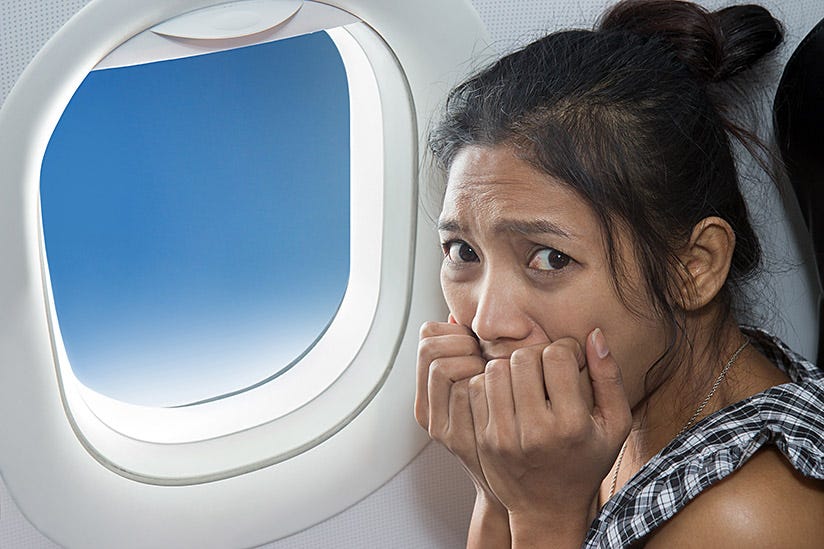
Whether you panic at the thought of public speaking, dread the sight of spiders, or feel irrationally nervous in a crowd, phobias can quietly shape our choices and our lives.
They’re something that almost everyone has experienced at some point in their lives. These fears can feel embarrassing, especially when they seem “silly” or hard to explain to others. The truth, however, is that phobias are more common (and more treatable) than you might think.
A phobia is more than a fear. Phobias are intense, persistent, and irrational fears of specific objects, situations, or activities that provoke an immediate anxiety response, which can often lead to avoidant behavior. They’re patterns that your brain learned to protect you.
The beautiful thing about this is that your brain can learn something new. With compassion, evidence-based tools, and support, you can absolutely move past your phobias and regain control of your life.
For a deeper dive, you can listen to the latest episode of Mental Health Bites here on Substack or on Apple Podcasts. You can also find more short clips and helpful tips at my YouTube channel.
Why Phobias Form (and What They Really Are)
According to the National Institute of Mental Health, more than 1 in 10 adults in the U.S. will experience a specific phobia at some point in their lives. There are several mechanisms from which phobias can emerge.
* Trauma and direct negative experience. A person might develop a fear of driving after being in a serious car accident. This is what we call classical conditioning, which is when the brain pairs the traumatic experience with the activity or object and registers it as dangerous.
* Observational learning. This is especially common in childhood. If a parent screams every time they see a spider, a child may learn that spiders are terrifying even if they’ve never been harmed by one. We internalize those fear responses, often unconsciously.
* Avoidance reinforces fear. The more you avoid the thing that scares you, the more your brain is tricked into the belief that it must truly be dangerous. That sense of relief you get from avoidance—say, if you cancel a flight or skip a crowded party—acts like a reward which solidifies the fear pathway in your brain. (In psychology, we call this negative reinforcement.)
* Evolutionary psychology plays a role. Some researchers, like Martin Seligman, suggest that we’re biologically prepared to fear things that once posed survival threats. So even if you’ve never been bitten by a snake or fallen from a cliff, your nervous system might still go into high alert in those situations.
The Most Common and Uncommon Phobias
I’m going to share with you an exercise you can use to work through phobias, but first I want to break down some of the most common and uncommon ones, and what they actually look like in real life.
* Social Phobia, also known as Social Anxiety Disorder, is a fear of judgment, embarrassment, or rejection in social or performance situations. This could be giving a presentation, eating in public, or even making small talk, where the fear of humiliation becomes so intense that the person avoids social settings altogether.
* Agoraphobia is the fear of situations where escape might feel difficult (or help unavailable). This is especially true if a panic attack might occur. Agoraphobia is often misunderstood as a fear of “open spaces,” but it can also include fear of public transportation, large crowds, or even being outside alone.
* Claustrophobia is the fear of enclosed spaces, such as elevators, small rooms without windows, or even crowded trains. The fear can trigger panic symptoms, such as a racing heart, breathlessness, or dizziness, because the person feels trapped and unable to escape.
* Acrophobia is the fear of heights. This can occur when someone stands on a balcony, crosses a bridge, or even watches videos of high places. Anxiety that stems from acrophobia isn’t always about falling; it’s often about the overwhelming sense of danger and disorientation that accompanies it.
* Emetophobia is a lesser-discussed but very common phobia—the intense fear of vomiting. People with emetophobia often avoid certain foods, social gatherings, or public transportation, just in case they (or someone else) gets sick.
* Trypanophobia is the fear of needles or injections. While many people feel uneasy around needles, this phobia can prevent people from receiving necessary medical care, vaccines, or blood tests, out of overwhelming fear or fainting responses.
* Arachnophobia is the fear of spiders. While some evolutionary theories suggest this fear is rooted in survival instincts, for many people, even seeing a photo of a spider can lead to intense panic.
* Aviophobia, or fear of flying, is a fear not only of the flight itself but often of the lack of control, turbulence, or the idea of being far from help while in the air.
Now let’s talk about a few lesser-known phobias that may surprise you but are very real and valid.
* Nomophobia is the fear of being without your phone or losing signal. With the rise of constant digital connection, this fear has become increasingly common. It is often tied to anxiety around being unreachable or losing access to vital information.
* Trypophobia is the aversion or fear of clustered holes or repetitive patterns, like a lotus pod or honeycomb. For many people, these patterns trigger a visceral reaction, even nausea or itching.
* Pogonophobia is the fear of beards. This can be triggered by negative associations, cultural factors, or sensory discomfort, like the texture or unpredictability of facial hair.
* Ablutophobia is the fear of bathing or cleaning oneself. While rare and more commonly seen in children, this phobia can be connected to trauma, sensory processing issues, or OCD-related fears.
* Chirophobia is the fear of hands, either one’s own or others’. This can stem from sensory issues, past injury, or symbolic associations tied to touch, boundaries, or vulnerability.
Even if some of these sound unusual, remember: Your brain doesn’t distinguish between "rational" and "irrational." If it perceives danger, it reacts.
Your goal should not be to mock the fear, but to understand it and treat it compassionately.
How to Know if It’s a Phobia, and What You Can Do About It
Before we get into how to work with phobias, it’s worth asking: How do you know if what you’re feeling is a true phobia—or just a normal fear?
Here are a few ways to tell the difference:
* Intensity. A phobia is more than discomfort. A phobia is a strong, disproportionate fear response that often leads to panic symptoms, such as a racing heart, sweating, dizziness, shortness of breath.
* Avoidance. If you're going out of your way to avoid a situation, object, or place, and that avoidance is limiting your life, that's a sign it may be a phobia.
* Interference. Is the fear affecting your daily functioning, relationships, or career? For instance, refusing a job because it involves flying, or avoiding medical care due to needle fears.
* Duration. True phobias tend to be persistent (lasting six months or longer) and don’t fade with logic or reassurance alone.
If you recognize yourself in some of these patterns, you’re not alone. And there are evidence-based ways you can treat it.
Practical Tip: Exposure Ladder
One of the most effective tools from Cognitive Behavioral Therapy (CBT) is called an Exposure Ladder. It’s a wonderful tool and one of the first I ever learned during my doctoral program training.
In fact, I had a minor fear of heights myself years ago, which I overcame by taking up trapeze classes (yes, that’s me here in these photos). I did a rapid exposure ladder (sometimes called flooding) by showing up at a trapeze class and just throwing myself into it. I ended up falling in love with the flying trapeze and it’s one of my favorite hobbies.
💡Pro tip: I created a printable bonus workbook just for paid subscribers to help you put this into action.
It’s called The Phobia Reset Toolkit and includes a step-by-step Exposure Ladder template, guided anxiety rating scale, and the exact relaxation techniques to use at each step—so you’re not just learning about phobias, you’re working through them with support.
➕ Already a paid subscriber? This is coming straight to your inbox this Friday!➕ Not yet? [Upgrade now] and get immediate access to the toolkit and all past mental health bonuses.
An Exposure Ladder (also known as a fear ladder) is exactly what it sounds like: a step-by-step sequence that gradually exposes you to the feared situation. It starts with the least scary piece and then builds up over time. The goal is to desensitize your fear response, reduce avoidance, and help your brain re-learn that the situation is safe.
Step 1: Build your ladder
List situations related to your phobia that range from mildly stressful to intensely distressing. Rank them from easiest to hardest. This becomes your exposure ladder.
Let’s say you’re working on a fear of flying. Here’s how a basic exposure ladder might look:
* Start by looking at photos of airplanes.
* Watch videos of planes taking off and landing.
* Listen to airplane cabin sounds while sitting comfortably at home.
* Drive past the airport or walk inside the terminal.
* Sit in a grounded plane or a flight simulator.
* Book a short, supported flight and practice coping strategies.
* Fly solo, maybe even journal during the trip to reflect on your progress.
The key is to move to the next rung only once the current one feels manageable. You don’t need to rush. This gradual exposure rewires the brain’s threat detection system, building confidence and reducing panic over time.
You can build your own ladder with the support of a therapist, or start by journaling situations related to your fear and rating them from 0 to 10 in terms of anxiety. That becomes your roadmap.
Step 2: Rate the anxiety
For each rung, ask yourself: On a scale of 1 to 10, how anxious does this make me feel right now? This helps you track progress and keep the experience measurable.
Step 3: Regulate your nervous system
Before, during, and after each exposure step, practice a relaxation strategy to bring the anxiety down to a manageable level, ideally a 3 or lower out of 10.
This might include:
* Deep breathing. Try box breathing (inhale 4, hold 4, exhale 4, hold 4).
* Grounding through your senses. Hold a comforting object, sip tea, or listen to calming sounds.
* Positive self-talk. Use affirmations like I can do hard things or This fear is temporary.
Only when that exposure step consistently feels manageable (rated at a 3 or lower) do you move up to the next rung. This gradual process helps re-train your brain to disconfirm the belief that the situation is dangerous. Over time, your anxiety response fades and your confidence grows.
Facing Your Fears Doesn’t Mean to “Tough It Out”
This is important to remember. The way you face your fears is my working with your nervous system, step by step, to reclaim freedom.
So, take a deep breath. You’ve got this.
If this piece resonated with you, I’d love for you to share it with someone who might need to hear it. Subscribe to Mental Health Bites, leave a review if you found it helpful, and join me over at my Substack for free resources and tools to support your mental wellness journey.
If you’d like access to even more resources, private Q&As, and access to my entire back catalogue of techniques and tools, check out my paid subscriber option.
Order The New Rules of Attachment here: https://bit.ly/3MvuvvF
Take my attachment styles quiz
About me:
Dr. Judy Ho, Ph. D., ABPP, ABPdN is a triple board certified and licensed Clinical and Forensic Neuropsychologist, a tenured Associate Professor at Pepperdine University, television and podcast host, and author of Stop Self-Sabotage. An avid researcher and a two-time recipient of the National Institute of Mental Health Services Research Award, Dr. Judy maintains a private practice where she specializes in comprehensive neuropsychological evaluations and expert witness work. She is often called on by the media as an expert psychologist and is also a sought after public speaker for universities, businesses, and organizations.
Dr. Judy received her bachelor's degrees in Psychology and Business Administration from UC Berkeley, and her masters and doctorate from SDSU/UCSD Joint Doctoral Program in Clinical Psychology. She completed a National Institute of Mental Health sponsored fellowship at UCLA's Semel Institute.