We’ve all heard it before: “Go for a walk, you’ll feel better.” And sure, sometimes that advice sounds about as helpful as “Have you tried… not being sad?”
But now, science is officially backing up your chatty neighbor, your yoga-loving cousin, and every fitness influencer who’s ever posted a sunrise run selfie.
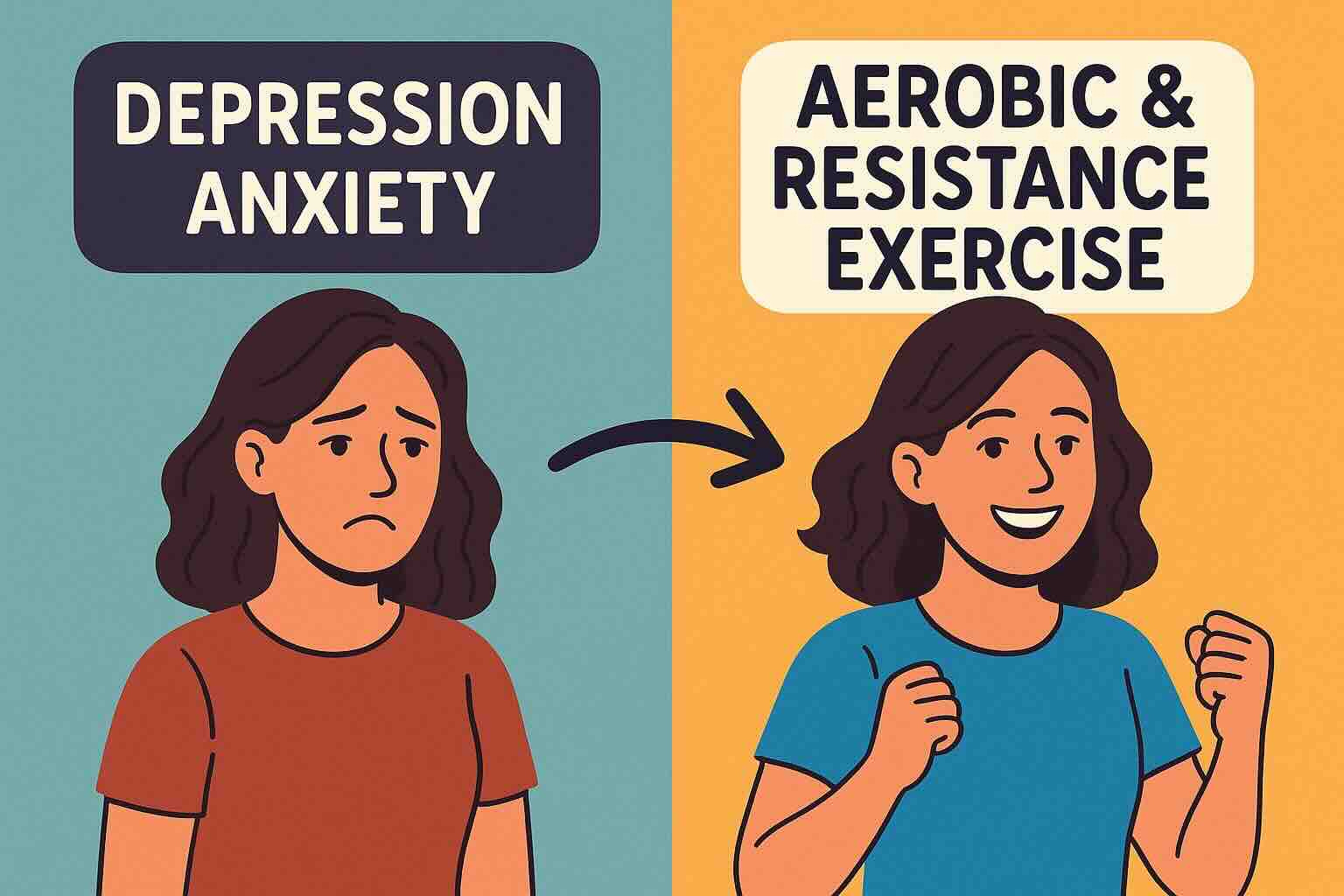
A brand-new systematic review and meta-analysis [1] (translation: the research equivalent of assembling The Avengers of studies) shows that exercise is a potent treatment for depression and anxiety — not just for the “a bit stressed” crowd, but for people with a clinical diagnosis.
And the best part? It works whether you’re a treadmill warrior, a dumbbell devotee, or somewhere in between.
What the Science Says (Without Making Your Eyes Glaze Over)
📊 For depression: Exercise had a large effect in reducing symptoms (that’s science-speak for “really works”).
📊 For anxiety: Exercise had a moderate effect overall, with resistance or mixed training showing the biggest wins. Aerobic workouts (think jogging, cycling, swimming) still help — just a little less consistently for anxiety.
Why Exercise Works (Besides Making You Look Great in Jeans)
* Brain chemistry boost – Exercise helps regulate stress hormones, improves energy production in brain cells (hello, mitochondria), and generally keeps your mood steady.
* Better sleep – Which helps with… basically everything.
* Social connection – Join a group class and you’ll be too busy trying to keep up with the instructor to dwell on your worries.
* Built-in distraction – Hard to spiral into anxious thoughts when you’re focused on not dropping a kettlebell on your foot.
Practical, Zero-Excuse Tips to Get Moving
💪 Start tiny – Even 10 minutes counts. If your brain is saying “Nope”, promise it you’ll just do a quick set. (Chances are, you’ll keep going.)
🚶 Pick a mode you don’t hate – Walking, dancing, bodyweight squats, light weights, tai chi, resistance bands — all are fair game.
📆 Schedule it like a meeting – If it’s not in the calendar, your couch will win.
👯 Find an accountability buddy – You’re far less likely to skip if someone’s expecting you.
🎯 Mix it up – For depression, both aerobic and resistance training work. For anxiety, sprinkle in resistance or combined workouts for best results.
But What If You’re Struggling to Start?
Totally normal. Depression and anxiety can sap your motivation, and life’s other barriers (time, money, energy) pile on. Here’s a gentle reframe:
* Think movement, not marathon.
* Celebrate showing up, not performance.
* Remember: even small sessions can trigger positive brain chemistry changes.
Bottom Line
Exercise isn’t a magic cure — but it’s a powerful, low-cost, side-effect-free tool that most of us aren’t using enough. Whether it’s a daily walk, a twice-a-week strength class, or dancing like nobody’s watching in your living room, your brain will thank you.
Now, go move — our highly rated app BreathNow will help you to get started and guide you with follow along videos.
Reference: