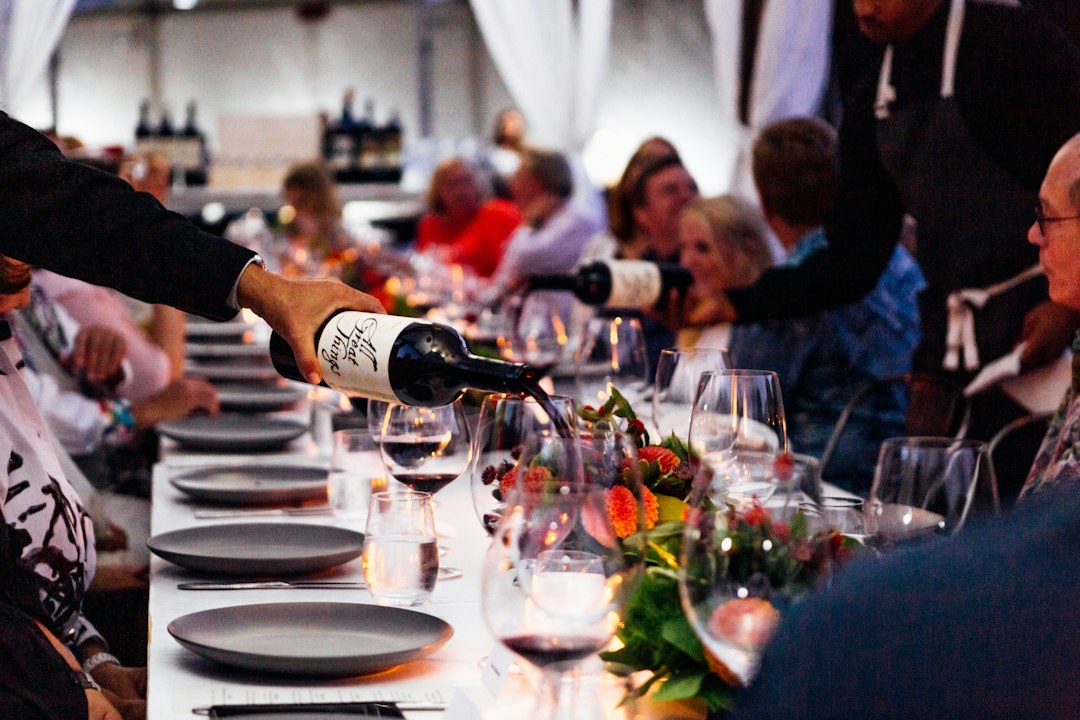
I once sat in the elegant dining room of a lovely Orange County, California home, sharing a fine dinner with good-natured and hospitable people. I did not know our hosts, the Jostens; I was only there by the invitation of another guest.
When someone inquired about our host’s profession, Walter Josten said he worked in the film industry. He spoke softly; he did not lead with his credits.
“So, why do you live so far from the studios?,” I asked.
“Because we chose to raise our children in a real world.”
There was nothing pretentious about our hosts or their home ... no movie posters, awards, celebrity photos, or any other evidence of self-absorption. Just real people, real words, real thoughts.
So, his answer made sense. They worked in a world of illusion; they wanted their children grounded in reality. That’s called wisdom.
When someone asked about his projects, he delivered another surprise: “Mostly horror films.” He mentioned his film Witchboard, which is about a Ouija board.
The mental pretzels in all that were, for me, overshadowed by the grace and peace that flowed through the home’s atmosphere. The Jostens did not draw attention to themselves. Their house was a home, not a narcissist’s museum. Although Hollywood was the arena of their work, it was clearly not the auditorium of their identity.
When another guest asked about upcoming projects, Walter told us about plans for a film about Father Damien, the Catholic priest who served people suffering from leprosy in 19th century Hawaii, eventually dying from the disease himself.
So, what does it mean that humble, low-key people worked in the movie business? Not only that, but they produced horror films. And, in another hairpin curve, they became financially and artistically committed to the story of a Christian who chose a life of service that ultimately cost him his own.
What are we to make of people who don’t fit neatly into the categories we assign them?
Not long after that dinner, my friend, The Washington Post columnist William Raspberry, spoke a profound truth to me over lunch: “Most people believe both sides of most issues.”
Of course, they do.
Normal people swim in the details of life. They trade cars, interview for jobs, help their kids with homework, go in for the MRI, pay attention to current events, pray, do laundry, etc.
They also understand the balance of polarities—freedom and order, risk and reward, love and caution, generosity and discipline. They see parallel needs for strong national borders and gentleness toward immigrants, military strength and diplomacy, law and grace, and other truths held in tension.
In his simple statement, Raspberry exposed one of the great rip-offs of our time: the idea that we cannot live with peace and uncertainty. Every word, every concept, every emotion must be a call to arms. Have we lost the capacity to be still, silent, and patient—to honor and embrace those who see things from a different angle?
Our world, including our social frameworks, is much larger than we have ever imagined. The problem, according to an ancient maxim: “We don’t see things as they are; we see them as we are.”
That Orange County dinner was more than a pleasant evening among friends and strangers. It offered a glimpse into the larger circles of human life, where people are more complicated, surprising, and gracious than the labels we so quickly give them.
Those people gathered in the Josten home seemed to suggest we may do better if we live more in enchantment than suspicion, more in love than reaction, and with greater respect for those who challenge our orthodoxies.
Perhaps we don’t have to resolve every contradiction, explain every mystery, or defend every absolute. Could we find the flow of relational peace and let our Creator do the heavy lifting?
The Timberline Letter is a reader-supported publication. To receive new posts and support my work, consider becoming a free or paid subscriber.